Finding the Best Flooring for Your Basement
The best flooring for basements needs to withstand unique challenges that other rooms in your home don’t face. Here’s a quick answer to help you decide:
| Flooring Type | Water Resistance | Durability | Comfort | Cost (sq ft) |
|---|---|---|---|---|
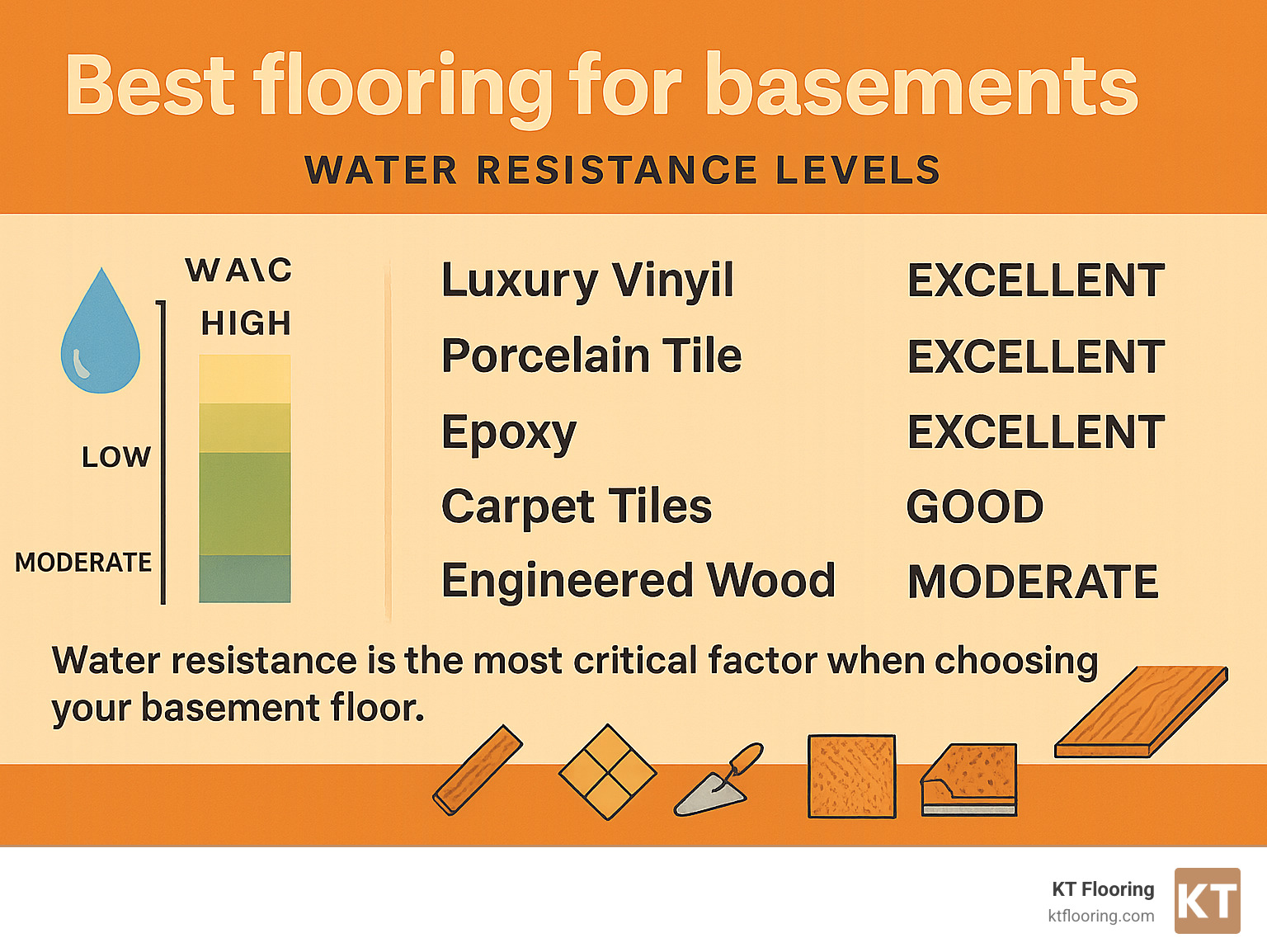
| Luxury Vinyl Plank/Tile | Excellent | High | Good | $2-$7 |
| Porcelain/Ceramic Tile | Excellent | Very High | Poor | $3-$46 |
| Epoxy/Polyaspartic | Excellent | Very High | Poor | $3-$12 |
| Carpet Tiles | Good (with proper backing) | Medium | Excellent | $2-$15 |
| Engineered Wood | Moderate | High | Good | $5-$16 |
Basements present unique challenges when selecting flooring. They’re naturally prone to moisture, temperature fluctuations, and sometimes even flooding. Unlike upper floors, basements sit directly on concrete slabs that can leach residual moisture vapor from the ground even in seemingly dry conditions. This makes water resistance the most critical factor when choosing your basement floor.
Why does this matter? The wrong flooring choice can lead to warping, mold growth, musty odors, and expensive replacements. Even a small water event can ruin traditional materials like solid hardwood or standard carpet within 24-48 hours.
“When it comes to basement flooring, we have to think differently. The kind of flooring installed must be able to stand up to the damp conditions and high humidity that are typical of below-grade spaces.”
As Christopher Talty, owner of KT Flooring, I’ve helped hundreds of New Hampshire homeowners select the best flooring for basements over my 50 years in the industry, and I’ve seen how the right choice can transform cold, damp spaces into comfortable living areas.
Best flooring for basements word list:
– Best flooring for allergies
– Non-slip bathroom flooring
– Waterproof bathroom flooring
Best flooring for basements: Quick Snapshot
When looking for the best flooring for basements, you’re balancing several important factors that will make or break your basement renovation. Let’s take a closer look at what really matters:
Why the “Best flooring for basements” starts with moisture control
Before we dive into specific flooring types, we need to talk about the invisible enemy: moisture. Even basements that feel bone-dry can harbor hidden dampness that will wreak havoc on your new floors.
As HGTV host and professional contractor Bryan Baeumler puts it: “You cannot finish a basement without putting down a proper subfloor system. Nobody wants a musty smell in the house, and you never want to put your finished floors on top of wet, damp, and cold concrete.”
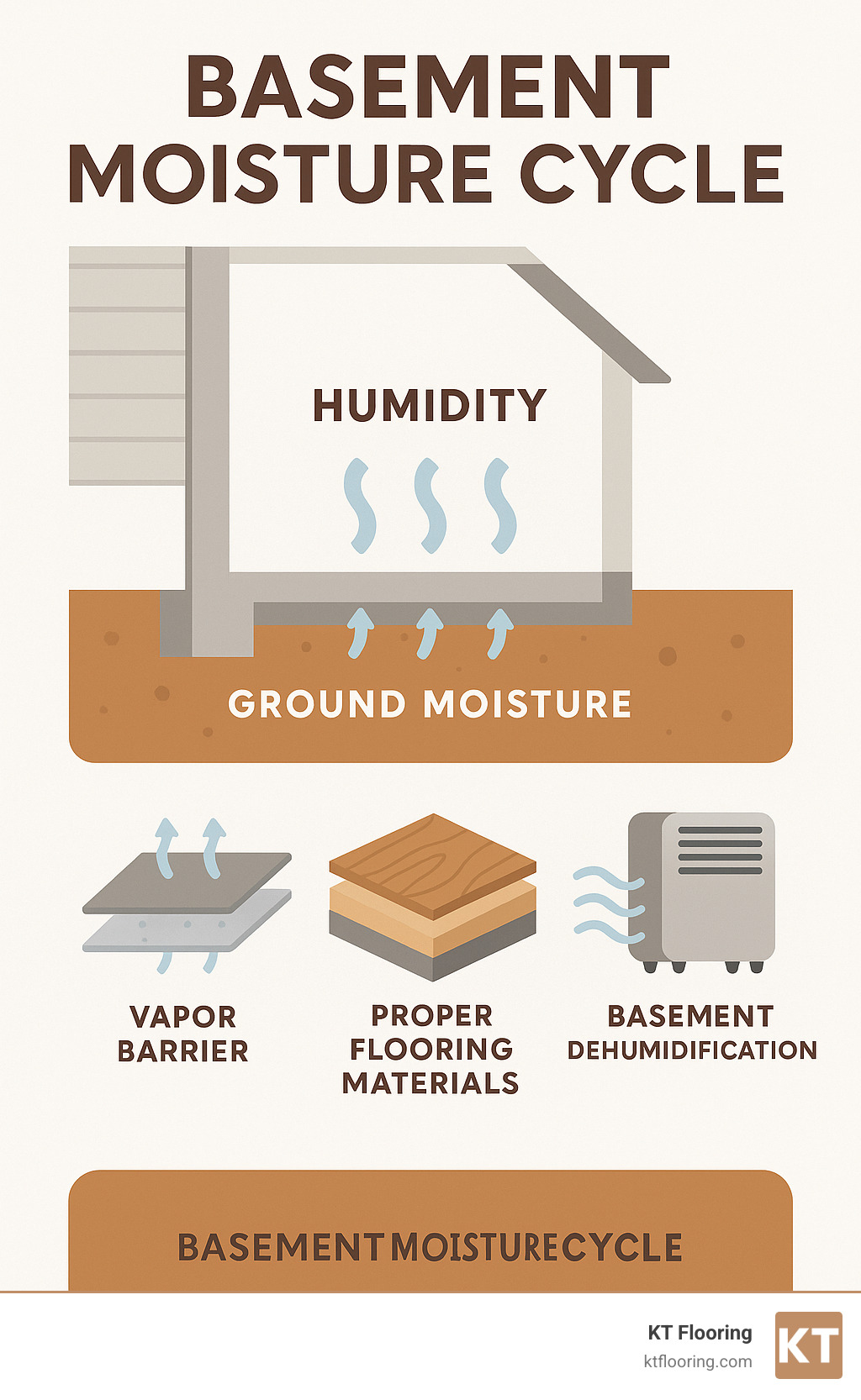
Here’s the thing – concrete is like a giant sponge that slowly wicks moisture up from the ground. That’s why proper moisture control isn’t optional, it’s essential. Your moisture strategy should include vapor barriers that block dampness from migrating through the concrete, dehumidifiers to keep the air between that sweet spot of 30-50% humidity, professional slab testing to verify your concrete is actually ready for flooring, and subfloor systems that create a protective air gap.
I’ve seen too many homeowners skip these steps to save money upfront, only to call us later when their beautiful new floors are warping, buckling, or growing unwanted “science experiments” underneath. Trust me, doing it right the first time is always cheaper.
Average pricing & ROI notes
When it comes to basement flooring costs, the range is wide enough to make your head spin. The prices I’m sharing here are industry averages based on internet data, not actual quotes from KT Flooring.
For your budget planning, here’s what you might expect to spend:
Entry-level options will run about $2-5 per square foot for basic vinyl, laminate, or simple carpet tiles. These can be perfectly good choices when installed correctly.
Mid-range options typically cost $5-15 per square foot, which gets you into higher-quality vinyl, engineered wood, or porcelain tile territory.
Premium options can range from $15-46 per square foot for designer tiles, high-end engineered wood, or custom epoxy finishes with artistic elements.
Don’t forget installation costs, which typically add another $2-15 per square foot depending on how much prep work your concrete needs and the complexity of the material you’ve chosen.
From a return-on-investment perspective, water-resistant basement flooring is money well spent. Industry data shows basement renovations with proper moisture-resistant flooring can recoup 70-75% of their cost when you sell. But the real value might be in what you don’t pay – avoiding those expensive water damage repairs that can quickly run into thousands of dollars.
For those concerned about health implications (and you should be), the EPA offers detailed scientific research on mold and mildew that explains why proper moisture control isn’t just about protecting your floors – it’s about protecting your family’s health too.
Luxury Vinyl Plank & Tile
When I talk with homeowners about the best flooring for basements, luxury vinyl plank (LVP) and luxury vinyl tile (LVT) consistently top my recommendation list. There’s a good reason these products have taken the basement flooring world by storm – they strike that perfect sweet spot between beautiful looks, practical performance, and reasonable cost.
What makes vinyl so perfect for those challenging below-grade spaces? It starts with the construction. Today’s luxury vinyl is a far cry from the vinyl sheet flooring of yesteryear. Modern options feature a 100% waterproof core made of PVC that won’t swell, warp or deteriorate even if your basement experiences the occasional water intrusion. Unlike traditional hardwood or laminate that can be ruined by a single water event, vinyl stands strong.
The click-lock installation system creates tight seals between planks, preventing moisture from seeping between the joints. This floating floor design also means it can be installed right over most existing surfaces with proper preparation – no need to rip up that old basement floor completely.
Another huge benefit I’ve seen customers appreciate is thermal comfort. Let’s face it – basements are naturally cooler than the rest of your home. Vinyl feels noticeably warmer underfoot than ceramic tile or concrete, making your basement space feel much more inviting. Add to that impressive pet-proof durability with resistance to scratches, stains and odors, and you’ve got a floor that can handle whatever your family dishes out.
As Steve Maxwell, professional contractor, puts it: “Vinyl flooring is made of PVC, providing waterproof and durable properties that make it ideal for basements prone to moisture issues.”
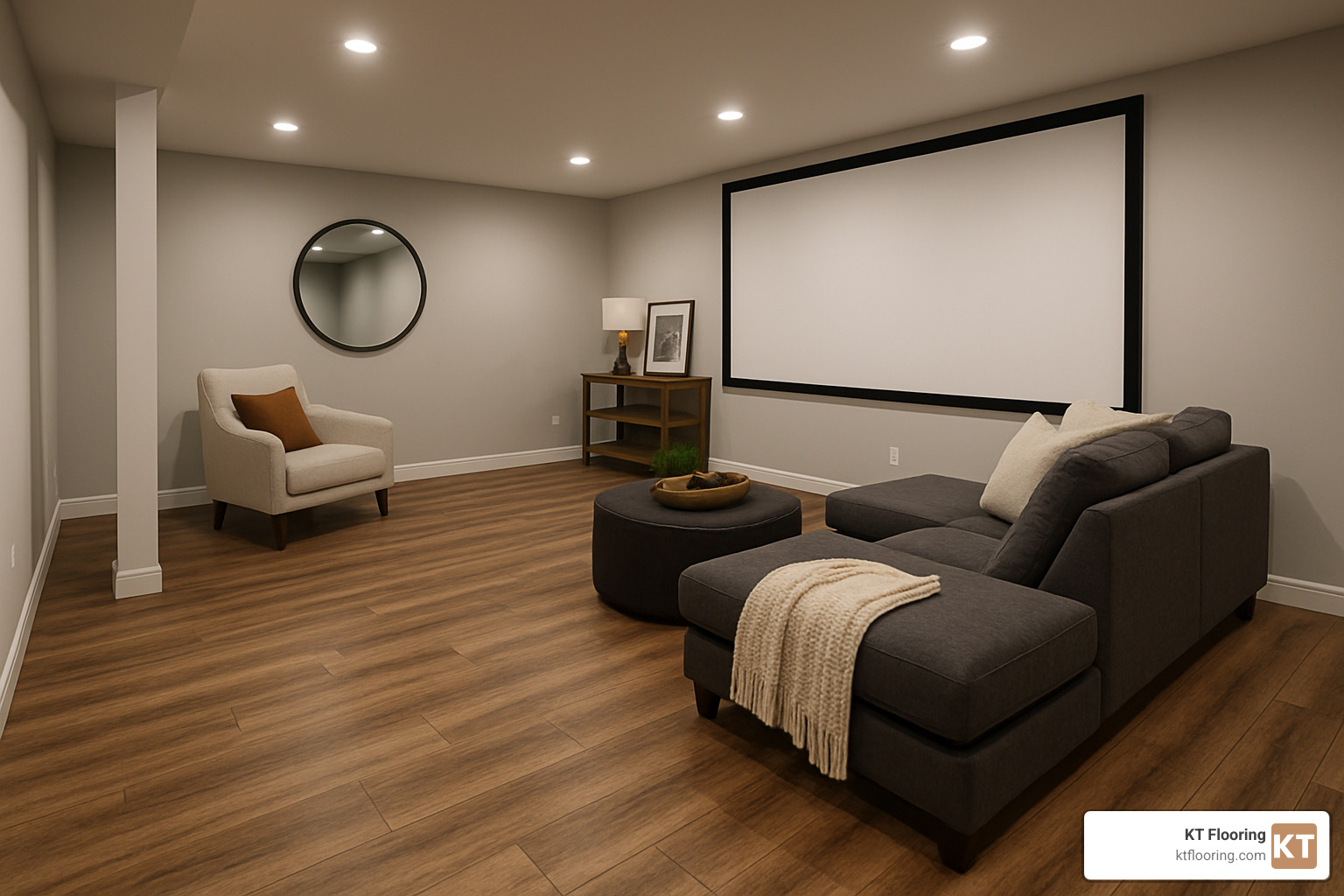
The change we’ve seen customers achieve with LVP in their basements is truly remarkable. Just last month, a family in Nashua converted their damp, uninviting storage area into a stunning media room using a hickory-look vinyl plank that guests regularly mistake for real hardwood. The difference was night and day.
For more detailed information about waterproof options, check out our guide to Vinyl Waterproof Flooring.
Best flooring for basements—luxury vinyl edition
Not all vinyl is created equal when hunting for the best flooring for basements. Premium vinyl flooring offers authentic wood and stone looks thanks to high-definition printing technology and embossed textures that mimic natural materials with impressive realism. You can get the warm look of hardwood or the sophisticated appearance of stone without any of the moisture concerns.
The floating floor installation method means no messy adhesives and the ability to install directly over most existing surfaces with proper preparation. Many homeowners find LVP surprisingly DIY-friendly, potentially saving hundreds on installation costs. That said, proper subfloor preparation is crucial for long-term success.
For families concerned about indoor air quality in enclosed basement spaces, look for products with FloorScore certification, which ensures low VOC emissions. This is especially important in basements where ventilation may be limited.
One of our Bedford, NH customers recently transformed their basement by installing stone-look LVT in their basement bar area. It created a high-end aesthetic while ensuring complete protection from the occasional spilled drink. The floating installation meant they could install it right over their existing concrete floor after proper moisture testing and preparation.
Pro tips & maintenance
After helping hundreds of homeowners with basement vinyl installations, I’ve gathered some insider knowledge to help you get the most from your investment:
Acclimation is non-negotiable. Always allow your vinyl planks to sit in your basement for at least 48 hours before installation. This gives the material time to adjust to the specific temperature and humidity conditions of your space, preventing future problems.
Pay special attention to subfloor flatness. Your substrate should be level within 3/16″ over 10 feet to prevent click-lock failures and ensure a proper installation. A little extra prep work here pays big dividends in the long run.
Consider adding a cushioned underlayment beneath your vinyl for added comfort, sound absorption, and thermal insulation. This small upgrade makes a noticeable difference in how your basement floor feels underfoot.
Choose the right wear layer thickness for your lifestyle. For high-traffic basement areas like game rooms or home gyms, look for at least a 12-20 mil wear layer for better scratch and dent resistance. The wear layer is essentially your floor’s shield against daily life.
Maintaining vinyl basement flooring couldn’t be simpler. Regular sweeping and occasional damp mopping with a manufacturer-approved cleaner is typically all that’s needed. Unlike carpet, vinyl won’t harbor allergens or absorb odors – a huge plus for basement environments where air circulation may be limited.
For professional installation of luxury vinyl flooring that stands the test of time, learn more about our Luxury Vinyl Plank Flooring Installation services. We’ve been perfecting basement flooring installations for over five decades, and we’d love to help make your basement dreams a reality.
Porcelain & Ceramic Tile
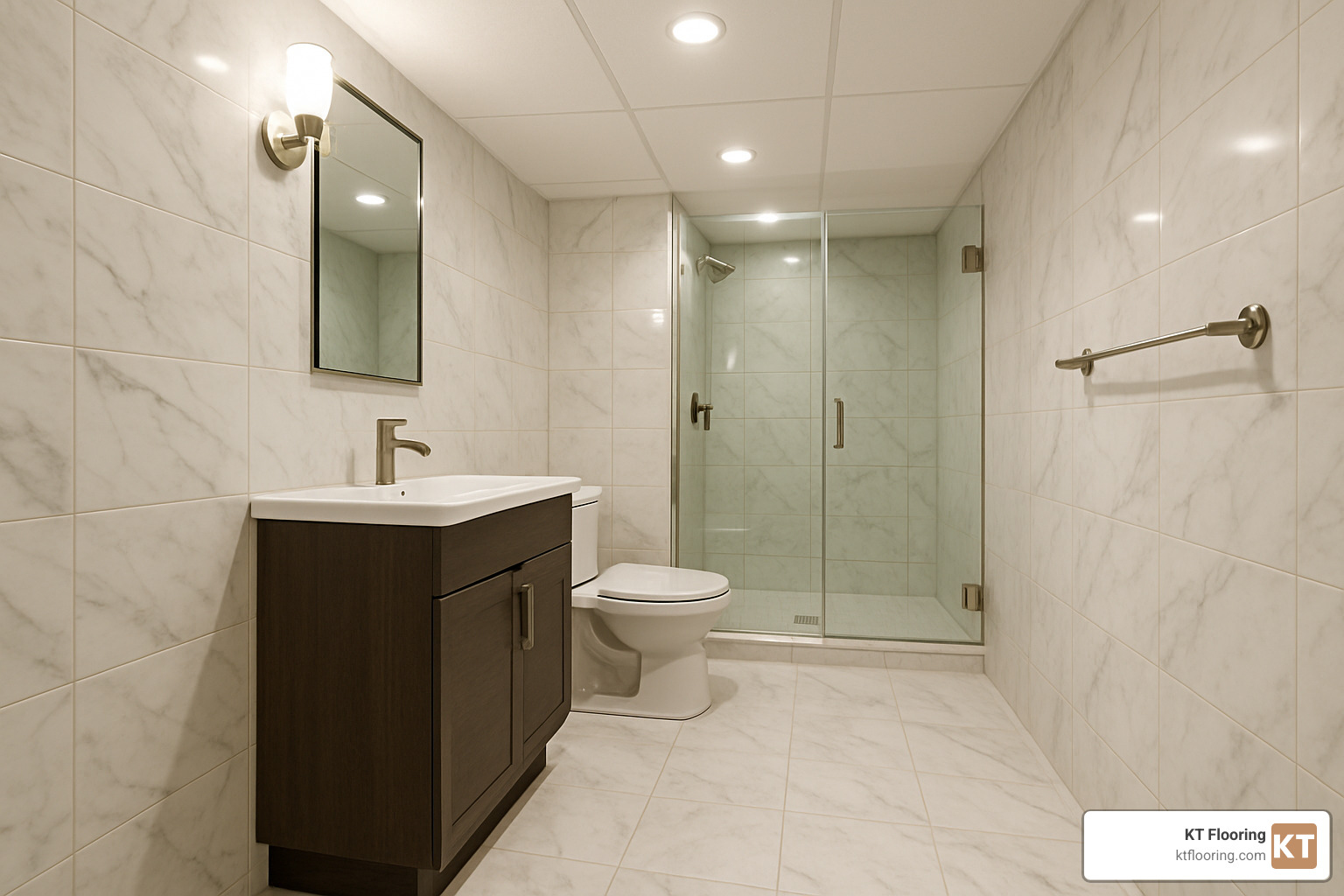
When it comes to battling basement moisture, few materials can match the time-tested reliability of tile. For homeowners seeking the best flooring for basements with unwavering durability, porcelain and ceramic tile deliver peace of mind that’s hard to beat.
Think of tile as the steadfast guardian of your basement space. With an impervious surface that barely absorbs water (less than 0.5% for porcelain), it stands firm against the moisture challenges that make basements so tricky. I’ve seen basement tiles installed 30+ years ago that still look remarkable today—something few other flooring materials can claim.
What makes tile particularly suited for basements is its ability to be installed directly on concrete slabs when properly prepared. This eliminates the need for floating subfloors that can reduce precious ceiling height in already low-ceilinged basements. Plus, tile’s compatibility with radiant heating systems addresses the age-old complaint about cold basement floors. Imagine stepping onto gently warmed tile on a chilly winter morning instead of the typical basement chill!
Modern tile has come a long way aesthetically, too. Today’s large-format styles measuring up to 48 inches can create sleek, contemporary spaces with minimal grout lines. A customer in Bedford recently installed wood-look porcelain planks in their basement entertainment area, achieving the warmth of hardwood with none of the moisture vulnerability.
If you’re deciding between porcelain and ceramic, remember this simple distinction: porcelain is essentially ceramic’s more moisture-resistant cousin. Fired at higher temperatures, porcelain’s denser composition makes it the superior choice for basement environments where moisture concerns are paramount.
For budget-conscious renovations, we offer numerous Inexpensive Tile Flooring options that don’t sacrifice quality or water resistance. Many homeowners are pleasantly surprised to find beautiful options that won’t break the bank.
Performance in damp environments
Tile’s exceptional performance in basement environments doesn’t happen by accident—proper installation makes all the difference. The unsung hero in many successful basement tile installations is the uncoupling membrane. These remarkable sheets (like Schluter DITRA) create separation between your concrete floor and tile, preventing cracks from transferring upward while also providing waterproofing benefits.
Another advantage that makes tile ideal for basements is its temperature resilience. While other flooring materials expand and contract with basement temperature swings, tile remains dimensionally stable. This stability prevents the buckling and warping that plague less suitable materials.
Safety matters too, especially in potentially damp environments. Many modern tiles offer slip-resistant finishes with subtle texture that provides secure footing without sacrificing style. I always recommend these for basement bathrooms and laundry areas where water is likely.
While tile itself stands strong against moisture, don’t forget about the grout. Regular grout sealing (typically annually) maintains the water-resistant integrity of your entire floor system. Think of it as routine maintenance that preserves your investment.
The elephant in the room with tile is comfort—it’s undeniably hard and can feel cold underfoot. Area rugs offer a simple solution, but the real game-changer is underfloor heating. As one of my customers in Nashua put it after installing heated tile in their basement: “It’s like having the durability of a bunker with the comfort of a luxury spa.”
Keeping tile looking its best requires minimal effort—regular sweeping and occasional mopping with a neutral cleaner is typically all that’s needed. This low-maintenance nature makes it particularly appealing for busy families who want their basement to look great without constant upkeep.
Carpet Tiles & Waterproof Carpet
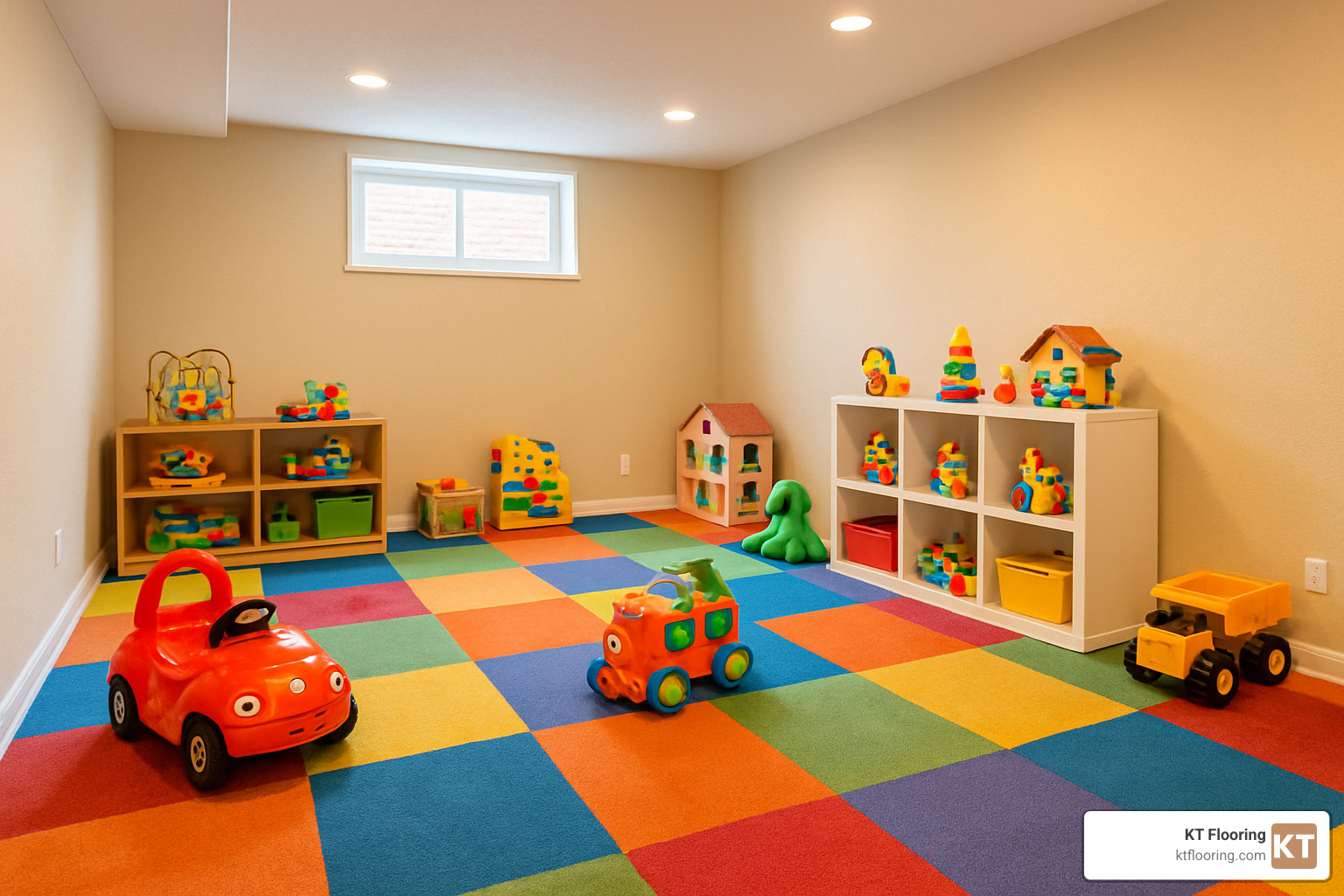
Imagine walking barefoot down your basement stairs and feeling soft, warm carpet beneath your toes instead of cold, hard surfaces. For many homeowners, this cozy vision seems at odds with basement moisture concerns—but today’s innovative carpet options have changed everything.
The best flooring for basements doesn’t always have to be hard and utilitarian. Modern carpet tiles and waterproof carpet solutions have revolutionized what’s possible in below-grade spaces, bringing comfort without the moisture worries of traditional wall-to-wall carpeting.
“The first time I showed a client waterproof carpet for their basement playroom, they couldn’t believe it was an option,” shares Chris Talty of KT Flooring. “Their faces lit up at the possibility of having a warm, soft surface where their kids could play comfortably.”
Today’s basement-friendly carpet options offer remarkable benefits. The modular design of carpet tiles means you can replace individual sections if they’re ever damaged by moisture or stains—no need to redo the entire floor. Their low-pile construction helps them dry quickly and trap fewer allergens than plush carpets, while waterproof backing creates an essential moisture barrier between your carpet and subfloor.
Beyond moisture resistance, carpet brings superior insulation benefits that make basements significantly more comfortable. The thermal properties keep floors warmer, while the acoustic advantages make carpet ideal for basement media rooms, where sound absorption improves the overall experience.
One Salem homeowner who installed carpet tiles after a minor basement flood shared with us: “We chose recycled plastic peel-and-stick tiles because they’re practically indestructible. When our washing machine leaked last month, we simply pulled up the affected tiles, dried the concrete, and put them right back down. No damage, no fuss.”
Carpet tiles particularly shine in specific basement uses. They create safer play areas for children who need cushioning for tumbles and falls. They transform home theaters with better acoustics and comfort. They make basement offices more professional and comfortable. And they turn basement bedrooms into cozy retreats that don’t feel like underground spaces.
Making a basement cozy without sacrificing “Best flooring for basements” standards
Successfully using carpet in a basement requires thoughtful preparation. Start with anti-microbial padding specifically designed to resist mold and mildew growth in basement environments. Always install proper moisture barriers beneath your carpet system—this isn’t a step to skip! Many of our customers are surprised to learn how important this invisible layer is to long-term success.
The modular nature of carpet tiles opens up creative possibilities. One of our Manchester families created a stunning playroom using a checkerboard pattern of bright, colorful tiles that their children absolutely love. The space has become the heart of their home, while giving parents peace of mind about potential juice spills or craft accidents.
Regular maintenance remains important with any carpet installation. Vacuum frequently to remove dust and debris, and address spills immediately—especially in basement environments where airflow might be limited.
Budget-conscious homeowners appreciate that carpet tiles often cost less than other flooring options, typically ranging from $2-$15 per square foot depending on quality and features. For those looking to maximize value, explore our range of Inexpensive Flooring Options that include carpet tiles and other basement-friendly choices.
Even with modern waterproof technology, carpet still requires more attention to moisture control than completely waterproof options like vinyl or tile. A proper subfloor system with adequate drainage and ventilation is particularly important with basement carpet installations. When these elements work together, you can enjoy all the comfort of carpet without moisture worries.
The acoustic benefits of carpet can’t be overstated for basement spaces. Whether you’re creating a home theater, music room, or just trying to minimize the echo common in basement environments, carpet’s sound-absorbing properties make a remarkable difference in how the space feels and functions.
For allergy sufferers, today’s low-pile carpet tiles with antimicrobial treatments can actually be more allergy-friendly than some hard surfaces where dust can collect and become airborne when disturbed. The key is choosing the right product and maintaining it properly.
Engineered Wood & Waterproof Laminate
When the warm, natural look of wood is desired for a basement, engineered wood and waterproof laminate offer viable alternatives to solid hardwood, which should never be installed below grade. These options can provide the best flooring for basements when you want the aesthetic of wood with better moisture performance.
Engineered wood consists of:
– A real wood veneer top layer
– A cross-ply plywood or high-density fiberboard core
– A dimensionally stable construction that resists warping
As one flooring expert explains, “Engineered hardwood uses a layered veneer construction that mitigates moisture-related warping, enabling click-lock DIY installation in environments where solid hardwood would fail.”
Waterproof laminate is a newer innovation featuring:
– A high-density fiberboard core with special water-resistant treatments
– A photographic layer that realistically mimics wood grain
– A durable wear layer that protects against scratches and stains
– Click-lock edges that create tight seams against moisture intrusion
Both options offer significant advantages for basement installations:
– Authentic wood appearance – Natural warmth and character that vinyl can’t quite match
– Click-lock installation – Creates floating floors that don’t need to be nailed or glued down
– Warmth underfoot – More comfortable than tile or concrete in cold basement environments
– Good resale value – Many buyers prefer the look of wood-style flooring
However, these options do require special considerations for basement use:
– Expansion gaps – Must leave space around the perimeter for natural expansion and contraction
– Proper acclimation – Materials should adjust to basement conditions for 48-72 hours before installation
– FloorScore certification – Ensures low VOC emissions for healthier indoor air quality
Learn more about our selection of Laminate Flooring that can work beautifully in properly prepared basement spaces.
When to choose over solid hardwood
While solid hardwood is never recommended for basements due to its susceptibility to moisture damage, engineered wood and waterproof laminate can be appropriate choices under the right conditions:
- Consistently dry basements – Spaces with proven moisture control and no history of water issues
- Proper humidity control – Maintaining 30-50% relative humidity with dehumidifiers
- Subfloor sleeper systems – Creating an air gap between the concrete and the finished floor
- Lower-risk areas – Upper portions of split-level basements or walkout basements with good drainage
From a cost perspective, engineered wood typically ranges from $5-$16 per square foot installed, while quality waterproof laminate runs $3-$15 per square foot installed. These averages are based on internet data and not actual costs for KT Flooring products and services.
Maintenance requirements include:
– Regular sweeping or vacuuming with a hard floor attachment
– Cleaning with manufacturer-approved products only
– Immediate attention to any spills
– Avoiding wet mopping on laminate (damp mop only)
– Periodic inspection for signs of moisture issues
A Salem, NH customer recently installed engineered oak in their walkout basement family room. By combining a proper subfloor system with consistent dehumidification, they’ve created a warm, inviting space that guests would never guess is below grade.
Concrete, Epoxy & Polyaspartic Finishes
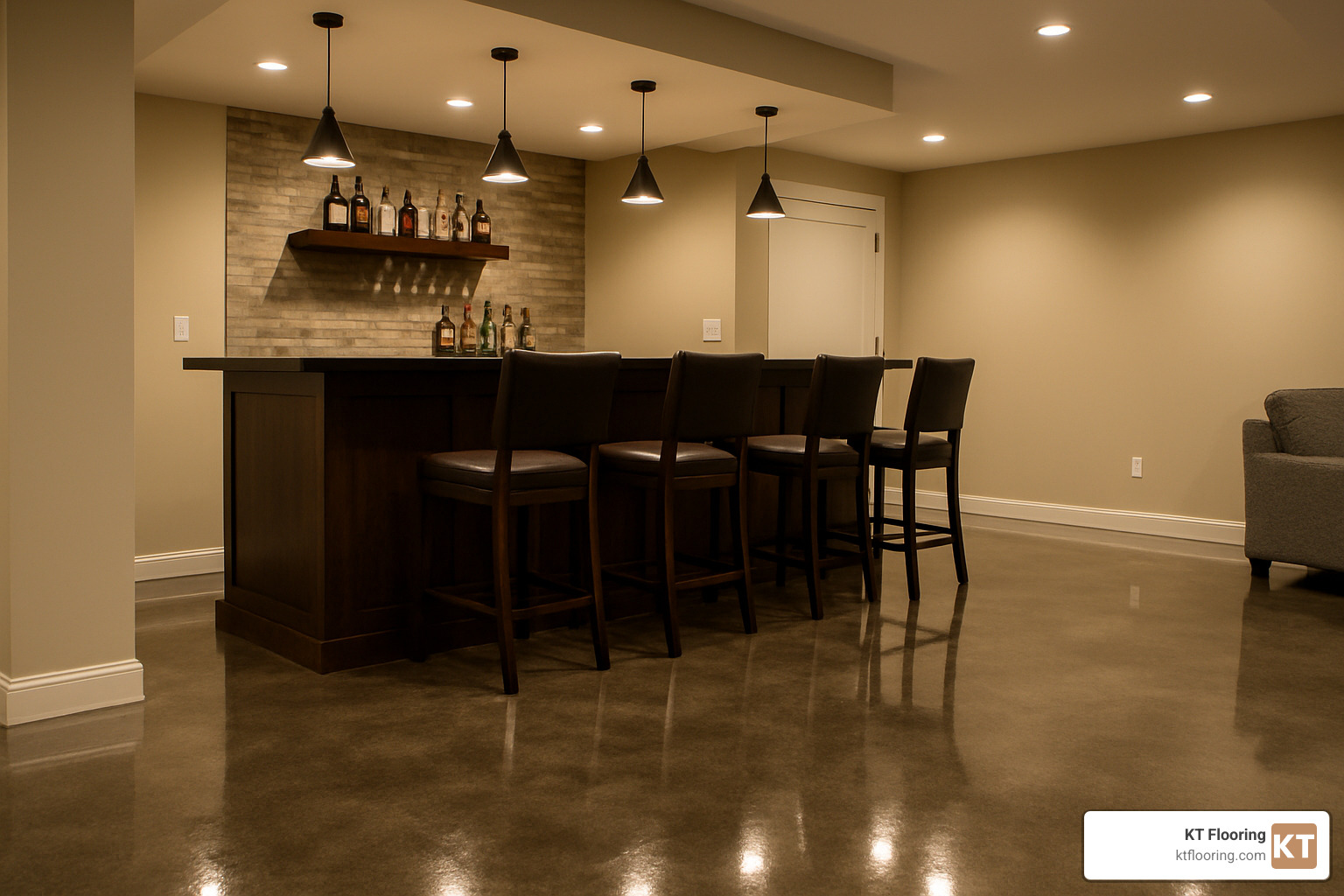
Sometimes the perfect basement flooring solution is right beneath your feet. That plain concrete slab—the one you might be thinking needs to be covered up—could actually become the star of your basement renovation. Modern concrete finishing techniques have completely transformed what was once considered purely utilitarian into designer surfaces that rank among the best flooring for basements where moisture resistance can’t be compromised.
“I was dead-set on putting down tile until my contractor showed me photos of finished concrete,” shares one of our Nashua customers. “Now my basement floor is a conversation starter when guests come over!”
There are three main approaches to elevating your concrete basement floor:
Sealed concrete offers the simplest path forward. We thoroughly clean the existing slab and apply commercial-grade clear sealers that improve the natural character while providing protection. It’s budget-friendly and surprisingly effective.
Polished and stained concrete takes things up a notch. Through mechanical grinding and polishing, we bring out a smooth, almost marble-like finish. Add acid or water-based stains, and suddenly that gray slab transforms into a rich, variegated surface with earth tones that look surprisingly natural.
Epoxy and polyaspartic coatings represent the premium end of concrete treatments. These high-performance resin systems create seamless, incredibly durable surfaces that can include decorative flakes, metallic effects, or even embedded objects for truly one-of-a-kind floors.
What makes these options ideal for basement settings? They work with your existing concrete rather than fighting against it. There’s no added height (important in basements with limited headroom), no seams where moisture can penetrate, and impressive durability that stands up to heavy furniture, workout equipment, or workshop activities.
Polyaspartic coatings deserve special attention if you’re looking for the best flooring for basements with premium performance. Originally developed for industrial settings, these advanced systems cure remarkably fast—often in just hours rather than the days required for traditional epoxy. They’re also more flexible and resist yellowing from UV exposure.
“Polyaspartic flooring gives you industrial-grade durability with residential-friendly aesthetics,” explains Chris Talty. “It’s perfect for basements that need to multitask as living space, home gym, and occasional workshop.”
Budget-friendly upgrade paths
The beauty of concrete finishing options is their scalability to different budgets. A basic sealing job might run $2-$5 per square foot, while creative acid staining typically costs $3-$12 per square foot. For polished concrete, expect to invest $3-$15 per square foot, while epoxy systems generally range from $3-$12 and premium polyaspartic coatings from $5-$15 per square foot. These are average costs based on internet data and not actual costs for KT Flooring products and services.
While DIY kits exist for basic sealing and some staining applications, I’ve seen enough amateur epoxy jobs gone wrong to strongly recommend professional installation for polished concrete and coating systems. The difference in durability and appearance is significant and worth the investment.
A Londonderry couple recently worked with us to transform their basement into a home brewery. We created a custom epoxy floor with their collection of bottle caps embedded under a crystal-clear topcoat. It’s not only perfectly suited to the occasional spill, but it’s also become a fantastic conversation piece when friends come over for tastings.
When considering concrete finishing options, keep these practical points in mind:
Slip resistance matters, especially in areas that might get wet. We can add textured additives to create safer surfaces without sacrificing appearance.
Proper preparation is absolutely essential. Even the best coating system will fail if applied to dirty, damaged concrete. We thoroughly clean, repair, and sometimes mechanically profile the surface before applying any treatment.
Moisture testing should never be skipped. While these systems are more moisture-tolerant than most flooring options, extremely damp concrete may need additional mitigation measures.
For health-conscious homeowners, we offer low-VOC formulations that minimize indoor air pollutants. The latest research on indoor air quality has driven significant improvements in coating technology, making today’s options much safer than products available even a decade ago.
Concrete finishes offer incredible creative potential while providing the practical moisture resistance that makes them among the best flooring for basements. With proper installation and minimal maintenance, these surfaces can deliver decades of beautiful, trouble-free performance.
Insulation, Comfort & Subfloor Strategies
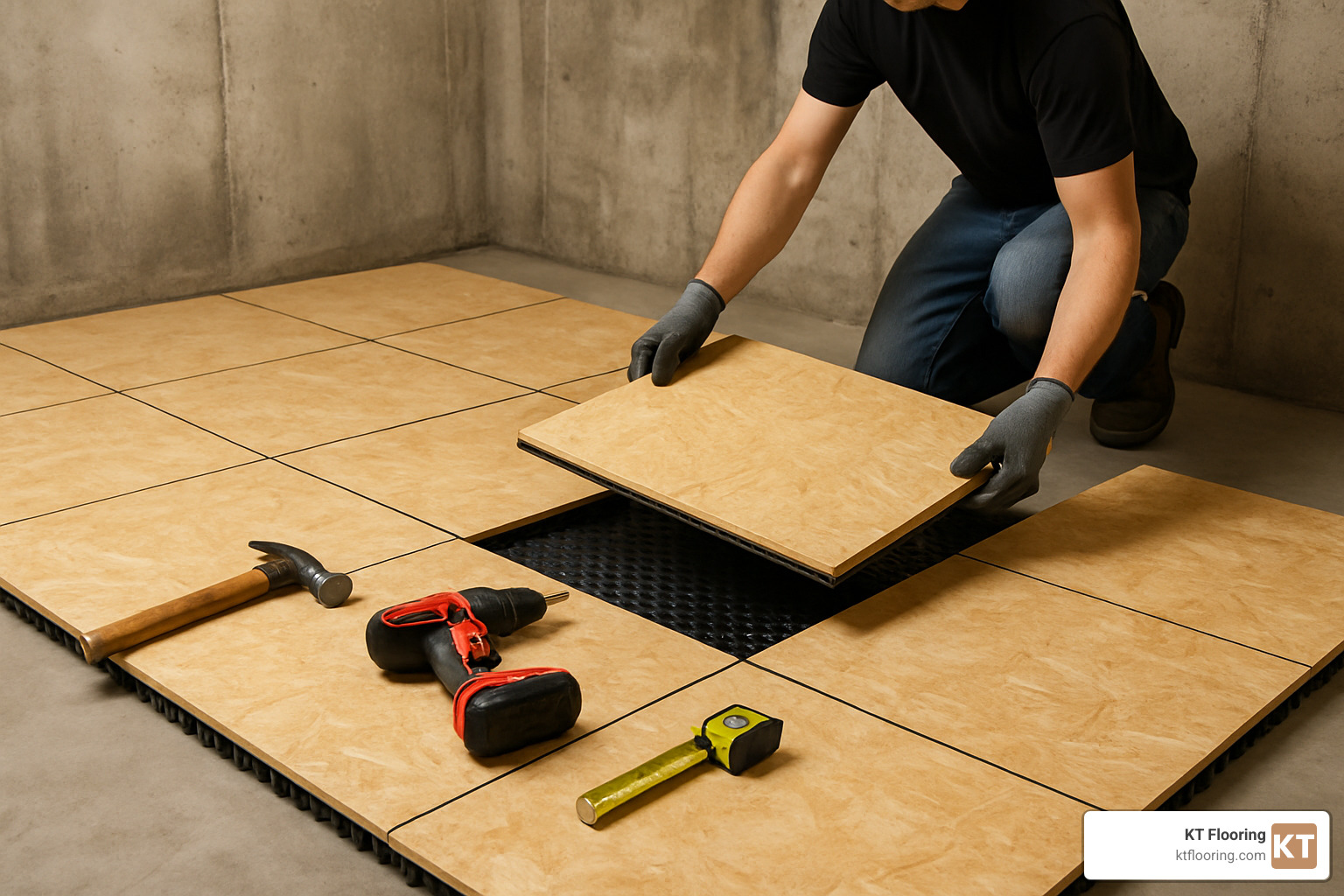
You know what they say about houses—they’re only as good as their foundation. Well, the same principle applies to basement floors. The best flooring for basements isn’t just about what catches your eye; it’s about creating a complete system that manages moisture and temperature from the ground up.
Think of your subfloor as the unsung hero of your basement renovation. It’s working behind the scenes to keep your beautiful new floors dry, warm, and problem-free for years to come.
“I can’t stress this enough,” says Skip Bedell, TV host and professional contractor. “DRICORE® helps protect finished floors and furnishings from moisture that occurs in concrete floors, and from small water leaks.”
Several effective subfloor strategies can transform your basement experience:
Raised panel systems create a crucial air gap between your concrete slab and finished flooring. Products like DriCore feature a dimpled plastic bottom that allows air circulation and moisture evaporation. This simple space—often just 1/4 inch—can make all the difference between a successful basement floor and a moldy disaster.
Vapor barrier sheets act as your first line of defense. These 6-15 mil polyethylene sheets block moisture from migrating upward through your concrete slab. They’re relatively inexpensive but deliver significant protection when properly installed with overlapped seams sealed with moisture-resistant tape.
Rigid foam insulation provides a thermal break that can dramatically improve comfort. Concrete slabs are notorious heat thieves, often running 10°F colder than the air above them. That’s why basements feel chilly even when your thermostat says the temperature is comfortable. Foam insulation boards with R-values of 1-3.5 create a buffer zone that keeps cold from radiating upward.
Sleeper systems use pressure-treated wood strips to create a framework for traditional subfloors. While more labor-intensive, these systems allow for substantial insulation between the sleepers and create a truly wood-like feel underfoot.
For homeowners planning to install Vinyl Waterproof Flooring in their basement, a quality subfloor system improves the overall performance without compromising vinyl’s waterproof benefits. The combination delivers the best of both worlds.
“Best flooring for basements” isn’t complete without a smart subfloor
I recently visited a Burlington, MA home where the owners had experienced a washing machine leak in their basement. They had installed interlocking subfloor panels before their vinyl plank flooring, and the results spoke for themselves. “The air gap allowed everything to dry out without damaging our floors,” they told me. “Plus, the basement feels noticeably warmer since we installed the system.”
When planning your basement flooring project, don’t overlook these subfloor considerations:
The thermal break provided by subfloor systems isn’t just about comfort—though your feet will certainly appreciate it on cold winter mornings. It also helps prevent condensation that occurs when warm air meets cold surfaces, further protecting your finished flooring from moisture damage.
Mold prevention is perhaps the most compelling reason to invest in proper subflooring. By creating air circulation beneath your finished floors, these systems help prevent the stagnant moisture conditions where mold thrives. For families with allergies or respiratory concerns, this benefit alone justifies the investment.
Headroom impact varies significantly between systems. Some modern options add only 3/8″ to floor height, while traditional sleeper systems might reduce ceiling height by 1-2″. In basements where every inch counts, this consideration can be crucial.
DIY-friendly panel systems have revolutionized basement finishing. Products with tongue-and-groove edges simply snap together over a vapor barrier, creating a continuous surface ready for finished flooring. Many homeowners tackle this project themselves, though professional installation ensures optimal results.
The cost of quality subfloor systems typically ranges from $1.50-$5.50 per square foot for materials alone, with some premium systems running up to $16.50 per square foot. These are average costs based on internet data and not actual costs for KT Flooring products and services. While this adds to your initial investment, it’s the insurance policy that protects everything above it. I’ve seen too many beautiful basement floors ruined by moisture problems that could have been prevented with proper subflooring.
Different flooring materials have specific subfloor requirements. Vinyl may need only a vapor barrier on reliably dry concrete, while engineered wood typically demands a complete subfloor system with an air gap. Carpet benefits tremendously from insulated panels that add warmth, and tile requires specific uncoupling membranes to prevent cracking as the concrete slab naturally shifts over time.
Your basement floor is a system, not just a surface. The most beautiful flooring in the world won’t perform if what’s underneath isn’t addressing the unique challenges of below-grade spaces.
Frequently Asked Questions about Basement Flooring
What flooring can I install directly over concrete?
Wondering what you can put right on that concrete slab without a lot of fuss? You’ve got several solid options that work beautifully in basements when the concrete is properly prepared.
Luxury vinyl plank and tile is probably the most versatile choice. All it needs is a clean, level surface and sometimes a thin underlayment. Many of our Hudson customers love this option because installation is straightforward and the results look fantastic.
Porcelain and ceramic tile bonds directly to concrete with the right thinset mortar. As one of our tile specialists often says, “If the slab is clean, level and in good condition, you can install tile directly, or opt for click-together porcelain RevoTile for a floating DIY floor.”
Epoxy and polyaspartic coatings transform your existing concrete into a beautiful finished floor. These are applied directly to prepared concrete and create seamless, waterproof surfaces.
Carpet tiles can often go straight onto concrete, though I always recommend a moisture barrier underneath. This simple extra step provides valuable protection against potential dampness.
Before installing any flooring directly on concrete, you’ll need to prep the surface properly. This means moisture testing (we use relative humidity or calcium chloride tests), thoroughly cleaning and degreasing the surface, patching any cracks or holes, leveling uneven areas, and possibly applying primers or sealers. This preparation makes all the difference in how your floors perform long-term.
Are there any materials to avoid in basements?
I’ve seen too many basement flooring disasters over my years in the business. Some materials simply don’t belong below grade, no matter how dry you think your basement is.
Solid hardwood tops the “avoid” list. It’s extremely susceptible to moisture damage, warping, and cupping. As one of our installation pros bluntly puts it, “We’ve seen hundreds of basements with ruined wood floors! Solid hardwood and laminate are among the worst choices for basements due to moisture absorption and mold risk.”
Traditional laminate (the non-waterproof versions) can quickly swell and deteriorate when exposed to even minor moisture. One small water event can ruin an entire floor.
Sheet vinyl with paper backing might seem waterproof on top, but it can trap moisture underneath, creating perfect conditions for mold growth.
Glue-down carpet with standard padding acts like a sponge in damp conditions, leading to musty odors and potential health hazards.
Cork flooring, while environmentally friendly, is a natural material that can deteriorate in the damp conditions typical of basements.
Even materials that technically “can” work in basements may not be the best flooring for basements in your specific situation. I always recommend considering your local conditions, how you’ll use the space, and your basement’s moisture history before making a final decision.
How does intended room use affect flooring choice?
The way you’ll use your basement should be a major factor in choosing your flooring. Different activities have different requirements, and the right floor makes all the difference in comfort and durability.
For a home theater or entertainment space, sound absorption becomes important. Carpet tiles or waterproof carpet help reduce echo and create a cozy atmosphere. If you prefer hard surfaces, luxury vinyl plank offers a warm look with durability, but consider adding an acoustic underlayment to reduce sound reflection.
Creating a home gym? You’ll need flooring that can handle equipment weight and impact. Rubber flooring works best in equipment areas, while vinyl plank is perfect for general exercise spaces. For serious weight rooms, epoxy provides best durability against dropped dumbbells.
For a children’s playroom, prioritize comfort and safety. Carpet tiles create a soft, warm surface for little ones to play on, while luxury vinyl offers easier cleaning for inevitable spills. Whichever you choose, look for low-VOC options to maintain good air quality.
Setting up a home office requires a professional appearance with practical benefits. Engineered wood or luxury vinyl creates a sophisticated look, while carpet tiles absorb sound during video calls. Consider how the flooring feels during long periods of sitting in your office chair.
For a workshop or utility area, durability is key. Epoxy or polyaspartic coatings resist chemicals, stains, and impacts. Polished concrete also works well for easy cleanup. These spaces need to withstand tools, spills, and heavy use without showing wear.
I recently worked with a Nashua family who brilliantly divided their basement into zones with different flooring: luxury vinyl in the main family area, carpet tiles in the kids’ play corner, and epoxy in the workshop area. This thoughtful approach created the perfect floor for each activity while maintaining a cohesive overall look.
Conclusion
Selecting the best flooring for basements is a bit like solving a puzzle – you need all the right pieces to fit together perfectly. After helping hundreds of New Hampshire homeowners transform their basement spaces over the years, I’ve seen how the right flooring choice can make all the difference.
Let me share what really matters when making your decision:
First and foremost, moisture control isn’t something you can compromise on. Whether you choose inherently waterproof materials like luxury vinyl or add protection through proper subfloors, addressing moisture is essential for long-term success. I’ve seen too many beautiful basement renovations ruined by skipping this critical step.
A great basement floor is about the complete system, not just the surface material. The most beautiful engineered hardwood will fail without the right underlayment and subfloor strategies beneath it. Think of it as building a house – you need a solid foundation before adding the pretty finishes.
Your basement’s purpose should guide your flooring choice. The best flooring for basements used as playrooms might be carpet tiles, while a home gym might need the durability of epoxy or rubber. One of our Manchester customers created different flooring zones in their open basement – vinyl plank in the TV area, carpet tiles in the kids’ corner, and porcelain tile near the walkout door. It works beautifully because each area has the right flooring for its function.
I can’t stress enough how important proper preparation is before installation begins. The few hundred dollars you might save skipping moisture testing and concrete preparation can cost thousands in repairs later. It’s like painting a house without primer – it might look good initially, but it won’t last.
While many homeowners are comfortable with DIY projects, professional installation truly adds value with basement flooring. The unique challenges of below-grade spaces often require specialized knowledge and equipment to ensure proper moisture management and installation techniques.
At KT Flooring, we’ve spent over 50 years helping families throughout New Hampshire and Northeast Massachusetts create beautiful, functional basement spaces. We understand the specific challenges basements present and how to address them effectively. Our experience means your new floor will perform beautifully for years to come.
We offer free in-home consultations where we can assess your specific basement conditions and help you select the perfect flooring solution for your needs and budget. We carry all the top industry brands and have the expertise to ensure proper installation, even in challenging basement environments.
Ready to transform your basement with beautiful, durable flooring? Contact KT Flooring today to schedule your free consultation and take the first step toward the basement of your dreams.
For more information about our extensive selection of quality flooring products, visit our page on More info about our flooring brands.
