The Comfort Revolution Beneath Your Feet
Anti-fatigue kitchen flooring is designed to reduce the strain on your body when standing for long periods in the kitchen. If you’re looking for solutions to make cooking and meal prep more comfortable, here are the top options:
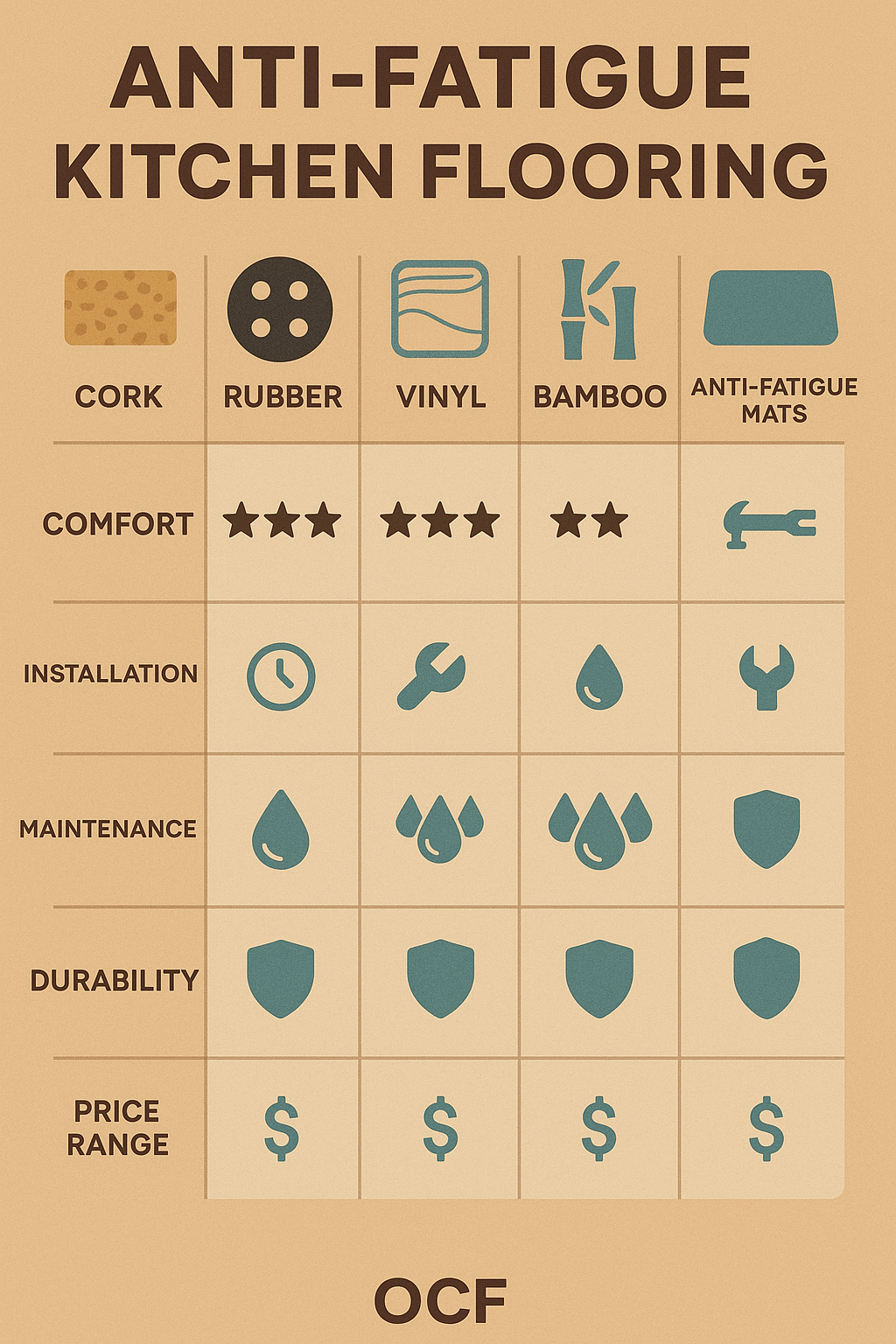
| Anti-Fatigue Flooring Type | Comfort Level | Durability | Price Range |
|---|---|---|---|
| Cork Flooring | High | Medium | $4-$14/sq ft |
| Rubber Flooring | Very High | High | $3-$12/sq ft |
| Vinyl with Cushioned Backing | Medium-High | High | $2-$10/sq ft |
| Bamboo Flooring | Medium | High | $5-$12/sq ft |
| Anti-Fatigue Mats (for existing floors) | Very High | Medium | $40-$150 each |
Standing on hard kitchen floors for hours can take a toll on your joints. Many homeowners regret choosing hard surfaces like concrete, ceramic, or stone after experiencing knee, hip, or back pain. As Dr. Sumner, an Occupational Medicine specialist, explains: “A softer surface leads to more dynamic foot movement, better circulation, and better rhythmic muscle contraction. Keeping it dynamic, in theory, reduces discomfort.”
Anti-fatigue kitchen flooring works by providing a resilient surface that absorbs shock and distributes pressure evenly between your feet. This reduces muscle fatigue and joint strain while still offering the durability needed in busy kitchen environments.
I’m Christopher Talty, owner of KT Flooring, and I’ve been helping homeowners select and install anti-fatigue kitchen flooring for over 20 years as part of our company’s 50-year history serving New Hampshire and Northeast Massachusetts. My experience has shown that the right flooring can dramatically improve comfort while maintaining style and functionality in your kitchen.
Anti-fatigue kitchen flooring vocabulary:
– best durable inexpensive flooring for a kitchen
– best kitchen flooring for high traffic area
– best waterproof flooring for kitchen
What Is Anti-Fatigue Kitchen Flooring?
Ever notice how your feet and back ache after cooking a big family meal? That’s where anti-fatigue kitchen flooring comes to the rescue. Unlike traditional hard surfaces, these special floors are designed to give your body a break when you’re standing for hours chopping vegetables or washing dishes.
Anti-fatigue kitchen flooring isn’t just a fancy term—it’s a game-changer for kitchen comfort. These floors have a bit of “give” to them, responding to your weight and movements in ways that hard tile or stone simply can’t match.
Here at KT Flooring, we’ve watched more and more homeowners find these comfort-focused options. As people spend more time cooking at home, they’re realizing that the floor beneath their feet makes a huge difference in how they feel at the end of the day.
One of our customers from Nashua, Maria, told us: “After we installed cork flooring in our kitchen, I could finally cook those big holiday meals without ending up with an aching back. I had no idea my old ceramic tiles were causing so much strain!”
How Does Anti-Fatigue Kitchen Flooring Reduce Fatigue?
The science behind anti-fatigue kitchen flooring is actually pretty fascinating. When you stand on a hard surface, your muscles stay contracted to maintain balance. But on a slightly resilient surface, your body makes tiny adjustments that keep blood flowing and muscles engaged in a healthy way.
These floors work their magic through several key mechanisms:
First, they absorb shock with each step you take. Think of it as having tiny shock absorbers under your feet, cushioning the impact that would normally travel up through your ankles, knees, and spine.
Second, they help distribute pressure evenly across both feet. Research from the National Floor Safety Institute shows that this balance correction can significantly reduce overall body fatigue.
Third, the slight give in these materials encourages small movements in your leg muscles. These micro-movements improve circulation and prevent the stiffness that comes from standing still too long.
Finally, many anti-fatigue materials provide thermal insulation from cold subfloors, which helps prevent the muscle tension that develops when you’re standing on a chilly surface.
Studies have shown that properly designed anti-fatigue surfaces can reduce fatigue by up to 50% compared to standing on hard concrete or tile. The secret is something called hysteresis—the material’s ability to absorb energy when compressed and bounce back when the pressure is removed.
Materials Used in Anti-Fatigue Kitchen Flooring
When it comes to creating comfortable kitchen floors, not all materials are created equal. Several standouts have proven their worth in kitchens across New Hampshire and beyond:
Rubber flooring offers excellent shock absorption while being incredibly durable. It’s naturally slip-resistant—a huge plus in kitchens where spills happen. Made from natural and recycled compounds, it’s also an environmentally responsible choice. The cushioning properties of rubber make it particularly effective at reducing impact stress when you drop something (which, let’s face it, happens to all of us).
Cork is nature’s own cushioning material. Harvested sustainably from the bark of cork oak trees (without harming the trees), cork contains millions of tiny air cells that act like natural cushions. Beyond comfort, cork offers natural antimicrobial properties and resists mold and mildew—perfect for kitchen environments. It’s warm underfoot and provides excellent sound absorption too.
Vinyl with cushioned backing gives you the best of both worlds—the practical, water-resistant surface of vinyl with a foam or cork underlayer that provides significant comfort benefits. Modern luxury vinyl products come in designs that convincingly mimic wood, stone, or just about any look you want for your kitchen.
Foam materials are primarily used in anti-fatigue mats and some flooring underlayments. Specialized high-density foam provides maximum cushioning while still being durable enough for kitchen use.
Bamboo flooring with the right construction offers moderate anti-fatigue properties. Though technically a grass, bamboo provides a resilient surface that’s incredibly durable and sustainable. It’s harder than many hardwoods but still has enough give to reduce fatigue.
At KT Flooring, we help customers find the perfect balance of comfort, durability, and style. Your kitchen floor should feel good underfoot while standing up to spills, drops, and the general hustle of daily life—all while looking beautiful for years to come.
Top 5 Anti-Fatigue Kitchen Flooring Solutions
After installing countless kitchen floors across New Hampshire and Northeast Massachusetts over the past five decades, we’ve developed a keen understanding of what really works for homeowners seeking comfort without sacrificing style or durability. If you’re tired of aching feet and back pain from standing in your kitchen, these anti-fatigue kitchen flooring solutions might just change your life.
Each option below offers unique benefits, and we’ve helped hundreds of families find the perfect balance between cushioning comfort and practical performance. Whether you’re a passionate home chef who spends hours cooking or simply want a more comfortable surface for your morning coffee routine, there’s an anti-fatigue solution that’s perfect for your kitchen.
1. Resilient Vinyl Flooring
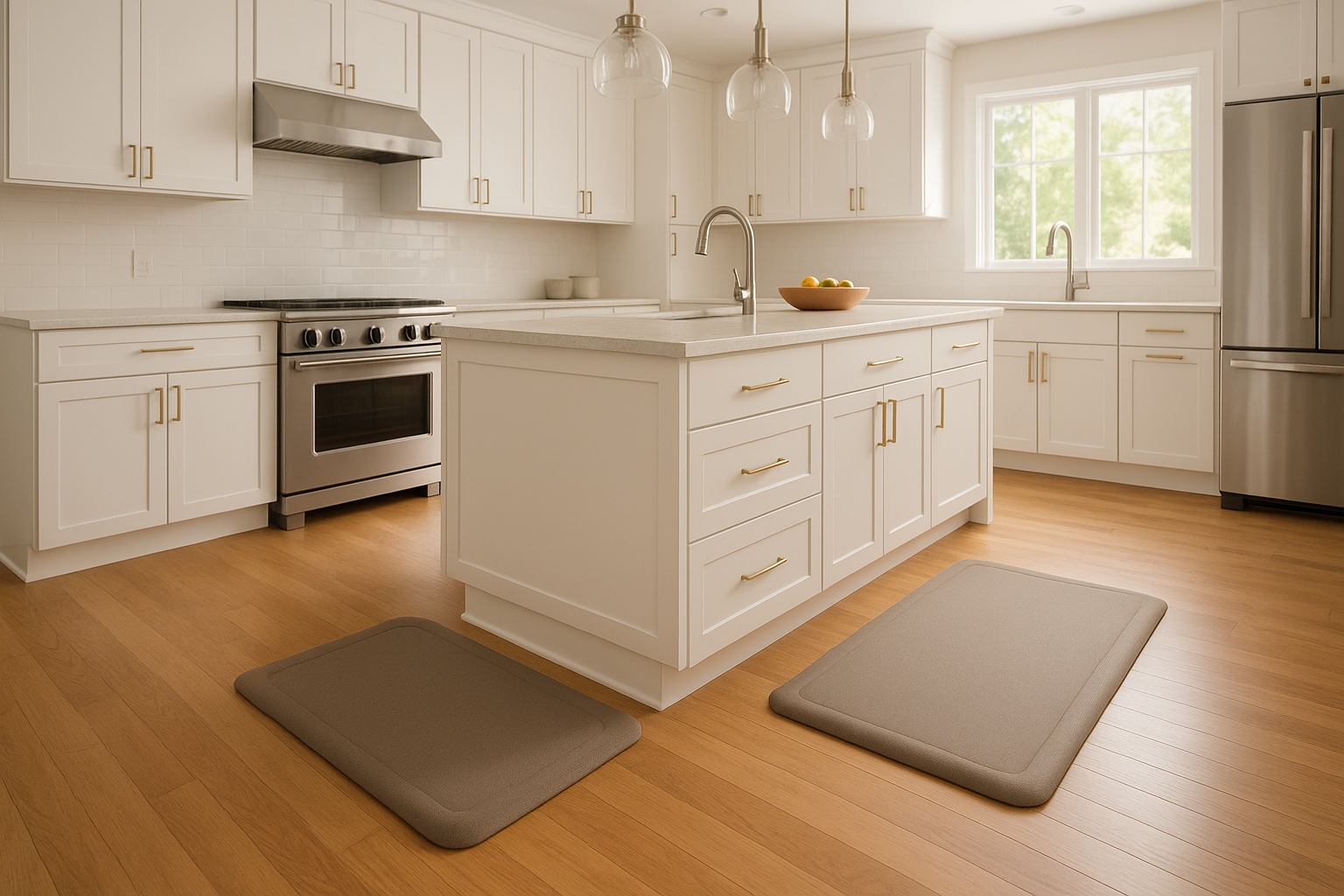
Today’s luxury vinyl is nothing like the vinyl flooring of the past. Modern anti-fatigue kitchen flooring in vinyl form comes with specially designed cushioned backing that provides remarkable comfort while standing.
What makes vinyl particularly appealing is its incredible versatility in design – it can authentically mimic the look of hardwood, stone, or ceramic tile while offering significantly more comfort underfoot. Many of our customers are genuinely surprised by how realistic these designs have become.
“I was skeptical about vinyl at first,” shares Tom from Nashua, “but the wood-look vinyl we installed feels so much better on my feet than our old tile, and guests can’t even tell it’s not real hardwood!”
Vinyl is also exceptionally easy to clean and maintain, making it perfect for busy kitchens. With costs typically ranging from $2-$10 per square foot, it’s also one of the more budget-friendly options for anti-fatigue kitchen flooring.
Luxury Vinyl Plank Flooring Installation
2. Cork Flooring
Cork is perhaps nature’s perfect anti-fatigue kitchen flooring material. When you walk on cork, millions of tiny air cells compress slightly and then spring back, creating a naturally resilient surface that’s remarkably comfortable for standing.
Beyond comfort, cork offers impressive environmental credentials. It’s harvested without harming the cork oak trees, which continue to grow and absorb carbon dioxide throughout their long lifespans. For eco-conscious homeowners, this sustainable aspect is often a major selling point.
Cork also provides excellent thermal insulation, keeping your kitchen floor warmer in winter, and its natural sound-absorbing properties help create a quieter kitchen environment – perfect for open-concept homes where kitchen noise can travel.
While cork does require periodic resealing to maintain its water resistance, many homeowners find the unique comfort and natural beauty well worth this simple maintenance step.
3. Rubber Flooring
When ultimate durability meets superior comfort, you get rubber anti-fatigue kitchen flooring. Once primarily found in commercial kitchens and gyms, rubber flooring has made its way into residential kitchens for good reason.
The slip-resistant surface of rubber flooring makes it exceptionally safe, even when wet – a crucial feature in kitchens where spills happen regularly. Its shock-absorbing properties not only make standing more comfortable but also help protect dishes that might otherwise break when dropped on harder surfaces.
Modern rubber flooring comes in a variety of colors and textures, moving well beyond the utilitarian black rubber of the past. Some of our clients have created stunning contemporary kitchens using colorful rubber tile patterns that add both comfort and visual interest.
For families with young children or active cooks who spend hours in the kitchen, rubber’s combination of safety features and comfort makes it an increasingly popular choice.
4. Bamboo Flooring
Bamboo offers a compelling middle ground for homeowners who want the look of hardwood with better resilience and anti-fatigue properties. Though technically a grass, bamboo is processed into flooring that resembles hardwood while providing more give underfoot.
The natural springiness of bamboo creates a slightly more forgiving surface than traditional hardwoods, making it a good choice for anti-fatigue kitchen flooring when you want a classic wood appearance. Strand-woven bamboo varieties are particularly durable, standing up well to the high traffic and occasional spills common in kitchen environments.
Bamboo’s rapid growth cycle (maturing in just 3-5 years compared to decades for hardwood trees) makes it an environmentally responsible choice. Its distinctive grain patterns and warm tones bring natural beauty to any kitchen design.
5. Anti-Fatigue Mats
Sometimes the simplest solution is the most practical. Anti-fatigue mats offer an easy way to add comfort to your existing kitchen floor without a complete renovation. These specialized mats are engineered specifically to reduce fatigue from standing and can be placed strategically where you spend the most time – in front of the sink, stove, or prep areas.
Today’s anti-fatigue kitchen flooring mats come in a wide range of designs that complement your kitchen décor rather than detracting from it. From sleek modern patterns to classic solid colors, there’s a mat to match any kitchen style.
“Adding anti-fatigue mats to my kitchen was a game-changer,” explains Sarah from Bedford. “I didn’t have to replace my beautiful tile, but now I can cook comfortably for hours without my usual back pain.”
For renters or homeowners who aren’t ready for a full flooring replacement, quality anti-fatigue mats provide targeted comfort exactly where you need it most.
Best Kitchen Flooring for High Traffic Area
At KT Flooring, we’ve helped countless homeowners find their perfect anti-fatigue kitchen flooring solution. Whether you’re building a new home or updating your existing kitchen, we’d be happy to show you samples of these comfortable flooring options and help you determine which one best meets your needs for comfort, style, and durability.
1. Resilient Vinyl Flooring
If you’ve been searching for the perfect balance of comfort and practicality for your kitchen floors, luxury vinyl flooring with cushioned backing might just be your dream solution. This innovative flooring option has transformed kitchens across New Hampshire, offering remarkable comfort without sacrificing style or durability.
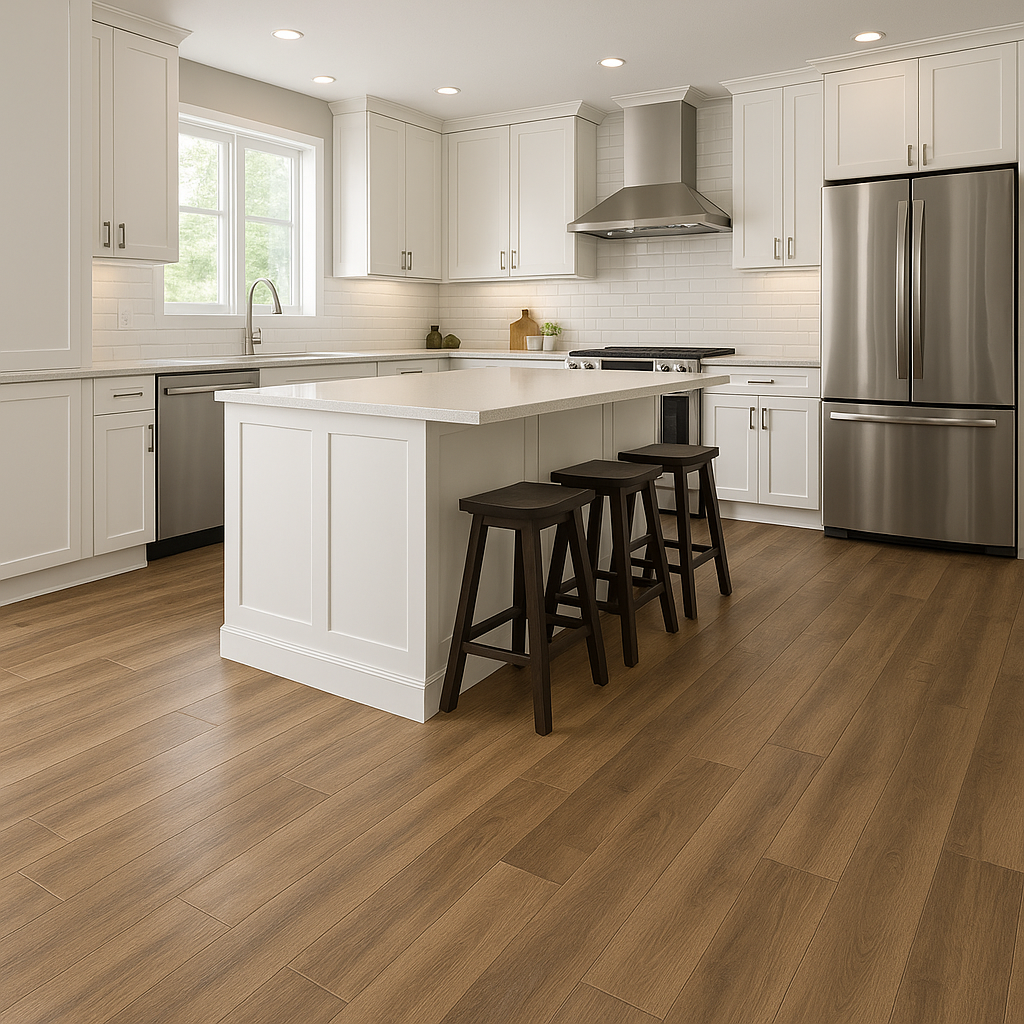
When you stand on cushioned vinyl flooring, you’ll immediately notice how the specially designed backing absorbs pressure and reduces strain on your feet, knees, and back. It’s like having the perfect amount of give beneath your feet – not too soft that it feels unstable, but just enough cushioning to make those long cooking sessions much more comfortable.
Superior comfort is just the beginning of what makes cushioned vinyl so perfect for kitchens. The material’s natural exceptional durability means it can handle everything from dropped pots to sliding chairs without showing wear. Most of our customers are amazed at how well it holds up even in their busiest kitchen areas.
“I used to dread making holiday meals because of how my feet and back would feel after hours on our old tile floor,” shares Jenny from Nashua. “Since we installed cushioned vinyl last year, I’ve noticed a night-and-day difference. Plus, my 5-year-old spilled grape juice last week, and it wiped right up without a trace!”
The water resistance of vinyl makes it particularly suitable for kitchen environments. Many of today’s luxury vinyl products offer 100% waterproof protection, giving you peace of mind when dealing with inevitable kitchen spills and splashes.
Don’t think you’ll need to sacrifice style for comfort, either. Modern vinyl comes in an astonishing array of design options that convincingly mimic high-end materials like hardwood, natural stone, or ceramic tile – often at a fraction of the cost. Whether your kitchen style is farmhouse rustic or sleek contemporary, there’s a vinyl option that will complement your design perfectly.
For busy families, the easy maintenance requirements are another major selling point. A simple sweep and occasional damp mopping is all it takes to keep these floors looking their best. No special cleaners or complicated care routines required!
Based on internet data, cushioned vinyl typically costs between $2-$10 per square foot, with premium options at the higher end offering improved comfort features and more realistic visuals. These are average market prices and not specific to KT Flooring products.
At KT Flooring, we specialize in luxury vinyl plank flooring installation with the precision and attention to detail that comes from over 50 years of experience. We’ve helped countless homeowners throughout New Hampshire and Northeast Massachusetts transform their kitchens into more comfortable, functional spaces with beautiful cushioned vinyl floors.
2. Cork Flooring
Cork is perhaps nature’s perfect anti-fatigue material, offering a unique combination of resilience, warmth, and eco-friendly credentials that many of our New Hampshire customers have fallen in love with.
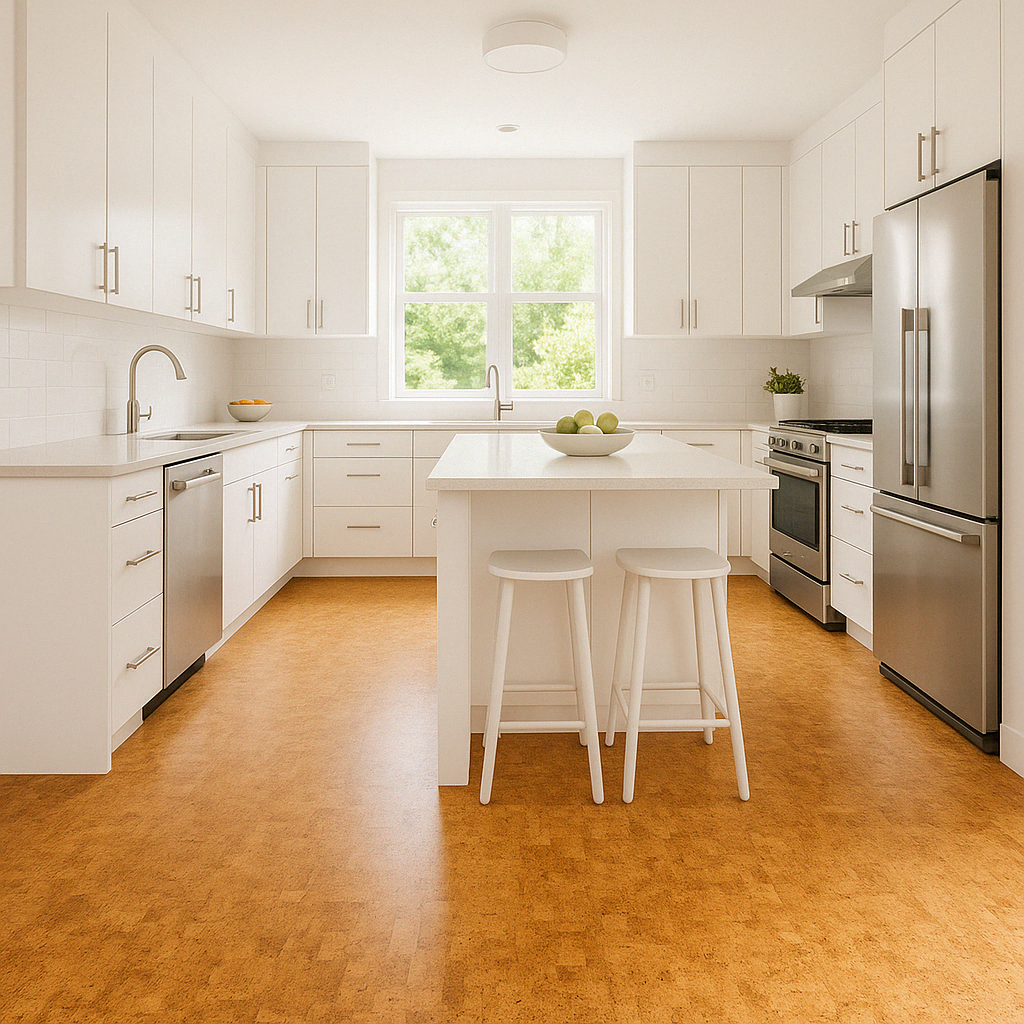
When you step onto cork flooring, you’ll immediately notice how it gives slightly under your weight—this isn’t a flaw, but rather cork’s superpower. This natural cushioning comes from cork’s unique cellular structure, which contains millions of tiny air-filled chambers that compress and bounce back as you walk.
“The first thing my clients notice about cork is how different it feels underfoot,” explains Christopher Talty of KT Flooring. “It’s like the floor is working with your body instead of against it.”
Beyond comfort, cork offers impressive thermal insulation properties. Even on the coldest New Hampshire winter mornings, cork floors remain pleasantly warm to the touch, eliminating that jarring cold-floor shock that can start your day on the wrong foot.
Cork’s sound absorption qualities are another hidden benefit for busy kitchens. The material naturally dampens noise from footsteps, clattering pots, and kitchen conversations, creating a more peaceful cooking environment. For open-concept homes where kitchen noise can travel, this feature is particularly valuable.
The environmentally friendly nature of cork appeals to our increasingly eco-conscious customers. Unlike hardwood, which requires cutting down trees, cork is harvested from the bark of cork oak trees without harming them. The trees continue growing and producing cork for up to 200 years, making it one of the most sustainable flooring materials available.
Dr. James Wilson, an ergonomics specialist, notes: “Cork flooring is one of the best options for reducing joint strain during prolonged standing. Its natural elasticity mimics the ideal surface for human biomechanics.”
Cork also offers antimicrobial properties that make it especially suitable for kitchen environments. It naturally resists mold, mildew, and pests—a significant advantage in spaces where food preparation occurs.
Cork flooring typically costs between $4-$14 per square foot, with variations based on thickness, finish quality, and installation method. These are average costs based on internet data and not actual costs for KT Flooring products and services. While requiring more maintenance than some options (regular sealing is recommended every few years), cork’s exceptional comfort makes it worth considering for many homeowners.
“We installed cork in our kitchen five years ago,” shares Thomas from Chelmsford, MA. “Not only has it been incredibly comfortable for my wife who loves baking and spends hours in the kitchen, but it’s also held up remarkably well despite our large dog and frequent entertaining.”
At KT Flooring, we’ve seen a growing number of homeowners choose cork specifically for its anti-fatigue kitchen flooring benefits, particularly those who enjoy cooking and find themselves standing for extended periods. The natural beauty of cork, with its warm, distinctive patterning, also adds character to kitchens that mass-produced materials simply can’t match.
3. Rubber Flooring
Once limited to commercial kitchens and gyms, rubber flooring has evolved into an excellent option for residential kitchens where comfort and durability are top priorities.

When I first recommend rubber flooring to homeowners, I often get raised eyebrows. “Isn’t that just for gyms?” they ask. But after they experience standing on it for just a few minutes, those doubts quickly fade away.
Rubber flooring truly shines in the kitchen environment, offering exceptional shock absorption that makes holiday cooking marathons much more comfortable on your joints. Your feet, knees, and back will thank you after hours of meal prep!
What many homeowners don’t realize is how incredibly slip-resistant rubber flooring is, even when wet. This makes it one of the safest options for kitchens, especially for families with young children or elderly members who are more vulnerable to falls.
“After 25 years in the restaurant industry, I knew I wanted rubber flooring when we renovated our home kitchen,” explains Chef Michael from Portsmouth, NH. “It’s been a game-changer for my back and feet during marathon cooking sessions, and it’s practically indestructible.”
The extreme durability of rubber is another major selling point. I’ve seen rubber floors that have withstood over a decade of heavy use, dropped pots, and even sharp knife accidents without showing significant damage. This material is built to last, making it an excellent long-term investment.
Modern rubber flooring has come a long way in terms of aesthetics too. While traditionally limited to basic colors, today’s options include various textures, patterns, and color choices that can complement contemporary kitchen designs beautifully. Some premium options even mimic the look of stone or tile while maintaining rubber’s comfort benefits.
For families with young children, the sound dampening qualities of rubber flooring are an added bonus. It absorbs the noise of footsteps, dropped utensils, and general kitchen activities, creating a more peaceful cooking environment.
Rubber flooring typically costs between $3-$12 per square foot, depending on thickness and quality. While this represents average pricing based on internet data (not actual KT Flooring prices), it’s worth noting that investing in higher-quality rubber often pays dividends in comfort and longevity.
At KT Flooring, we’ve noticed increasing interest in anti-fatigue kitchen flooring like rubber, particularly among customers with active lifestyles, culinary professionals, and those managing joint or back issues. The combination of comfort, safety features, and durability makes rubber flooring a compelling option for modern kitchens where both function and comfort matter.
4. Bamboo Flooring
Bamboo flooring brings a perfect balance to your kitchen – offering just enough give to ease your tired feet while maintaining the neat look many homeowners crave. It’s one of those materials that surprises people when they first step on it.
When I visit homes with anti-fatigue kitchen flooring, bamboo consistently earns praise from homeowners who spend hours cooking. Unlike traditional hardwood that can feel unforgiving, quality bamboo provides a subtle, natural resilience that your joints will thank you for.
“The first thing I noticed after we installed strand-woven bamboo was how much less my feet hurt after Sunday meal prep,” shares Jennifer from Andover, MA. “It’s been the perfect middle ground—more comfortable than hardwood but still durable enough to withstand our three children and dog.”
What makes bamboo special is its unique combination of benefits. Its natural resilience provides that slight give your body needs during long cooking sessions. Meanwhile, quality bamboo (especially strand-woven varieties) can actually be harder than oak, standing up to dropped pots and kitchen traffic for years. For the environmentally conscious, bamboo reaches maturity in just 5-7 years, making it one of the most sustainable flooring options available.
At KT Flooring, we’ve found that the manufacturing process significantly affects comfort levels. Our flooring specialists often recommend: “Look specifically for strand-woven or engineered bamboo with a slightly softer finish for maximum anti-fatigue benefits. Pairing it with a quality cork or foam underlayment can improve its natural resilience even further.”
Bamboo’s distinctive appearance brings a contemporary feel to kitchens that’s hard to match with other materials. The natural grain patterns and warm tones complement both modern and traditional designs, giving you versatility that other comfort-focused flooring sometimes lacks.
Based on internet research, bamboo flooring typically ranges from $5-$15 per square foot installed, though premium options with improved comfort features can run higher. These are average costs based on internet data, not actual costs for KT Flooring products and services.
If you’re considering bamboo for your kitchen, we recommend selecting moso bamboo – the most durable variety – and don’t skip on quality underlayment. The combination will give you years of comfortable cooking while maintaining the stylish look your kitchen deserves.
5. Anti-Fatigue Mats
For those who aren’t ready to replace their entire kitchen floor but still want anti-fatigue benefits, quality anti-fatigue mats offer an excellent solution.
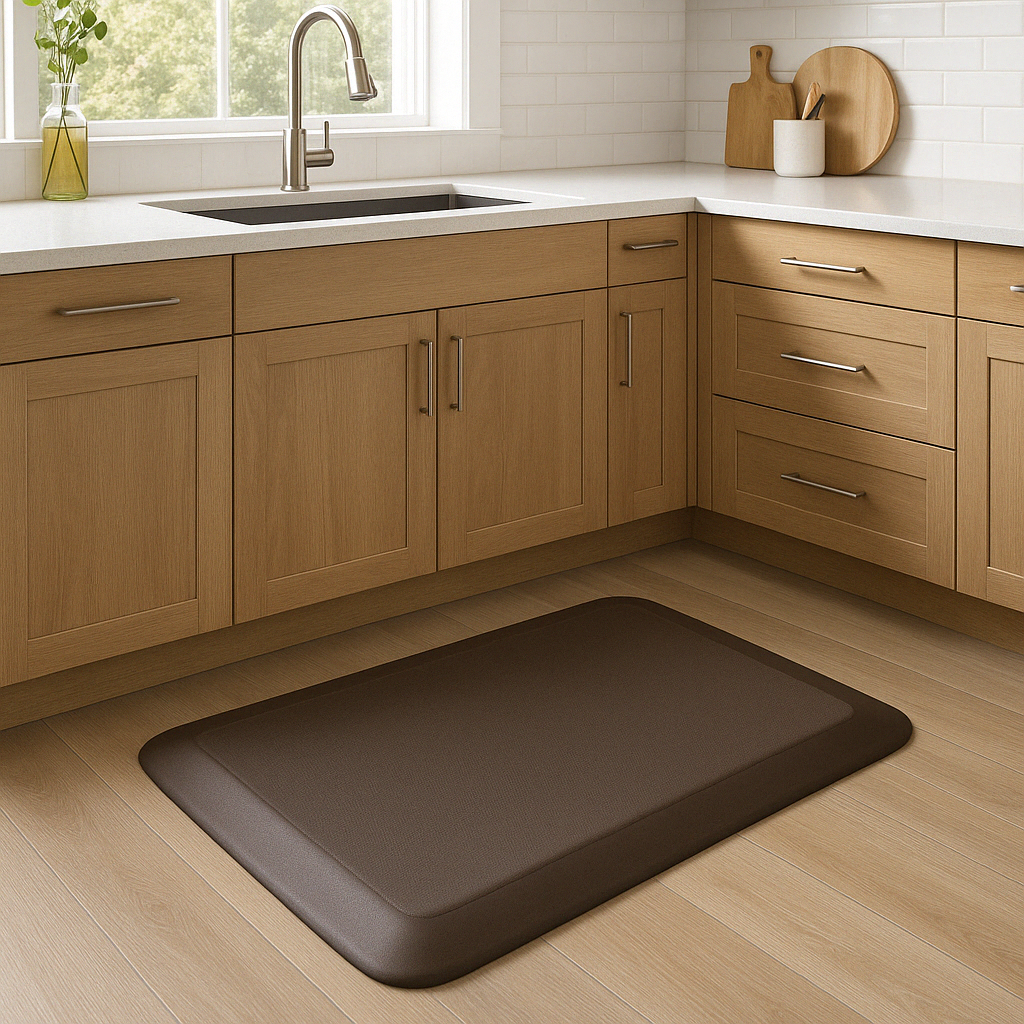
When I visit customers’ homes for flooring consultations, I often hear the same story: “I love my tile floors, but my feet are killing me after cooking dinner!” This is where anti-fatigue kitchen flooring solutions like specialized mats come to the rescue.
These mats are truly remarkable in their maximum comfort level. Unlike regular kitchen rugs, they’re specifically engineered with materials like gel cores and high-density foam that respond to your weight and movement. You’ll feel the difference the moment you step on one – it’s like giving your feet a gentle hug!
What makes these mats particularly appealing is their easy addition to your existing kitchen. There’s no need to tear up your beautiful floors or endure a renovation. Simply place them where you need them most, and you’ll immediately transform how your body feels during kitchen tasks.
“I recommend placing mats strategically in your kitchen—in front of the sink, stove, and prep areas where you stand the longest,” I often tell my customers at KT Flooring. “For larger kitchens, creating a comfortable path with multiple mats can make a world of difference in how your body feels at the end of the day.”
The targeted relief these mats provide is another major advantage. Unlike whole-floor solutions, you can position them exactly where you need support most. Many of our customers find that placing a mat in front of the sink, where they spend the most standing time, provides dramatic relief from back and foot pain.
Their portability is another feature my customers love. You can easily move them when cleaning the floor or reposition them as your kitchen activities change. Many homeowners even take their favorite mat to other areas of the home where they stand for extended periods.
Quality anti-fatigue mats typically range from $40-$150 each, depending on size, material quality, and features. While this price range reflects internet averages and not specific KT Flooring pricing, we’ve found that investing in a quality mat is well worth it for the comfort provided.
The best options include beveled edges to prevent tripping, water-resistant surfaces for easy cleaning, and non-slip backing for safety. I particularly recommend looking for mats with a textured surface that provides both comfort and stability.
Ina, a customer from Nashua, recently told me: “The feel of my anti-fatigue mat is so satisfying that I’ll often stand on it for a few minutes even when I’m not cooking. It’s like walking on a cloud compared to my tile floor.”
For customers concerned about aesthetics, I’m always happy to share that today’s design options have come a long way from the utilitarian black mats of commercial kitchens. Modern anti-fatigue mats come in countless styles, colors, and patterns that can complement your kitchen décor rather than detract from it.
While not a whole-floor solution, these mats offer the highest level of anti-fatigue performance and can be an excellent complement to your best kitchen flooring for high traffic areas. They’re particularly popular among our customers who love their existing floors but need targeted comfort in specific areas.
How to Choose the Right Anti-Fatigue Kitchen Flooring
Finding the perfect anti-fatigue kitchen flooring feels a bit like dating—you need the right combination of looks, personality, and staying power! After helping hundreds of New Hampshire homeowners make this important decision, I’ve learned that the perfect floor balances comfort, practicality, and style in a way that matches your unique kitchen life.
Let me walk you through the key considerations that will help you find your perfect match:
| Flooring Type | Anti-Fatigue Rating | Water Resistance | Durability | Maintenance | Cost Range | Installation Difficulty |
|---|---|---|---|---|---|---|
| Vinyl w/Cushion | Medium-High | Excellent | High | Low | $2-$10/sq ft | Medium |
| Cork | High | Good (with sealing) | Medium | Medium | $4-$14/sq ft | Medium |
| Rubber | Very High | Excellent | Very High | Low | $3-$12/sq ft | Medium |
| Bamboo | Medium | Good | High | Medium | $5-$12/sq ft | Medium-High |
| Anti-Fatigue Mats | Very High | Varies | Medium | Low | $40-$150 each | None (placement only) |
Evaluating Your Kitchen Needs
Your kitchen has its own personality and demands. Before committing to any anti-fatigue kitchen flooring, consider these real-world factors:
Your cooking habits make a huge difference in what floor will work best. Are you a weekend warrior who whips up occasional pancakes, or are you the family chef preparing three-course meals daily? One of my customers, a retired baker who spends 4+ hours daily in her kitchen, chose cork flooring and told me, “My knees haven’t felt this good in years!” If you’re standing for hours, prioritize maximum cushioning with cork or rubber. For occasional cooks, cushioned vinyl might provide enough relief.
Spills happen (especially in my house!). If your kitchen sees frequent water splashes, dropped pasta sauce, or little ones with juice boxes, water resistance becomes critical. Vinyl and rubber shine in this department, while cork requires regular sealing to stay protected. As one customer put it, “With three kids and two dogs, I needed a floor that could handle chaos. Our rubber flooring has survived everything from spilled milk to dropped cast iron with barely a scratch.”
Foot traffic varies dramatically between households. A retired couple might have a relatively quiet kitchen, while a family with teenagers and their friends creates a highway of activity. For busy households, durability becomes just as important as comfort. Rubber and quality vinyl provide the best balance for high-traffic kitchens that still need comfort.
Your design vision matters tremendously. The good news is that anti-fatigue kitchen flooring comes in countless styles. Vinyl offers everything from realistic wood patterns to contemporary tile looks. Bamboo provides a distinctive natural appearance, while cork brings warm, organic texture. Don’t feel you need to sacrifice style for comfort—today’s options deliver both.
Budget realities can’t be ignored. While investing in comfort is valuable (your joints will thank you!), we understand that budgets have limits. Cushioned vinyl often provides the best balance of comfort, durability, and affordability at $2-$10 per square foot. For those with limited budgets, strategic placement of anti-fatigue mats on existing floors offers targeted relief right where you need it most.
At KT Flooring, we take pride in offering inexpensive flooring options that don’t compromise on comfort or quality. Our experts can help you find solutions that fit your budget while still giving your feet and back the support they deserve.
Considering Installation and Maintenance
The long-term success of your anti-fatigue kitchen flooring depends greatly on proper installation and ongoing care. Here’s what experienced homeowners understand:
Professional installation often makes a significant difference in how your floor performs. While some options like luxury vinyl planks and anti-fatigue mats can be DIY-friendly, others truly benefit from expert hands. Cork requires careful subfloor preparation and proper sealing. Large rubber sheets need precise fitting. Even click-lock vinyl benefits from professional installation to prevent future issues with moisture or uneven wear.
At KT Flooring, our installation teams bring over 50 years of experience to ensure your flooring performs optimally for both comfort and longevity. I’ve seen how proper installation extends the life of anti-fatigue properties—it’s not just about looks!
Different materials have varying maintenance needs to maintain their cushioning properties. Vinyl is wonderfully forgiving, needing just regular sweeping and occasional damp mopping. Cork requires periodic resealing every 3-5 years to maintain its water resistance and springy feel. Rubber floors clean easily with mild soap and water but don’t appreciate harsh chemicals. Bamboo needs gentle care similar to hardwood floors.
One customer shared her experience: “I chose cork for my kitchen renovation last year, and I love how it feels underfoot. My installer explained the maintenance schedule, which seemed daunting at first, but it’s actually just a quick resealing every few years. Totally worth it for how good my back feels after cooking holiday meals!”
For personalized guidance on maintaining your specific flooring choice, our experts at KT Flooring provide detailed advice custom to your selection and lifestyle. We’re passionate about helping you find the best durable inexpensive flooring for a kitchen that keeps you comfortable for years to come.
The perfect anti-fatigue kitchen flooring balances your comfort needs, practical requirements, and design preferences in a way that makes your kitchen a joy to use. The right choice means you’ll no longer feel that familiar ache after preparing family meals—and that’s something worth investing in!
Frequently Asked Questions about Anti-Fatigue Kitchen Flooring
What are the main benefits of anti-fatigue kitchen flooring?
When clients visit our showroom at KT Flooring, they often ask what makes anti-fatigue kitchen flooring worth the investment. The benefits go far beyond just feeling a little more comfortable while cooking!
Think about those holiday meal preparations or weekend baking sessions where you’re on your feet for hours. Anti-fatigue kitchen flooring works like your body’s best friend during these times. It reduces the pressure on your feet, knees, hips, and lower back, allowing you to focus on creating culinary masterpieces rather than counting the minutes until you can sit down.
The magic happens because these floors encourage subtle movements in your legs while you stand. This improves blood circulation, which not only reduces fatigue but can help prevent those achy, swollen ankles at the end of a long cooking session.
“I used to dread making big family dinners because my feet would be throbbing halfway through,” shares Maria from Salem, NH. “Since installing cushioned vinyl flooring from KT Flooring, I’ve noticed I have energy left over even after preparing our Sunday family dinners!”
Many of our customers are surprised to find that their productivity in the kitchen improves dramatically. When you’re comfortable, you can focus better on cooking tasks and actually enjoy your time in the kitchen instead of rushing to finish so you can get off your feet.
For those who cook regularly, anti-fatigue kitchen flooring can also help reduce the risk of developing chronic issues like plantar fasciitis, varicose veins, and persistent lower back pain. Many of our customers with existing joint problems report significant relief after switching to more forgiving kitchen surfaces.
As a bonus, materials like cork provide excellent insulation from cold subfloors, keeping your feet warm during those chilly New England winter mornings when you’re making breakfast!
Can anti-fatigue kitchen flooring help with back and joint pain?
This is perhaps the most common question we receive at KT Flooring from customers dealing with chronic pain. The short answer is yes—anti-fatigue kitchen flooring can indeed help many people who struggle with back and joint discomfort.
Here’s why it makes such a difference: When you stand on hard surfaces like concrete, ceramic tile, or stone, your body absorbs all the shock through your joints and spine. It’s like walking around with tiny hammers hitting your joints with every step and shift in weight. Over time, this constant impact can aggravate existing conditions or create new problems.
Anti-fatigue kitchen flooring works by absorbing some of this impact and distributing pressure more evenly across your feet. This more natural standing position helps reduce strain on your back, hips, knees, and ankles.
“After my knee replacement, my surgeon actually recommended I look into softer kitchen flooring,” Tom from Nashua told us. “The cork flooring we installed has made such a difference that I can cook an entire meal without reaching for my pain medication.”
Dr. Kevin Lees, a chiropractor whose research we follow, explains the science: “Standing on a hard, bare floor for several hours puts constant pressure on your feet, lower back, and legs. The muscles become static and fatigued, which can lead to poor posture and pain.”
I remember installing rubber flooring for a retired chef in Portsmouth who had undergone three back surgeries. When I visited six months later for a different project, he practically hugged me, saying the flooring had changed his life. He could finally enjoy cooking again without dreading the pain that would follow.
It’s important to note, though, that while anti-fatigue kitchen flooring can help reduce pain, it’s not a substitute for medical treatment. We always advise customers with serious back or joint conditions to consult their healthcare providers as part of a comprehensive approach to managing their condition.
How do I maintain and clean anti-fatigue kitchen flooring?
The good news is that most anti-fatigue kitchen flooring options are relatively easy to maintain, though each material has its specific care requirements. Proper maintenance not only keeps your floor looking beautiful but also preserves those wonderful cushioning properties that make your kitchen more comfortable.
For vinyl flooring with cushioned backing, maintenance is wonderfully simple. Just sweep or vacuum regularly to remove grit that might scratch the surface. For deeper cleaning, a damp mop with a manufacturer-approved cleaner works perfectly. Avoid harsh chemicals that can break down the cushioning layer over time. One of our customers in Bedford keeps her vinyl looking brand new after three years by simply wiping up spills promptly and using protective pads under her kitchen island stools.
If you’ve chosen cork flooring for your kitchen, you’ll need to be a bit more diligent about moisture. Sweep or vacuum regularly with a soft brush attachment to avoid scratching, and wipe up spills immediately to prevent staining. Every 3-5 years, plan to reseal your cork floor to maintain its water resistance and preserve its cushioning properties. “I set a reminder in my phone calendar,” shares Donna from Chelmsford. “Resealing takes a weekend every few years, but it’s worth it for how great my feet feel when I’m cooking.”
Rubber flooring is perhaps the most forgiving when it comes to maintenance. Regular sweeping and occasional mopping with mild soap and water is usually all it needs. Just avoid petroleum-based cleaners which can damage rubber over time. For stubborn marks, a rubber-safe cleaner recommended by the manufacturer will do the trick without compromising the anti-fatigue properties.
For bamboo flooring, treat it similarly to hardwood—sweep or dust mop daily and clean spills immediately. Use cleaners specifically formulated for bamboo to maintain its finish and protective properties. Every 3-5 years, consider recoating to maintain the protective finish that keeps moisture from damaging the floor’s structure and resilience.
If you’ve opted for anti-fatigue mats on your existing floor, maintenance is straightforward but important. Wipe the surface with a damp cloth for regular cleaning, and for deeper cleaning, use mild soap and water. Allow mats to air dry completely before placing them back on the floor, and never machine wash unless the manufacturer specifically says it’s okay. Periodically check for wear and replace when cushioning properties diminish—usually every 2-3 years with heavy use.
“The biggest mistake people make is using harsh chemicals thinking they’re getting a deeper clean,” explains our maintenance specialist at KT Flooring. “In reality, those chemicals break down the very materials that provide the cushioning effect, reducing both the comfort and lifespan of your flooring.”
At KT Flooring, we provide all our customers with detailed care instructions specific to their chosen flooring. We want to make sure you enjoy the comfort of your anti-fatigue kitchen flooring for many years to come!
Conclusion
Standing in the kitchen shouldn’t leave you with aching feet and a sore back. That’s why anti-fatigue kitchen flooring has become such a game-changer for home cooks and anyone who spends significant time in their kitchen.
After helping thousands of New Hampshire and Massachusetts homeowners transform their kitchens over the past five decades, we’ve seen how the right flooring choice can dramatically improve daily comfort and long-term health. Whether you’re preparing holiday feasts or simply making your morning coffee, the surface beneath your feet matters more than most people realize.
“I never thought flooring could make such a difference,” shared Melissa from Nashua after we installed cork flooring in her renovated kitchen. “Now I can spend Sunday afternoons baking with my grandkids without needing to sit down every 20 minutes. It’s literally changed how I use my kitchen.”
Each anti-fatigue option brings its own unique benefits. The natural springiness of cork creates a walking surface that feels almost therapeutic. Rubber’s exceptional durability makes it perfect for busy families. Cushioned vinyl offers nearly endless design possibilities while still being kind to your joints. Bamboo provides eco-friendly resilience with distinctive style. And for those not ready for a full flooring replacement, quality anti-fatigue mats deliver targeted relief exactly where you need it most.
What makes us particularly proud at KT Flooring is knowing that our installations help prevent pain before it starts. Many customers come to us after years of discomfort, wishing they’d made the switch to anti-fatigue kitchen flooring much sooner. The investment pays dividends not just in comfort but in allowing you to fully enjoy your kitchen again.
Our expert installation teams understand that proper installation is crucial for maximizing both comfort and longevity. Even the highest quality materials won’t deliver their full anti-fatigue benefits if not installed correctly. That’s why we take such care with every step of the process, from initial measurement to final inspection.
As kitchens continue evolving from purely functional spaces to the true heart of the home, the importance of ergonomic design has never been greater. Your flooring choice affects not just how your kitchen looks, but how you feel while using it every day.
We invite you to explore our luxury vinyl flooring collection and other anti-fatigue solutions. Our showroom in Hudson, NH offers hands-on experience with different options, or we’re happy to bring samples directly to your home through our free consultation service.
The kitchen should be a place of creativity and joy—not discomfort and fatigue. With the right anti-fatigue kitchen flooring beneath your feet, you can focus on what truly matters: creating delicious meals and precious memories with those you love.
Contact KT Flooring today to find how our 50+ years of flooring expertise can help transform your kitchen into a more comfortable, body-friendly space that you’ll enjoy for years to come.
