What You Need to Know About Hardwood Flooring Costs
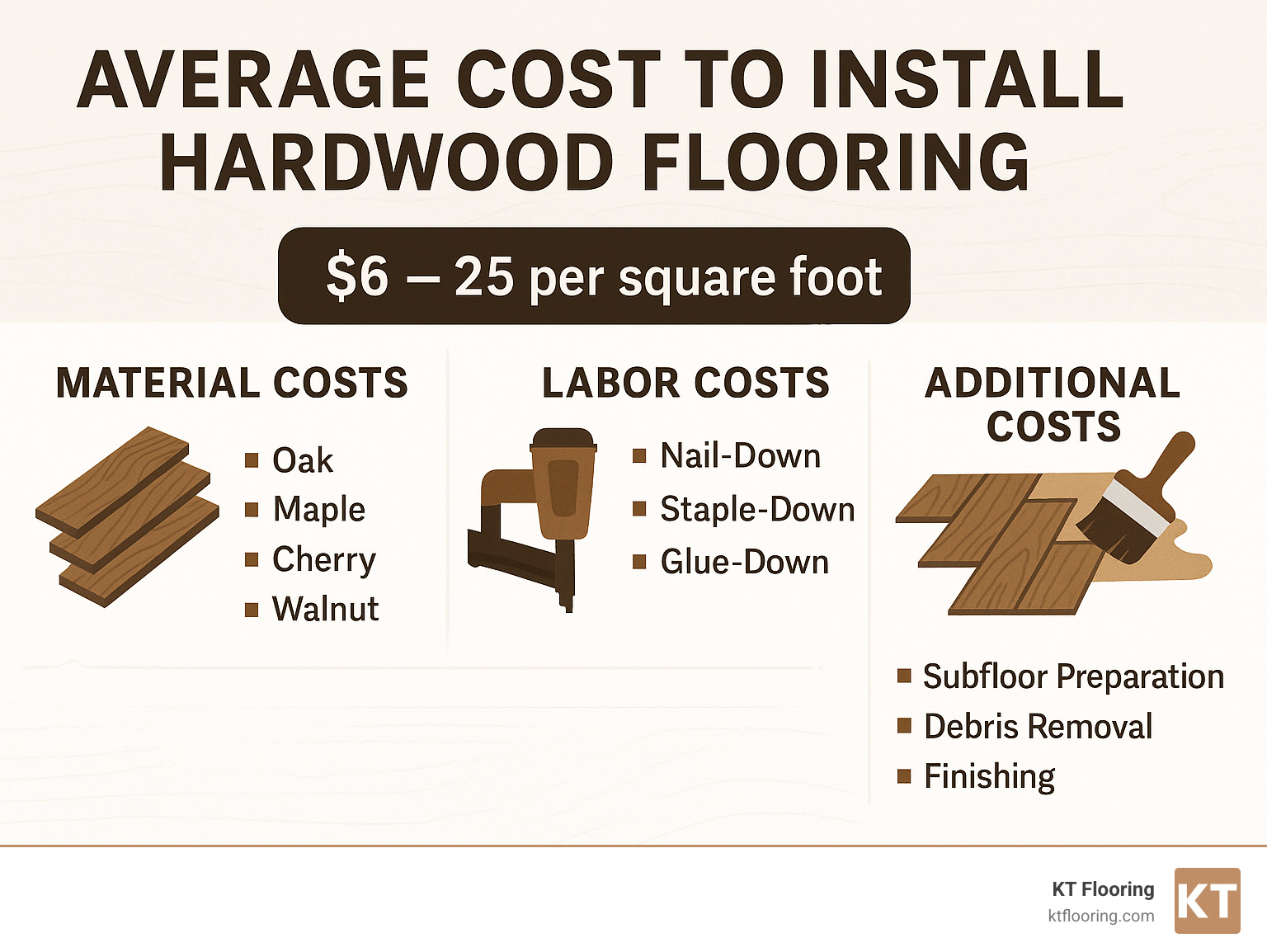
The average cost to install hardwood flooring ranges from $6 to $25 per square foot, with most homeowners spending between $2,475 and $7,031 for a complete project. Here’s a quick breakdown of what you can expect to pay:
| Cost Component | Typical Range |
|---|---|
| Materials | $4 to $15 per sq ft |
| Labor | $3 to $10 per sq ft |
| Total Installation | $6 to $25 per sq ft |
| Average Project Cost | $4,724 |
Planning to upgrade your home with beautiful hardwood floors is exciting, but it can also be overwhelming when you start looking at the numbers. The investment varies widely based on factors like wood species, room size, installation method, and your geographic location.
Many homeowners are surprised to learn that labor typically accounts for 50-70% of the total project cost. And while the upfront expense might seem high, hardwood flooring is one of the few home improvements that can actually increase your property value – with an estimated ROI of up to 55%.
I’m Christopher Talty, owner of KT Flooring with over 50 years of experience helping homeowners understand the average cost to install hardwood flooring throughout New Hampshire and Northeast Massachusetts. My team and I have installed thousands of hardwood floors, giving us unique insight into what truly impacts your bottom line.
Handy average cost to install hardwood flooring terms:
– Hardwood flooring installation NH
– Hardwood floor installation services
– Hardwood floor refinishing services
Understanding the Numbers: The Average Cost to Install Hardwood Flooring in 2024
The national average cost to install hardwood flooring in 2024 typically ranges from $6 to $25 per square foot. For most homeowners, this translates to total project costs between $2,475 and $7,031. But don’t be surprised if luxurious or complex installations reach $15,000 or more, especially in larger homes or when using those gorgeous exotic hardwoods everyone’s drooling over on home renovation shows.
I’ve been having conversations with homeowners about flooring costs for decades, and there’s one thing that surprises almost everyone: labor typically accounts for 50-70% of your total installation cost. Many folks focus solely on material prices when budgeting, but the craftsmanship that ensures your floors will last for generations is where much of your investment goes.
The 2024 market has certainly kept us on our toes. While lumber prices have settled down somewhat after the roller coaster of recent years, we’re still seeing price fluctuations due to supply chain hiccups and the continued home renovation boom. Premium hardwoods command higher prices these days, especially as sustainable harvesting practices become industry standard (good for the planet, a bit tougher on the wallet). For more detailed information on these factors, you can check out Forbes’ guide to hardwood flooring costs.
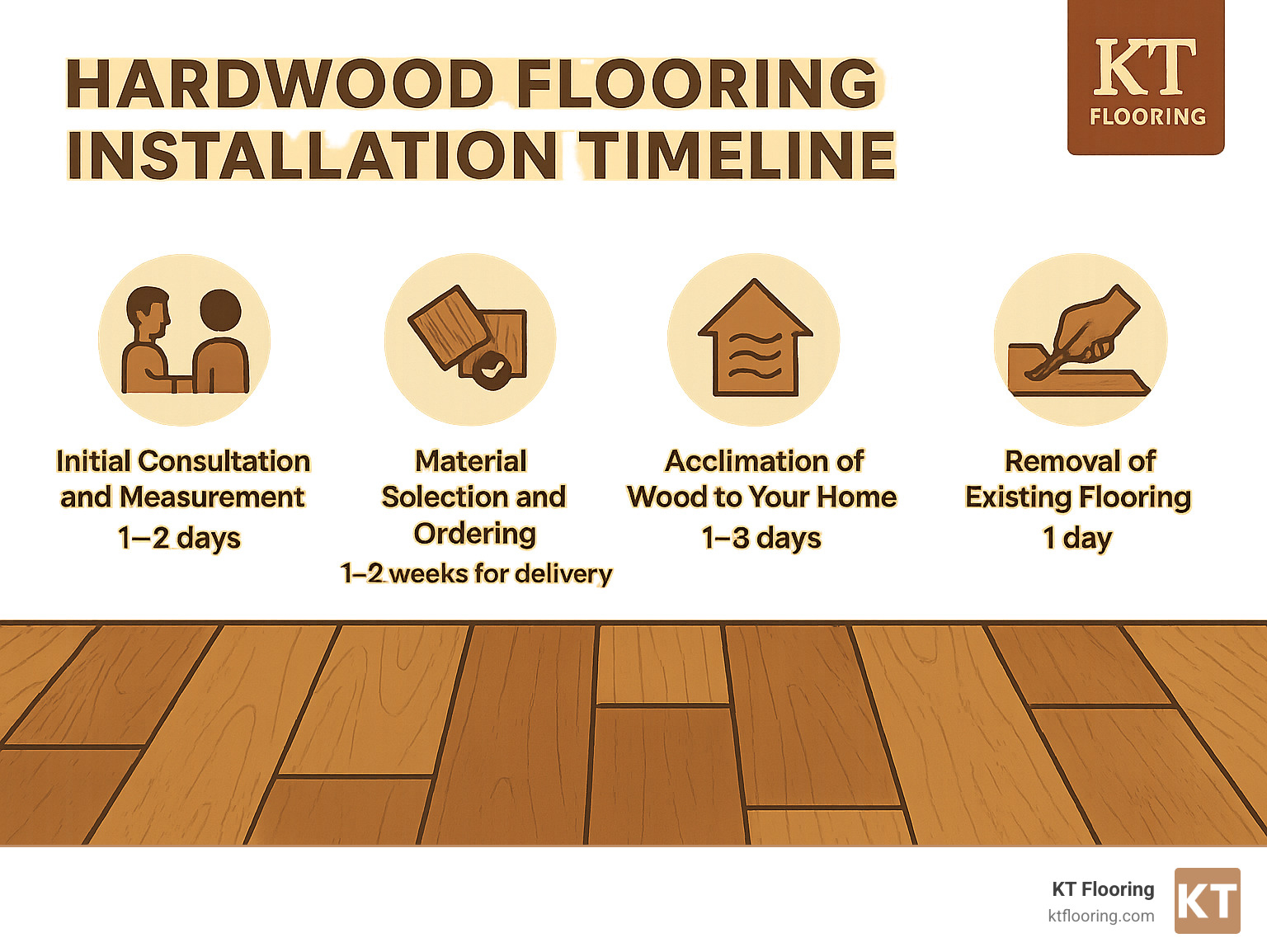
When planning your hardwood floor installation, it helps to understand the timeline. Most projects follow this sequence: initial consultation (1-2 days), material selection and delivery (1-2 weeks), wood acclimation (1-3 days), removal of existing flooring (1 day), subfloor preparation (1-2 days), installation (2-5 days depending on square footage), finishing for site-finished floors (2-3 days including drying time), and final cleanup (1 day). Planning ahead makes the process much smoother!
Regional Price Ranges & Market Trends
If you’re comparing the average cost to install hardwood flooring across different regions, you’ll notice significant variations. Here in the Northeast where KT Flooring operates, particularly in Boston’s suburbs and throughout Southern New Hampshire, prices typically run 10-15% higher than the national average. This isn’t just because we like to charge more (we don’t!) – it reflects higher regional labor costs and the prevalence of charming but challenging older homes that often require additional preparation.
To put it in perspective, a project that might cost $4,500 in the Midwest could easily reach $5,200-$6,000 in towns like Nashua, Bedford, or Concord, NH. Labor rates in our Northeast region typically range from $4-$10 per square foot compared to $3-$7 in other parts of the country.
We’ve also noticed some interesting market trends affecting pricing. As more homeowners recognize hardwood’s value for resale, demand has increased, particularly for engineered products that handle New England’s temperature and humidity swings beautifully. The growing preference for wider planks (5-7 inches) has also impacted pricing, as these require more premium cuts of lumber – they’re stunning, but they do command a premium.
How Installers Calculate the “Average Cost to Install Hardwood Flooring”
When you get an estimate from our team at KT Flooring, there’s a lot more science behind those numbers than you might think:
First, we measure the exact square footage to be covered, including closets and transitions – every inch matters for an accurate estimate.
We also calculate a waste overage factor, typically adding 7-10% additional material to account for cuts, waste, and potential future repairs. If you’ve chosen a complex pattern like herringbone or have an unusually shaped room, we might recommend 15% or more.
Professional installers like us use specialized estimator software that accounts for regional material costs, labor rates, and project complexity. Many of us also reference RSMeans data, a construction cost database that provides standardized pricing information across the industry.
As one of our customers from Londonderry, NH recently told us: “I was initially shocked at the price difference between quotes, until I realized some companies weren’t accounting for my unusual room layout and the extra waste it would create. The more detailed quote actually saved me money in the long run.”
While these internet-based average costs give you a starting point, your specific project will have unique requirements that affect the final price. That’s why we always recommend an in-home consultation to provide you with the most accurate estimate possible for your beautiful new floors.
Cost Per Square Foot Explained: Solid vs Engineered vs Prefinished
Have you ever wondered why there’s such a wide range in the average cost to install hardwood flooring? The truth is, not all hardwood floors are created equal. Understanding the differences between flooring types can save you thousands and help you choose the perfect match for your home and lifestyle.
| Flooring Type | Material Cost | Installation Cost | Total Cost | Refinishing Potential | Moisture Resistance |
|---|---|---|---|---|---|
| Solid Hardwood | $4-$15/sq ft | $3-$10/sq ft | $11-$25/sq ft | Multiple times (3-7) | Low |
| Engineered Hardwood | $3-$13/sq ft | $3-$8/sq ft | $7-$20/sq ft | Limited (1-3 times) | Moderate to High |
| Prefinished Solid | $5-$15/sq ft | $3-$8/sq ft | $8-$23/sq ft | Multiple times (3-7) | Low |
| Site-Finished Solid | $3-$12/sq ft | $5-$12/sq ft | $12-$24/sq ft | Multiple times (3-7) | Low |
“The right choice depends on your specific needs,” explains our lead installer with 25 years of experience. “A young family in a Nashua colonial might benefit from engineered hardwood’s moisture resistance, while a historic home in Portsmouth might deserve traditional site-finished oak to maintain its character.”
Solid Hardwood at a Glance—Average Cost to Install Hardwood Flooring
There’s a reason solid hardwood has been the gold standard for centuries. These ¾-inch thick planks offer best longevity and timeless beauty, with an average cost to install hardwood flooring ranging from $11 to $25 per square foot all-in.
In New England homes, we most commonly install:
Red Oak ($3-$8 per square foot) remains the region’s most popular choice, offering a warm, traditional look that complements colonial and craftsman homes beautifully. White Oak ($4-$10 per square foot) has surged in popularity recently, thanks to its lighter tones and ability to take gray and whitewashed finishes. For high-traffic areas, Maple ($4-$10 per square foot) provides exceptional hardness with a clean, contemporary appearance, while Hickory ($4-$12 per square foot) delivers dramatic grain patterns and outstanding durability for active households.
One of my Concord customers recently told me: “We installed solid oak throughout our first floor 27 years ago. It’s been refinished twice and still looks beautiful. The initial investment was steep, but it’s averaged out to just pennies per day considering how long it’s lasted.”
Engineered Hardwood—When Lower Cost Meets Moisture Control
For many New Hampshire homeowners, engineered hardwood offers the perfect balance of beauty, performance, and value. With the average cost to install hardwood flooring of the engineered variety ranging from $7 to $20 per square foot, it’s easy to see why it’s gained such popularity.
Think of engineered hardwood as the best of both worlds—a genuine hardwood veneer bonded to multiple layers of high-quality plywood. This clever construction prevents the expanding and contracting that solid hardwood undergoes during our dramatic seasonal changes. I often recommend engineered products for:
Basements (with proper moisture barriers installed), kitchens (though you’ll still want to wipe spills promptly), homes with radiant heating systems, and areas with minor subfloor irregularities that might be costly to fully correct.
Many modern engineered products feature click-lock installation systems that can trim labor costs by 15-20% compared to traditional nail-down methods. This “floating” installation doesn’t require attachment to the subfloor, making it faster to install and sometimes suitable for handy homeowners.
Want to learn more about this versatile option? Check out our detailed guide to Install Engineered Hardwood Floor.
Prefinished vs Site-Finished: Paying Now or Paying Later
When it comes to finishing, you’re essentially deciding whether to pay for convenience now or customization later.
Prefinished hardwood arrives with the finish already applied in a factory setting. The advantages are clear: no drying time means you can walk on your new floors immediately, there’s virtually no dust or strong odors during installation, and factory-applied aluminum oxide finishes often outlast site-applied finishes. The drawbacks? You’ll notice small bevels between boards (necessary to accommodate slight height differences), and your color options are limited to what manufacturers offer.
Site-finished hardwood is installed raw, then sanded and finished in your home. This creates that seamless, old-world look without bevels between boards. The biggest advantage is customization—we can match existing woodwork or create a one-of-a-kind color you won’t find in any showroom. The downsides include higher labor costs (typically 20-30% more), 2-3 days of drying time before you can replace furniture, and the need for dust containment systems during sanding.
“Site-finished floors give you that classic, seamless look that many homeowners in historic New England homes prefer,” notes our finishing specialist. “However, prefinished products have come a long way and now offer factory finishes that can last 25+ years with proper care.”
While these figures represent the average cost to install hardwood flooring based on internet research, actual pricing for your specific project may vary. The best way to get an accurate estimate is to schedule a free in-home consultation with our team at KT Flooring, where we can evaluate your space, discuss your preferences, and provide a detailed quote custom to your needs.
What Influences Your Budget? 10 Key Cost Factors
Understanding what drives the average cost to install hardwood flooring helps you make informed decisions and potentially save money. Here are the ten most significant factors that influence your final price:
- Wood Species: Domestic species like oak and maple range from $3-$10 per square foot for materials, while exotic species like Brazilian Cherry or Teak can cost $9-$20+ per square foot.
- Grade & Width: Clear grade (minimal knots) costs more than character grade. Similarly, wider planks (5″+ width) command premium prices compared to traditional 2¼” strips.
- Room Layout: Complex layouts with islands, fireplaces, staircases, or unusual angles increase labor time and material waste by 10-25%.
- Installation Method: Nail-down methods (typical for solid hardwood) average $3-$7 per square foot for labor, while glue-down methods (often used on concrete) range from $4-$10 per square foot due to additional materials and time.
- Subfloor Condition: Repairing or replacing damaged subfloors adds $2-$5 per square foot, while leveling an uneven subfloor can add $1-$2 per square foot.
- Pattern Complexity: Standard straight installations are most economical, while herringbone or parquet patterns increase labor costs by approximately 30% and require 15-20% more material for cuts.
- Stairs: Hardwood stair installation costs $100-$300 per step, depending on complexity and whether it includes risers and stringers.
- Geographic Labor Rates: Labor rates vary significantly by location. In the Northeast, skilled hardwood installers typically charge 10-15% more than the national average.
- Supply & Demand: Seasonal fluctuations affect pricing. Many installers offer discounts during slower winter months, while summer and fall typically see higher demand and prices.
- Project Size: Larger projects often benefit from economies of scale, with per-square-foot costs decreasing as square footage increases. Small projects under 300 square feet may incur minimum charges.
Material Choices: From Pine to Brazilian Walnut
The wood species you select has perhaps the most significant impact on your material costs:
- Pine: $3-$7 per square foot (softer, more susceptible to dents)
- Red Oak: $3-$8 per square foot (excellent value, moderate hardness)
- White Oak: $4-$10 per square foot (slightly harder than red oak, trending)
- Maple: $4-$10 per square foot (very hard, lighter appearance)
- Hickory: $4-$12 per square foot (one of the hardest domestic species)
- Brazilian Cherry: $5-$10 per square foot (extremely hard, rich reddish color)
- Brazilian Walnut (Ipe): $8-$15+ per square foot (among the hardest woods available)
The Janka hardness scale measures wood’s resistance to denting and wear. For high-traffic homes with children or pets, species with higher Janka ratings (1000+) are recommended. Oak (1290 for red oak) represents a good balance of durability and cost for most homeowners.
Sustainability is another consideration. Domestic species are generally more sustainable and have lower carbon footprints due to reduced shipping distances. If you prefer exotic species, look for FSC certification to ensure responsible harvesting practices.
Labor Variables You Can’t Ignore
Labor typically accounts for 50-70% of the total average cost to install hardwood flooring, making it crucial to understand what drives these costs:
- Installation Method: Nail-down installation is standard for solid hardwood on plywood subfloors. Glue-down is necessary for concrete subfloors or some engineered products. Floating installations (primarily for engineered products) can reduce labor costs.
- Hourly Rates: Professional installers in New Hampshire and Massachusetts typically charge $60-$80 per hour, with specialty work commanding higher rates.
- Crew Size: Most residential installations require 2-3 skilled workers. Larger crews can complete projects faster but at a higher hourly rate.
- Accessibility: Difficult access, tight spaces, or homes with multiple levels increase labor time and cost.
One Andover, MA customer noted: “The installers spent almost half a day just figuring out the complex transitions between our kitchen, dining room, and sunken living room. That expertise was worth every penny when I saw how beautifully they handled the different levels.”
For professional installation that addresses these variables correctly, learn more about our Professional Flooring Installation MA services.
Beyond Planks: Extra Costs Homeowners Forget
When planning your flooring project, it’s easy to focus on just the basic material and labor costs. However, there’s a whole world of additional expenses that can catch you by surprise if you’re not prepared. These “hidden” costs often make up a significant portion of your final bill.
“Nearly every week, I meet with homeowners who are shocked when they see the complete estimate,” shares our project manager. “They’ve researched the average cost to install hardwood flooring but missed all the preparation and finishing work that makes the installation successful long-term.”
These additional costs typically include:
Subfloor preparation runs about $1-$2 per square foot for basic leveling—absolutely essential for a flat, squeak-free floor. Removing your old flooring adds another $1-$5 per square foot, with ceramic tile being particularly labor-intensive at the higher end of that range. And don’t forget about furniture moving ($100-$300), debris disposal ($100-$500), and vapor barriers ($0.50-$1 per square foot).
Some municipalities require permits for substantial renovations, which can add $50-$300 to your project. If your project includes stairs, plan for $100-$300 per step—a cost that adds up quickly in multi-level homes. And those beautiful transitions between rooms? They’ll run you $2-$30 per linear foot depending on the material and complexity.
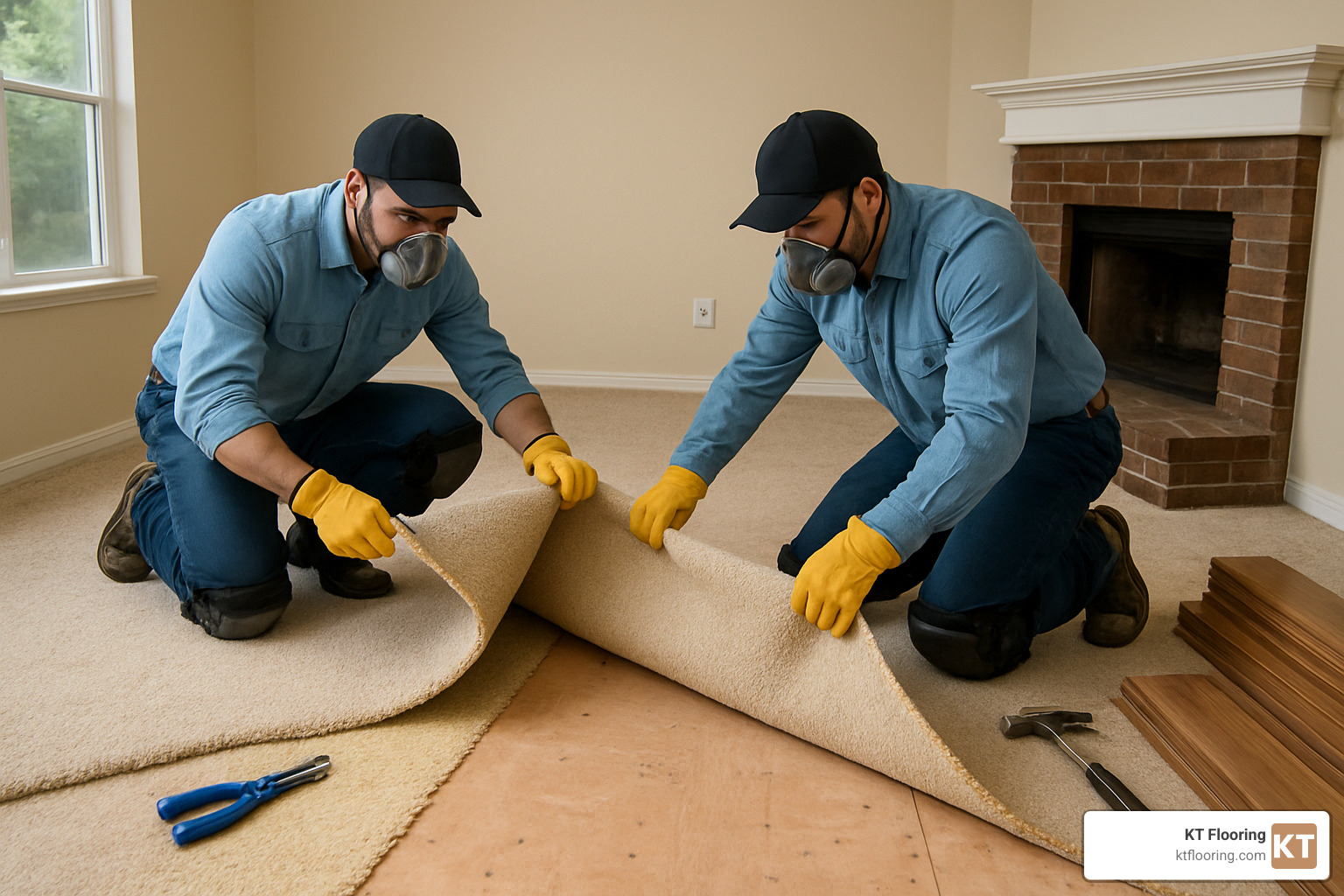
Subfloor Repairs & Moisture Barriers
The foundation beneath your beautiful new hardwood is just as important as the flooring itself—maybe even more so. Problems hidden beneath your old flooring can dramatically impact your budget.
Basic leveling typically costs $1-$2 per square foot, but if you need major leveling work, that jumps to $2-$4 per square foot. Replacing sections of plywood subfloor runs $2-$5 per square foot, while serious joist repairs can set you back $40-$60 per square foot or $350-$1,000 per joist.
For homes with concrete slabs, crack repairs typically cost $300-$800, and you’ll want moisture testing ($100-$300) to prevent future problems. Moisture barrier installation adds another $0.50-$1 per square foot—a small price compared to the cost of replacing buckled flooring later.
“In the 30 years I’ve been installing hardwood in New England homes, I’ve never seen a perfect subfloor in an older house,” notes our lead installer. “One Bedford homeowner was initially frustrated by the $2,000 in subfloor repairs we recommended, but was ultimately grateful when we fixed water damage that had been hidden under carpet for years.”
New England’s older homes often present unique challenges. Historic homes in Portsmouth or Newburyport might need extra attention to level floors that have settled over centuries. For a deeper look at these costs, check out our detailed guide on Hardwood Flooring Installation Cost.
Finishing Touches That Add Up
The difference between an average installation and one that makes you smile every time you enter the room often comes down to the finishing details. These seemingly small elements can add 10-15% to your total project cost.
New baseboards run $1.50-$8 per linear foot for materials, plus another $2-$5 per linear foot for professional installation. Many homeowners opt to add quarter round or shoe molding ($1-$3 per linear foot, plus installation) for a polished look where the flooring meets the wall.
Thresholds and transitions between rooms cost $5-$30 per linear foot installed, depending on the material and complexity. Don’t forget about vent extensions ($15-$50 each) to match your new floor height.
If you’re opting for site-finished flooring, custom staining adds $1-$3 per square foot, while specialty treatments like wire-brushing or hand-scraping add $1-$4 per square foot. Premium coatings for high-traffic areas cost an additional $0.50-$2 per square foot but can dramatically extend the life of your finish.
“The transitions are where amateur installations often fall short,” explains our craftsman with 25 years of experience. “A proper transition isn’t just about looks—it accommodates the natural expansion and contraction of wood flooring, preventing buckling and gaps as seasons change.”
These finishing details might seem minor on paper, but they’re what transforms a basic floor installation into a showcase feature of your home. When you’re comparing quotes, make sure each contractor is including these essential elements in their estimate.
Can You Cut Costs? DIY vs Professional Installation
Looking to save on your hardwood flooring project? Many homeowners consider the DIY route – and I get it. When you see that the average cost to install hardwood flooring includes thousands in labor costs, it’s tempting to grab a nail gun and take on the challenge yourself.
But before you dive in, let’s have an honest conversation about what DIY installation really entails.
“I thought I’d save a bundle installing my own floors,” admits Mark, a homeowner from Windham. “Three weekends later, with sore knees and a floor that creaked in all the wrong places, I called in the pros to fix my mistakes. It ended up costing more than if I’d hired them from the start.”
DIY installation means investing in tool rentals ($200-$500 for nailers, compressors, and saws), purchasing about 15-20% extra materials for inevitable mistakes, and committing to a significant time investment – typically 2-3 times longer than professional installation. Plus, many manufacturers will void their warranties if you don’t use certified installers.
Professional installation, on the other hand, brings expertise in proper acclimation, moisture testing, and installation techniques. A skilled team can typically complete an average home in just 2-5 days, and they often receive contractor discounts on materials that they can pass along to you. They also carry insurance to protect against any potential damage during the installation process.
Crunching the Numbers: Potential Savings vs Hidden Pitfalls
Let’s compare a 500 square foot installation of oak hardwood:
With professional installation, you might pay around $2,500 for materials ($5/sq ft) and $2,000 for labor ($4/sq ft), totaling $4,500.
Going the DIY route, you’d spend approximately $2,750 on materials (including extra for waste), $300 on tool rentals, and $200 on additional supplies, bringing your total to about $3,250 – a potential savings of $1,250.
But that savings comes with significant risks: improper installation can lead to squeaking, gaps, or buckling. You might damage expensive materials during installation. And if the floor isn’t properly installed, your refinishing options down the road could be limited.
“The biggest mistake DIYers make is rushing the acclimation process,” explains our lead installer. “Wood needs time to adjust to your home’s environment before installation. Skip this step, and you’ll likely see gaps or buckling within months.”
Another hidden advantage of professional installation? Bulk material discounts. Professionals often receive 10-15% off retail pricing, which can offset a significant portion of their labor costs.
Money-Saving Tips From the Pros
If budget concerns are driving your DIY thoughts, consider these insider tips to reduce costs without compromising quality:
Get multiple quotes from reputable installers – prices can vary by 15-20% for the same job. Schedule during the off-season (January-March) when demand is lower and you might score better rates.
Choose common domestic species like red oak or maple instead of exotic woods – they offer excellent durability at more affordable prices. Consider engineered or prefinished options which typically require less labor time than site-finished solid hardwood.
You can also DIY the demo work by removing existing flooring and baseboards yourself. This simple step can save hundreds in labor costs. Similarly, preparing the space by moving furniture before installers arrive can reduce your total bill.
If your budget is truly tight, consider focusing on main living areas while using less expensive flooring in bedrooms or closets. And simplifying your design (avoiding herringbone or other complex patterns) can significantly reduce installation costs.
“The smartest way to save money is actually by investing in quality installation,” notes Christopher Talty. “A properly installed floor will last decades longer than one with installation shortcuts, making it much more cost-effective in the long run.”
For professional installation that balances quality and value, explore our Hardwood Floor Installation Services.
Value Over Time: Lifespan, Maintenance & Home Resale Boost
When considering the average cost to install hardwood flooring, look beyond the initial price tag. Unlike carpet or vinyl that you’ll likely replace every decade or so, quality hardwood floors can become a family heirloom:
- Solid Hardwood Lifespan: 30-100+ years with proper care
- Engineered Hardwood Lifespan: 20-30+ years
- Refinishing Costs: $3-$8 per square foot (typically needed every 10-20 years)
- Home Value Increase: 3-5% on average according to real estate professionals
- ROI: 70-80% of costs typically recouped at resale, with some studies showing premium hardwood installations returning over 100%
“We regularly work in historic homes throughout New Hampshire and Massachusetts where the original hardwood floors are still in service after 100+ years,” notes our refinishing specialist. “With periodic refinishing, these floors continue to add character and value to these homes.”
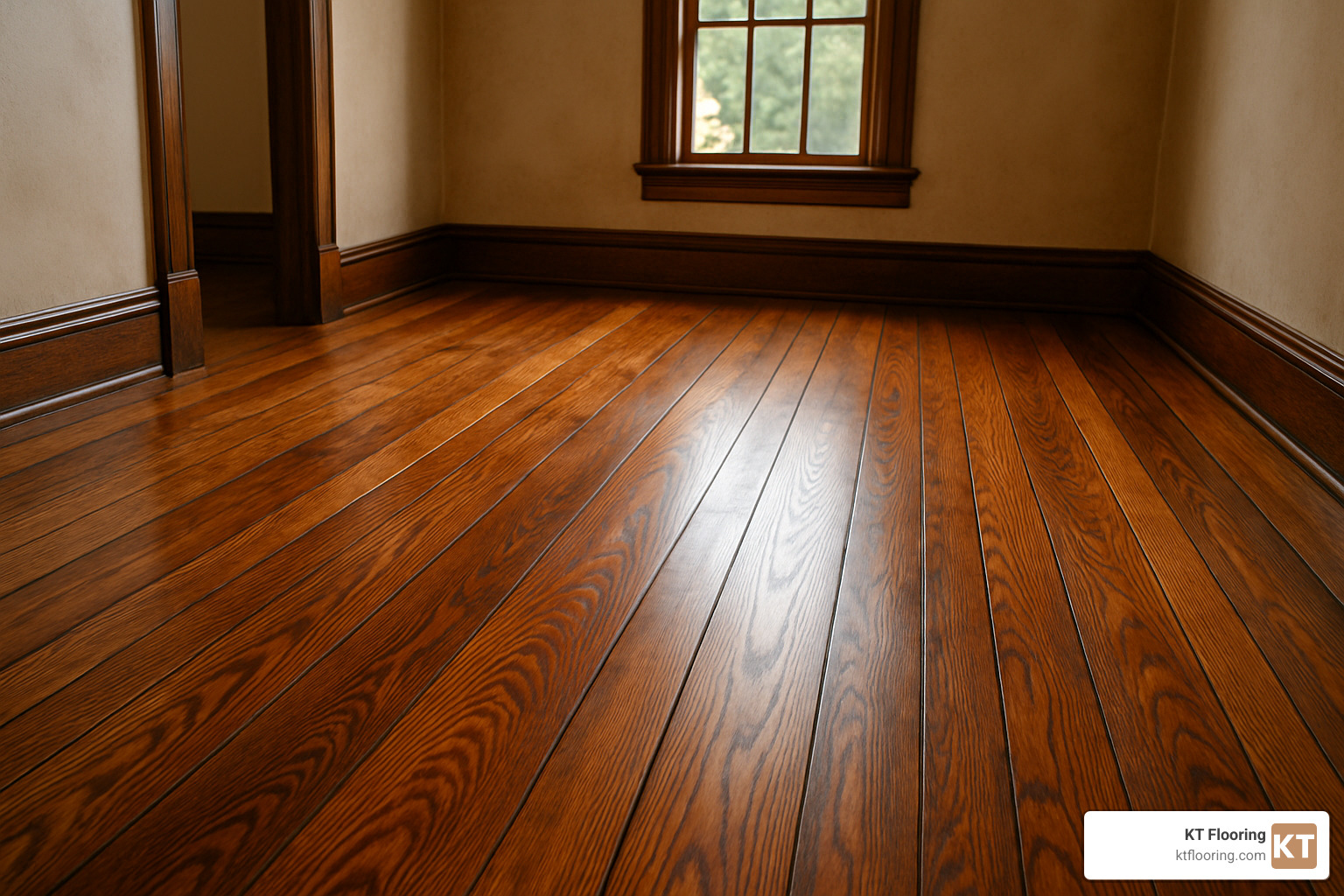
Hardwood floors aren’t just beautiful – they’re practical investments too. Unlike carpet that traps allergens and dust mites, hardwood provides a healthier indoor environment, which many of our customers with allergies particularly appreciate. The natural insulation properties of wood can help moderate your home’s temperature, potentially trimming those heating bills during our harsh New England winters.
There’s also something timelessly appealing about hardwood. While design trends come and go (remember shag carpet?), a well-maintained hardwood floor never goes out of style. I’ve had customers tell me they specifically sought out homes with original hardwood floors, willing to pay a premium for that character and quality.
Maintenance Costs vs Replacement Costs
Caring for hardwood is surprisingly simple and affordable, especially when compared to replacement:
Keeping your floors looking beautiful starts with basic daily care – just a quick sweep or dust mop to prevent grit from scratching the surface. Monthly cleaning with a manufacturer-approved wood cleaner (typically $10-$20 per bottle that lasts months) keeps them gleaming.
Every few years, consider a professional recoating (about $1.50-$3 per square foot) to refresh the protective finish without the dust and disruption of full refinishing. When deeper wear eventually shows, full refinishing runs between $3-$8 per square foot – a fraction of replacement costs.
Compare that to completely replacing floors: removal ($1-$3/sq ft), new materials ($4-$15+/sq ft), and installation ($3-$10/sq ft) quickly adds up to $8-$28+ per square foot total. That’s often triple the cost of refinishing!
You’ll know it’s time to consider replacement rather than refinishing when you notice:
– The wood has become too thin from multiple sandings
– Structural damage or severe cupping that won’t resolve
– Extensive water damage affecting the core of the boards
– Large, permanent gaps between boards
– Deep pet stains that have penetrated beyond the surface
“Many homeowners are surprised to learn we can save floors they thought were beyond repair,” shares our senior technician. “Before assuming replacement is necessary, have a professional assessment – you might save thousands.”
Is the “Average Cost to Install Hardwood Flooring” Worth It?
Let’s break down the value proposition in practical terms:
A 1,000 square foot installation at $10,000 ($10 per square foot) that lasts 50 years equals just $200 per year or about $17 monthly – less than a basic streaming subscription! Put another way, you’ll enjoy those floors for roughly 55 cents a day. Few home improvements offer such enduring value.
The energy efficiency benefits shouldn’t be overlooked either. Many of our customers report feeling warmer with hardwood compared to tile and cooler compared to carpet, particularly when we install proper underlayment. This natural temperature regulation can contribute to year-round comfort.
The market speaks volumes too. According to the National Association of Realtors, more than half of home buyers (54%) are willing to pay more for homes with hardwood floors – averaging a 2.5% premium. In our local markets, that can translate to thousands of dollars in added value.
As one straight-talking real estate agent in the Greater Boston area told me: “In our market, hardwood floors aren’t just preferred—they’re expected. Homes with wall-to-wall carpet often sit on the market longer and sell for less, even if the carpet is brand new. Hardwood is never the wrong choice.”
When you weigh the average cost to install hardwood flooring against decades of enjoyment, improved health, energy benefits, and increased home value, it’s clear why so many homeowners consider it one of the wisest investments they’ve made in their homes.
Frequently Asked Questions About the Average Cost to Install Hardwood Flooring
How much does 1,000 sq ft of hardwood really cost?
When homeowners call us about a 1,000 square foot hardwood project, they’re often looking for a simple number, but the reality is more nuanced. For a project this size, you can expect to pay between $6,000 and $25,000 for materials and installation combined, depending on your choices.
This price range breaks down roughly into three tiers:
Budget-Friendly: For around $6,000-$11,000, you can install pine or standard oak with basic installation. This option gives you genuine hardwood at the most accessible price point.
Mid-Range Quality: Most of our customers in Bedford and Nashua fall into this $11,000-$16,000 range, choosing quality oak, maple, or hickory with professional installation. This sweet spot balances durability with aesthetics.
Premium Experience: For those renovating higher-end homes in Portsmouth or Andover, premium installations using exotic hardwoods or complex patterns like herringbone typically run $16,000-$25,000+.
I should note that these figures represent average internet-based prices and not specific to KT Flooring’s services. Your actual cost will depend on your home’s specific conditions and your design preferences.
As one of our Merrimack customers shared after her project: “We installed 1,200 square feet of red oak throughout our first floor for about $14,400. Three years later, we’re still thrilled with the investment. The floors look as good as the day they were installed.”
How long does installation usually take from start to finish?
The hardwood installation journey involves several steps, and understanding the timeline helps set realistic expectations for your home renovation.
For a typical 1,000 square foot installation, here’s what you can expect:
The process begins with our initial consultation and precise measurements, usually completed in 1-2 days. After you’ve selected your perfect hardwood (which typically takes 1-3 weeks to arrive, depending on availability), we’ll deliver the materials to your home for acclimation – a crucial 2-3 day period that prevents future warping or buckling.
The active work phase starts with removing your existing flooring (1 day), followed by careful subfloor preparation (1-2 days) to ensure a perfect foundation. The installation itself typically takes 2-4 days for a space this size.
If you’ve chosen site-finished hardwood, add another 2-3 days for sanding, staining, and applying protective coats (plus drying time). We wrap up with a thorough cleanup and detailed inspection.
All told, you’re looking at approximately 2-4 weeks from our first handshake to your first steps on your new floors. Prefinished hardwood can shorten this timeline significantly since you can walk on these floors immediately after installation – a big plus for busy families who can’t relocate during renovations.
What are the signs my existing hardwood should be replaced instead of refinished?
This is one of the most common questions we hear, especially from homeowners in older New England homes. The good news is that quality hardwood floors can often be refinished rather than replaced, saving you significant money.
Your floors are likely candidates for refinishing when:
You see primarily surface scratches and minor dents that haven’t penetrated through the finish. A dull appearance or cosmetic wear is easily addressed through refinishing. Even minor water spots that haven’t soaked deeply into the wood can usually be sanded out. If your boards still have adequate thickness (at least 1/8″ above the tongue) and haven’t been refinished more than 3-5 times, refinishing remains a viable option.
However, replacement becomes necessary when:
You’re dealing with extensive structural damage across multiple boards or severe cupping that doesn’t resolve after proper acclimation. Deep cracks running throughout the floor or widespread pet urine damage that has reached the subfloor often requires replacement. Boards that have become too thin from multiple sandings, extensive insect damage, or major subfloor issues are also signs that it’s time for new floors.
“We often recommend partial replacement for localized damage,” explains our repair specialist who’s been with us for over 20 years. “For example, we can replace boards damaged by a refrigerator leak while refinishing the rest of the kitchen floor, saving thousands compared to full replacement.”
During our free in-home consultation, we can assess your existing floors and provide honest guidance on whether refinishing or replacement makes more sense for your situation and budget. Sometimes, the answer lies somewhere in between.
Conclusion
When you’re planning a flooring project, understanding the average cost to install hardwood flooring helps you make smart choices with your renovation budget. While the initial investment of $6-$25 per square foot might make you hesitate, hardwood floors are one of those rare home improvements that actually get better with age.
Think about it – while carpet needs replacement every decade or so, your new hardwood floors could still be bringing warmth and character to your home when your grandchildren come to visit. That’s value that’s hard to match with any other flooring option.
The pricing information we’ve discussed represents internet-based averages, not specific quotes for KT Flooring’s services. Your actual costs will depend on your home’s unique characteristics, the materials that catch your eye, and your specific location within New Hampshire or Northeast Massachusetts.
After fifty years of installing and refinishing hardwood floors throughout Southern New Hampshire and Northeast Massachusetts, we’ve learned something important at KT Flooring: even the most expensive exotic hardwood won’t look its best if the installation isn’t done right. In fact, expert installation often matters more than the price tag on the materials themselves.
You don’t have to steer these decisions on your own. Our team at KT Flooring offers free in-home consultations where we’ll help you understand your options, find materials that fit your budget, and provide a detailed estimate custom to your unique space. We’ll take the time to answer your questions and help you choose flooring that will bring you joy for decades to come.
The floors we install today often outlast us – becoming part of your home’s story and legacy. It’s a responsibility we take seriously, and why we focus on quality at every step of the process.
Ready to explore how hardwood flooring could transform your home? Visit our More info about hardwood flooring page or reach out to schedule your free in-home consultation with KT Flooring today. Let’s create something beautiful together that will stand the test of time.
