Creating the Perfect Workout Space: Choosing Your Home Gym Flooring
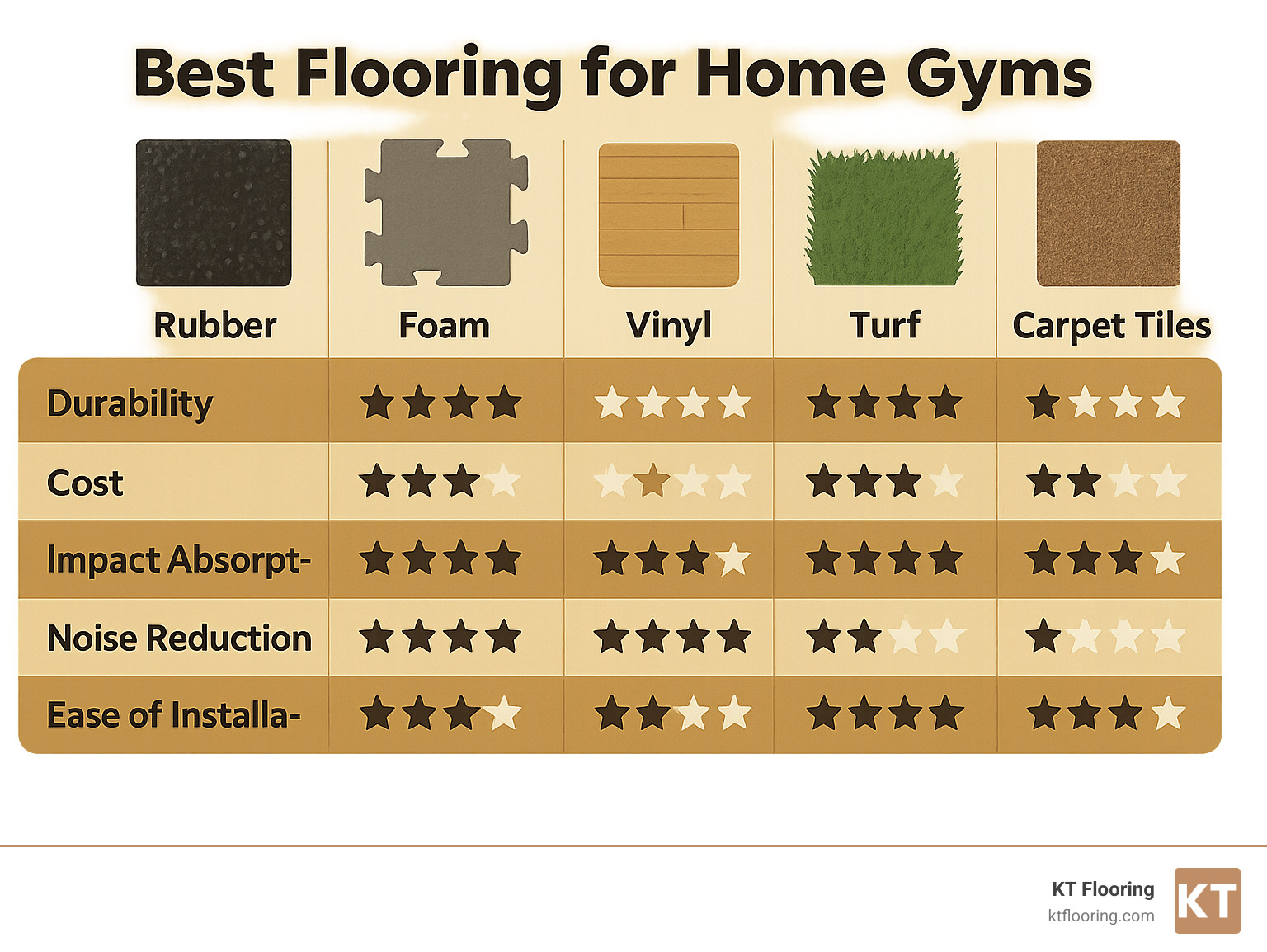
The best flooring for home gyms depends on your specific workout style and equipment. Here’s a quick guide to help you decide:
| Flooring Type | Best For | Thickness | Price Range |
|---|---|---|---|
| Rubber | Heavy weights, equipment | 3/8″ – 3/4″ | $2-12/sq ft |
| EVA Foam | Yoga, bodyweight, light dumbbells | 1/2″ – 1″ | $1-4/sq ft |
| Vinyl | Multi-purpose, cardio machines | 5-8mm | $2-8/sq ft |
| Artificial Turf | Functional training, sled work | 1/4″ – 1/2″ | $3-15/sq ft |
| Carpet Tiles | Low-impact, multi-use spaces | 1/4″ – 1/2″ | $2-7/sq ft |
The foundation of your home gym is quite literally what’s beneath your feet. The best flooring for home gyms protects both your subfloor and your body while enhancing workout performance. Whether you’re dropping weights in the garage or flowing through yoga poses in a spare bedroom, your flooring choice impacts everything from noise levels to injury prevention.
Since the pandemic, home gyms have surged in popularity as more people work remotely and seek convenient fitness solutions. The right flooring not only provides crucial shock absorption and slip resistance but also helps define your space as a dedicated workout zone.
I’m Christopher Talty, owner of KT Flooring with over 50 years of experience providing the best flooring for home gyms throughout New Hampshire and Northeast Massachusetts. Our team specializes in helping homeowners select and install durable, high-performance flooring solutions custom to your specific workout needs and space requirements.
Common Best flooring for home gyms vocab:
– Best flooring for basements
– Non-slip bathroom flooring
– Best flooring for allergies
Rubber Flooring: The Heavy-Duty Champion
When it comes to serious home gyms, rubber flooring stands as the undisputed champion. There’s a reason most commercial gyms worldwide choose rubberits exceptional shock absorption, durability, and resilience make it perfect for those heavy-duty workouts we all love.
“Rubber is the best of the best when it comes to home gym flooring,” notes fitness equipment specialist Cooper Mitchell. “If you’ve stepped foot in a gym, you’ve probably been on rubber flooring.”
The beauty of rubber flooring is how it absorbs the impact when you drop those weights, protecting both your subfloor and your expensive equipment. A quality 3/8-inch rubber floor can handle barbells, dumbbells, and even Olympic lifts without showing permanent damage. This protective quality extends to noise reduction toorubber tiles can reduce sound by up to 24 decibels. That’s a game-changer if your gym shares walls with living spaces or neighbors who don’t appreciate hearing your 6 AM deadlifts!

Most best flooring for home gyms in the rubber category comes in two forms: recycled rubber (often made from old tires) or virgin rubber. While virgin rubber typically has less odor, the recycled options are more environmentally friendly and offer comparable performance at a friendlier price point.
“Recycled rubber gym mats can match virgin rubber performance while being more cost-effective,” explains Sarah Thompson, a flooring specialist at KT Flooring in Hudson, NH. “For most home gyms, the difference in performance is negligible, but the savings can be substantial.”
Recent scientific research on joint impact reduction shows that proper flooring can significantly decrease the stress on your knees and ankles during high-impact exercisesmaking rubber flooring an investment in your long-term joint health.
Pros & Cons of Rubber
On the plus side, rubber flooring offers superior impact protection that’s essential for weight training. Its exceptional durability means it can last 10+ years with proper carethat’s value for money! You’ll also appreciate the excellent grip even when wet from sweat, its moisture resistance, and how easy it is to clean. Available in various thicknesses, rubber flooring can support heavy equipment without compression damage.
The downsides? There’s a higher upfront cost ($2-12 per square foot based on internet data, not KT Flooring pricing). It’s also a heavier materialrubber rolls average 70kg and usually require two people to handle. The initial rubber odor can be strong, though it dissipates over time. You’ll also find limited color and design options compared to other materials, and some find it too firm for yoga or floor exercises without an additional mat.
One of our Burlington, Massachusetts clients, Mike R., installed 3/8-inch rubber flooring in his garage gym last year: “The difference was immediate. Not only did it protect my concrete floor from scratches and cracks, but my joints felt so much better after deadlifts. The noise reduction was a bonus my wife definitely appreciated!”
Best Thickness for Lifters
For home gyms focused on weightlifting, thickness matters significantly. Here’s what our experience installing hundreds of home gym floors has taught us:
1/4 inch (6mm) works for light dumbbells, cardio equipment, and general fitnessbut isn’t ideal for heavy weight drops. 3/8 inch (8-10mm) hits the sweet spot for most home gyms, providing good protection for weights up to 150 pounds while balancing cushioning and stability. 1/2 inch (12mm) excels for CrossFit-style workouts and Olympic lifting with improved shock absorption for regular weight drops. For serious lifters, 3/4 inch (19mm) offers professional-grade thickness, recommended for powerlifters or if your gym sits above another living space where sound transmission is a concern.
“For barbell and free-weight use, we typically recommend at least 3/4-inch thickness,” advises Thompson. “This provides optimal shock absorption while maintaining a stable surface for lifts.”
The ProsourceFit Puzzle Exercise Mat, with over 55,000 customer reviews and a 4.6-star rating, remains one of the most popular choices for best flooring for home gyms. Its 1/2-inch thickness provides sufficient protection for most home workouts while remaining affordable.
Interlocking Tiles vs Rolls
When selecting rubber flooring, you’ll need to choose between interlocking tiles and rubber rolls. Each has distinct advantages:
| Feature | Interlocking Tiles | Rubber Rolls |
|---|---|---|
| Installation | DIY-friendly, no adhesive needed | May require professional installation for large areas |
| Coverage | Good for smaller or irregular spaces | Ideal for large, open areas (fewer seams) |
| Cost | $2-8/sq ft (average internet pricing) | $2-12/sq ft (average internet pricing) |
| Weight | Manageable pieces (20-40 lbs each) | Heavy rolls (70+ lbs) requiring two people |
| Customization | Easy to replace individual tiles | Less flexible for partial replacement |
| Stability | May shift during lateral movements | Stays in place better, especially with adhesive |
“Interlocking tiles are like pieces of a giant puzzle you assemble yourself,” explains Thompson. “They’re perfect for DIY installations and can be easily transported piece by piece into basement gyms where carrying a heavy roll downstairs would be challenging.”
For lateral movement exercises like side lunges or agility drills, rubber rolls often perform better. “Rubber rolls are recommended for lateral movement exercises because interlocking tiles can shift under side-to-side loads and create trip hazards,” cautions fitness equipment specialist Mitchell.
The American Floor Mats 3/8-inch Heavy Duty Rubber Rolls, with a 4.6-star rating from nearly 600 reviews, exemplify quality roll flooring that provides seamless coverage for larger gym spaces. The seamless look creates a professional aesthetic, while proper installation with expansion joints prevents buckling as temperatures change in spaces like garages.
Whether you choose tiles or rolls, rubber flooring remains the heavy-duty champion of best flooring for home gyms for serious fitness enthusiasts who need durability, protection, and performance from their workout surface.
EVA Foam Mats: Lightweight & Budget-Friendly
If you’re just starting your fitness journey or working with a tight budget, EVA (Ethylene-Vinyl Acetate) foam mats offer a wallet-friendly entry point into creating your home workout space. These colorful, interlocking puzzle tiles have become a hit among home fitness enthusiasts, especially for rooms that need to pull double-duty.
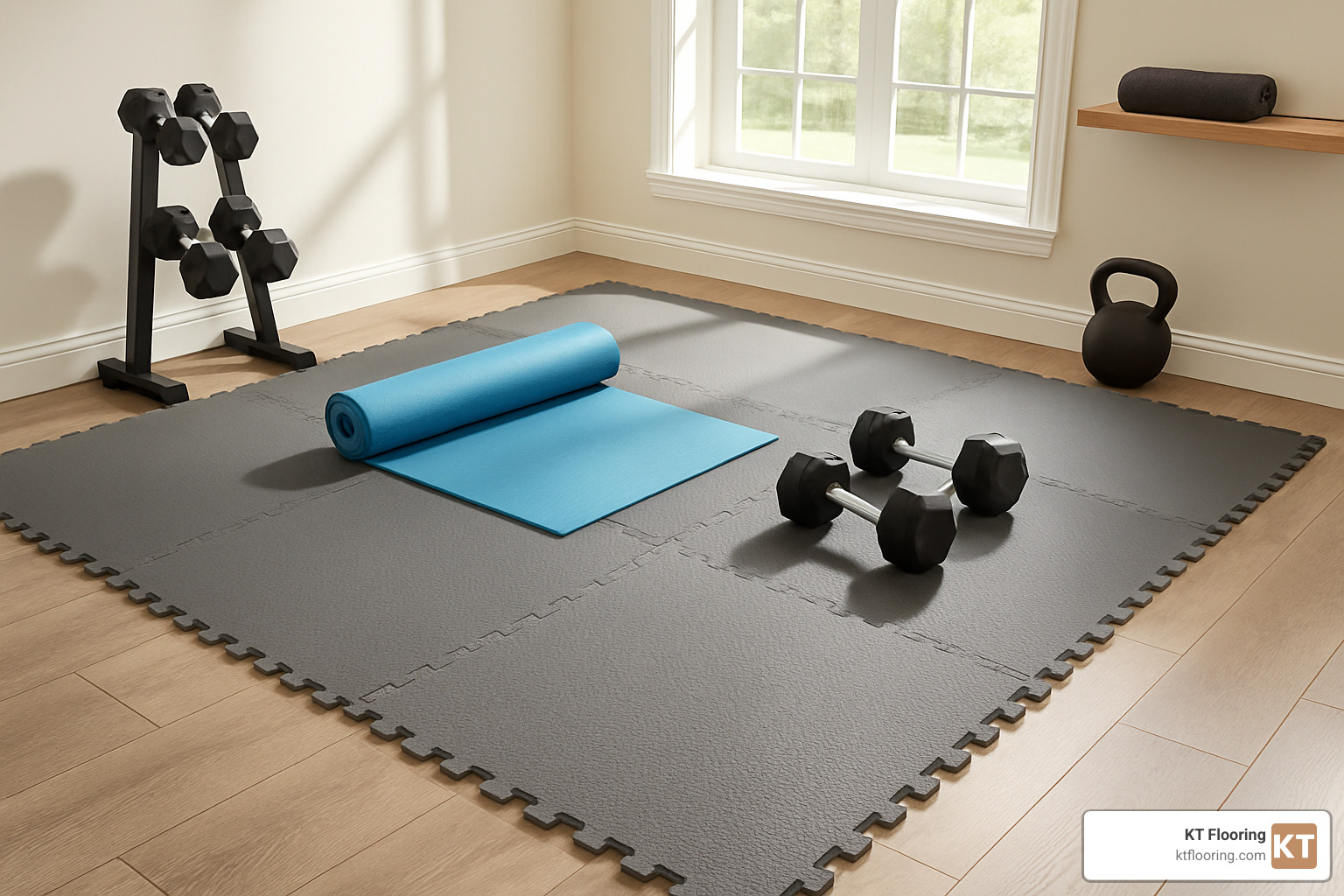
The ProsourceFit Puzzle Exercise Mat tells the story of foam’s popularity—with over 55,000 reviews and a stellar 4.6-star rating, more than 7,000 people snagged these mats just last month. It’s not hard to see why; they’re affordable, snap together in minutes, and provide enough cushioning for many types of workouts.
“I love recommending foam tiles to clients who need flexibility in their space,” shares Jennifer Knowles, our flooring specialist at KT Flooring. “They’re perfect for that spare bedroom that needs to transform from home office to workout space and back again. You can even take them apart and store them in a closet when company comes over!”
EVA vs Rubber for Best Flooring for Home Gyms
When deciding between foam and rubber for your best flooring for home gyms setup, several key differences come into play:
| Factor | EVA Foam | Rubber |
|---|---|---|
| Cost | $1-4/sq ft (internet pricing) | $2-12/sq ft (internet pricing) |
| Weight | Light (5-10 lbs per tile) | Heavy (20-100+ lbs per section) |
| Durability | 1-3 years with regular use | 5-10+ years with proper care |
| Impact Absorption | Good for low-impact activities | Superior for heavy weights |
| Comfort | Softer, more cushioning | Firmer, more stable |
| Water Resistance | Moderate (can absorb moisture) | Excellent (waterproof) |
| Installation | Very easy, no tools required | Moderate to complex |
| Shore Hardness | ~40 Shore (softer) | ~60 Shore (firmer) |
The difference in feel between these materials is significant. “Think of foam as wearing cushioned running shoes, while rubber is more like a supportive cross-trainer,” explains our flooring expert Sarah Thompson. “That softer feel makes foam more comfortable for floor exercises, but less stable when you’re doing standing movements or lifts.”
This comfort difference comes with a trade-off in longevity. While your rubber flooring might still look great after a decade of workouts, foam tiles typically show wear and tear within 1-3 years of regular use. You might notice compression dents where your equipment sits, separation at the seams, or even tearing in high-traffic areas.
Ideal Uses & Limitations
Foam flooring truly shines in certain workout scenarios. It’s perfect for yoga flows where you’re spending time on your knees and back. The cushioning makes bodyweight HIIT workouts with burpees and mountain climbers much more joint-friendly. And if you’re occasionally using light dumbbells or kettlebells under 50 pounds (without dropping them), foam provides adequate protection.
Maria from Nashua, one of our clients, found foam tiles to be exactly what she needed: “I wanted something I could easily install myself in my spare bedroom that wouldn’t break the bank. These foam tiles give me just enough cushion for my morning yoga and occasional HIIT workouts, plus I can pull them up when guests stay over.”
However, foam does have its limitations. Heavy stationary equipment like treadmills or weight benches can leave permanent indentations. The softer surface makes balance-focused exercises more challenging. And if you’re sweating through intense workouts, foam can absorb moisture and develop odors over time.
“I generally steer clients away from foam if they’re serious about weightlifting,” cautions Cooper Mitchell, a fitness equipment specialist. “Once you start working with heavier weights, especially anything you might drop, foam simply can’t provide the protection or stability you need. That’s when rubber becomes the safer, more practical choice.”
The bottom line? Foam mats offer an accessible starting point for your fitness journey, especially if you’re doing primarily bodyweight exercises, yoga, or light dumbbell work. They’re budget-friendly, easy to install, and perfect for multi-purpose spaces. But as your fitness routine intensifies or includes heavier equipment, you might find yourself ready to upgrade to the more durable protection of rubber flooring.
Multi-Purpose Surfaces: Vinyl, Turf & Carpet Tiles
When your home gym needs to do double-duty or if you’re looking for something with more style than basic utility, several versatile flooring options can transform your workout space while still providing practical functionality. Vinyl planks, artificial turf, and carpet tiles each bring unique benefits to the table.
Vinyl Planks and Tiles
Luxury vinyl flooring hits that sweet spot between tough-as-nails durability and Instagram-worthy design. Today’s vinyl options are completely waterproof, offer decent shock absorption, and come in countless styles that convincingly mimic hardwood, stone, or creative patterns.
“Vinyl flooring is tough, water-resistant, easy to clean, and available in slip-resistant options, making it ideal for high-traffic and moisture-prone gym areas,” notes flooring expert Thomas Williams.
The Rubber Flooring Inc Modular Grid-Loc Tiles showcase what quality vinyl gym flooring can offer. Priced around $6.50 per square foot (based on internet pricing, not KT Flooring pricing), these tiles excel at resisting moisture and mold while giving your space a polished look that stands up to light and moderate workouts.
Manchester homeowner David L. found vinyl to be his perfect solution: “My home gym doubles as our guest room when family visits. The wood-look vinyl gives us a polished appearance but still handles my rowing machine and free weights without damage.”
Artificial Turf
Once only seen on football fields and mini-golf courses, artificial turf has muscled its way into home gyms, particularly among functional fitness enthusiasts who love its unique feel and performance benefits.
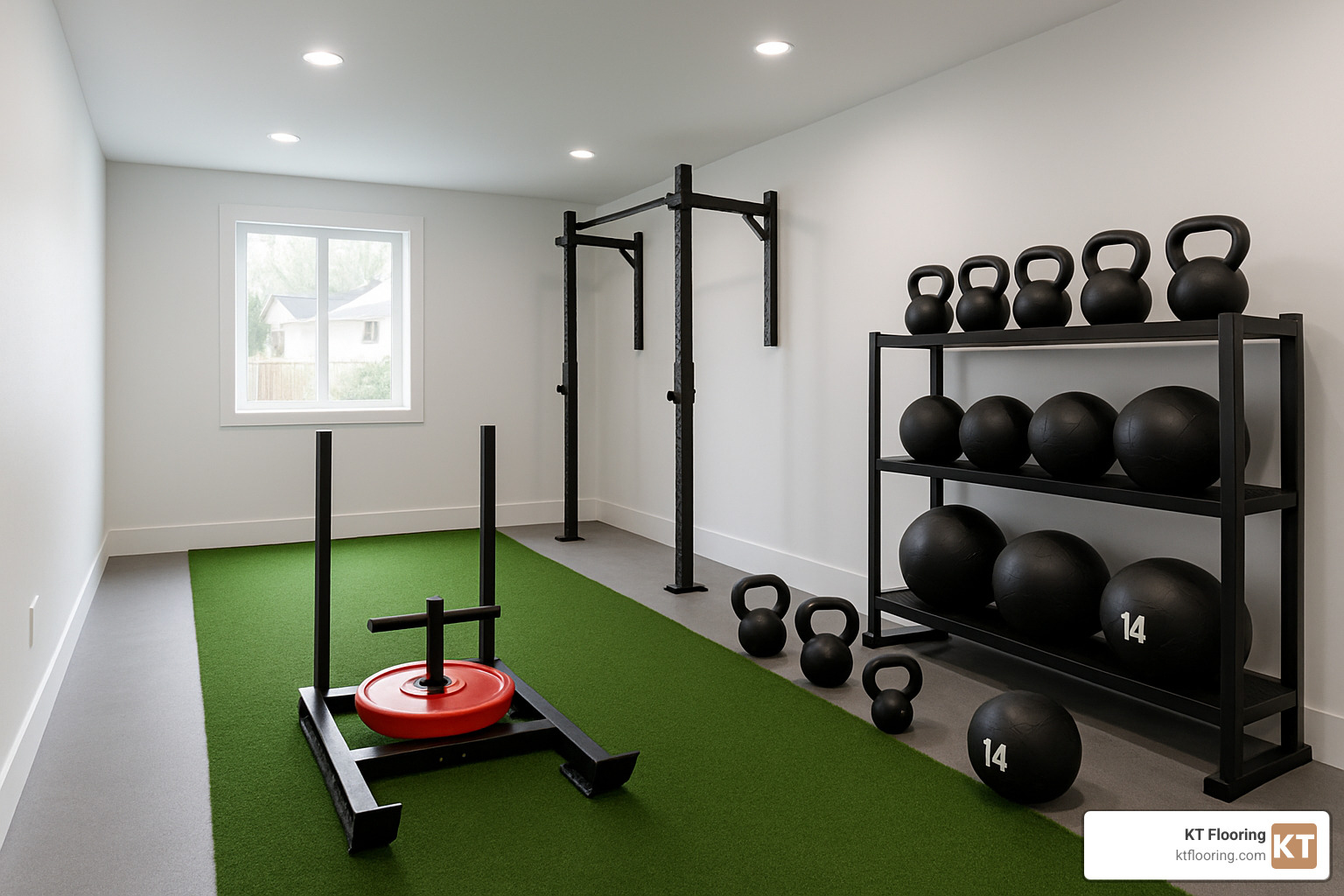
“Turf used in gyms is typically polyethylene, not nylon,” explains Mitchell. “This makes it softer for floor exercises and suitable for indoor use.”
Quality gym turf runs approximately $2.79-$15 per square foot (based on internet pricing, not KT Flooring pricing) and offers some compelling advantages:
It provides excellent traction for agility work, creates the ideal surface for sled pushes and pulls, and offers comfortable cushioning for plyometric exercises. The unique aesthetic also helps define workout zones within larger spaces, and it’s available with or without drainage options depending on your needs.
While covering an entire home gym with turf might stretch the budget, many of our clients install turf strips or sections for specific training types. “A small turf area looks great and protects joints during plyometrics,” says Thompson from our team at KT Flooring. “It’s also become something of a status symbol in home gyms – a little slice of athletic performance that makes the space feel professional.”
Carpet Tiles
For basement gyms or multi-purpose spaces, carpet tiles offer several practical advantages that many homeowners overlook.
Low-pile commercial-grade carpet tiles provide surprising durability with just enough cushioning for comfort. Their modular design is a game-changer – if you damage one section during an intense workout, you can simply replace that tile rather than the entire floor. They also provide superior sound absorption compared to harder surfaces and create a warm, comfortable surface for floor exercises.
“Low-pile carpet tiles track less dirt and debris than traditional carpet,” notes Jennifer Knowles from KT Flooring. “They’re also antimicrobial and can improve indoor air quality by trapping fewer allergens.”
Many options now come in water-resistant, stain-protected varieties that can be installed directly over concrete or existing low-pile carpet. The Feather Peel and Stick Carpet Tiles exemplify the convenience of this option, offering easy installation and replacement without adhesives or special tools.
Noise & Vibration – Best Flooring for Home Gyms
For many homeowners, especially those in apartments or homes with open floor plans, controlling noise and vibration becomes a critical factor when selecting best flooring for home gyms.
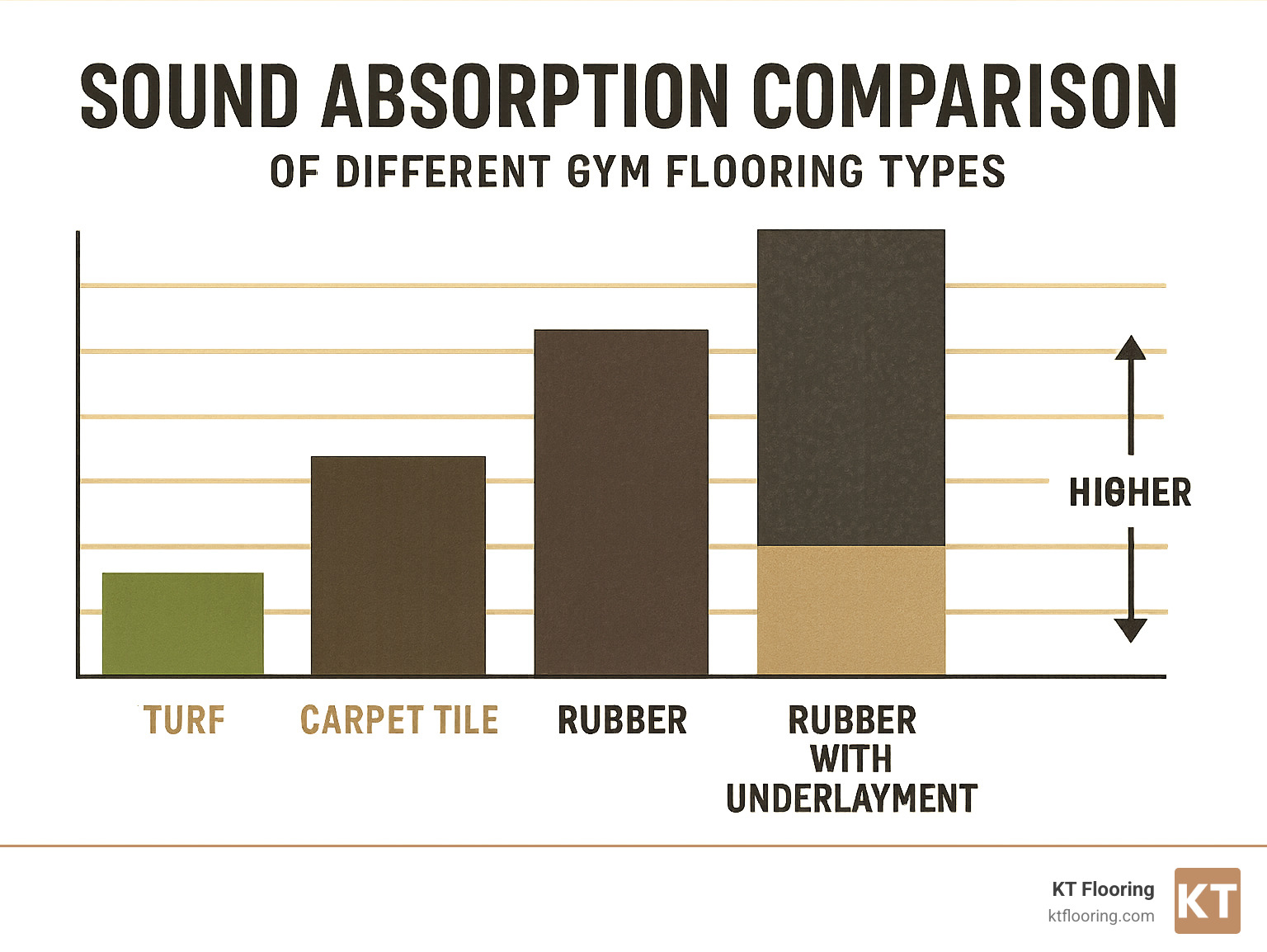
Rubber flooring naturally provides excellent sound dampening, with studies showing it can reduce impact noise by up to 24 decibels. However, for maximum sound reduction, consider these approaches:
Installing a cork or foam underlayment beneath your primary flooring can significantly reduce sound transmission. Products like the SecondSkin Stomp Mat, with an R-value of 2.0 per square inch, are specifically designed for noise reduction. These mats are trusted by laundromats to silence washing machines—which speaks volumes about their effectiveness.
For truly challenging situations, a layered approach works best. Combine underlayment, rubber flooring, and equipment-specific pads under heavy items like treadmills or power racks to create a comprehensive sound barrier.
“In basement gyms with concrete floors, sound reverberates more, creating a louder environment,” explains Thompson. “Adding carpet tiles or rubber flooring with underlayment can dramatically improve acoustics.”
Andover resident James T. made sound control his priority: “My home gym is directly above our family room. After installing 3/4-inch rubber flooring with cork underlayment, the noise from my morning workouts no longer wakes the kids. It was worth every penny.”
Eco-Friendly & Sustainable Picks
As environmental consciousness grows, many homeowners seek sustainable options for their gym flooring without sacrificing performance. Several eco-friendly alternatives have emerged that deliver excellent results while reducing environmental impact.
Recycled rubber flooring gives new life to materials that would otherwise end up in landfills. Made primarily from reclaimed tire rubber, these floors perform remarkably well while keeping waste out of our environment.
Cork-backed vinyl combines the durability and water resistance of vinyl with sustainable cork underlayment, improving comfort and sound absorption simultaneously.
Low-VOC options certified for minimal volatile organic compound emissions improve your indoor air quality – something particularly important in enclosed workout spaces where you’re breathing heavily.
PVC-free alternatives from several manufacturers now offer similar performance characteristics but with fewer environmental concerns than traditional synthetic flooring.
“Recycled rubber gym mats are made from automotive and truck tires,” notes Thompson. “They perform comparably to virgin rubber while keeping these materials out of landfills.”
When exploring eco-friendly options, look for respected certifications like FloorScore, GreenGuard, or LEED compatibility. These ensure the products meet recognized environmental standards rather than just making vague “green” claims.
At KT Flooring, we’ve seen growing interest in sustainable gym flooring options, especially among younger homeowners who want their fitness journey to align with their environmental values. We’re happy to discuss these options during our free consultations to find the perfect balance of performance and sustainability for your space.
Installation, Maintenance & Costs
The right installation approach and consistent maintenance can dramatically extend the life of your home gym flooring. As someone who’s helped hundreds of New Hampshire homeowners create their perfect workout spaces, I’ve seen how these factors impact long-term satisfaction.
Installation Options
Setting up your gym flooring can be surprisingly straightforward, especially with DIY-friendly options like interlocking rubber or foam tiles. These puzzle-edge systems simply snap together without adhesives, making them perfect for weekend warriors who want to tackle the project themselves.
“For interlocking tiles, the secret is patience,” explains Sarah Thompson from KT Flooring. “Let them acclimate to your room temperature for 24-48 hours before installation. This prevents those annoying gaps that can appear later due to expansion and contraction.”
Loose-lay rubber rolls work well for smaller areas, while peel-and-stick carpet tiles and click-lock vinyl planks offer simple installation with more aesthetic appeal. For garage gym setups where temperature changes are common, I always recommend using carpet tape or Gorilla Tape along the seams to prevent shifting during lateral movements.
Some situations really do call for professional installation, particularly:
– Large rubber roll installations (those 70+ pound rolls are no joke!)
– Glue-down rubber flooring for permanent setups
– Custom-cut installations around fixed equipment
– Turf installations with proper drainage and underlayment
“A pro tip from years of installations,” shares Mitchell, “is to let rolled-up mats lay flat under weight plates for 24–48 hours before securing them. This helps them settle properly and eliminates those frustrating curling edges that can become trip hazards.”
Maintenance Tips
Keeping your gym floor clean isn’t just about aesthetics—it directly impacts performance and longevity. The good news? Most gym flooring is designed for easy maintenance.
For rubber flooring, weekly cleaning with a pH-neutral cleaner will keep it looking fresh. Avoid harsh chemicals that can break down the material over time. Many of our more serious clients swear by a quick leaf blower session after intense workouts to remove chalk and debris—simple but effective!
“I recommend a 10:1 ratio of water to Simple Green for deep cleaning rubber floors,” Thompson advises. “Just be sure to let it dry completely before your next workout.”
Foam mats require more frequent attention since they can trap dirt and absorb moisture. Regular vacuuming and spot cleaning with a damp cloth will keep them in good shape. Since foam is more susceptible to damage, plan to replace individual tiles as needed—one advantage of the modular design.
Vinyl and carpet tiles offer the easiest maintenance, with regular vacuuming and prompt attention to spills being the main requirements. For carpet tiles, resist the urge to use steam cleaners or carpet cleaning machines too frequently, as excessive moisture can affect adhesives.
The most overlooked maintenance tip? Disinfecting. In the post-pandemic world, a weekly wipe-down with a non-bleach disinfectant helps keep your workout space healthy, especially if multiple family members share the equipment.
Cost Considerations
Home gym flooring costs vary dramatically based on materials, quality, and installation needs. Based on internet data (not specific to KT Flooring pricing), here’s what you might expect to invest:
Rubber tiles range from $2-4/sq ft for budget options to $5-12/sq ft for premium commercial-grade products. For a standard 10’x10′ room, that’s approximately $200-1,200.
Rubber rolls typically run $1.50-3/sq ft for basic recycled rubber and $4-9/sq ft for virgin rubber with customizable colors and thicknesses.
EVA foam offers the most budget-friendly option at $1-2/sq ft for basic tiles and $3-6/sq ft for thicker, more durable versions.
Vinyl planks designed for gym use typically cost $2-4/sq ft for standard options and $5-8/sq ft for heavy-duty commercial grades with improved wear layers.
Artificial turf ranges from $3-6/sq ft for basic options to $7-15/sq ft for premium surfaces with proper backing systems.
Carpet tiles suitable for gym use generally run $2-3/sq ft for standard commercial grade and $4-7/sq ft for premium moisture-resistant options.
Don’t forget to budget for extras like underlayment ($0.50-2.50/sq ft), adhesives ($30-100 per room), and transition pieces ($20-100). If you opt for professional installation, expect to add approximately $1-3/sq ft depending on the material and complexity.
“Black Friday at Tractor Supply or volume-pricing negotiations at local feed stores can yield significant savings on rubber stall mats,” suggests Mitchell for those looking to maximize their budget.
Garage vs. Basement Considerations
The location of your gym significantly impacts what flooring will perform best.
Garage gym flooring needs to withstand temperature swings that can cause materials to expand and contract. If you’ll occasionally park vehicles in the same space, polypropylene or PVC materials resist automotive fluids better than rubber, which can break down when exposed to oil or battery acid.
“Many homeowners don’t realize that rubber is unsuitable if you’re parking cars in the same space,” notes Thompson. “The chemical reaction with automotive fluids can degrade the flooring prematurely.”
Garage floors often need thicker material (minimum 3/8-inch) to provide adequate cushioning over concrete. A moisture barrier becomes essential on concrete slabs, particularly in regions with high humidity or for below-grade garages.
Basement gym flooring presents different challenges. Moisture management is crucial, as many basement concrete floors experience some degree of dampness. Waterproof options or raised-base mats prevent moisture wicking and potential mold issues—especially important in older New England homes.
“Basement gyms benefit from sound-absorbing flooring,” explains Williams. “The concrete walls can create echo chambers that make workouts uncomfortably loud. The right flooring can dramatically improve acoustics.”
Since basements typically maintain more consistent temperatures, you’ll have more flooring options. However, if your basement has radiant heat flooring, consult with a flooring professional about compatible materials that won’t interfere with heat transfer or be damaged by it.
At KT Flooring, we offer free in-home consultations to assess your specific space requirements and recommend the optimal best flooring for home gyms, whether it’s in a garage, basement, or spare room. Our five decades of experience serving New Hampshire and Northeast Massachusetts homeowners means we’ve seen and solved virtually every flooring challenge imaginable.
Frequently Asked Questions
What flooring is safest under heavy power racks?
When it comes to supporting the substantial weight of power racks and squat racks, safety is non-negotiable. For these heavy-duty setups, we consistently recommend rubber flooring with a minimum thickness of 3/4-inch.
“The concentrated force of a loaded barbell hitting the supports during re-racking can be surprisingly intense,” explains Christopher Talty of KT Flooring. “That’s why many of our clients who are serious about lifting invest in dedicated platform constructions.”
These platforms typically feature 3/4-inch rubber on the sides with a center section made of plywood, creating the perfect balance of shock absorption and stability during lifts. For those working with budget constraints, horse stall mats (usually 3/4-inch thick recycled rubber) provide excellent protection directly under racks at a more affordable price point.
Mitchell, a fitness equipment specialist, puts it simply: “You’ll want at least 8mm thick flooring for general use, but push that up to 12mm or thicker if you’re doing CrossFit or heavy weightlifting to ensure proper shock absorption.”
How do I keep mats from sliding on concrete?
There’s nothing more frustrating—or potentially dangerous—than flooring that shifts during an intense workout. After installing hundreds of home gym floors, we’ve found several reliable solutions to keep your mats firmly in place on concrete surfaces.
Double-sided carpet tape applied to the underside perimeter and seams works wonders for most installations. For a temporary bond that still allows future removal, rubber cement creates just enough grip without permanent adhesion. Many of our clients with modular setups prefer using mending plates (metal connectors that join adjacent mats) for a clean, hardware-based solution.
“The simplest fix I recommend is strategic equipment placement,” shares Thompson from KT Flooring. “Positioning your power rack or other heavy equipment partially on mat edges naturally anchors everything in place.”
For the most secure setup, consider a wall-to-wall installation that eliminates edge movement entirely. And if you’re starting fresh, selecting mats with quality interlocking systems provides built-in stability from the beginning.
“A strip of Gorilla Tape along seams is my quick fix for loose mats,” Mitchell adds. “It’s inexpensive but eliminates the most common trip hazards I see in home gyms.”
Can gym flooring go over radiant-heat floors?
Yes, you can definitely install gym flooring over radiant heat, but material selection becomes crucial for both floor protection and heating efficiency.
Vinyl flooring works beautifully with radiant systems, as it conducts heat efficiently while providing a durable workout surface. If rubber is your preferred material, stick with thinner options (1/4-inch to 3/8-inch) that permit adequate heat transfer. For those seeking additional comfort, cork-backed products offer a nice compromise—providing some insulation while still allowing heat to permeate.
What you’ll want to avoid are thick foam or rubber materials exceeding 1/2-inch. These effectively function as insulators, preventing proper heat distribution and potentially raising your heating costs significantly.
“This is one situation where thinner isn’t a compromise—it’s actually optimal,” notes Talty. “We’ve helped dozens of clients with radiant systems select appropriate gym flooring that maintains heating efficiency.”
Always double-check both your flooring manufacturer’s specifications and your heating system documentation for maximum temperature ratings and compatibility. Some materials may have specific temperature limitations that could affect warranty coverage.
“The relationship between your flooring and heating system is a two-way street,” Thompson explains. “You need to protect both investments by ensuring they work harmoniously together.”
At KT Flooring, we offer free consultations to help you steer these technical considerations, ensuring your best flooring for home gyms works perfectly with your home’s existing systems.
Conclusion
Choosing the best flooring for home gyms isn’t just about picking a surface – it’s about creating a foundation for your fitness journey that will support your goals for years to come. Throughout this guide, we’ve explored how different flooring options serve different workout styles, budgets, and spaces.
Rubber flooring remains the gold standard for serious fitness enthusiasts, offering best durability and protection for both your subfloor and your body. For those seeking budget-friendly alternatives, EVA foam tiles provide a comfortable surface for lighter workouts. Meanwhile, multi-purpose options like vinyl planks, artificial turf, and carpet tiles offer unique benefits for specialized training or spaces that need to serve multiple functions.
Your ideal flooring solution depends on your specific workout style. Heavy lifters need the stability and protection of thick rubber, while yoga enthusiasts might prefer the cushioning of foam or the warmth of carpet tiles. Whatever your fitness passion, there’s a flooring solution designed to improve your performance and protect your investment.
At KT Flooring, we’ve spent over five decades helping homeowners throughout New Hampshire and Northeast Massachusetts transform their spaces into functional, beautiful workout areas. Our team understands that a home gym isn’t just a room – it’s a commitment to your health and wellbeing that deserves proper foundation.
Whether you’re converting a garage in Nashua, finishing a basement in Burlington, or repurposing a spare bedroom in Lowell, we’re here to guide you through the selection process with our free in-home consultations. Our flooring experts will help you steer the options while considering your specific needs, space constraints, and budget.
Your home gym should inspire you to work out, not worry about damage to your floors. With the right flooring solution professionally installed, you can focus on what really matters – achieving your fitness goals in a space that’s built to support your journey every step of the way.
Ready to create the perfect foundation for your fitness journey? Contact KT Flooring today for expert guidance and professional installation that will transform your workout space into the home gym of your dreams.
More info about flooring installation
