Why Kitchen Flooring Choices Matter More Than You Think
Best flooring for kitchens has to survive spills, steam, and daily dashes between the fridge, stove, and sink—while still looking fantastic. After five decades of installations across New Hampshire and northeast Massachusetts, our team at KT Flooring keeps coming back to the same top performers:
- Porcelain Tile – toughest and most water-proof
- Luxury Vinyl Plank (LVP) – realistic wood looks, fully waterproof
- Engineered Hardwood – genuine wood veneer with added moisture stability
- Ceramic Tile – cost-effective, easy to clean
- Natural Stone – one-of-a-kind appearance, higher maintenance
Your kitchen floor is a work surface, playground, and gathering spot rolled into one. Choosing wisely can boost your home’s value by 10 % to 54 % and save you from costly replacements later. Modern manufacturing now offers vinyl that shrugs off floods and porcelain that fools even seasoned pros into thinking it’s reclaimed oak.
In short, the right floor lets you focus on pancakes, homework help, or late-night snacks—without worrying about scratch marks or warped boards.
Best flooring for kitchens word roundup:
Factors to Consider Before You Choose
Your dream kitchen floor should fit both your lifestyle and your budget. The sweet spot lies where nine key factors overlap: durability, water resistance, comfort, safety, maintenance, budget, installation skill, home value, and sustainability.
Traffic, Moisture & Durability
Kitchens see the heaviest traffic in most homes. Dense, low-porosity materials (think porcelain or SPC rigid-core vinyl) shrug off dropped pots and constant foot traffic better than softer alternatives. Engineered hardwood’s cross-layered core keeps boards flatter when humidity swings.
Komfort & Safety
Standing at the stove for an hour? Softer materials such as cork or cushioned LVP reduce fatigue, while textured finishes or anti-fatigue mats help prevent slips on wet surfaces.
Budget, Lifespan & Resale Value
Average installed costs (based on internet data, not KT Flooring pricing) range from $3–$8 / sq ft for entry-level vinyl or laminate up to $15–$50 / sq ft for premium stone or solid hardwood. Spread over decades, higher-quality floors often end up cheaper per year and add more curb appeal when it’s time to sell.
Installation & DIY vs. Pro
Click-lock vinyl or laminate is DIY-friendly; large-format tile or intricate hardwood patterns usually need a pro. Remember: most manufacturer warranties require professional installation.
Sustainability & Heating Compatibility
Eco options such as cork, bamboo, or low-VOC engineered wood pair nicely with radiant heat. Porcelain, engineered hardwood, and most luxury vinyl also rate highly for heated floors.
Best flooring for kitchens: Material Showdown
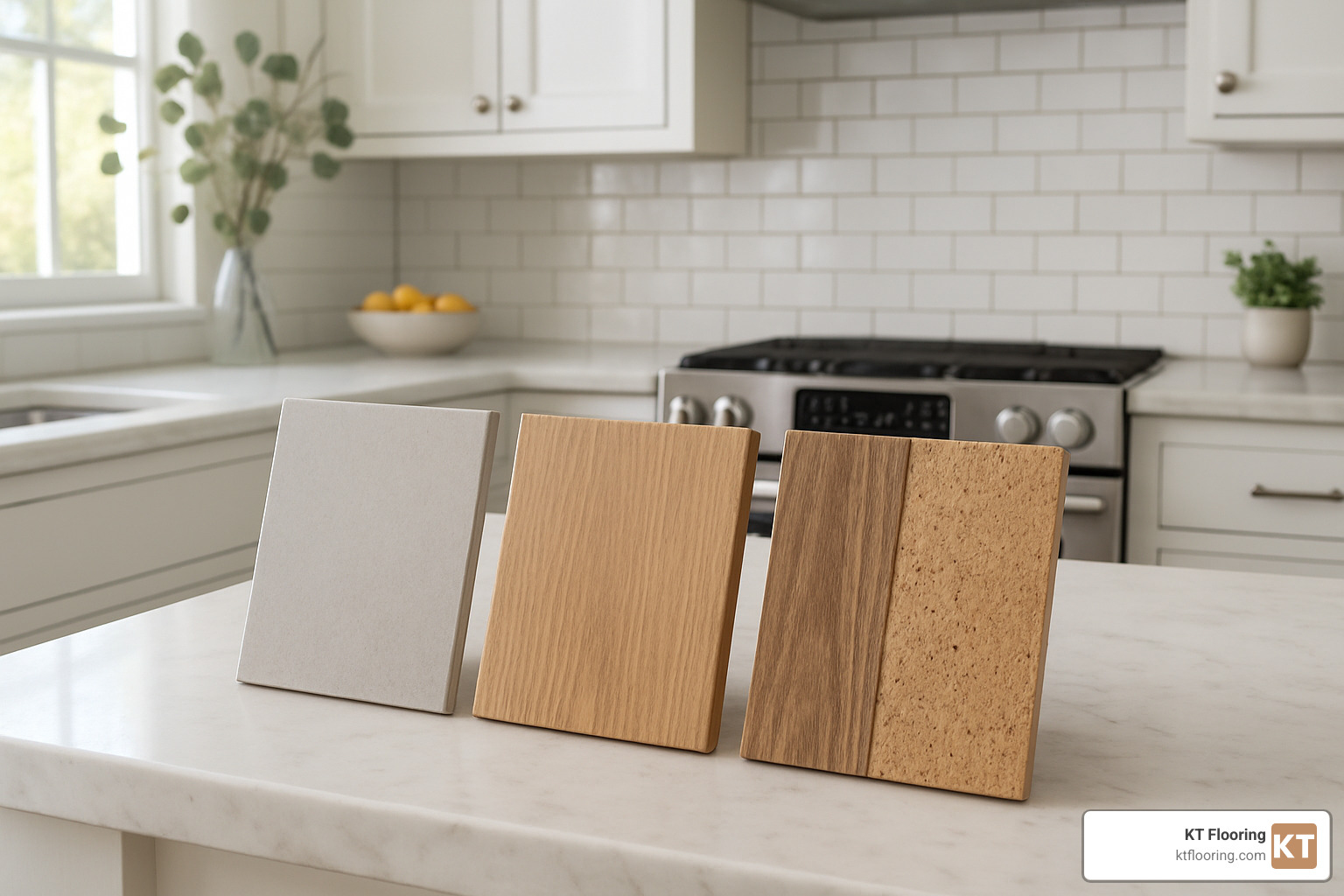
Below is a quick, no-fluff look at how popular materials stack up in real New England kitchens.
Best flooring for kitchens: Porcelain & Ceramic Tiles
Fired hotter than ceramic, porcelain is almost waterproof and extremely dent-resistant—perfect for busy families. Ceramic offers similar looks at lower cost but needs a bit more grout TLC. Both stay cool underfoot, so add area rugs or radiant heat if comfort is a priority.
Best flooring for kitchens: Luxury Vinyl Plank & Sheet
LVP delivers wood visuals, silent footsteps, and full-room waterproofing in a DIY-friendly click system. Sheet vinyl ups the moisture defense with minimal seams—great under fridges and dishwashers.
Engineered vs. Solid Hardwood
Nothing beats real wood for warmth. Engineered hardwood handles moisture swings better and installs over radiant heat; solid hardwood can be refinished many times and may raise resale value the most—just wipe spills quickly.
Laminate & Waterproof Laminate
Standard laminate is a budget hero, but opt for new waterproof laminate (AC3 or higher wear rating) if you want peace of mind against splashes. Life expectancy averages 10–15 years before replacement.
Natural Stone
Slate, marble, or travertine provide best character and longevity. Plan on annual sealing and avoid acidic cleaners on marble. If you crave the look without the upkeep, wood-look or stone-look porcelain is a smart detour.
Eco-Friendly & Specialty Surfaces
Cork feels like a built-in yoga mat, absorbs sound, and regrows every nine years. Strand-woven bamboo rivals oak’s hardness and matures in just a few years. Modern linoleum is low-VOC and fully biodegradable, while polished concrete suits industrial-chic remodels and works beautifully with radiant heat.
Cost & Installation: What Will You Really Pay?
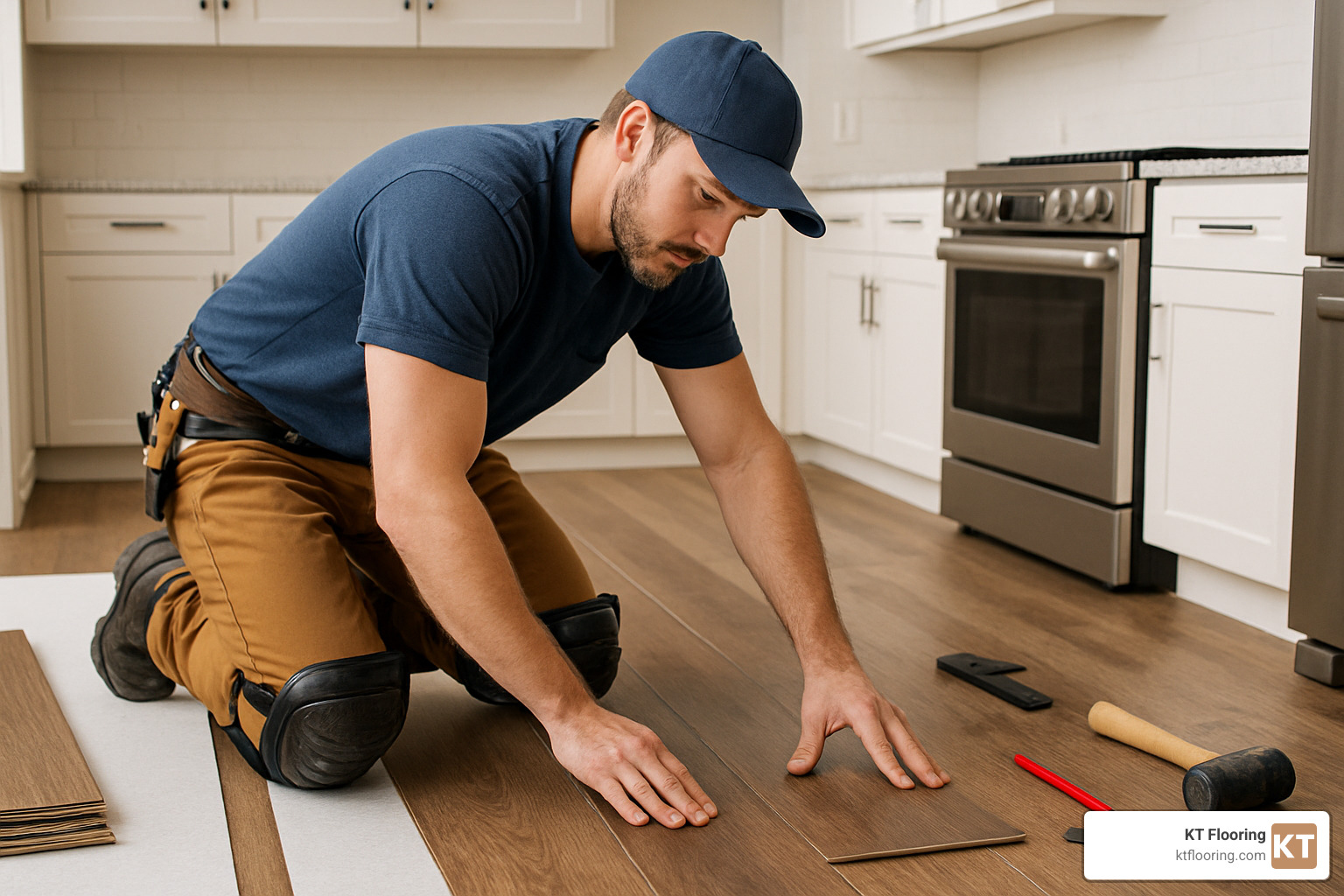
Let’s talk real numbers. After helping New Hampshire families choose the best flooring for kitchens for over 50 years, I’ve learned that understanding the full cost picture upfront saves everyone headaches later. It’s not just about the pretty samples – you need to factor in labor, prep work, and those surprise costs nobody mentions until day two of installation.
The truth is, your total project cost depends on much more than just the flooring material. We’ve seen simple vinyl installations turn complicated when subfloors need major repair, and gorgeous hardwood projects stay on budget because the prep work was minimal.
Price Ranges & Lifespan
Here’s what you can realistically expect to invest, based on internet data (not KT Flooring pricing). These ranges reflect everything from basic builder-grade materials to premium designer options.
Budget-friendly choices typically run $3 to $8 per square foot installed and include basic vinyl flooring, standard laminate, sheet vinyl, and entry-level ceramic tile. These materials can look great and handle daily family life, especially if you choose quality brands within this range.
Mid-range options fall between $8 to $15 per square foot installed and cover luxury vinyl plank, engineered hardwood, and premium ceramic or basic porcelain tiles. This sweet spot often gives you the best balance of durability, appearance, and value for busy kitchens.
Premium materials start around $15 per square foot and can reach $50 or more for solid hardwood, natural stone, high-end porcelain, and specialty materials like cork or bamboo. These investments often pay off in both daily enjoyment and resale value.
Lifespan makes a huge difference in your long-term costs. Luxury vinyl typically lasts 15 to 20 years, while laminate needs replacement in 10 to 15 years. Ceramic tile can go 20 to 30 years, engineered hardwood often lasts 20 to 30 years, but solid hardwood can serve your family for 50 to 100+ years with proper care. Natural stone can literally last a lifetime when properly maintained.
Hidden Costs & Installation Complexity
Nobody likes surprises, especially expensive ones. Demolition and disposal of your existing flooring adds $1 to $3 per square foot based on internet data. If your subfloor needs leveling or repair – which we find during about 30% of our consultations – expect another $2 to $5 per square foot.
Underlayment costs $0.50 to $2 per square foot but can dramatically improve comfort and sound control. Transition strips and trim might seem minor at $3 to $15 per linear foot, but they add up quickly in kitchens with multiple doorways and cabinet interfaces.
Natural stone brings ongoing costs too. Annual sealing runs $1 to $3 per square foot based on internet data, and skipping this maintenance can lead to permanent staining or damage.
Professional installation protects your investment in ways that go beyond just making things look pretty. Our team’s five decades of experience means we spot potential problems before they become expensive repairs. We know when subfloors need attention, how to handle tricky cabinet cuts, and which materials work best with your home’s specific conditions.
DIY-Friendly Options
Some inexpensive flooring options genuinely work for confident DIYers. Peel-and-stick vinyl tiles are almost foolproof for small areas, while click-lock luxury vinyl planks and floating laminate floors can be weekend projects for handy homeowners.
Click-lock engineered hardwood systems have made real wood flooring more accessible to DIY installers, though the investment makes professional installation worth considering for warranty protection.
But here’s what we’ve learned after thousands of installations: even “easy” materials require proper subfloor preparation, precise cutting around appliances and cabinets, and seamless transitions between rooms. The difference between a good-looking floor and a professional-looking floor often comes down to these details that most homeowners tackle once in their lifetime, while our installers handle them daily.
That’s why we offer free in-home consultations. We can assess your specific situation, explain what’s involved, and help you decide whether DIY makes sense for your project and skill level.
Trends & Innovations for 2025 Kitchens
Style Snapshot
Oversized tiles (up to 48 × 48 inches) and classic checkerboard patterns are replacing basic 12 × 12 squares. Wood-look porcelain keeps getting so convincing that even installers take a second glance. Denim-blue neutrals are edging out gray for a fresh but timeless vibe.
Tech Upgrades
- SPC rigid-core LVP—rock-solid stability and zero water worries.
- Waterproof laminate—finally rivals vinyl for splash zones.
- Ultra-thin radiant mats—fit under almost any floor, controlled by smart thermostats.
- Built-in antimicrobial finishes—extra peace of mind for families.
Sustainability & Wellness
Recycled-content vinyl (up to 30 %) and carbon-tracked hardwood let eco-minded homeowners verify the footprint of their purchase. Cork’s natural antimicrobial qualities and rapid renewability are driving a welcome comeback.
Frequently Asked Questions about Kitchen Flooring
After helping thousands of New Hampshire families choose their kitchen flooring over five decades, we hear the same questions again and again. Let me share the answers that will save you time, money, and potential headaches down the road.
What flooring should be avoided in kitchens?
Carpet tops my “never install in kitchens” list. I’ve seen too many families struggle with sauce stains, grease absorption, and the impossible task of keeping carpet hygienic in a cooking space. Moisture gets trapped in carpet fibers, creating perfect conditions for mold and bacteria growth.
Softwood species like pine simply can’t handle the daily punishment of kitchen life. These woods dent easily from dropped pots and pans, and they lack the density needed for high-traffic areas. I always steer clients toward harder wood species if they’re set on hardwood flooring.
Unsealed solid hardwood is another mistake I see homeowners make. Without proper finishing, moisture from dishwasher steam, spills, and cleaning can cause warping, cupping, and permanent water stains. The wood essentially becomes a sponge for every kitchen mishap.
High-gloss tiles might look stunning in showrooms, but they become dangerously slippery when wet. I’ve had clients call about family members slipping on these surfaces after minor spills. Safety trumps style every time in my book.
Unfinished concrete without proper sealing is a nightmare waiting to happen. It stains permanently from everything – wine, oil, even water – and the porous surface can harbor bacteria no matter how much you scrub.
How do I match flooring to my kitchen design?
The secret is thinking about your kitchen as part of your whole home’s story, not an isolated room. During our free in-home consultations, I always start by looking at your cabinet colors and countertop materials to understand your existing palette.
Light floors work magic in smaller kitchens, making them feel more spacious and airy. However, they show dirt and scratches more readily, which matters if you have kids or pets. Darker floors are more forgiving with everyday wear but tend to show dust and pet hair more obviously.
For open-concept homes, your kitchen flooring needs to flow seamlessly into adjacent living spaces. I often recommend choosing a neutral foundation – think warm grays, soft beiges, or natural wood tones – that complements multiple rooms without competing for attention.
Neutral colors are your best friend for long-term satisfaction. They work with most design styles and won’t look dated when you decide to update your backsplash or cabinet hardware in a few years. I’ve seen too many homeowners regret bold flooring choices that seemed perfect initially but became limiting later.
Can I install heated floors under any material?
Radiant floor heating compatibility depends heavily on the material’s thermal properties and how it responds to temperature changes. The good news is that most modern flooring options work well with heated floors when installed correctly.
Porcelain and ceramic tiles are my top recommendations for heated floors because they conduct heat efficiently and distribute it evenly throughout the room. The thermal mass of tile means your floors stay warm longer, even after the heating system cycles off.
Luxury vinyl and engineered hardwood typically work excellently with radiant heating systems. These materials are engineered to handle temperature fluctuations without significant expansion or contraction. We always check manufacturer specifications to ensure compatibility.
Solid hardwood can be problematic because it expands and contracts more dramatically with temperature changes. Some species handle it better than others, but we generally recommend engineered alternatives for heated applications to avoid potential issues like gaps or cupping.
Natural stone works beautifully with radiant heat, though the installation may require thicker heating systems due to stone’s thermal mass. Once heated, stone floors provide wonderful, long-lasting warmth that feels luxurious underfoot during cold New Hampshire winters.
The key is working with experienced installers who understand both the flooring material and heating system requirements. Our team evaluates every aspect during consultations to ensure your best flooring for kitchens choice works perfectly with your comfort goals.
Conclusion
Finding the best flooring for kitchens isn’t just about picking the prettiest option in the showroom. It’s about understanding how your family really lives – from morning coffee spills to holiday dinner prep marathons. The right choice balances your lifestyle needs with your budget while creating a space you’ll genuinely love for decades.
Whether you’re drawn to the waterproof convenience of luxury vinyl, the timeless beauty of engineered hardwood, or the bulletproof durability of porcelain tile, there’s no single “perfect” answer. The best choice is the one that fits your specific situation and makes your daily kitchen routine easier, not harder.
At KT Flooring, we’ve been having these conversations with families across New Hampshire and Northeast Massachusetts for over 50 years. We’ve seen trends come and go, but we’ve also learned that the most successful kitchen flooring projects happen when homeowners really understand their options before making decisions.
That’s why we offer free in-home consultations throughout Hudson, Manchester, Lowell, Burlington, and surrounding communities. We come to your kitchen, see how you actually use the space, and help you steer the sometimes overwhelming world of flooring choices. No pressure, no sales pitch – just honest guidance from people who’ve seen it all.
Our relationships with top industry brands mean we can offer quality materials at competitive prices, backed by professional installation that protects your investment. We handle everything from subfloor preparation to final cleanup, so you can focus on planning your first meal on your beautiful new floor.
Ready to stop worrying about spills and start loving your kitchen floor? Contact us today for your free consultation. We’ll help you sort through the options, avoid common mistakes, and create a kitchen that works as hard as you do.
Your dream kitchen floor is just one conversation away. Visit our website to learn more about our flooring brands or call to schedule your consultation. After five decades in this business, we know that the best flooring for kitchens is the one that makes you smile every time you walk into your favorite room.
