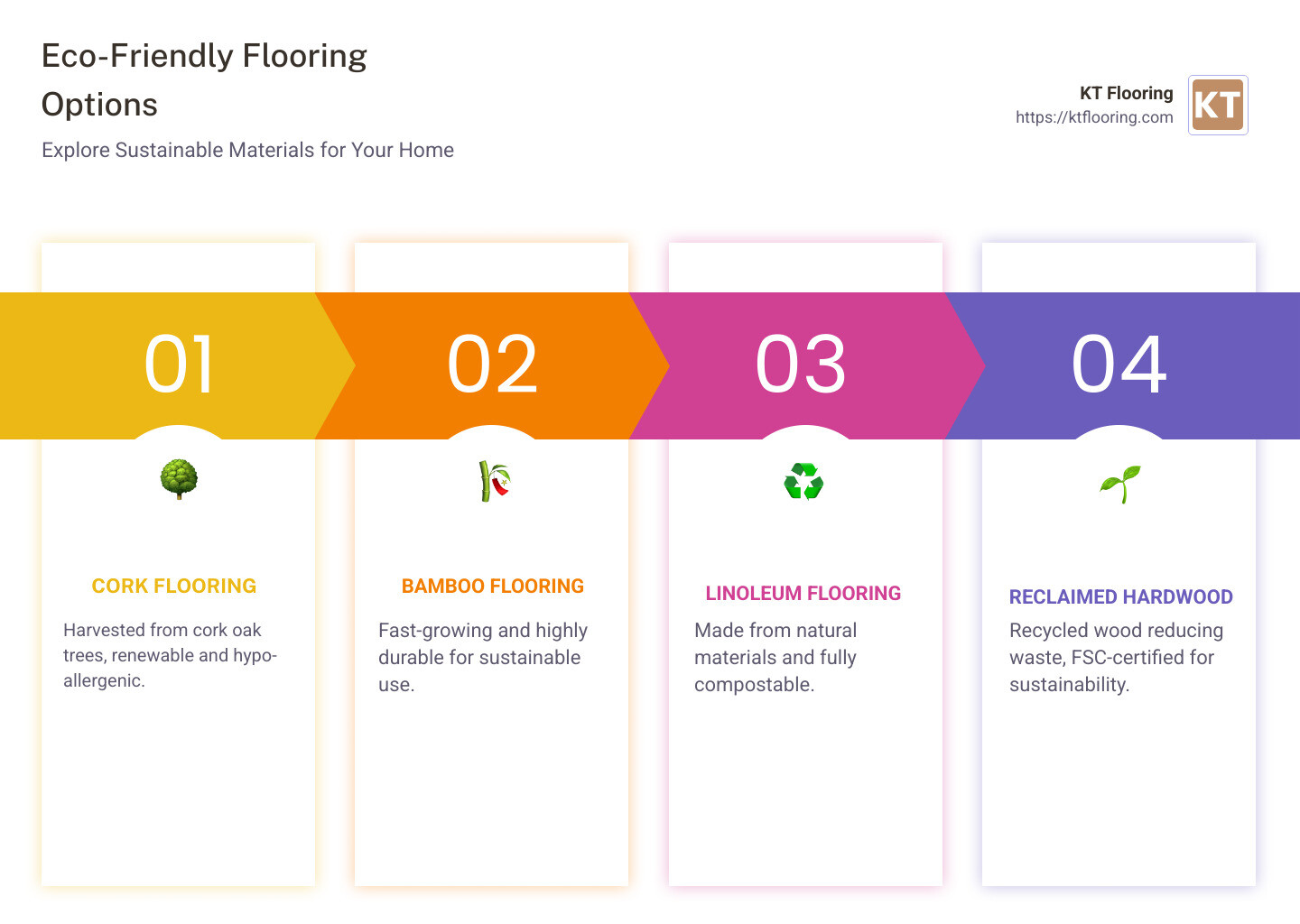
When it comes to revamping your home, choosing environmentally friendly flooring options can make all the difference for both your living space and the planet. As the demand for these sustainable materials grows, so too do the options available to homeowners like Helen. Here’s a quick peek at popular eco-friendly flooring materials you might consider:
- Cork: Renewable and harvested from trees without causing damage.
- Bamboo: Fast-growing grass with high durability.
- Linoleum: Made from natural materials and fully compostable.
- Reclaimed Hardwood: Offers longevity while reducing waste.
- Natural Stone: Extremely durable and recyclable.
Incorporating environmentally friendly flooring options into your home doesn’t just boost style—it also champions the circular economy and promotes better indoor air quality. Opting for these choices supports a sustainable lifestyle that aligns with modern eco-conscious values.
I’m Christopher Talty, owner of KT Flooring with over 50 years in the industry. Our team specializes in providing environmentally friendly flooring options to improve New Hampshire and Massachusetts homes. My expertise ensures you get the beautiful, sustainable flooring you desire with minimal disruption.
Understanding Environmentally Friendly Flooring Options
When selecting environmentally friendly flooring options, it’s crucial to consider factors like renewable resources, recycled content, and a low carbon footprint. These elements not only contribute to a healthier planet but also to a more sustainable home environment.
Renewable Resources
Opting for flooring made from renewable resources is a great way to ensure sustainability. Materials like cork and bamboo are excellent examples. Cork is harvested from the bark of cork oak trees without harming the tree itself, allowing the bark to regenerate. This makes cork a highly renewable choice. Bamboo, on the other hand, is a type of grass that can grow up to three feet in just 24 hours, making it one of the fastest renewable materials available.
Recycled Content
Using materials with recycled content helps reduce waste and conserve natural resources. Flooring options like reclaimed hardwood and recycled metal tiles are made from repurposed materials, which means they require less energy to produce compared to new materials. Reclaimed hardwood, for example, is sourced from old buildings, giving it a second life and reducing the need for new timber. Similarly, recycled metal tiles are crafted from scrap metals, keeping these materials out of landfills.
Low Carbon Footprint
A low carbon footprint is essential for eco-friendly flooring. This can be achieved by choosing materials that require less energy for production and transportation. Linoleum, made from natural materials like linseed oil, is a great choice because it is both compostable and long-lasting. Additionally, it can be burned as fuel at the end of its life, further minimizing its environmental impact.
Natural stone flooring, while durable and recyclable, can have a significant transport impact due to its weight. However, when sourced locally, its carbon footprint can be minimized, making it a viable option for sustainable flooring.
By understanding these key aspects of environmentally friendly flooring options, you can make informed decisions that benefit both your home and the environment. Whether you’re drawn to the rapid renewability of bamboo or the recycled appeal of reclaimed hardwood, there’s a sustainable flooring option that fits your needs.
Top Eco-Friendly Flooring Materials
Choosing the right flooring can make a big impact on the environment. Here are some top environmentally friendly flooring options that blend style with sustainability.
Cork Flooring
Cork is an amazing material. It’s harvested from the bark of cork oak trees, which means the tree keeps growing and producing more bark. This makes cork a highly renewable resource. Plus, cork flooring offers excellent insulation, keeping your home warm in winter and cool in summer. It’s also naturally hypo-allergenic, resisting mold and mildew.
Pros:
– Renewable and sustainable
– Provides insulation
– Hypo-allergenic
Cons:
– Needs regular maintenance
– Can be sensitive to humidity
Bamboo Flooring
Bamboo is a green superstar. It grows incredibly fast—up to three feet in just 24 hours! This rapid growth makes it a highly renewable resource. Bamboo is also durable, making it a great option for high-traffic areas. However, most bamboo is produced in the Pacific Rim, which can increase its transport impact.
Pros:
– Rapidly renewable
– Durable and strong
Cons:
– Transport impact due to overseas production
Linoleum Flooring
Linoleum is made from natural materials like linseed oil, making it both compostable and long-lasting. It’s a fantastic choice if you’re looking for a flooring option that minimizes environmental impact. Plus, at the end of its life, linoleum can be burned as fuel, further reducing waste.
Pros:
– Compostable and biodegradable
– Long-lasting
Cons:
– Limited color options compared to other flooring types
Reclaimed Hardwood
Reclaimed hardwood is a fantastic way to reuse materials. It’s sourced from old buildings, giving the wood a second life. This not only conserves resources but also ensures that you get a unique look with each plank. Look for FSC-certified options to ensure the wood comes from responsibly managed forests.
Pros:
– Recycled content
– Unique appearance
Cons:
– Can be more expensive than new hardwood
Natural Stone Flooring
Natural stone is formed through tectonic processes, making it a product of nature itself. It’s durable and can be recycled into other projects. However, due to its weight, the transport impact can be significant. Sourcing stone locally can help minimize this.
Pros:
– Durable and recyclable
– Natural beauty
Cons:
– Heavy, leading to higher transport impact
Choosing the right eco-friendly flooring involves balancing sustainability with practicality. Whether you prefer the renewable nature of cork and bamboo or the timeless appeal of reclaimed hardwood and natural stone, there’s an option that fits your style and conscience.

Healthier Flooring Choices
When it comes to creating a healthier home, your choice of flooring plays a crucial role. Traditional flooring can release harmful chemicals into the air, but there are better options available that are both safe and stylish.
Low VOCs
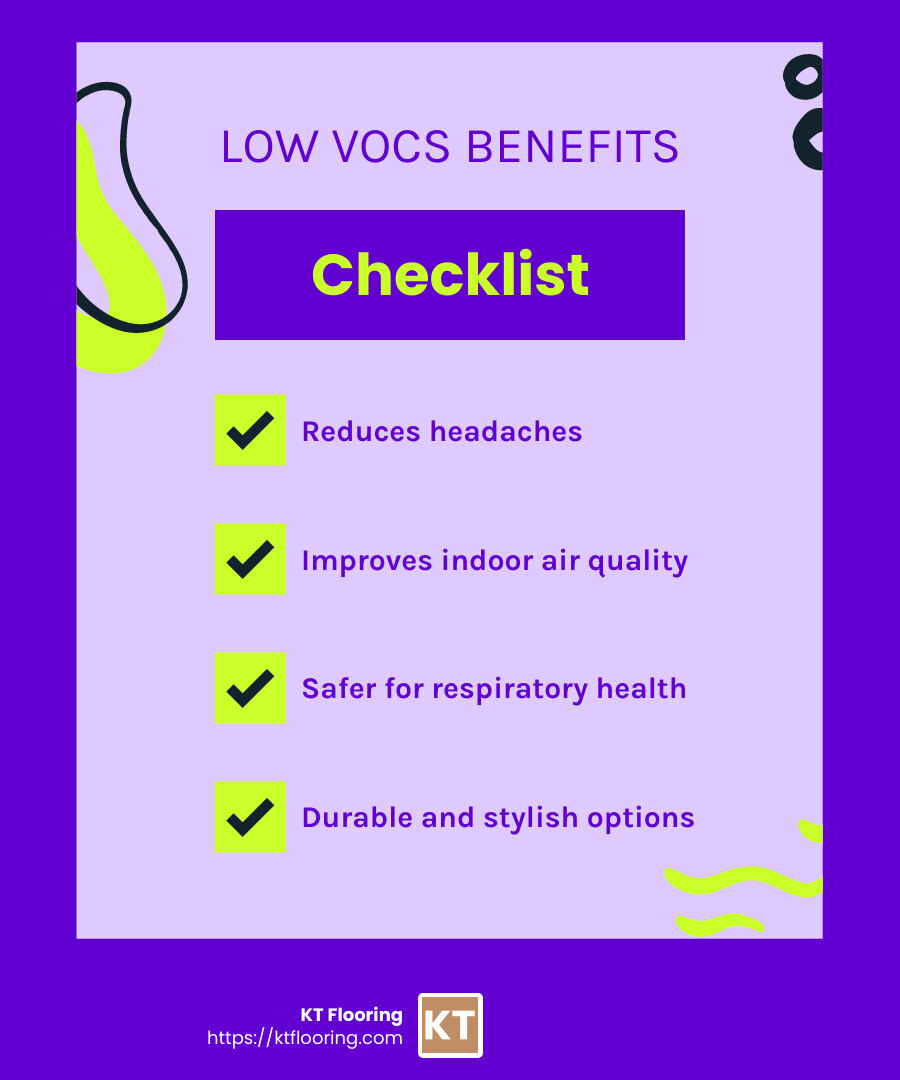
Volatile Organic Compounds (VOCs) are chemicals that can evaporate into the air from various products, including flooring materials. High levels of VOCs can lead to poor indoor air quality and health problems like headaches and respiratory issues. Choosing flooring with low VOCs is a smart move for a healthier home environment.
- Waterborne finishes are a great choice for hardwood floors. They offer durability while emitting fewer VOCs compared to oil-based finishes. This means you get a beautiful floor without compromising your air quality.
Non-Toxic Materials
Opting for non-toxic flooring materials can significantly improve your home’s indoor air quality. These materials are free from harmful chemicals that can off-gas into your living space.
- Natural linoleum and solid wood are excellent choices. Linoleum is made from natural materials like linseed oil, while solid wood provides a timeless look with minimal chemical treatments.
Improving Indoor Air Quality
Better indoor air quality starts with the right flooring. Here are some tips to ensure your floors contribute to a healthier home:
- Install with care: Avoid chemical-based glues. Instead, use water-based, low-VOC adhesives if needed.
- Consider installation methods: For carpets, tacking them down is a safer alternative to using glue, reducing potential pollutants.
- Regular maintenance: Use eco-friendly cleaning products to maintain your floors. This keeps them looking great without adding toxins to the air.
By choosing low-VOC, non-toxic flooring options, you not only protect the environment but also create a healthier living space for you and your family.
Frequently Asked Questions about Environmentally Friendly Flooring Options
Choosing the right flooring can be daunting, especially when you’re trying to be eco-conscious. Here, we address some common questions to help you make an informed decision.
What flooring is the most environmentally friendly?
When it comes to environmentally friendly flooring options, several materials stand out for their sustainability.
- Hardwood: Look for wood certified by the Forest Stewardship Council (FSC). This ensures the wood is sourced from responsibly managed forests. Hardwood is durable and can be recycled, making it a top eco-friendly choice.
- Cork: Harvested from the bark of cork oak trees, cork is a renewable resource. It provides excellent insulation and is naturally hypoallergenic, making it a great option for those with allergies.
- Bamboo: Known for its rapid growth, bamboo is a highly renewable material. It has a high strength-to-weight ratio, making it both durable and sustainable. That most bamboo is produced in the Pacific Rim, which can affect its carbon footprint due to transportation.
What is the best flooring without chemicals?
For those seeking flooring with minimal chemical exposure, consider these options:
- Solid Wood: With minimal treatment, solid wood floors offer a natural and timeless look. Opt for waterborne finishes to reduce VOC emissions.
- Natural Linoleum: Made from materials like linseed oil and cork dust, linoleum is biodegradable and doesn’t release harmful toxins. It’s also long-lasting, often outliving synthetic alternatives.
- Stone: Natural stone flooring is free from synthetic chemicals. It’s formed through natural tectonic processes and can be recycled, though its weight can make transportation energy-intensive.
Is luxury vinyl plank flooring environmentally friendly?
Luxury Vinyl Plank (LVP) flooring has made strides in becoming more eco-friendly. While traditional vinyl can be a source of VOCs, newer formulations focus on reducing these emissions.
- Eco-friendly formulations: Modern LVP is designed to improve indoor air quality by minimizing VOCs. It provides the look of natural materials at a lower cost without sacrificing durability.
- Improved indoor air quality: By choosing LVP with certified low VOC levels, you can enjoy a stylish floor that contributes to a healthier home environment.
When selecting flooring, consider not just the material but also the entire life cycle, from production to disposal. This holistic approach ensures your choice is as eco-friendly as possible.
Conclusion
At KT Flooring, we believe that choosing sustainable flooring is not just a trend—it’s a responsibility. Our commitment to providing eco-friendly flooring options ensures that our customers can enjoy beautiful, durable floors while also caring for the planet.
Our Commitment to Sustainability
With over 50 years of experience in the flooring industry, KT Flooring has always prioritized quality and environmental responsibility. We offer a range of environmentally friendly flooring options, including reclaimed hardwood, bamboo, and cork. These materials not only look stunning but also have a lower environmental impact due to their renewable and recyclable nature.
For those interested in hardwood, our selection includes options certified by the Forest Stewardship Council (FSC), ensuring that the wood comes from responsibly managed forests. This certification is a testament to our dedication to sustainability and quality.
Customer Satisfaction is Our Priority
We understand that choosing the right flooring involves more than just aesthetics. It’s about finding a balance between style, durability, and sustainability. Our team of experts is here to guide you through every step of the process, from selecting the perfect material to ensuring a flawless installation.
We offer free in-home consultations to help you make an informed decision that aligns with your values and lifestyle. Our experienced professionals are dedicated to delivering top-notch customer service and ensuring your complete satisfaction with your new eco-friendly floor.
Explore Our Eco-Friendly Options
Find the wide range of sustainable flooring options available at KT Flooring. Whether you’re interested in the timeless beauty of reclaimed hardwood or the modern appeal of bamboo, we have something for every taste and budget.
Visit our hardwood flooring page to learn more about our sustainable flooring solutions and how they can transform your space into a stylish and environmentally conscious haven.
By choosing KT Flooring, you’re not just investing in your home—you’re investing in a healthier planet. Together, let’s make a positive impact, one floor at a time.
