Flooring options for schools are critical decisions that impact not only the environment’s aesthetics but also its safety and durability. When selecting the appropriate flooring, it’s essential to consider high-traffic resistance, moisture resistance, and cost-effectiveness. Here’s a quick overview of popular choices:
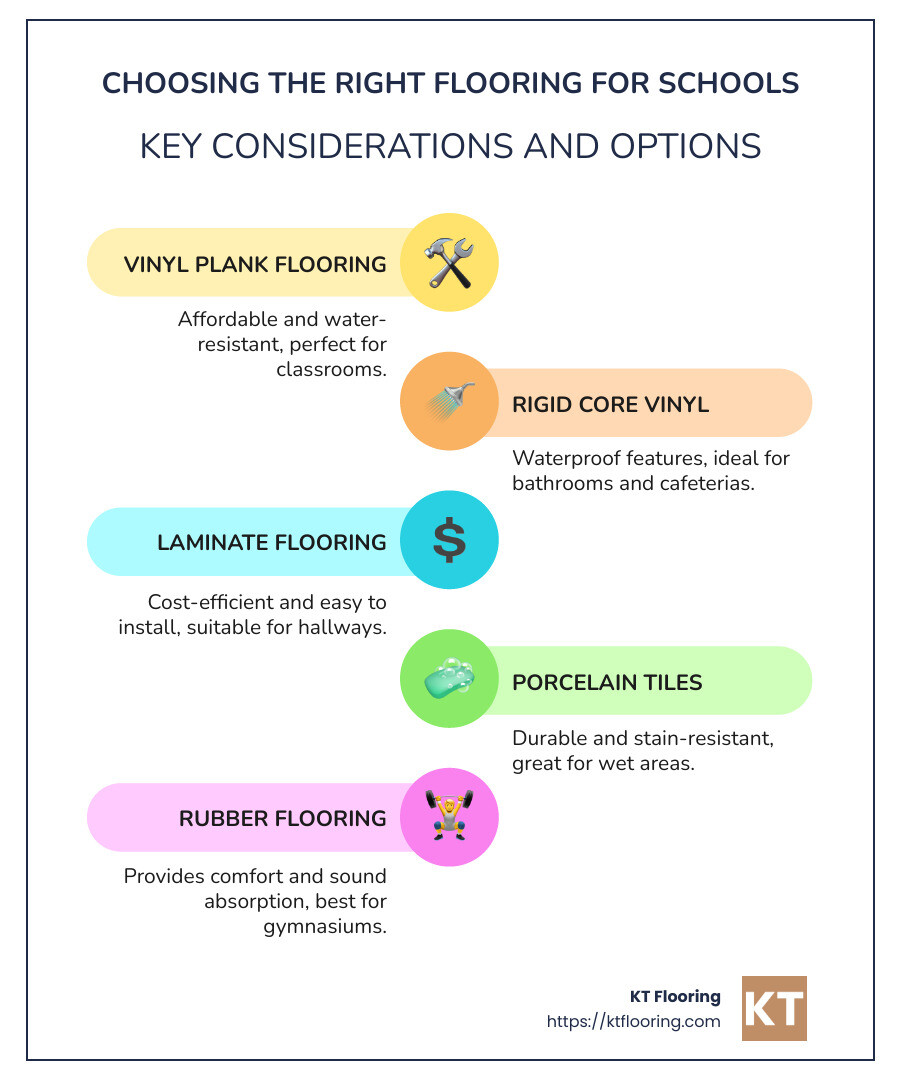
- Vinyl Plank Flooring: Affordable and water-resistant, perfect for classrooms.
- Rigid Core Vinyl: Offers waterproof features, ideal for bathrooms and cafeterias.
- Laminate Flooring: Cost-efficient and easy to install, suitable for hallways.
- Porcelain Tiles: Durable and stain-resistant, great for wet areas.
- Rubber Flooring: Provides comfort, sound absorption, best for gymnasiums and high-activity zones.
Choosing the right flooring involves balancing durability and safety while staying within budget constraints. Safety is paramount in school environments, requiring slip-resistant materials to prevent accidents while ensuring the surfaces withstand daily wear and tear.
My name is Christopher Talty, owner of KT Flooring. With over 50 years of experience in delivering quality flooring solutions in New Hampshire and Northeast Massachusetts, I understand the nuances and demands of selecting the right flooring options for schools. Let’s explore the factors that make certain flooring options stand out for education facilities.
Flooring options for schools vocabulary:
Best Flooring Options for Schools
Selecting the right flooring options for schools is crucial. It impacts not just the look, but also the safety and durability of the environment. Let’s explore some top choices:
Vinyl
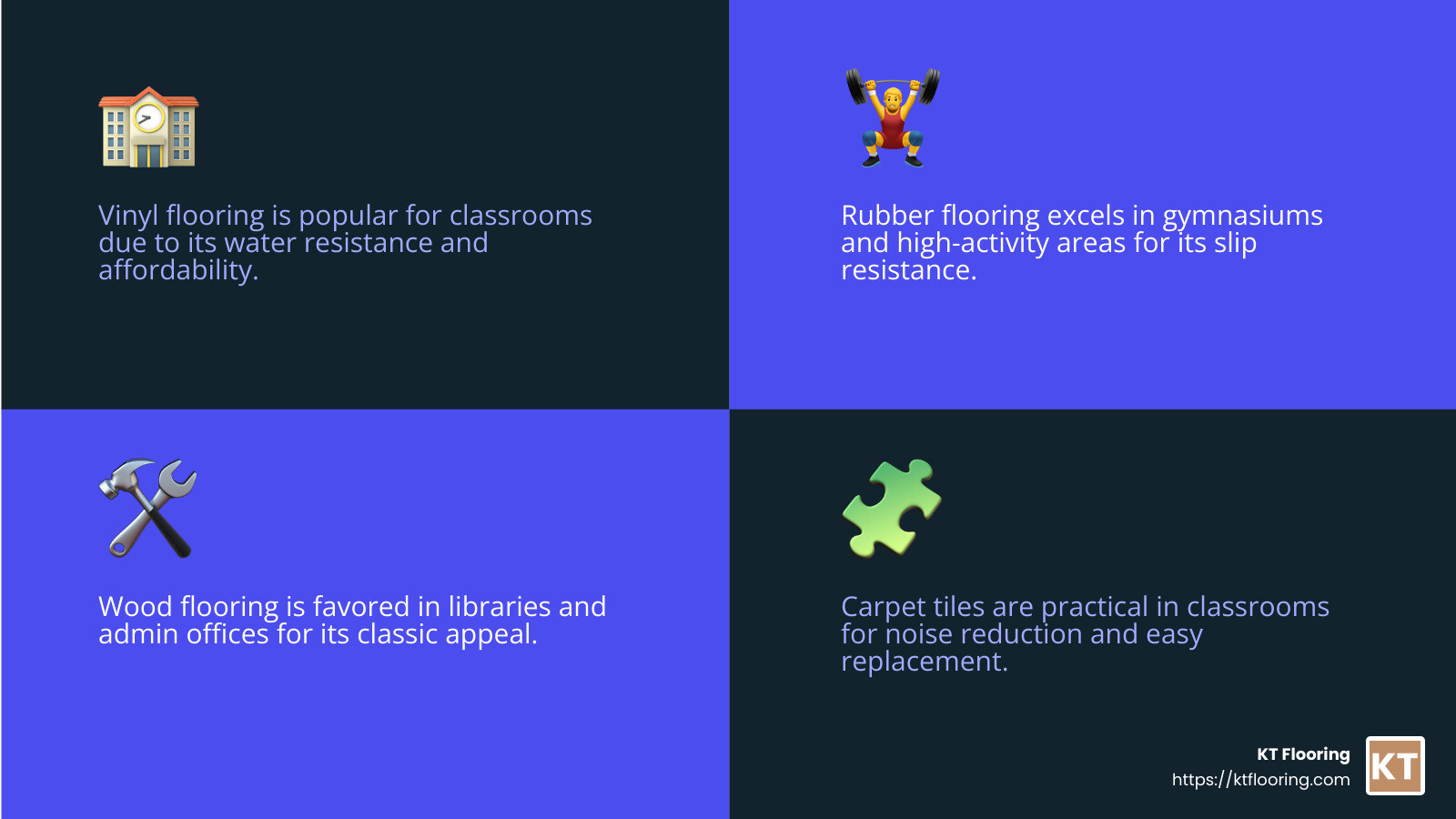
Vinyl flooring is a top contender for schools due to its affordability and resilience. It comes in various forms, such as Vinyl Plank Flooring and Rigid Core Vinyl. Vinyl plank is cost-effective and water-resistant, making it an excellent choice for classrooms. Its ease of maintenance is a bonus for busy school staff.
Rigid Core Vinyl is even more robust, offering waterproof features perfect for bathrooms and cafeterias. Although slightly pricier than standard vinyl, its durability is worth the investment.
Wood
Wood flooring brings a classic and warm feel to educational spaces. While it may not be as water-resistant as vinyl, it offers a timeless aesthetic. Wood is often used in areas like libraries and administrative offices where the traffic is moderate, and the environment is more controlled.
Rubber
Rubber flooring is ideal for areas that require comfort and sound absorption, such as gymnasiums and high-activity zones. It provides excellent slip resistance and durability, making it a safe choice for schools.
Rubber is also low-maintenance, with self-healing properties that make it a long-lasting option. In cafeterias, rubber sheet or tile flooring can reduce noise and prevent slips, keeping students safe during busy lunch hours.
Carpet
Carpet, particularly broadloom or modular carpet tiles, is often used in classrooms and libraries. It provides a soft surface, reducing noise and offering comfort. Carpet tiles are easy to replace if damaged, making them a practical choice for areas with heavy foot traffic.
Laminate
Laminate flooring is a budget-friendly option that mimics the look of wood. It’s durable and easy to install, which helps keep costs down. Laminate is suitable for hallways and common areas where durability and aesthetic appeal are both important.
In summary, choosing the right flooring for schools involves considering the specific needs of each area. Whether it’s the affordability and water resistance of vinyl, the classic appeal of wood, or the comfort of rubber, each material offers unique benefits that cater to the demands of educational environments.
Flooring Options for Schools: Room-Specific Recommendations
When designing school spaces, choosing the right flooring for each room is key. Different areas have different needs, so let’s dive into the best options for each.
Classrooms
Classrooms are busy hubs of activity, requiring flooring that is both durable and comfortable. Broadloom carpet and modular carpet tiles are popular choices. They provide a soft surface that reduces noise and offers comfort for students, especially younger ones who spend time on the floor. Carpet tiles are easy to replace if damaged, making them practical for high-traffic areas.
Luxury Vinyl Tile (LVT) is another excellent option for classrooms. It combines durability with a wide range of design options, allowing schools to maintain an inviting atmosphere. LVT is resilient against spills and easy to clean, a feature that busy classrooms benefit from greatly. When considering costs, it’s important to note that prices can vary widely, with some options being up to three times more expensive than the average.
Cafeterias
Cafeterias are high-traffic areas where spills are common. Rubber sheet and rubber tile flooring are top choices here. Rubber is slip-resistant, reducing the risk of accidents, and it absorbs sound, which helps manage the noise level in busy lunchrooms.
Luxury Vinyl Tile (LVT) is another option for cafeterias. While it offers a broader range of design aesthetics, it’s important to ensure it has a commercial wear layer to withstand the constant movement of tables and chairs. If sound is a concern, specialized underlayment can help. As with other flooring options, costs can vary significantly, with high-end choices being much more expensive than the average.
Hallways
School hallways see constant foot traffic, so slip resistance is crucial. Rubber flooring is a standout choice, offering durability and safety. Its self-migrating waxes make maintenance easy, keeping halls looking good without the need for waxing.
If budget constraints make rubber a challenge, Luxury Vinyl Tile (LVT) serves as a cost-effective alternative. While it may not match rubber’s slip resistance, it provides good durability and a range of design choices. Pricing for these materials can range widely, with some options costing significantly more than the average.
Gymnasiums
Gymnasiums require specialized flooring to support sports activities. PVC sports flooring is ideal for such spaces, offering the right slip coefficient to reduce sports injuries. This type of flooring is durable and can handle the demands of various sports.
Wood flooring is also used in gymnasiums for its classic look and performance. It provides a smooth surface for sports like basketball, though it may require more maintenance than PVC options. The cost of gym flooring can vary greatly, with high-end options being several times more expensive than the average.
Bathrooms
Bathrooms need flooring that can handle moisture and is easy to clean. Porcelain tile is the top choice here. It’s waterproof and stylish, making it both practical and appealing. Porcelain’s durability ensures it can withstand high traffic without showing wear.
Sheet vinyl is another option for bathrooms, offering slip resistance and easy maintenance. It’s a cost-effective choice that provides a clean and safe environment for students. As with other flooring types, prices can vary, with some options being significantly more expensive than the average.
By tailoring flooring choices to the specific needs of each room, schools can create safe, durable, and inviting environments for students and staff alike.
Key Features of School Flooring
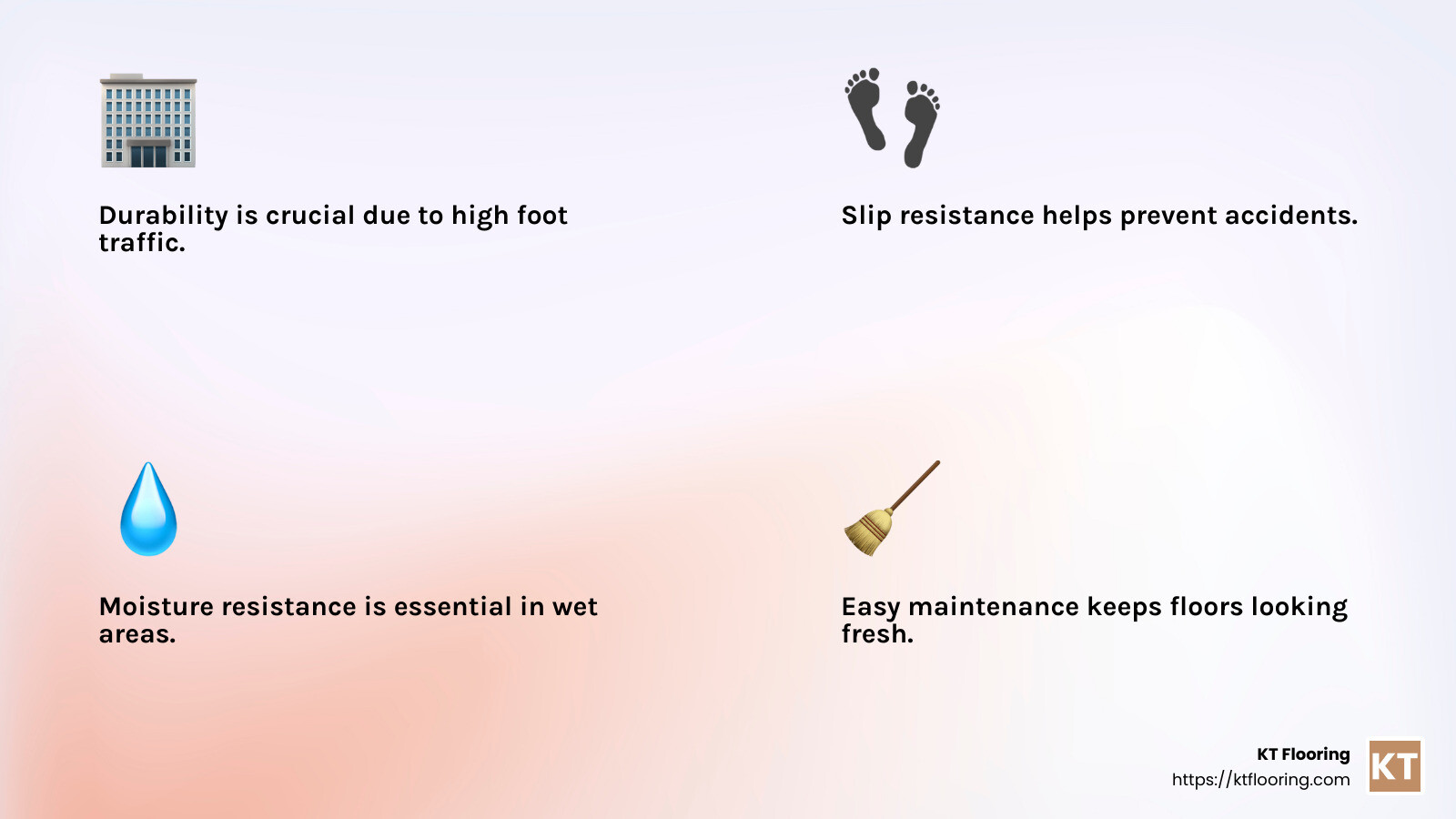
When choosing flooring for schools, several key features should guide your decision. These include durability, slip resistance, moisture resistance, and ease of maintenance. Let’s break down each of these important factors.
Durability
School floors take a beating—hundreds of students walking, running, and sometimes even sliding across them every day. Durable flooring is essential to withstand this constant foot traffic. Vinyl Composition Tile (VCT) and rubber flooring are both known for their exceptional durability. VCT, for instance, is designed to handle high traffic and provides long-lasting performance without frequent replacements. Rubber flooring also excels in durability, especially in areas like gymnasiums and hallways, where resilience is key.
Slip Resistance
Safety is a top priority in schools, and slip resistance is a critical feature in preventing accidents. Rubber flooring is naturally slip-resistant, making it a preferred choice for areas prone to spills, such as cafeterias and bathrooms. Porcelain tile also offers good slip resistance when unpolished, making it suitable for bathrooms where water is often present.
Moisture Resistance
Moisture can be a problem in schools, especially in bathrooms, cafeterias, and entryways. Porcelain tile is excellent for bathrooms due to its waterproof nature. Rigid core vinyl is another great option for areas that might get wet, as it is entirely waterproof. This makes it ideal for locker rooms and cafeterias where spills are common.
Ease of Maintenance
Schools need flooring that is easy to clean and maintain. Vinyl plank flooring is celebrated for its ease of maintenance—simple sweeping and mopping keep it looking fresh. Rubber flooring also requires minimal upkeep, as its self-migrating waxes reduce the need for regular waxing. In classrooms, modular carpet tiles are practical because they can be easily replaced if damaged, ensuring that maintenance is both manageable and cost-effective.
By focusing on these key features, schools can select flooring materials that not only meet their practical needs but also contribute to a safe and welcoming learning environment. Each feature plays a crucial role in creating a functional and aesthetically pleasing space for students and educators.
Frequently Asked Questions about School Flooring
What type of floor do they use in schools?
Schools use a variety of flooring types to meet different needs. Vinyl is a popular choice due to its durability and cost-effectiveness. It’s great for high-traffic areas like hallways and cafeterias. Rubber flooring is often used in gymnasiums and cafeterias because it’s slip-resistant and sound-absorbing. Wood is also common, especially in older school buildings, for its classic look and durability. Carpet tiles are frequently used in classrooms and libraries for their comfort and ease of replacement.
What type of flooring is best with kids?
When choosing flooring for areas frequented by children, safety and comfort are key. Laminate flooring is a great option as it is durable and can withstand spills and rough play. It’s also easy to clean, which is a big plus for busy school environments. Carpet tiles provide a soft surface for kids to sit and play on. They are easy to replace if stained or damaged, making them a practical choice for classrooms. Rubber flooring is excellent for its slip resistance and cushioning, reducing the risk of injuries from falls.
How do you maintain school flooring?
Maintaining school flooring involves regular cleaning and occasional repairs. Vinyl and laminate floors require simple sweeping and mopping to keep them clean. For rubber flooring, a damp mop and neutral pH cleaner will do the trick. It’s important to avoid harsh chemicals that can damage the floor. Carpet tiles should be vacuumed regularly, and individual tiles can be swapped out if they become stained or worn.
Pro Tip: To extend the life of any school flooring, consider placing entryway mats at all entrances to trap dirt and moisture. Regularly scheduled maintenance, like waxing VCT (Vinyl Composition Tile) floors, can also help maintain their shine and durability.
By choosing the right flooring and maintaining it properly, schools can create a safe, clean, and welcoming environment for students and staff alike.
Conclusion
At KT Flooring, we understand that choosing the right flooring solutions for schools is crucial for creating a safe and welcoming environment. With over 50 years of experience, our team is dedicated to providing top-quality flooring options that meet the unique needs of educational institutions across New Hampshire and Northeast Massachusetts.
Our commitment to customer satisfaction is reflected in our wide range of products, including durable vinyl, slip-resistant rubber, and comfortable carpet tiles. We offer free in-home consultations to ensure you find the perfect fit for your school’s requirements and budget.
Whether you’re looking to upgrade your classrooms with easy-to-maintain laminate or improve your cafeterias with sound-absorbing rubber, our expert team is here to guide you every step of the way. Our goal is to deliver a flooring solution that not only looks great but also stands up to the demands of a busy school environment.
For more information on how we can help with your school flooring needs, visit our commercial flooring installation page.
Let us help you create a safe, durable, and beautiful space for your students and staff!
