Find Your Perfect Hardwood Floor Installer in Boston
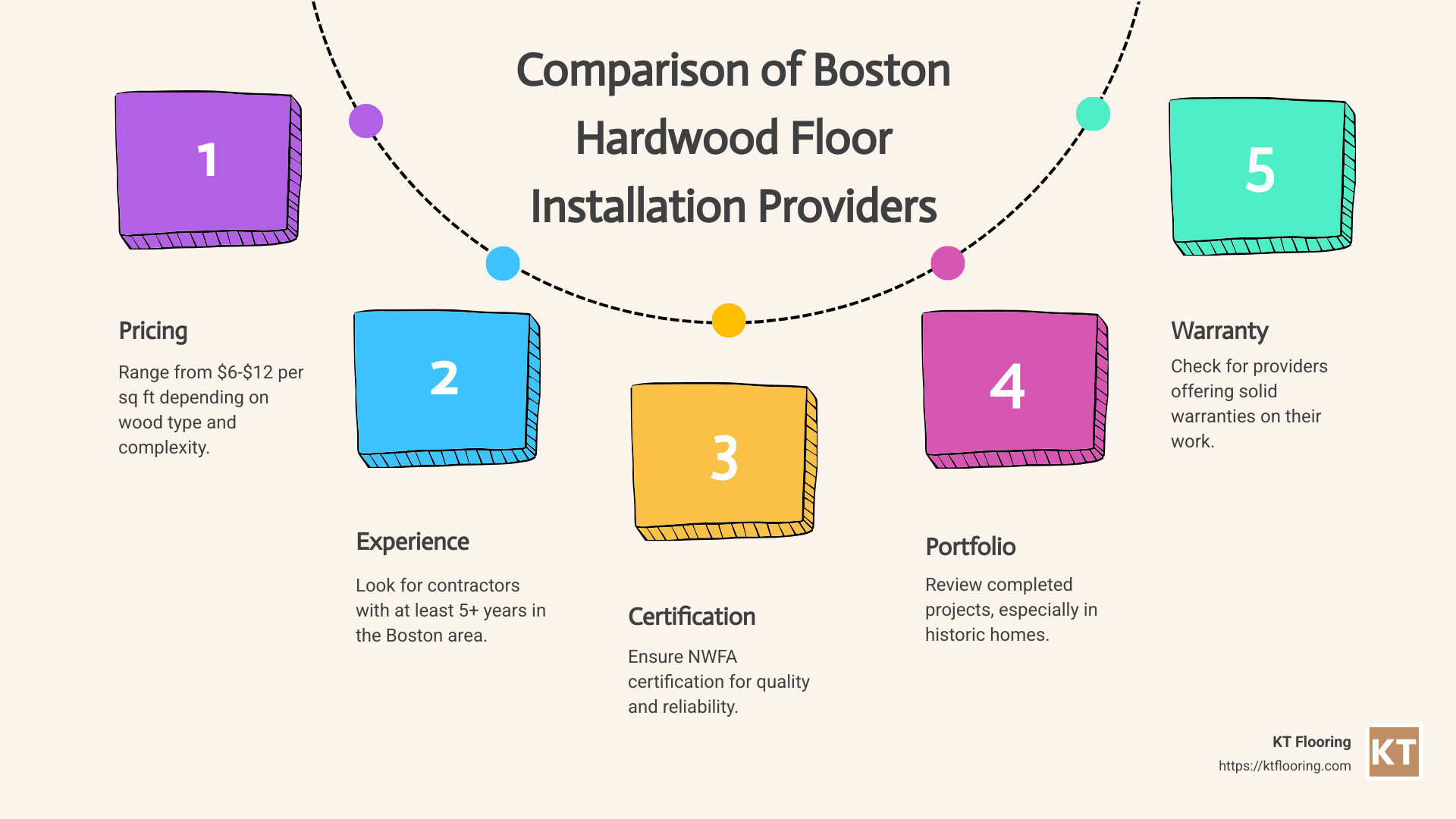
Hardwood floor installation boston ma services typically cost between $6-$12 per square foot with professional installation, with prices varying based on wood type, project complexity, and contractor experience. Most Boston homeowners spend $3,500-$10,500 for a standard installation in a 500 square foot area.
- Average Cost Range: $6-$12 per square foot (labor and materials)
- Total Project Cost: $3,500-$10,500 for 500 sq ft
- Installation Timeline: 3-7 days for standard projects
- Top Woods for Boston Climate: Red Oak, White Oak, Maple
- Best Time for Installation: Fall or Spring (optimal humidity)
Boston’s unique climate and historic homes require specialized knowledge when installing hardwood flooring. The city’s seasonal humidity fluctuations and older home structures present challenges that only experienced installers can properly address. When searching for a hardwood flooring professional in Boston, look for contractors with:
- Minimum 5+ years of experience in the Boston area
- NWFA (National Wood Flooring Association) certification
- Strong portfolio of completed Boston projects
- Knowledge of historic home requirements
- Understanding of local building codes
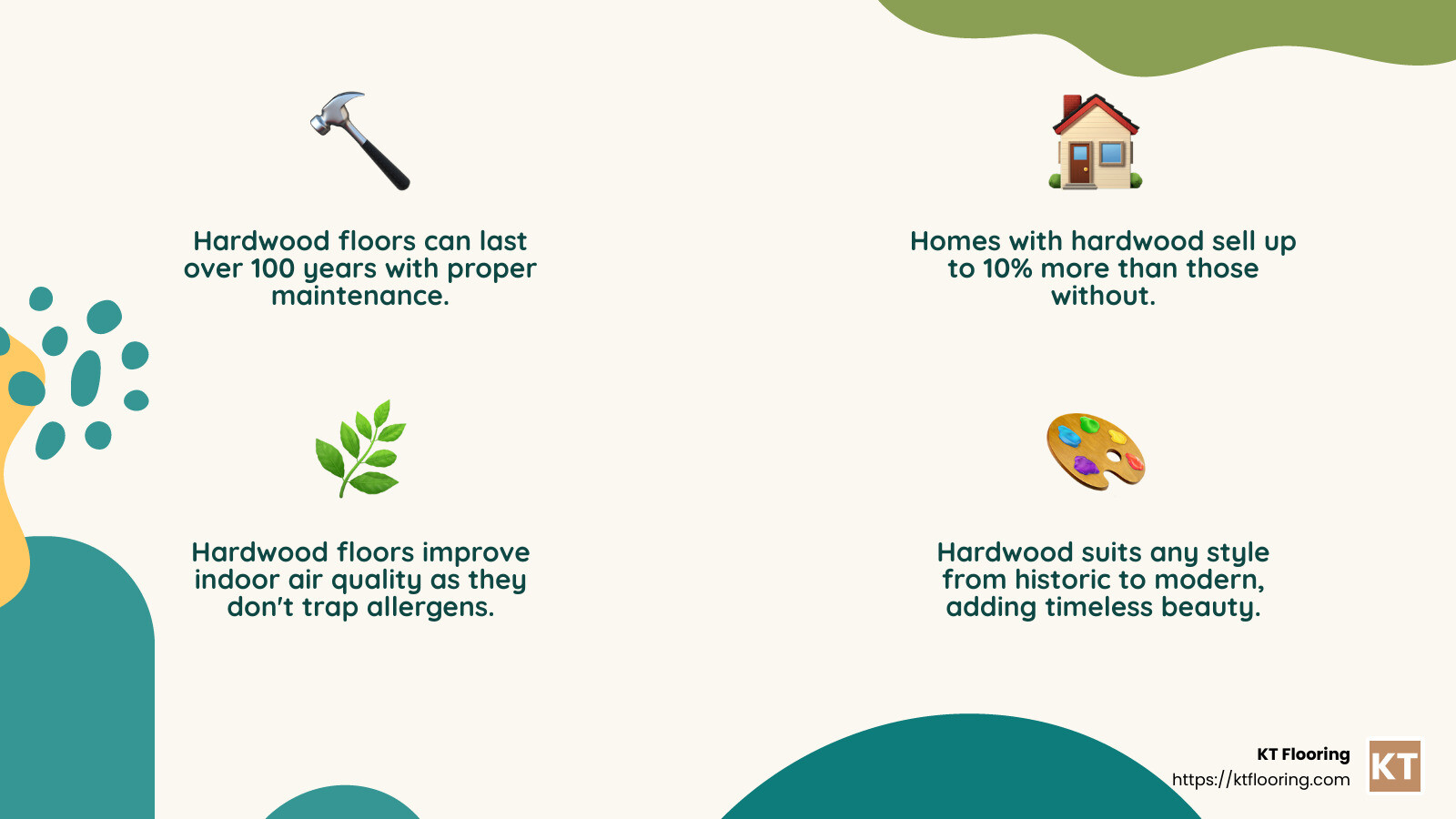
Many Boston homeowners choose hardwood flooring for its timeless appeal, durability against harsh New England winters, and ability to increase property values in the competitive Boston real estate market.
I’m Christopher Talty, owner of KT Flooring, bringing quality hardwood floor installation boston ma and surrounding areas since 1974, with a deep understanding of New England’s unique flooring challenges. Our team specializes in delivering exceptional craftsmanship custom to Boston’s historic homes and modern residences alike.
The Benefits of Installing Hardwood Floors in Boston
There’s something special about walking into a Boston home and feeling the solid warmth of hardwood floors beneath your feet. As a homeowner in this historic city, your flooring choice matters – not just for today, but potentially for generations to come.
Durability in Boston’s Climate
Boston weather throws everything at us – from nor’easters dumping feet of snow to those muggy August days when the humidity makes everything stick. Through it all, hardwood floor installation Boston MA proves its worth year after year.
Those beautiful oak floors in Guide Hill townhomes? Many have weathered over 100 New England winters and still look stunning. With proper care, your hardwood floors can become an heirloom feature of your home.
“We believe your floors are the foundation of your home,” is something we at KT Flooring truly mean. When installed correctly, hardwood creates a stable base that stands up to Boston’s seasonal mood swings – from bone-dry heated air in winter to summer’s coastal humidity.
Increased Home Value
In Boston’s competitive real estate market, hardwood floors give you a genuine edge. Homes featuring hardwood typically sell faster and command higher prices than similar properties with carpeting or laminate. The National Wood Flooring Association has found that properties with wood floors can sell for up to 10% more than those without – a significant premium in Boston’s already valuable housing market.
Think about it: When you’re browsing Zillow listings around Jamaica Plain or Charlestown, don’t those hardwood floor photos instantly make a property more appealing?
Timeless Aesthetic Appeal
From Guide Hill’s historic brownstones to sleek Seaport condos, hardwood floors complement virtually any architectural style or interior design vision. The natural warmth and character of wood creates an inviting atmosphere that never feels dated or trendy – it’s simply timeless.
Hardwood floor installation Boston MA opens up endless design possibilities. Light maple brightens smaller Back Bay apartments, while rich walnut adds sophistication to Cambridge Victorians. Your floors become the foundation for your entire design story.
Health Benefits
Boston winters keep us indoors for months at a time, making indoor air quality especially important. Unlike carpet, hardwood doesn’t harbor allergens, dust, or pet dander. For families with allergies or asthma, this can make a meaningful difference in comfort and health during those long indoor months.
Hardwood is also incredibly easy to clean – a quick sweep or damp mop removes winter’s salt residue or summer’s tracked-in dirt without harsh chemicals. This makes it an excellent choice for families with children or pets.
Versatility Across Boston Neighborhoods
Whether you own a triple-decker in Southie, a colonial in Dorchester, or a modern loft in Cambridge, hardwood floor installation Boston MA adapts beautifully to every neighborhood’s unique character. The variety of wood species, stain colors, and finishes means you can find the perfect match for your home’s particular style.
Oak might be the traditional Boston choice, but maple offers exceptional durability for active households. Cherry brings warmth to north-facing rooms, while ash provides distinctive grain patterns. At KT Flooring, we help homeowners find the perfect wood to complement their home’s unique character.
Hardwood floors aren’t just beautiful – they’re practical for Boston living. They stay cool during summer heat waves, work wonderfully with radiant heating systems during winter, and provide acoustic benefits in multi-unit buildings. They’re also a sustainable choice that can last for generations, reducing the environmental impact of frequent flooring replacements.
When you choose hardwood floor installation Boston MA, you’re not just making a design choice – you’re making an investment in your home’s future that brings daily enjoyment and lasting value.
Exploring the Types of Hardwood Flooring Available
Boston homeowners have numerous options when selecting hardwood flooring. Understanding the different types available helps ensure you choose the right wood for your specific needs, style preferences, and budget.

Solid Hardwood Options
Red Oak
When we talk about hardwood floor installation Boston MA projects, red oak consistently remains the star of the show in New England homes. It’s not just popular—it’s practically a Boston tradition. With its impressive Janka hardness rating of 1290, red oak stands up beautifully to the foot traffic of busy Boston families.
What I love about red oak is how its prominent grain patterns cleverly hide minor scratches and dents—perfect for homes with children or pets. Those warm, reddish-pink undertones bring a cozy feeling to traditional New England interiors, especially when the winter winds are howling outside. And because it’s so widely available, you’ll find it’s often more budget-friendly than exotic alternatives.
White Oak
In recent years, I’ve noticed white oak surging in popularity, especially in more contemporary Boston homes and renovations. It edges out red oak in durability with a Janka hardness rating of 1360, giving you that extra bit of resilience against dropped holiday ornaments or sliding furniture.
The distinctive grain patterns of white oak feature longer, more flowing lines that create a sense of spaciousness—ideal for Boston’s sometimes compact living spaces. Its cooler, grayish-brown tones complement modern design schemes beautifully. As a bonus, white oak offers better resistance to moisture than many alternatives, making it a smart choice for entryways where boots drip melting snow during those long Boston winters.
Maple
Many of our Boston clients gravitate toward maple when they’re looking for clean, consistent elegance. With its subtle grain patterns and exceptional hardness (1450 on the Janka scale), maple creates floors that feel both sophisticated and durable.
Maple’s naturally light, bright appearance works wonders in Boston’s historic homes where windows might be smaller and natural light precious. It reflects what light there is, making spaces feel larger and more open. For families with children or high-traffic homes, maple’s resistance to wear makes it a practical investment that doesn’t sacrifice style.
Exotic Hardwoods
For Boston homeowners looking to make a statement, exotic options like Brazilian cherry or walnut offer rich, dramatic coloring that turns floors into conversation pieces. These premium woods do command higher price points—often starting at $12 per square foot and ranging up to $25 or more for installation—but the visual impact is undeniable. In historic Guide Hill townhomes or luxury Back Bay condos, these distinctive floors create an impression that lasts.
Engineered Hardwood
Engineered hardwood has become increasingly valuable for hardwood floor installation Boston MA projects, especially given our unique climate challenges.
Unlike solid hardwood, engineered products feature a real hardwood veneer bonded to multiple layers of high-quality plywood or fiberboard. This construction makes them remarkably stable during Boston’s notorious humidity fluctuations—from sticky summer days to bone-dry heated interiors in winter.
What makes engineered hardwood especially practical for Boston homes is its versatility. It can be installed in basements and directly over concrete subfloors, where solid hardwood simply isn’t recommended. For condo owners in buildings with concrete construction, this opens up beautiful hardwood possibilities that weren’t previously available.
Many of our clients appreciate the installation options, including click-lock systems that can reduce installation time and cost. Higher-quality engineered products feature wear layers up to 1/6 inch thick that can be refinished multiple times—giving you decades of beautiful service.
As I often tell my customers, “Engineered hardwood flooring constructed with 9 plys offers a thicker wear layer than typical products,” making it a durable option for many Boston homes.
Reclaimed Hardwood
There’s something about reclaimed wood that resonates deeply with Boston’s historic character. Sourced from old barns, factories, and buildings, these floors bring stories and history into your home.
Walking across reclaimed pine from a 19th-century Lowell mill or oak from a Vermont barn connects you to New England’s rich past. The unique character, patina, and history simply can’t be replicated in new materials. For environmentally conscious homeowners, reclaimed wood offers sustainability credentials that are hard to beat.
What many don’t realize is that reclaimed wood often demonstrates exceptional stability due to its age—the wood has fully settled into its final form decades ago. This makes it particularly well-suited to historic home renovations in neighborhoods like Guide Hill and Back Bay, where authenticity matters.
Prefinished vs. Site-Finished
Boston homeowners face another important decision beyond wood type: whether to choose prefinished or site-finished floors.
Prefinished hardwood arrives with its stain and protective coatings already applied at the factory. The advantage? You can walk on your new floors immediately after installation—a real convenience for busy Boston families. The factory-applied finishes are typically harder and more durable than those applied on-site, standing up well to our tough New England winters and the salt and sand that inevitably get tracked in.
Site-finished floors, by contrast, are installed raw and finished in your home. This approach allows for completely customized stain colors to match existing woodwork in historic homes. It also creates a completely level surface with no bevels between boards, giving a more traditional, seamless appearance that many Boston homeowners prefer, especially in older homes where authenticity is valued.
Both approaches have their merits, and the right choice depends on your specific home, timeline, and aesthetic preferences. At KT Flooring, we’re happy to walk you through the pros and cons of each approach for your particular situation.
How Boston’s Climate Affects Hardwood Flooring
Boston’s distinctive climate creates unique challenges for hardwood floors that every homeowner should understand before investing in hardwood floor installation Boston MA. The city’s weather patterns can significantly impact how your floors perform over time, making it essential to choose the right materials and installation approach.
Seasonal Humidity Fluctuations
Anyone who’s lived through a full year in Boston knows the dramatic seasonal shifts we experience. These changes affect your hardwood floors in ways you might not expect:
During our harsh winters, indoor heating systems dramatically reduce humidity levels, causing wood to contract. This natural shrinkage can create those annoying gaps between floorboards that catch dirt and debris. Then summer arrives, bringing higher humidity that makes wood expand. Without proper installation that accounts for this movement, floors can potentially crown, cup, or even buckle in extreme cases.
Spring and fall serve as transitional seasons with fluctuating humidity levels that can stress your flooring as it repeatedly expands and contracts.
“Why do my floors shrink and expand?” is something we hear from Boston homeowners all the time. The simple answer is that wood is hygroscopic—it naturally absorbs and releases moisture based on the environment around it. At KT Flooring, we account for these natural changes during installation by leaving appropriate expansion gaps and ensuring proper acclimation before installation begins.
Temperature Considerations
Beyond humidity, Boston’s temperature swings also play a significant role in how your hardwood floors perform:
Those bitter cold winters don’t just affect you—they make wood contract and feel noticeably colder underfoot. This is why many Boston homeowners consider adding radiant heating systems beneath their hardwood floors. However, these systems require careful consideration as not all wood species are compatible with the constant heat exposure.
The rapid temperature changes we often experience during seasonal transitions can put additional stress on flooring materials, potentially leading to premature aging if the wrong product is selected.
Best Hardwood Options for Boston’s Climate
After decades of installing floors throughout Boston’s varied neighborhoods, we’ve learned which woods stand up best to our unique climate challenges:
| Wood Type | Stability in Boston Climate | Resistance to Humidity Changes | Cost Range | Best Applications |
|---|---|---|---|---|
| White Oak | Excellent | High | $7-$15/sq ft | Whole-home, including kitchens |
| Red Oak | Very Good | Good | $6-$12/sq ft | Living areas, bedrooms |
| Maple | Good | Moderate | $7-$14/sq ft | High-traffic areas |
| Hickory | Excellent | Very High | $8-$16/sq ft | Homes with pets/children |
| Engineered Hardwood | Excellent | Very High | $8-$18/sq ft | Basements, over concrete |
White oak has become increasingly popular in Boston homes not just for its beautiful aesthetics but for its outstanding stability and moisture resistance. Its natural properties make it less likely to warp or cup with our seasonal changes.
Engineered hardwood deserves special mention for Boston homes, particularly in areas like basements or rooms with concrete subfloors. Its layered construction provides superior dimensional stability during humidity fluctuations. Many of our Boston customers are surprised by how today’s high-quality engineered products look identical to solid hardwood while offering better performance in challenging environments.
Timing Your Installation
The timing of your hardwood floor installation Boston MA project can significantly impact its success. While professional installers can work year-round, certain seasons offer advantages:
Fall and spring typically provide the most moderate humidity levels, creating ideal conditions for installation. The wood will be starting from a middle ground, rather than an extreme contracted or expanded state.
Summer’s peak humidity and winter’s dry conditions present more challenges, though they can be managed with proper acclimation periods. We recommend allowing wood to acclimate in your home for at least 3-7 days before installation begins—longer during extreme weather periods.
Proper acclimation is absolutely crucial in Boston’s climate. This process allows the wood to adjust to your home’s specific conditions before installation, reducing the chance of problematic movement later. It’s one reason why choosing an experienced local installer who understands Boston’s unique climate challenges makes such a difference in the long-term performance of your floors.
Hardwood Floor Installation in Boston, MA: The Process Explained
The journey from bare subfloor to beautiful hardwood is both an art and a science, especially in Boston’s unique homes. Understanding what happens during your hardwood floor installation Boston MA project helps you appreciate the craftsmanship while preparing for each step along the way.
The Installation Process: Step by Step
The change of your Boston home begins with careful planning and ends with a stunning new floor. Our experienced installers follow a time-tested process refined over decades of serving New England homes.
First, we start with a thorough consultation where we measure your space, discuss your lifestyle needs, and help you select the perfect wood species and finish. This is where your vision begins to take shape – whether you’re dreaming of classic oak in a Guide Hill brownstone or modern maple in a Cambridge condo.
Once materials are selected, we order your hardwood with about 10% extra to account for cuts and waste. These materials then need to spend 3-7 days in your home before installation. This critical acclimation period allows the wood to adjust to Boston’s specific humidity levels, preventing problems down the road.
The real change begins with preparation. We’ll remove your existing flooring, carefully inspect the subfloor, and address any issues like squeaks, unevenness, or moisture concerns. In older Boston homes, this step is particularly important – those charming historic houses often hide surprises beneath the surface!
“I always tell Boston homeowners that what happens before the first board goes down often determines how their floors will look a decade later,” explains Chris Talty of KT Flooring. “Proper subfloor preparation is where craftsmanship really shines.”
With the foundation properly prepared, installation begins. Whether we’re using nail-down methods for traditional solid hardwood or floating installation for engineered products, precision is key. Our installers carefully plan the layout to maximize visual appeal while minimizing waste. Custom cuts around doorways, cabinets, and architectural features require both skill and patience.
For unfinished hardwood, the sanding and finishing process follows. Multiple rounds of progressively finer sanding create a smooth canvas, followed by stain application if desired. Then comes the protective finish – typically 2-3 coats with appropriate drying time between each. Finally, we conduct a detailed inspection and thorough cleanup before your final walkthrough.
“Every hardwood floor installation job is as unique as its customer’s style and needs,” is our philosophy at KT Flooring. No two Boston homes are identical, and your floors should reflect your specific taste and lifestyle.
Preparing for Hardwood Floor Installation in Boston, MA
The success of your hardwood floor installation Boston MA project depends partly on preparation. Here’s how to ensure everything goes smoothly:
Clear all furniture from the installation areas before our team arrives. If you need help with this step, just let us know in advance. You’ll also want to empty closets and remove items from lower shelves that might be affected by vibration during installation.
Consider your timing carefully. While we can install hardwood year-round in Boston, the fall and spring months offer ideal humidity conditions. Summer installations may require additional acclimation time due to higher humidity, while winter projects might need humidification to prevent excessive drying.
Be prepared for some disruption during the process. Even with our best dust containment efforts, hardwood installation creates noise and some dust. You’ll have limited access to the installation areas, and if you’re having site-finished hardwood, the finish will need time to cure before furniture can be replaced.
Many Boston homeowners ask about timeline expectations. For a typical living room installation with site-finishing, allow approximately 5-7 days from start to completion, including drying time. Prefinished hardwood installations can be completed more quickly since no on-site finishing is required.
Choosing Materials for Hardwood Floor Installation in Boston, MA
The materials you select will significantly impact both the appearance and performance of your new floors, especially considering Boston’s distinctive climate challenges.
Red oak remains the most popular choice for Boston homes, offering excellent durability and value with its warm, inviting tones. White oak provides slightly better moisture resistance with a more contemporary look, making it perfect for kitchens or entryways where water exposure might occur.
For high-traffic Boston households with children or pets, maple and hickory offer exceptional hardness. Maple provides a clean, consistent appearance that works beautifully in modern spaces, while hickory’s distinctive grain patterns help hide scratches and dents.
Your finish selection is equally important. Oil-based polyurethane creates a warm amber glow that many historic Boston homes showcase beautifully. Water-based polyurethane, which one installer notes “cures 100% in 7 days and dries in approximately 2-3 hours,” offers a clearer finish that maintains the wood’s natural color – perfect for contemporary spaces.
For environmentally-conscious Boston homeowners, hard-wax oils provide a low-VOC alternative that’s easier to spot-repair when needed. Meanwhile, prefinished hardwood with aluminum oxide factory finishes offers exceptional durability for busy households.
Boston’s seasonal humidity fluctuations make proper material selection crucial. Our team at KT Flooring understands which species and finishes perform best in New England’s challenging climate, ensuring your new floors will remain beautiful for decades to come.
Costs of Hardwood Floor Installation in Boston
Let’s talk dollars and cents – the part of hardwood floor installation Boston MA that makes everyone a little nervous. Understanding what goes into pricing helps you budget properly and recognize when you’re getting real value versus just a good sales pitch.
Average Cost Ranges Based on Internet Data
Based on our research of internet data (not KT Flooring’s specific pricing), Boston homeowners typically invest:
- Basic installation: $6-$12 per square foot (materials and labor)
- Mid-range installation: $12-$20 per square foot
- Premium installation: $20-$36 per square foot
These are internet averages – the real world has plenty of variation. High-end custom installations can easily reach 3x these average costs, especially when you’re dreaming of those gorgeous herringbone patterns you’ve been saving on Pinterest, or if you’ve fallen in love with an exotic wood species from halfway around the world.
Factors Affecting Hardwood Flooring Costs in Boston
Your final price tag depends on several key factors that are worth understanding before you start your project.
Wood Species
The type of wood you choose significantly impacts your bottom line. Standard domestic species like red oak or white oak typically run $5-$10 per square foot – they’re the workhorses of hardwood flooring for good reason. Move up to premium domestic species like maple or cherry, and you’re looking at $7-$15 per square foot. Feel like splurging on those exotic species like Brazilian cherry or tigerwood? Plan for $10-$30 per square foot – but the dramatic look might be worth every penny.
Installation Complexity
Those beautiful basic rectangular rooms that contractors dream about come with standard pricing. But Boston homes are known for their character – and with character comes complexity. Rooms with islands, closets, or irregular shapes typically add 10-20% to your cost. Dreaming of custom patterns or inlays? Those artistic touches can increase costs by 30-100%. And don’t forget those stairs and transitions – they’re priced separately, typically $40-$125 per stair.
Subfloor Preparation
Boston’s historic homes often hide surprises under existing flooring. Minor leveling typically adds $2-$4 per square foot. More extensive subfloor repair or replacement can run $4-$12 per square foot. And in our moisture-prone New England climate, proper moisture barrier installation at $0.50-$2 per square foot isn’t just an option – it’s often essential for long-term performance.
Removal of Existing Flooring
What’s currently covering your floors matters too. Carpet removal is relatively straightforward at $1-$3 per square foot. Vinyl or linoleum gets a bit trickier at $2-$4 per square foot. Removing existing hardwood runs $3-$5 per square foot. And if you’ve got tile to remove? Brace yourself for $4-$8 per square foot – those adhesives don’t give up without a fight!
Finishing Options
For site-finished hardwood, your choice of finish affects both appearance and cost. Standard polyurethane finish runs about $1.50-$3 per square foot. Premium water-based finishes with lower odor and faster drying times cost $2.50-$5 per square foot. Want a specific color? Custom staining adds another $1-$3 per square foot. And those gorgeous specialty finishes like wire-brushed or hand-scraped textures? They’ll add $3-$9 per square foot to your project.
All these figures represent internet data averages and not KT Flooring’s specific pricing. We’ve been installing hardwood in Boston-area homes for over 50 years, and we’d be happy to provide you with an accurate, personalized quote for your specific project. Every home is unique – especially in Boston – and deserves personalized attention to detail.
Selecting the Right Hardwood Flooring Contractor in Boston
Finding the perfect partner for your hardwood floor installation Boston MA project might feel overwhelming, but it’s worth taking the time to choose wisely. After all, even the most beautiful hardwood won’t look its best without proper installation.
Certifications and Industry Standards
When evaluating potential contractors, look beyond the sales pitch and check for recognized credentials. Professional installers should proudly display their industry certifications – these aren’t just fancy pieces of paper, but proof they’ve invested in proper training.
The National Wood Flooring Association (NWFA) certification is particularly valuable, as it requires rigorous training in installation techniques, sanding methods, and finishing processes. You can verify current standards at NWFA’s official site. Many premium hardwood manufacturers also offer their own certification programs, ensuring installers understand the specific requirements of their products.
Another mark of quality is the Bona Certified Craftsman designation, which indicates specialized training with Bona’s professional-grade finishing products. As one delighted customer put it: “Quality Work, Professionally Done” – this simple phrase captures exactly what you should expect from your flooring contractor.
Experience Matters in Boston
Boston’s housing landscape presents unique challenges for flooring professionals. From centuries-old Guide Hill brownstones to Dorchester triple-deckers, each property type comes with its own set of installation considerations.
When interviewing potential contractors, ask about their specific experience with Boston homes like yours. At KT Flooring, our 50+ years in the business means we’ve literally seen it all – from crooked floors in Charlestown to complex installations in Cambridge’s historic districts.
Look for contractors who can show examples of installations in homes similar to yours. This portfolio diversity demonstrates adaptability and problem-solving skills that are essential for successful hardwood floor installation Boston MA projects. Contractors with historic home experience are particularly valuable if you own an older property, as they’ll understand the appropriate techniques that preserve character while ensuring durability.
Insurance and Licensing
Before letting anyone touch your floors, verify they have the proper protections in place. A reputable contractor should willingly provide proof of:
- A valid Massachusetts business license
- Comprehensive liability insurance (protecting your property)
- Workers’ compensation coverage (protecting their team)
Some premium contractors, like KT Flooring, carry additional insurance protection for extra peace of mind. This isn’t just about checking boxes – proper coverage protects both you and the contractor if unexpected issues arise during your project.
Evaluating Reputation and Reviews
A contractor’s reputation is more transparent than ever. Take advantage of this by researching potential installers thoroughly:
Read Google and Yelp reviews with a critical eye, looking for consistent themes across multiple reviews. Request references from similar projects, ideally in your neighborhood or with similar housing types. Ask to see before-and-after photos of completed work that resembles your planned project.
One Boston homeowner shared this glowing feedback about their experience: “Jay and his team are the best! Very caring, professional and talented at what they do. They go above and beyond at all costs. They work with the cream of the crop in the design industry which was really telling for me. I can’t say enough about how awesome they are.”
Questions to Ask Potential Contractors
When interviewing hardwood floor installation Boston MA professionals, don’t be shy about asking detailed questions. The best contractors welcome your curiosity and use it as an opportunity to demonstrate their expertise.
Consider asking about their specific experience with Boston homes, what percentage of their business focuses on hardwood (versus other flooring types), and whether they handle the entire process in-house or subcontract portions. Inquire about their warranty coverage for both materials and labor.
Given Boston’s challenging climate, ask detailed questions about their acclimation process and moisture testing methods. Request addresses of local installations you might be able to view in person, and ask how they minimize dust during installation and finishing.
At KT Flooring, we actually encourage these questions. We believe educated customers make the best long-term clients, and we’re always happy to share our knowledge about hardwood floor installation projects. After all, your beautiful new floors will be the foundation of your home for decades to come – they deserve a contractor who truly understands the craft.
Preparing Your Home for Installation Day
Getting your home ready for your new hardwood floors isn’t just about clearing a room—it’s about setting the stage for a smooth, efficient installation that protects both your property and your investment. With a little preparation, you can help ensure your hardwood floor installation Boston MA project goes off without a hitch.
Furniture and Belongings
The empty canvas approach is best when preparing for hardwood floor installation. Remove all furniture, area rugs, and decorative items from the installation space. In Boston’s typically compact living spaces, this can be challenging, but it’s absolutely necessary.
“The most common delay we see is incomplete room preparation,” says Christopher Talty of KT Flooring. “Taking time to properly clear the space saves everyone headaches later.”
Many Boston homeowners rent portable storage containers during larger flooring projects, which can be particularly helpful in neighborhoods with limited storage options. For brownstone or apartment dwellers, you might need to get creative with temporary furniture arrangements.
Don’t forget about what’s inside closets and cabinets! Empty lower cabinets and closets in all installation areas. And while you’re at it, take down artwork, electronics, and fragile items from adjacent rooms too—installation creates vibrations that can travel through walls.
Home Access and Logistics
Boston’s narrow streets and limited parking can complicate installation day logistics. If you live in neighborhoods like Guide Hill or the North End, arrange convenient parking for installation crews—this might require temporary parking permits, which you should secure in advance.
Create clear pathways from your home’s entrance to the installation area. Remove obstacles and protect areas not receiving new flooring with floor coverings. Your installation team will bring their own protection materials, but a little extra care never hurts, especially in Boston’s historic homes with original details.
If you have pets or young children, make arrangements for them to be elsewhere during installation hours. The noise, activity, and potentially hazardous tools and materials make the work area unsafe for curious kids and nervous pets.
Can’t be home during the installation? No problem. Just arrange secure access for the installation team, whether that’s through a trusted neighbor, building superintendent, or secure key exchange.
Environmental Preparations
Boston’s variable climate requires special attention to environmental conditions before, during, and after installation. Maintain consistent temperature and humidity levels in your home—this helps the wood acclimate properly and prevents future issues.
While professional installers use dust containment systems, Boston’s older homes often have unexpected gaps and crevices where dust can travel. Consider covering air vents and doorways to non-installation areas with plastic sheeting for additional protection.
Talk to your installer about ventilation plans, especially for the finishing process when VOCs may be released. This is particularly important in Boston’s older homes, which may have less efficient ventilation systems.
Communication and Scheduling
Clear communication prevents most installation day problems. Confirm the exact start time, daily schedule, and estimated completion date with your installation team. Boston traffic can be unpredictable, so having a time window rather than an exact arrival time is often helpful.
Establish how and when you’ll communicate with the installation team—will they text when they’re on the way? Should you call with questions, or is there a project manager to contact?
Most importantly, ensure someone authorized to make decisions is available (in person or by phone) during critical installation phases. This prevents delays if unexpected issues arise, such as finding damaged subfloors or needing to select an alternative transition piece.
Post-Installation Planning
Your beautiful new floors will need time to settle in. Plan for appropriate curing time before replacing furniture—typically 24 hours for light foot traffic and 72 hours for furniture placement with felt pads. This timeline may vary based on the specific finish used and Boston’s current humidity levels.
Stock up on proper cleaning supplies specifically designed for your new hardwood finish type. Using the wrong cleaners is one of the most common ways homeowners accidentally damage their new floors.
Protect your investment by obtaining felt pads for all furniture legs and consider area rugs for high-traffic zones (after full curing). Boston’s snowy winters mean you’ll want a good strategy for keeping salt and moisture away from your new floors during the challenging months ahead.
With thoughtful preparation, your hardwood floor installation Boston MA project will go smoothly, leaving you with beautiful floors to enjoy for decades to come.
Maintaining Your Hardwood Floors in Boston
Proper maintenance ensures your hardwood floors remain beautiful for decades, especially considering Boston’s challenging climate.

Regular Cleaning Routine
Keeping your hardwood floors clean in Boston doesn’t have to be complicated, but consistency is key. Dust and grit are your floor’s worst enemies – they act like sandpaper when walked on, gradually scratching your beautiful finish. That’s why daily dust mopping or vacuuming with a hardwood-specific attachment is so important.
Weekly, give your floors a little more attention with a slightly damp (never wet!) microfiber mop and a cleaner specifically formulated for your floor’s finish type. Avoid all-purpose cleaners or oil soaps that can dull the finish or leave residue. Your floors will thank you with a beautiful, lasting shine.
Once a month, take time for a more thorough cleaning, focusing on those high-traffic areas near entryways and in the kitchen. And with each season change – which we certainly experience dramatically here in Boston – inspect your floors for any signs of damage, gaps, or finish wear that might need attention.
Humidity Control for Boston’s Seasons
If there’s one thing that keeps Boston hardwood floor owners up at night, it’s our region’s dramatic seasonal humidity swings. These fluctuations can wreak havoc on hardwood if not properly managed.
During our bone-dry winter heating season, wood naturally contracts, potentially causing gaps between boards. Keep a humidifier running to maintain 35-45% relative humidity. Your floors (and your sinuses!) will benefit. As one Boston homeowner told me, “I noticed my floors started developing gaps every winter until I installed a whole-house humidifier. Problem solved!”
When summer humidity rolls in, the opposite problem occurs – wood can absorb moisture and swell, sometimes causing boards to cup or crown. Air conditioning isn’t just for comfort; it’s crucial floor protection that keeps humidity below 55%. For basement or lower-level installations, consider running a dehumidifier during particularly muggy periods.
The spring and fall transitions require special vigilance. Monitor humidity closely during these seasonal changes, adjusting climate control as needed. Many of our hardwood floor installation Boston MA customers invest in simple humidity monitors for different areas of their homes.
Protection Strategies
Beyond cleaning and humidity control, several protective measures will extend your floor’s life. High-quality felt pads under furniture legs are essential – and remember to replace them regularly as they collect grit or wear down. Those plastic adhesive pads might seem convenient, but they can trap particles that scratch floors when furniture moves.
Strategic placement of area rugs makes a tremendous difference, especially in high-traffic zones and entryways. Just avoid rubber-backed mats that trap moisture against the wood. For homes with children or pets, consider rugs in play areas and near water bowls.
Boston winters demand special entryway protection. Use both outdoor and indoor mats to minimize tracked-in grit, salt, and moisture. Boot trays by the door save floors from puddles of melting snow and slush. Your entryway is your floor’s first line of defense against Boston’s harshest elements.
If you have furry family members, keep their nails trimmed regularly. Even small dogs can cause scratches with untrimmed nails, especially when they get excited about squirrels outside the window or delivery people at the door!
Dealing with Boston-Specific Challenges
Living in Boston brings unique challenges for hardwood floor owners. Winter salt and ice-melt chemicals are particularly damaging to wood finishes. Make wiping up tracked-in salt a priority, and consider keeping a slightly damp mop near entryways during winter months for quick cleanup.
The summer humidity we mentioned earlier requires vigilance. Watch for early signs of cupping (edges higher than centers of boards) during humid months and address moisture sources promptly. Sometimes it’s as simple as running a dehumidifier or fixing a minor leak.
Boston’s strong summer sun can fade hardwood over time, creating uneven coloration where rugs or furniture block the light. Consider UV-protective window treatments for rooms with significant sun exposure, particularly for darker wood species that show fading more dramatically.
Professional Maintenance
Even with excellent daily care, your floors will eventually need professional attention. Think of it like dental care – daily brushing is essential, but you still need professional cleanings periodically.
Every 3-5 years, consider a screen and recoat service. This process applies a new topcoat without full sanding, refreshing the protective finish before deep wear occurs. It’s far less expensive and disruptive than a complete refinishing.
Depending on wear patterns and your household activity level, full refinishing might be needed every 10-20 years. This process removes the old finish entirely, sands out surface damage, and applies fresh stain and finish coats. Many of Boston’s historic homes have had their original hardwood floors refinished multiple times over a century or more – a testament to hardwood’s remarkable longevity when properly maintained.
At KT Flooring, we recommend an annual professional inspection for our hardwood floor installation Boston MA clients. This preventive approach helps catch small issues before they become major problems, potentially saving thousands in repair costs. Our experts understand Boston’s unique flooring challenges and can provide customized maintenance advice for your specific installation.
With proper care, your hardwood floors will remain a beautiful, valuable feature of your Boston home for generations to come.
Latest Trends in Hardwood Flooring in Boston
Boston homeowners are embracing several exciting trends in hardwood flooring that balance the city’s historic character with contemporary design sensibilities.
Pattern and Layout Innovations
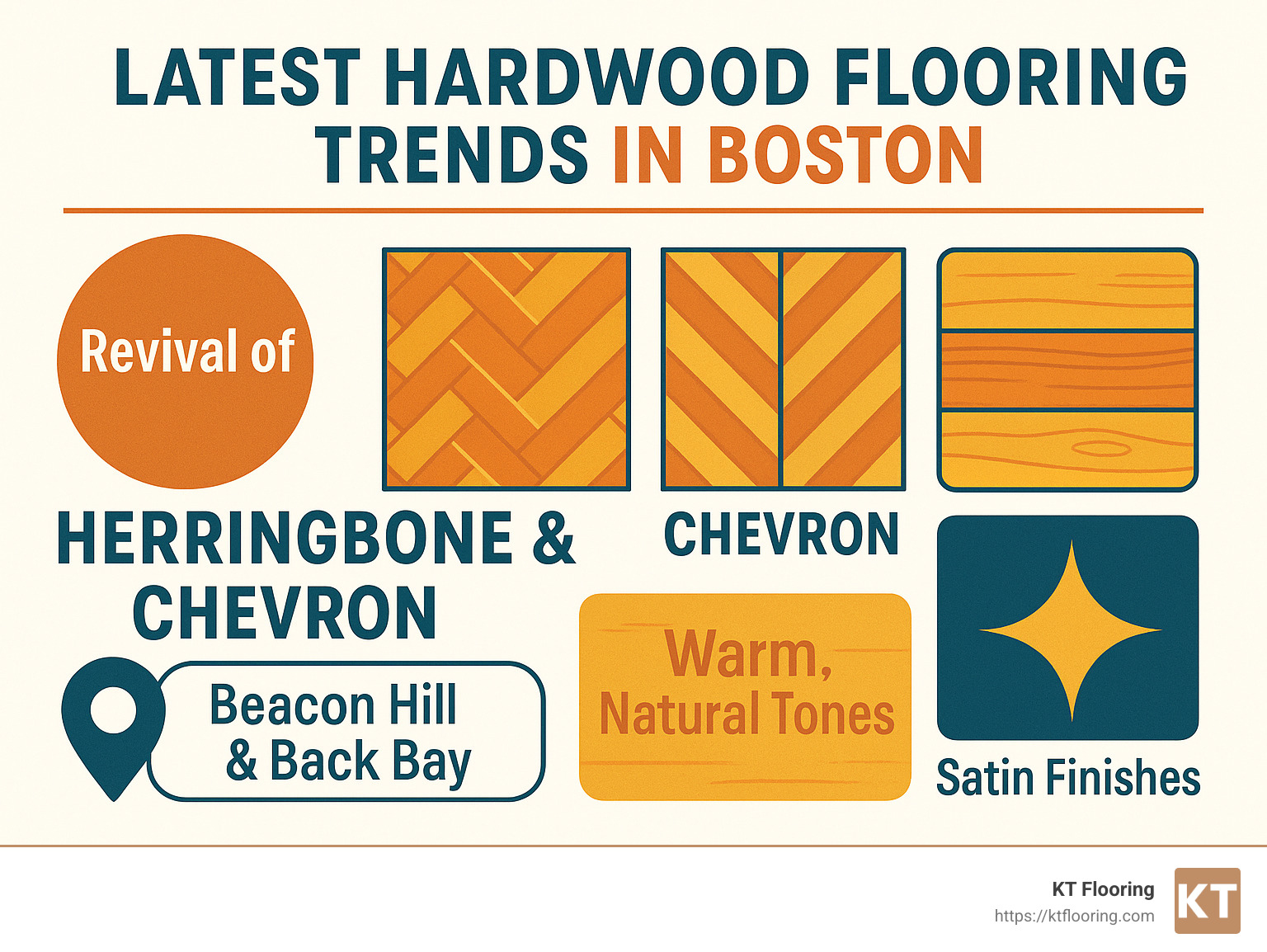
The classic straight-lay installation is no longer the only game in town for Boston homeowners. We’re seeing a beautiful revival of herringbone and chevron patterns, especially in historic neighborhoods like Guide Hill and Back Bay where these intricate designs complement the architectural heritage. These patterns add sophistication and visual interest that can transform an ordinary room into something extraordinary.
Mixed-width planks have also captured Boston’s imagination. By combining boards of different widths—typically 3″, 5″, and 7″—homeowners achieve a custom, less uniform look that feels both distinctive and organic. This approach works wonderfully in both contemporary urban lofts and traditional Colonials.
Many of our Boston clients are also opting for diagonal installations, where boards are laid at a 45-degree angle to the room. This clever technique creates an optical illusion that makes spaces appear larger—a particularly valuable trick in Boston’s notoriously cozy urban homes.
Finish and Color Trends
When it comes to color choices, Boston is embracing both ends of the spectrum. Natural and blonde tones are surging in popularity, especially in smaller city apartments and condos where they create an airy, open feeling. These lighter finishes beautifully showcase the natural wood grain and reflect more light, brightening up spaces during Boston’s long winters.
Gray and greige (that perfect blend of gray and beige) continue their strong run as modern neutrals that play well with virtually any décor style. These versatile tones work equally well in a Guide Hill townhouse or a modern Seaport District loft.
At the opposite end, dark charcoals and ebony finishes remain popular choices for more formal Boston homes. These dramatic dark floors create stunning contrasts with light walls and furnishings, adding a sense of luxury and gravitas to living spaces.
Regardless of color, we’re seeing a definite shift toward matte and satin finishes over high-gloss options. These lower-sheen finishes not only look more contemporary, but they’re also more forgiving when it comes to showing scratches and dust—a practical consideration for busy Boston households.
Sustainable and Eco-Friendly Options
Boston has always been a forward-thinking city, so it’s no surprise that sustainable hardwood floor installation Boston MA options are gaining tremendous traction. Environmentally conscious homeowners are increasingly requesting FSC-certified woods that ensure responsible forest management and harvesting practices.
Reclaimed wood has found a special place in Boston’s heart, particularly in converted industrial spaces in areas like the Leather District and Fort Point. These storied boards—often salvaged from old factories, barns, and warehouses—bring best character and history to new spaces while giving wood a second life.
Many Boston clients are also showing preference for domestic hardwood species like oak, maple, and hickory. Beyond their excellent durability in our challenging climate, these locally sourced options reduce transportation carbon footprints and support American forestry.
The shift toward low-VOC finishes represents another eco-friendly trend. Water-based polyurethanes and natural oil finishes emit fewer volatile organic compounds, contributing to healthier indoor air quality—something particularly important in urban environments and during Boston’s long winter months when windows stay closed.
Technological Advancements
Technology continues to improve hardwood flooring performance, addressing many challenges specific to Boston homes. Improved engineered products now feature thicker wear layers and more stable core materials, making them excellent performers in our climate’s humidity fluctuations. Many historic Boston homes with concrete subfloors or basement-level installations benefit from these advancements.
With energy costs in New England among the highest in the nation, many Boston homeowners are installing radiant heating systems. Thankfully, manufacturers have responded with radiant heat-compatible hardwoods specifically designed to perform well with these systems, expanding design possibilities while improving comfort and efficiency.
Factory-applied aluminum oxide and UV-cured finishes now offer exceptional durability for active households. These technological improvements mean today’s hardwood floors can better withstand the challenges of urban living, from salt-laden winter boots to the paws of the many dogs that call Boston home.
Design Integration Trends
Creative Boston homeowners and designers are thinking beyond the floor, using hardwood in innovative ways throughout the home. Hardwood feature walls extend flooring materials vertically, creating visual continuity and adding warmth to spaces. This approach works particularly well in open-concept layouts typical in renovated South End brownstones and new construction.
Mixed material floors that combine hardwood with tile insets have become popular solutions for entryways and transitions to wet areas. This practical design approach acknowledges Boston’s snowy winters while maintaining aesthetic cohesion throughout the home.
For homes with outdoor spaces—a premium feature in urban Boston—creating seamless indoor-outdoor transitions by coordinating interior hardwood with complementary exterior decking helps maximize the enjoyment of limited outdoor square footage.
Boston-Specific Trend Insights
Some hardwood trends are uniquely suited to Boston’s distinctive housing stock. In our oldest neighborhoods, we’re seeing growing interest in historic reproduction flooring—wide pine planks with square-head nails for Colonial-era homes in Charlestown, or intricate parquet patterns for Victorian properties in Jamaica Plain.
Conversely, some homeowners in historic buildings are choosing contemporary contrast, installing very modern flooring as an intentional counterpoint to traditional architecture. This juxtaposition of old and new feels particularly appropriate in a city that has always balanced reverence for history with innovation.
Boston’s iconic triple-deckers and multifamily homes present unique challenges and opportunities. Many owners are installing engineered hardwood with improved sound insulation properties, addressing the acoustic concerns inherent in these stacked living arrangements while maintaining the warmth and beauty of hardwood.
At KT Flooring, we’ve been helping Boston homeowners steer these trends for over 50 years, ensuring that their hardwood floor choices not only look beautiful today but continue to perform beautifully for decades to come in our unique New England environment.
Conclusion
Selecting the right hardwood flooring and installer is a significant decision for Boston homeowners. The unique challenges presented by Boston’s climate, housing stock, and lifestyle demands require specialized knowledge and experience.
At KT Flooring, we bring over 50 years of experience to every hardwood floor installation Boston MA project. Our deep understanding of New England’s climate challenges, combined with our commitment to quality craftsmanship, ensures that your hardwood floors will remain beautiful and functional for decades to come.
From our base in Hudson, NH, we proudly serve the entire Greater Boston area, including communities like Medford, Malden, Cambridge, Somerville, and beyond. Our team of expert installers understands the nuances of Boston’s diverse housing stock—whether you own a historic Guide Hill townhouse, a Dorchester triple-decker, or a modern Seaport condo.
The investment in quality hardwood flooring installed by experienced professionals pays dividends in both daily enjoyment and long-term home value. As one satisfied Boston customer shared, “This company exceeded my expectations of hardwood floors. They did a phenomenal job at my home and the crew was very professional.”
We invite you to experience the KT Flooring difference with our free in-home consultations, expert guidance on wood selection for Boston’s climate, transparent pricing with detailed project timelines, meticulous installation by trained professionals, and comprehensive aftercare support.
For more information about our residential flooring installation services, please visit our residential flooring installation page or contact us directly to schedule your consultation.
Your home deserves flooring that harmonizes with its architecture, withstands Boston’s climate challenges, and provides lasting beauty for years to come. With KT Flooring, you’re not just installing hardwood floors—you’re making an investment in your home’s future.
