Why Vinyl Waterproof Flooring Is a Game-Changer for Your Home
Vinyl waterproof flooring offers the perfect combination of durability and style for any home. If you’re looking for a quick comparison of waterproof flooring options, here’s what makes vinyl stand out:
| Feature | Vinyl Waterproof Flooring | Laminate | Hardwood |
|---|---|---|---|
| 100% Waterproof | ✓ | Only resistant up to 30 hours | ✗ |
| Pet & Kid Friendly | ✓ | Partial | Limited |
| Installation Ease | Simple click-lock | Moderate | Complex |
| Durability | Highly scratch & dent resistant | Moderate | Varies |
| Cost | $1.50-$7.00 per sq. ft. | $2.00-$8.00 per sq. ft. | $8.00-$25.00 per sq. ft. |
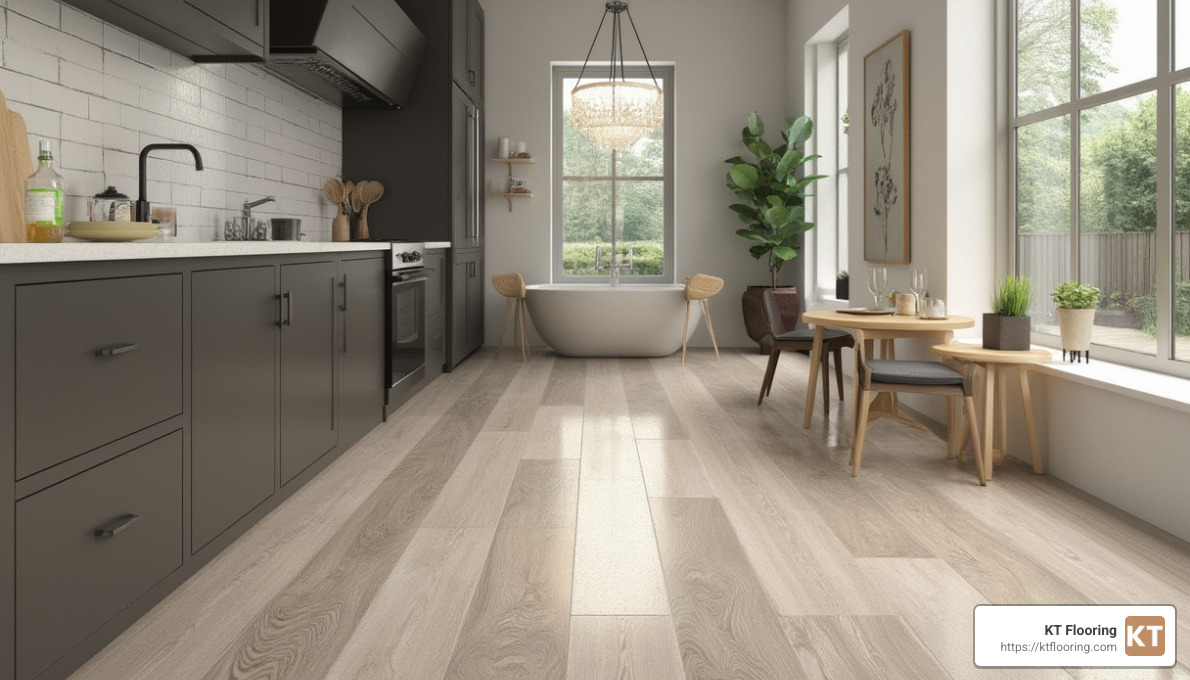
Modern vinyl waterproof flooring has revolutionized how we think about floors in moisture-prone areas. Gone are the days when beautiful floors and wet spaces couldn’t mix. Today’s vinyl options combine realistic wood and stone visuals with 100% waterproof technology, making them perfect for bathrooms, kitchens, basements, and anywhere spills happen.
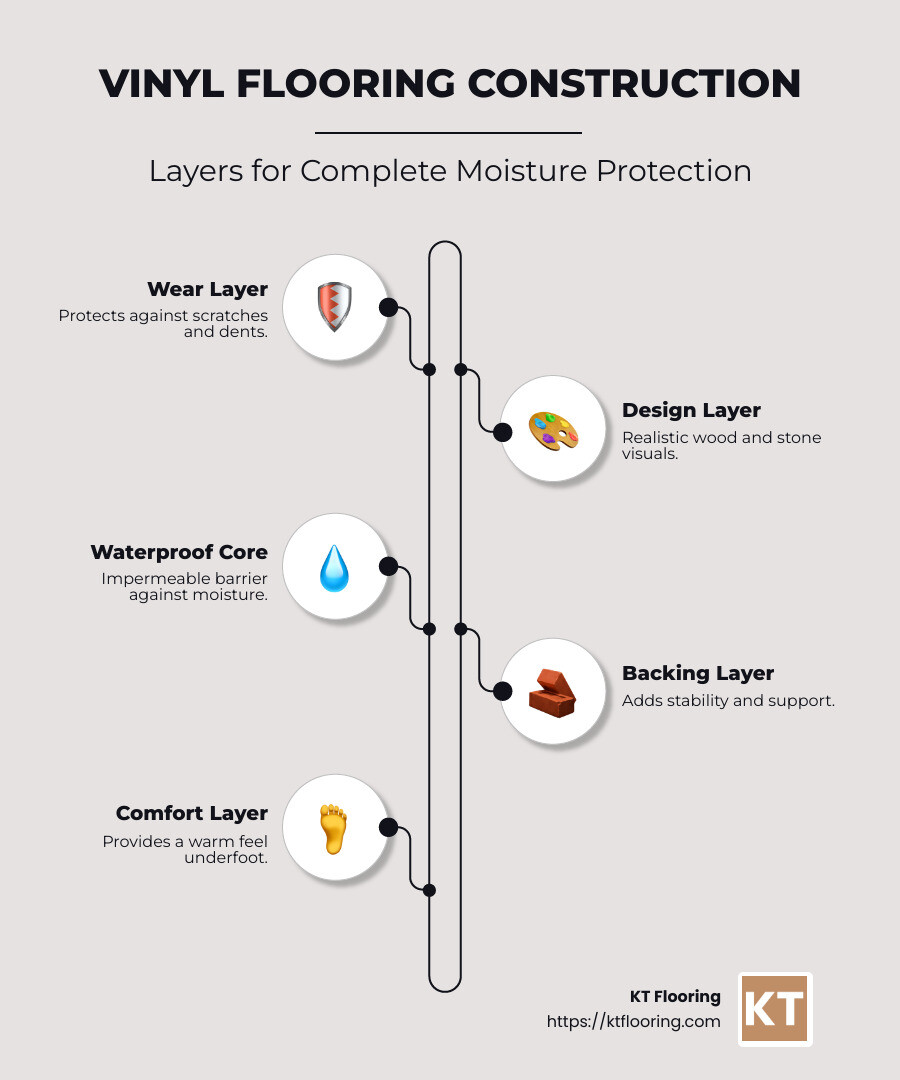
What makes vinyl waterproof flooring special? Its core construction creates an impermeable barrier against moisture while maintaining a comfortable, warm feel underfoot. Unlike laminate, which can only resist water for limited periods, vinyl stands up to prolonged exposure without warping, swelling, or damage.
I’m Christopher Talty, owner of KT Flooring with over 50 years of experience installing vinyl waterproof flooring throughout New Hampshire and Northeast Massachusetts. I’ve helped countless homeowners transform their moisture-prone spaces with durable, stylish vinyl solutions that stand the test of time.
The Benefits of Vinyl Waterproof Flooring
There’s a reason why vinyl waterproof flooring has become the go-to choice for so many of our customers here at KT Flooring. As we’ve installed these floors throughout New Hampshire and Northeast Massachusetts, we’ve seen how they transform homes with their perfect blend of practicality and beauty.
Best Durability
If you’ve ever worried about your floors standing up to daily life, vinyl waterproof flooring will put those concerns to rest. These floors are tough—really tough. They’re built with multiple layers including a specialized wear layer that acts like armor against scratches, scuffs, and everyday wear and tear.
I remember installing vinyl flooring for a family in Salem with three large dogs and two young children. Six months later, they called just to tell us how amazed they were that their floors still looked brand new despite the constant parade of paws, sneakers, and toy trucks!
The Vinyl Flooring Institute confirms what we see every day: “Vinyl flooring is designed to be wear-resistant and dent-resistant—and waterproof—for premium performance even in active households.” This incredible durability means your investment stays looking beautiful for years, even in your busiest rooms.
100% Waterproof Protection
Unlike laminate or hardwood that merely resist water for a limited time, vinyl waterproof flooring offers true, complete protection against moisture. Spill a glass of water and forget about it for hours? No problem. Muddy boots after a New England rainstorm? Just wipe it up.
This complete waterproof quality makes vinyl perfect for those challenging areas where moisture is a constant concern—bathrooms, kitchens, mudrooms, and yes, even those sometimes damp New Hampshire basements. One customer in Portsmouth told me, “For the first time, I don’t panic when my kids splash water out of the tub—what a relief!”
Easy Maintenance and Cleaning
Life’s too short to spend it maintaining your floors. With vinyl waterproof flooring, keeping things clean is refreshingly simple. A quick sweep and occasional damp mop is usually all it takes.
Unlike hardwood that needs special cleaners and refinishing, or tile with its stubborn grout lines, vinyl just needs a simple wipe-down with a mild cleaner. As one busy mom in Nashua laughed while showing me her spotless vinyl kitchen floor, “I can clean up spilled juice with a paper towel in ten seconds flat—now that’s my kind of floor!”
Cost-Effective Alternative to Natural Materials
We all love the look of beautiful hardwood or natural stone, but let’s be honest—those price tags can cause serious sticker shock. Vinyl waterproof flooring delivers those same gorgeous looks at a fraction of the cost.
Based on internet data (not actual KT Flooring prices), vinyl typically ranges from $1.50 to $7.00 per square foot, while hardwood can run anywhere from $8.00 to $25.00 per square foot. That’s significant savings that doesn’t sacrifice style, thanks to today’s advanced printing and embossing technologies that create remarkably realistic visuals and textures.
A customer in Manchester recently told me, “Guests keep complimenting my ‘hardwood’ floors, and I just smile knowing I paid a third of what real wood would have cost!”
Key Benefits at a Glance:
- 100% waterproof construction – perfect for every room, especially moisture-prone areas
- Superior durability – stands up to kids, pets, and high traffic without showing wear
- Comfortable underfoot – warmer and more forgiving than tile or stone
- Easy installation – many feature simple click-lock systems for faster completion
- Low maintenance – simple cleaning with everyday products
- Cost-effective – luxury looks without the premium price tag
- Style variety – endless design options to match any home aesthetic
- Sound absorption – quieter underfoot than many hard surface alternatives
- Hypoallergenic options – many vinyl products are low in VOCs and allergens
Top Types of Waterproof Vinyl Flooring
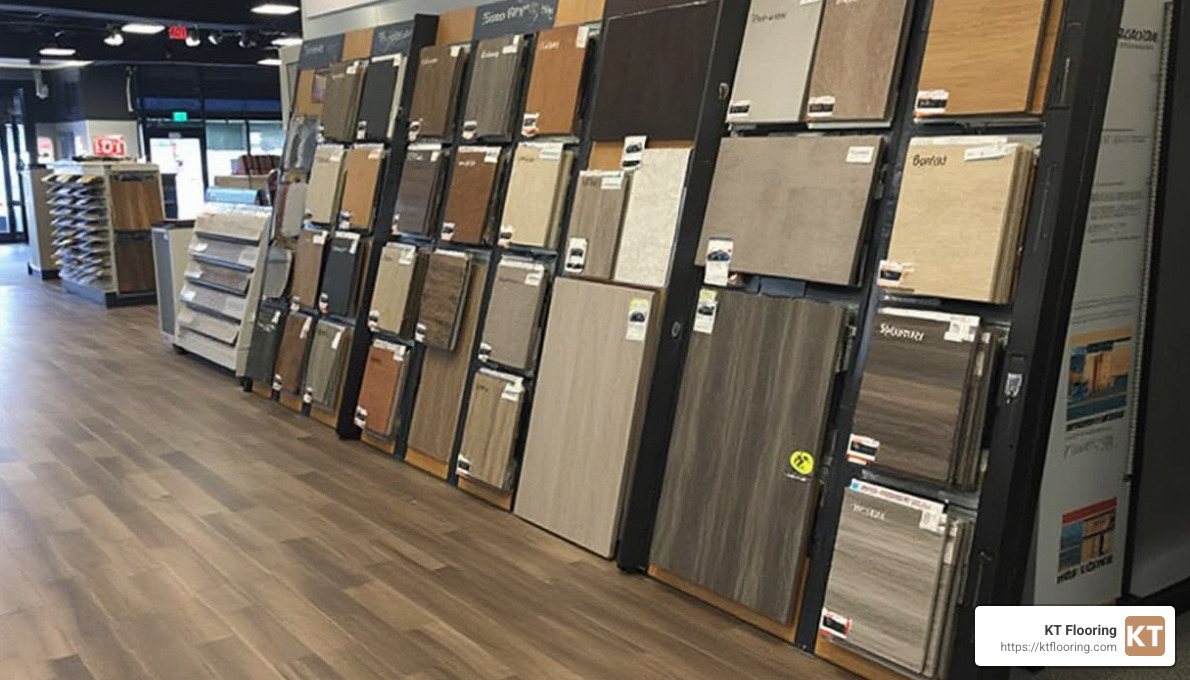
The world of vinyl waterproof flooring has evolved dramatically in recent years, with exciting innovations that combine stunning looks with practical performance. At KT Flooring, we love helping homeowners throughout New Hampshire and Northeast Massachusetts steer these options to find their perfect flooring match.
Luxury Vinyl Plank (LVP) Waterproof Flooring
Luxury Vinyl Plank has become the superstar of the vinyl waterproof flooring world – and for good reason! These beautiful planks give you the warm, natural look of hardwood while standing up to water in ways real wood simply can’t.
What makes LVP special is its clever multi-layer construction. A tough wear layer sits on top, protecting against daily scratches and scuffs. Below that, high-definition printing creates astonishingly realistic wood visuals – many of our customers do a double-take when they realize it’s not actual hardwood! The waterproof core is the hero of the story, preventing moisture from penetrating, while the backing layer adds stability and often helps with sound absorption.
I recently installed LVP throughout a young family’s home in Bedford. The mom told me, “With three kids and a golden retriever, we needed something that could handle spills and muddy paws. Our LVP looks gorgeous but doesn’t give me anxiety when someone walks in with wet shoes!”
The versatility of LVP is truly remarkable – it works beautifully in living rooms, bedrooms, kitchens, and bathrooms. This means you can create a seamless look throughout your entire home while getting practical benefits custom to each space.
WPC (Wood Plastic Composite) Vinyl Waterproof Flooring
Think of WPC as the comfort-focused member of the vinyl waterproof flooring family. These premium planks feature a specialized wood-plastic composite core that’s 100% waterproof while feeling noticeably more comfortable underfoot.
WPC has become particularly popular for basement installations, where comfort, warmth, and moisture protection are must-haves. The thicker, more cushioned construction makes these floors warmer and quieter than standard vinyl or ceramic tile. This extra thickness also makes WPC more forgiving over slightly uneven subfloors – a real advantage in older homes.
A retired couple in Nashua recently chose WPC for their basement renovation. They told me, “It’s so much warmer in the winter than our old concrete floor, and we love how it muffles sound when the grandkids are playing downstairs.”
The improved sound insulation of WPC is another major selling point. If you’ve ever lived with echoing footsteps on hard floors, you’ll appreciate how WPC absorbs sound rather than amplifying it. This makes it ideal for multi-level homes where noise transfer between floors can be an issue.
SPC (Stone Plastic Composite) Vinyl Waterproof Flooring
When extreme durability is your priority, SPC vinyl is your go-to option. These tough-as-nails floors feature a rigid core made from limestone powder, polyvinyl chloride, and stabilizers – creating a product that stands up to just about anything life throws at it.
The stone-polymer core gives SPC exceptional dent resistance, making it perfect for high-traffic areas or homes with heavy furniture. Despite its impressive strength, SPC maintains a relatively slim profile, which is ideal when transitioning to other flooring types without awkward height differences.
A restaurant owner in Portsmouth who installed SPC three years ago recently told me, “We’ve dropped pans, dragged chairs, and mopped these floors daily – they still look brand new. Best investment we’ve made in our business.”
SPC’s remarkable dimensional stability means it won’t expand or contract significantly with temperature changes, making it excellent for spaces with large windows and temperature fluctuations. This stability also makes it an ideal choice for installation over radiant heating systems.
Rigid Core Vinyl Waterproof Flooring
The term “rigid core” encompasses both WPC and SPC products, highlighting their solid, inflexible construction. This rigidity is a game-changer compared to traditional flexible vinyl, providing improved stability and resistance to indentation.
What homeowners love about rigid core vinyl waterproof flooring is its real-world practicality. The click-lock edges connect securely without adhesives, creating a floating floor that can often be installed right over existing hard surfaces. This means less demo work, less mess, and faster change of your space.
A young couple in Manchester recently installed rigid core vinyl themselves as their first DIY project. “The click-lock system was surprisingly easy to work with,” the husband shared. “We finished our living room in a weekend, and it looks like we hired professionals!”
Rigid core products shine in open-concept homes where the same flooring flows through multiple spaces. Their stability prevents unsightly gaps from forming between planks, even in large areas subject to temperature changes.
Click-Lock Systems
Most modern vinyl waterproof flooring now features ingenious click-lock installation systems that revolutionize how floors are installed. These precisely engineered edges allow planks to connect securely without glue, creating a tight, waterproof seal between pieces.
The beauty of click-lock flooring extends beyond just easy installation. Since no adhesive is used, you can walk on your new floors immediately after installation – no waiting for glue to dry! If a plank ever gets damaged, you can often replace just that section rather than redoing the entire floor.
Many of our more hands-on customers appreciate the DIY-friendly nature of click-lock systems. With basic tools and a weekend of work, you can transform your space while saving significantly on installation costs. That said, professional installation ensures the best results, especially in complex spaces with lots of cuts or transitions.
At KT Flooring, we’ve watched vinyl waterproof technology transform over our 50+ years in business. Today’s options offer unprecedented combinations of beauty, durability, and moisture resistance – making them some of the most practical flooring choices available for today’s active households.
Styles and Designs Available
Gone are the days when vinyl flooring meant limited design choices. Today’s vinyl waterproof flooring offers an incredible range of styles that can transform any space in your home. At KT Flooring, we’re constantly amazed by how far vinyl technology has come, creating products that beautifully mimic natural materials while offering superior performance.
Wood-Look Vinyl Flooring
Wood-look vinyl remains our most requested style among New Hampshire and Massachusetts homeowners – and for good reason. The latest manufacturing techniques have made these products remarkably authentic, with natural grain patterns and color variations that make them nearly indistinguishable from real hardwood.
“My guests literally get down on their hands and knees to check if our floors are real wood,” laughs Sarah from Nashua, one of our recent customers. “They’re always shocked to learn it’s vinyl that can handle our three kids and golden retriever without a scratch.”
Today’s wood-look vinyl comes in every species imaginable – from classic oak with its varied grain patterns to rich walnut with deep chocolate tones. You’ll find everything from light, airy maple that brightens smaller spaces to rustic pine complete with realistic knots and character marks. Many products feature embossed-in-register technology, where the texture perfectly aligns with the printed grain pattern, creating a truly authentic look and feel.
Whether you prefer narrow traditional planks or the modern farmhouse look of wide boards, there’s a wood-look vinyl that matches your vision. Most impressive are the multi-width options that allow for custom installation patterns just like real hardwood floors.
Tile-Look Vinyl Flooring
For spaces where stone or ceramic aesthetics make sense, tile-look vinyl delivers the beauty without the cold, hard surface. Vinyl waterproof flooring can convincingly replicate luxurious marble with delicate veining, travertine with natural pitting, or even industrial concrete for a modern urban feel.
What makes these options particularly appealing is how they solve common tile problems. No more cold feet on winter mornings, no more cracked tiles from dropped items, and best of all – no grout lines to clean! Though many designs include realistic-looking grout lines, they’re actually part of the seamless vinyl surface, making cleaning a breeze.
“We installed vinyl tile that looks like Italian marble in our bathroom,” shares a homeowner from Andover. “Visitors can’t believe it’s not real stone until they feel how warm and comfortable it is underfoot.”
Contemporary and Creative Designs
Beyond traditional wood and stone looks, today’s vinyl flooring accepts creative possibilities. Vinyl waterproof flooring now includes geometric patterns, artistic designs, and even custom-look installations:
Distressed and reclaimed wood appearances capture that sought-after vintage charm without the splinters and maintenance. Mixed-width plank installations create visual interest and a custom-installed look. Some homeowners are even exploring herringbone and other decorative layouts that were once only possible with expensive hardwood installations.
For the truly design-conscious, manufacturers now offer specialty finishes like wire-brushed textures that highlight the grain pattern or hand-scraped effects that mimic artisan-crafted wood floors – all with the practical benefits of vinyl.
Color Palette and Trends
The color options for vinyl waterproof flooring have expanded dramatically in recent years. While traditional medium brown wood tones remain popular, we’re seeing increasing demand for:
Greige tones – that perfect blend of gray and beige that works with virtually any décor style. Cool-toned woods with subtle gray undertones that complement modern color schemes. Whitewashed and bleached looks that brighten spaces and create an airy, coastal feel.
For those who prefer rich, dramatic floors, deep chocolate browns and even black finishes are available, often featuring high-variation multi-tonal effects that add depth and character.
“The gray-toned vinyl we installed throughout our open floor plan ties everything together perfectly,” notes a customer from Bedford. “It’s neutral enough to work with our changing décor but interesting enough to be a design feature on its own.”
Texture and Finish Options
The tactile experience of flooring contributes significantly to its realism. Modern vinyl offers various texture options that not only improve visual authenticity but provide practical benefits too.
Hand-scraped textures replicate the look of artisan-worked wood with subtle height variations. Wire-brushed finishes highlight natural grain patterns by appearing to remove the softer wood between grain lines. Distressed textures give the character and history of reclaimed wood without the splinters or maintenance concerns.
Most popular today are the matte and low-gloss finishes that not only look more authentic than the shiny vinyl of yesteryear but also help hide minor scratches and footprints – perfect for busy households.

The best part? These beautiful designs don’t sacrifice any of vinyl’s practical benefits. They’re still 100% waterproof, durable, and easier to maintain than the natural materials they mimic. It truly is the best of both worlds – designer looks with practical performance.
For more information about our extensive selection of luxury vinyl flooring options, visit our Luxury Vinyl Flooring page.
Installing Waterproof Vinyl Flooring: DIY or Professional?
One question I hear all the time from our customers at KT Flooring is whether they should install vinyl waterproof flooring themselves or hire professionals like us to do it. The answer isn’t one-size-fits-all – it really depends on your skill level, how complex your space is, and which type of vinyl flooring you’ve chosen.
Installation Methods
When it comes to installing vinyl waterproof flooring, you have several options, each with its own advantages.
1. Click-Lock Systems
Click-lock systems have become the darling of the vinyl flooring world, and for good reason. These ingenious planks and tiles feature edges that simply snap together without any messy adhesives.
The beauty of click-lock floors is their simplicity. You can walk on them immediately after installation, and they “float” over most existing hard surfaces. If a plank gets damaged down the road, replacing just that section is relatively straightforward.
As one of our customers put it, “The planks fit together like puzzle pieces – it was actually kind of satisfying to hear that little ‘click’ with each piece!”
2. Glue-Down Installation
Some vinyl products, especially luxury vinyl tiles and certain high-performance planks, need adhesive for proper installation.
Glue-down vinyl offers rock-solid stability with virtually no movement, making it perfect for high-traffic areas and large, open spaces. It also handles temperature fluctuations better than floating floors.
The trade-off? The installation process is more involved. Your subfloor needs proper preparation, the adhesive needs time to set, and if you ever need to replace a section, it’s considerably more challenging.
3. Floating Floors
Beyond click-lock systems, some vinyl waterproof flooring options are designed as “loose lay” products. These stay in place through a combination of their weight, backing texture, and sometimes perimeter securing.
These floors offer quick installation and easy replacement, but they’re not suitable for every situation – particularly areas with heavy rolling loads or extremely high traffic.
DIY Installation: Is It Right for You?
Many homeowners successfully install click-lock vinyl flooring themselves, and you might be able to join their ranks if:
You have basic DIY skills and access to the right tools. A typical installation requires a tape measure, utility knife (with plenty of extra blades – they dull quickly on vinyl), rubber mallet, tapping block, pull bar, spacers, and some type of saw for cutting.
Your subfloor is in good condition and relatively level. Significant prep work might push this project beyond DIY territory.
The room has a straightforward layout without a ton of obstacles, odd angles, or complex cuts.
You’re installing click-lock products rather than glue-down varieties (which have a steeper learning curve).
You have enough time to complete the project properly without rushing.
I remember a customer from Nashua who installed vinyl planks in her home office over a weekend. “The hardest part was cutting around door frames,” she told me, “but overall, it was much easier than I expected. I just took my time and followed the instructions carefully.”
Benefits of Professional Installation
At KT Flooring, we’ve been installing vinyl waterproof flooring throughout New Hampshire and Northeast Massachusetts for over 50 years, and there are definite advantages to bringing in the pros:
Expert assessment and preparation make a huge difference. Our installers immediately spot issues with subfloors that might not be obvious to homeowners but could cause problems later. They’re also masters at handling tricky transitions, complex cuts, and knowing exactly how much expansion space to leave.
Time and convenience can’t be overlooked. What might take a homeowner several days (including learning curve and mistakes) typically takes our professionals just a single day for average-sized rooms. We bring all the necessary tools and materials, move furniture, remove old flooring, and clean up thoroughly when we’re done.
Long-term performance is often better with professional installation. Many manufacturer warranties actually require professional installation to remain valid. Plus, proper installation techniques significantly extend your floor’s lifespan.
A couple from Bedford shared with me, “We thought about installing our vinyl flooring ourselves, but after seeing how your installer handled the uneven transition to our kitchen and the tricky cuts around our fireplace, we were so glad we didn’t attempt it. It would have taken us three times as long and wouldn’t have looked nearly as good.”
Comparing DIY vs. Professional Installation
| Factor | DIY Installation | Professional Installation |
|---|---|---|
| Cost | Lower initial cost (labor savings) | Higher initial cost but includes expertise |
| Time Required | Typically 2-3 days for average room | Usually completed in 1 day |
| Tools Needed | Must purchase or rent | Included with service |
| Warranty Coverage | May be limited or voided | Typically fully protected |
| Subfloor Preparation | Limited ability to address issues | Expert assessment and correction |
| Complexity Handling | Challenging for complex layouts | Experienced with all configurations |
| Risk of Errors | Higher, especially for beginners | Significantly reduced |
| Waste Factor | Typically higher (10-15%) | Lower (usually 5-10%) |
The right choice ultimately depends on your comfort level, the complexity of your project, and how much value you place on your time. If you’re reasonably handy and have a straightforward space, DIY might be a rewarding project. For complex spaces or if you want guaranteed results, professional installation is often worth the investment.
For more details about our professional installation services, visit our Luxury Vinyl Plank Flooring Installation page.
Cost Comparison of Vinyl Waterproof Flooring
Let’s talk dollars and cents – because I know that’s what most of us are thinking about when shopping for new floors! Vinyl waterproof flooring offers tremendous value when you consider what you’re getting: beautiful, durable, and completely waterproof floors that can handle whatever your household throws at them.
Average Cost of Vinyl Waterproof Flooring
If you’re budgeting for your project, it helps to understand the price ranges. Based on internet data (not actual KT Flooring prices), here’s what you can expect to pay for materials alone:
For budget-friendly options, economy vinyl typically runs between $1.50 and $3.00 per square foot. These products still offer waterproof protection but may have thinner wear layers or simpler designs.
Mid-range vinyl flooring, which hits that sweet spot of quality and affordability, generally costs between $3.00 and $5.00 per square foot. This is where many of our Hudson, NH customers find their perfect match – good durability with attractive visuals.
Premium luxury vinyl ranges from $5.00 to $7.00 per square foot, offering improved durability, deeper embossing, and more realistic visuals. For those seeking designer collections or specialized vinyl with unique features, prices can jump to $7.00 to $10.00+ per square foot.
It’s worth noting that high-end prices can be at least 3x the average, with some exclusive designer collections reaching $15.00 per square foot or more. These premium products often feature cutting-edge design technologies and exceptional wear layers.
Installation costs typically add another $2.00 to $5.00 per square foot, depending on your location, the condition of your subfloor, and the complexity of your space.
Cost Comparison with Other Flooring Types
When you place vinyl waterproof flooring side by side with other popular options, its value becomes crystal clear:
| Flooring Type | Materials Cost (per sq. ft.) | Installation Cost (per sq. ft.) | Total Average Cost |
|---|---|---|---|
| Vinyl Waterproof | $1.50 – $7.00 | $2.00 – $5.00 | $3.50 – $12.00 |
| Laminate | $2.00 – $8.00 | $2.00 – $6.00 | $4.00 – $14.00 |
| Porcelain Tile | $3.00 – $15.00 | $5.00 – $10.00 | $8.00 – $25.00 |
| Ceramic Tile | $2.00 – $10.00 | $4.00 – $8.00 | $6.00 – $18.00 |
| Engineered Hardwood | $4.00 – $13.00 | $3.00 – $8.00 | $7.00 – $21.00 |
| Solid Hardwood | $8.00 – $25.00 | $3.00 – $8.00 | $11.00 – $33.00 |
| Natural Stone | $10.00 – $30.00 | $6.00 – $12.00 | $16.00 – $42.00 |
As a recent industry report noted, “Vinyl flooring is a great alternative to wood or stone floors in terms of cost.” This becomes even more apparent when you consider that vinyl doesn’t require the ongoing maintenance expenses of refinishing, sealing, or specialized cleaning products that natural materials often demand.
One of our customers in Salem put it perfectly: “We were set on hardwood until we saw the price tag. Our luxury vinyl gives us that gorgeous wood look for less than half the cost, and we don’t worry about water damage from the kids’ spills.”
Factors Affecting Vinyl Flooring Cost
Not all vinyl waterproof flooring is created equal, and several factors influence the price you’ll pay:
The quality and construction make a significant difference. Products with thicker wear layers (20-30 mil) cost more but offer substantially better durability – worth considering for busy households. Similarly, advanced core constructions like SPC (Stone Plastic Composite) and WPC (Wood Plastic Composite) typically command higher prices than standard vinyl, but they offer improved stability and performance.
Design and aesthetics also impact pricing. Deeply embossed textures that perfectly match the wood grain pattern (called “embossed-in-register”) cost more to manufacture but look remarkably realistic. High-definition print layers with subtle color variations and authentic wood or stone visuals likewise increase the price, as do specialty designs like herringbone patterns or mixed-width planks.
Brand reputation and warranty coverage play a role too. Established manufacturers with proven track records typically charge more, but they also tend to stand behind their products with more comprehensive warranties. Products rated for commercial use generally cost more than residential-only options but offer exceptional durability.
A customer from Portsmouth shared her experience: “We compared several brands and decided to spend a bit more for a product with a 30-mil wear layer and lifetime warranty. Three years and two kids later, it still looks brand new – money well spent!”
Long-Term Value Considerations
When evaluating the true cost of flooring, looking beyond the initial price tag reveals vinyl waterproof flooring’s excellent long-term value:
Exceptional durability means your vinyl floors can last 15-25 years with proper care, spreading the initial investment over a much longer period than some alternatives. The maintenance savings add up too – no refinishing, no sealing, just simple cleaning with common household products.
If damage does occur, vinyl waterproof flooring often allows for replacement of individual planks rather than entire floors, saving significant repair costs. Perhaps most importantly, vinyl’s waterproof qualities may prevent costly water damage repairs to subfloors and surrounding structures – something we’ve seen save homeowners thousands in potential repair bills.
Cost-Saving Tips
If you love the idea of vinyl waterproof flooring but need to watch your budget, I’ve got some insider tips from my 50+ years in the flooring business:
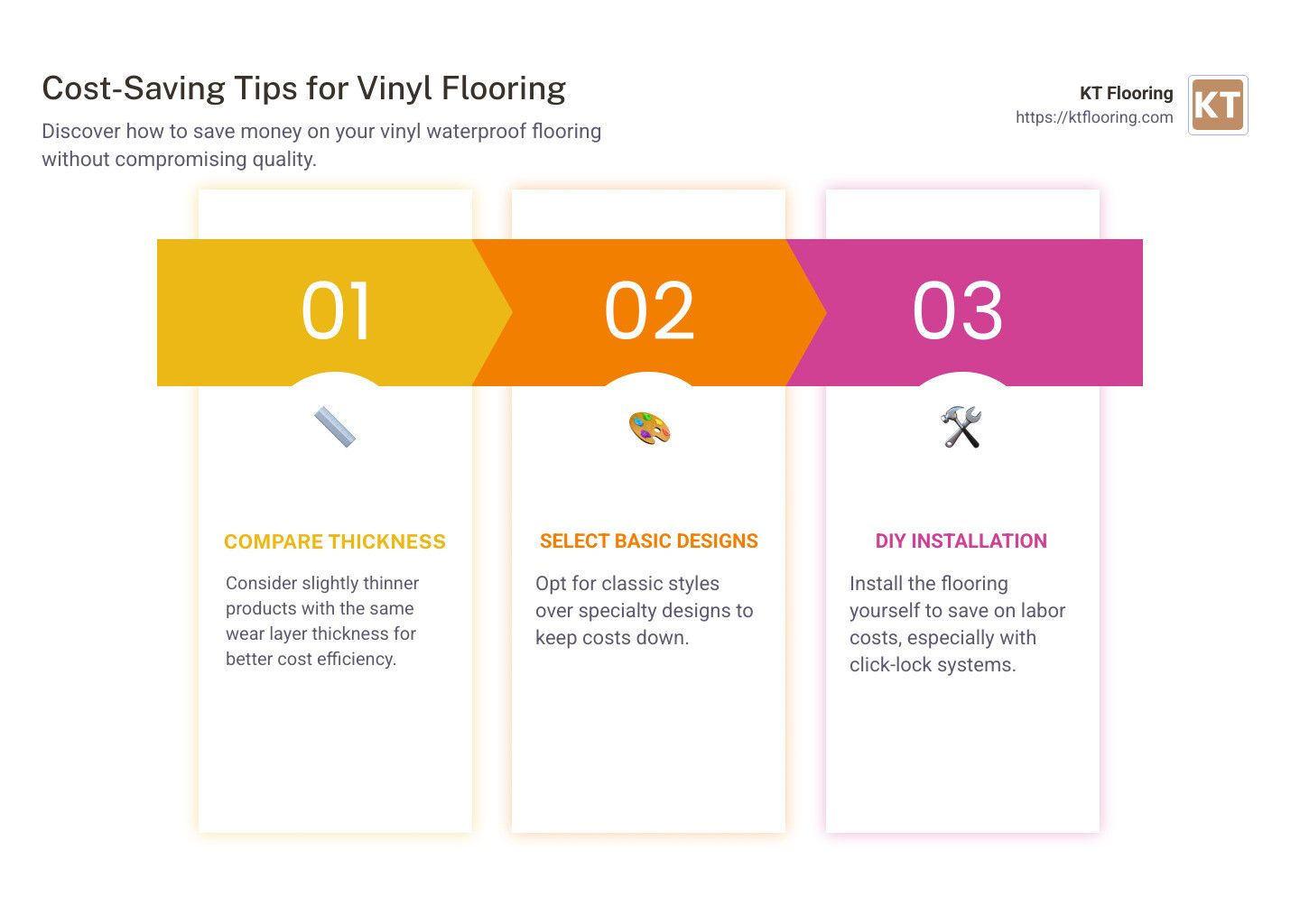
Compare thickness options carefully – sometimes a 5mm product with a 20-mil wear layer performs nearly as well as a 7mm product with the same wear layer, at a lower price point. Also, consider mid-range designs, as the visual difference between these and premium lines is often minimal to anyone but flooring professionals.
Timing your purchase can make a difference too. Discontinued styles often sell at significant discounts but are still perfectly current in terms of design trends. I always recommend buying 5-10% extra during your initial order to avoid color-matching issues if you need repairs years later.
For the DIY-inclined, click-lock systems can save substantially on installation costs. One customer in Nashua saved nearly $1,000 by installing his own kitchen and dining room floors over a long weekend. “The click-lock system was surprisingly easy to work with,” he told me. “And the satisfaction of doing it myself was worth the sore knees!”
At KT Flooring, we’re happy to help you steer these options to find the perfect balance of quality and affordability for your specific needs and budget. After all, the best floor isn’t just about price – it’s about finding the right solution for your home and lifestyle.
Environmental Impact and Sustainability
As environmental consciousness grows, many homeowners ask us about the sustainability of vinyl waterproof flooring. At KT Flooring, we believe in transparency about the environmental aspects of the products we carry, helping customers make informed decisions that align with their values.
Evolution of Vinyl Flooring’s Environmental Profile
Vinyl flooring has come a long way in terms of environmental impact. I’ve seen remarkable changes over my years in the industry, with modern manufacturing processes addressing many historical concerns.
Today’s vinyl waterproof flooring is often formulated to be low in volatile organic compounds (VOCs) and phthalate-free. These improvements have significantly reduced indoor air quality concerns that were once associated with vinyl products.
“Glatt Floor truly dares to say no formaldehyde,” as one manufacturer proudly states. This sentiment reflects the industry’s broader shift toward safer chemical profiles. Many of our suppliers now achieve certifications like GreenGuard Gold, indicating extremely low chemical emissions that help maintain healthy indoor air.
A customer from Exeter recently told me, “I was concerned about bringing vinyl into my home because of what I’d read online about chemicals. But when you showed me the phthalate-free options with those environmental certifications, I felt much more comfortable making the choice.”
Recyclability and Sustainability Efforts
While vinyl hasn’t historically been the poster child for recycling, the industry has been making meaningful progress. Some manufacturers now operate take-back programs for post-consumer vinyl flooring, and advancements in recycling technology are making vinyl recycling increasingly feasible.
Many new vinyl products contain recycled content from manufacturing waste, reducing the amount of virgin materials needed. Plus, the long lifespan of vinyl waterproof flooring (typically 15-25 years with proper care) means less frequent replacement and less material ending up in landfills.
Modern vinyl production has also become more energy-efficient. Manufacturing facilities have streamlined their processes to reduce energy consumption, with some now powered by renewable energy sources. Even shipping has improved, with lighter products and optimized packaging reducing the carbon footprint of transportation.
Sustainability Certifications Worth Looking For
When exploring the environmental impact of vinyl waterproof flooring, these certifications can help guide your choices:
FloorScore® certification ensures flooring meets strict indoor air quality standards, while GreenGuard and GreenGuard Gold verify low chemical emissions. Some vinyl products can contribute to LEED points in green building projects, and NSF/ANSI 332 specifically assesses the sustainability of resilient floor coverings. Environmental Product Declarations (EPDs) provide transparent reporting of environmental impacts throughout a product’s lifecycle.
A homeowner from Portsmouth shared with us: “We were initially concerned about vinyl’s environmental impact, but after researching products with GreenGuard Gold certification and recycled content, we found options that aligned with our eco-conscious values while still giving us the waterproof performance we needed for our busy household.”
Environmental Comparison with Other Flooring Types
When evaluating flooring options from an environmental perspective, it helps to consider multiple factors. Vinyl is petroleum-based, which is a non-renewable resource, but its long lifespan of 15-25 years means less frequent replacement than some alternatives like carpet (5-15 years).
Hardwood comes from renewable resources (when harvested sustainably) and can last 25+ years, but requires specific care and isn’t waterproof. Ceramic tile has a very long lifespan of 50+ years and low VOC emissions, but requires significant energy for production and isn’t as comfortable underfoot as vinyl.
“We take pride in offering vinyl flooring options that not only perform exceptionally well but also meet modern environmental standards,” a representative from one of our leading manufacturers recently told me. “The industry continues to innovate toward greater sustainability without compromising performance.”
Making Environmentally Conscious Choices
If environmental impact is a priority in your flooring decision, consider looking for vinyl waterproof flooring with recycled content. Many manufacturers now incorporate post-consumer or post-industrial recycled materials into their products.
Seek out low-VOC certifications like FloorScore® or GreenGuard, which ensure better indoor air quality. Selecting phthalate-free options is another way to choose healthier alternatives for your home.
Product longevity matters too – choosing durable products with longer warranties reduces how often you’ll need to replace your flooring. And thinking ahead about end-of-life, some manufacturers now offer take-back programs or recycling options when it’s eventually time to replace your floor.
One of our customers in Salem made an interesting point: “We realized that having a floor that lasts 20+ years is actually more environmentally friendly than replacing a less durable option every 5-10 years, even if the initial materials are more ‘green’ on paper.”
Scientific research continues to advance our understanding of vinyl flooring’s environmental impact. For those interested in diving deeper, resources like the scientific research on sustainability of vinyl flooring can provide additional insights into ongoing improvements in the industry.
At KT Flooring, we’re committed to helping you find the right balance between practical performance, aesthetic appeal, and environmental considerations for your home’s unique needs.
Caring for Your Vinyl Waterproof Flooring for Longevity
One of the biggest perks of vinyl waterproof flooring is how little maintenance it requires. After installing hundreds of vinyl floors throughout New Hampshire and Massachusetts over the years, we’ve gathered plenty of practical advice to help your floors stay beautiful for decades.
Daily and Weekly Maintenance
Keeping your vinyl floors looking showroom-fresh is surprisingly simple. Most of our customers are amazed at how little effort it takes compared to other flooring types.
Regular sweeping or vacuuming makes all the difference in preventing tiny particles from scratching your floor’s surface. Just be sure to use a vacuum with a hard floor setting (the beater bar can damage vinyl). For weekly cleaning, a damp mop with a pH-neutral cleaner specifically made for vinyl does the trick.
One of the joys of vinyl waterproof flooring is how it handles spills. Unlike hardwood or laminate, you don’t need to panic when liquids hit the floor. As one of our Hudson customers told me with a laugh, “I used to dive across the room when my kids spilled juice. Now I just grab a paper towel whenever I get around to it!”
That said, a few preventative measures go a long way. Place entry mats at doorways to catch dirt before it reaches your floors. Add felt pads to furniture legs to prevent scratches when moving chairs or tables. And here’s something many homeowners don’t realize: avoid using rubber-backed mats on vinyl, as they can cause discoloration over time.
Dealing with Challenges
Even the most durable floors occasionally face challenges. The good news is that vinyl waterproof flooring handles most of them beautifully.
For scuffs and marks, a damp cloth with gentle rubbing usually does the trick. Stubborn marks might need a small amount of vinyl floor cleaner, but avoid abrasive cleaners or scrubbing pads that could damage the wear layer. I remember a customer in Nashua who was amazed when a black scuff from her grandson’s sneakers wiped away with just a damp paper towel.
Fading can be an issue in rooms with intense sunlight. Using window treatments helps minimize direct sunlight exposure. I also suggest rearranging rugs and furniture periodically to ensure even exposure. One clever homeowner in Portsmouth installed UV-protective window film in her sunroom, which protected both her vinyl flooring and furniture from fading.
Heavy furniture deserves special attention. Always use floor protectors under furniture legs. When moving heavy items, use furniture sliders or lift rather than drag. One customer learned this the hard way when moving a loaded bookcase across his new vinyl floor – the resulting scratch could have been prevented with a simple furniture slider.
What to Avoid
To keep your vinyl waterproof flooring looking its best, steer clear of these common mistakes:
Harsh cleaners containing ammonia or bleach can damage the wear layer of your vinyl. Steam cleaning might seem like a good idea for waterproof flooring, but the intense heat can potentially affect adhesives and seams. Wax or polish products aren’t necessary and can actually make your floor dangerously slippery.
While vinyl is waterproof, allowing standing water to remain for extended periods isn’t recommended, as it can potentially seep through seams. And never use steel wool, abrasive brushes, or scouring pads, which will scratch the surface.
A Bedford customer shared her story: “I thought my steam mop would be perfect for my new vinyl floors. Thankfully, Chris from KT Flooring called to check on my installation and stopped me before I did any real damage!”
Seasonal Maintenance Tips
Different seasons create unique challenges for floor care in New England.
During our snowy winters, increase your use of entrance mats and promptly clean up any salt or ice-melt chemicals tracked in from outside. These substances can be abrasive and potentially damage your floor’s finish. Also, maintain reasonable indoor humidity levels to prevent excessive drying.
Summer brings its own challenges, especially if you have children running in and out. Clean floors more frequently when outdoor activities increase, and be especially vigilant about wiping up sandy residue, which can act like sandpaper on your vinyl surface.
Long-Term Care for Extended Lifespan
With proper care, your vinyl waterproof flooring can remain beautiful for 15-25 years or more. Consider these long-term maintenance strategies to maximize your investment:
Once or twice yearly, give your floors a deeper cleaning with a manufacturer-approved cleaning solution. This removes buildup that regular cleaning might miss. Periodically inspect for any damaged planks that might need replacement – one advantage of plank vinyl is that individual pieces can often be replaced without disturbing the entire floor.
If you have transition strips between different flooring types, check that they remain secure. In basement installations, occasionally check for any moisture issues in the subfloor, even though your vinyl flooring is waterproof.
One of our longtime customers in Dracut recently told me, “Our vinyl floors are going on 18 years, and they still look almost new. With three kids and two dogs, that’s saying something!” That kind of longevity makes vinyl not just a practical choice but a smart investment for your home.
Common Misconceptions About Vinyl Waterproof Flooring
Let’s face it – despite its growing popularity, vinyl waterproof flooring still battles a few persistent myths. After installing floors throughout New Hampshire and Northeast Massachusetts for over 50 years, we’ve heard just about every misconception out there. Let me clear up some of these misunderstandings with the straight facts.
Myth #1: Vinyl Flooring Looks Cheap and Artificial
Remember those shiny, obviously fake vinyl floors from your grandmother’s kitchen? Those days are long gone. Today’s vinyl waterproof flooring features incredibly sophisticated printing and texturing technology that creates startlingly realistic wood and stone looks.
“I was dead-set against vinyl until our designer showed us the latest luxury vinyl planks,” admits Maria from Nashua. “Now visitors literally get down on their hands and knees trying to figure out if our floors are real hardwood. The authentic grain patterns and textured surface completely fooled my mother-in-law, who considers herself a design expert!”
Modern manufacturing techniques create micro-beveled edges, varied plank widths, and even embossed textures that align perfectly with the printed grain patterns. The result? Floors that look premium and natural, not plastic or artificial.
Myth #2: Vinyl Flooring Doesn’t Last Long
This might have been true decades ago, but quality vinyl waterproof flooring now ranks among the most durable flooring options available. With proper care, today’s vinyl floors easily last 15-25 years – and sometimes much longer.
The secret is in the wear layer, that transparent top coating that protects the design. Premium vinyl flooring typically features wear layers between 20-30 mil thick (a mil is 1/1000 of an inch), designed to resist scratches, dents, and daily wear. Many manufacturers now offer lifetime residential warranties on their top lines, reflecting their confidence in the product’s longevity.
A restaurant owner in Portsmouth recently told me, “After five years of heavy foot traffic in our dining area, our vinyl floors still look almost new. We expected to replace them by now based on how quickly our previous flooring wore out.”
Myth #3: Vinyl Flooring Is Bad for Indoor Air Quality
This concern stems from older vinyl products that sometimes emitted volatile organic compounds (VOCs). However, the industry has made tremendous strides in creating healthier options.
Many of today’s vinyl waterproof flooring products are certified low-VOC or zero-VOC, carrying prestigious certifications like FloorScore® or GreenGuard Gold. These certifications ensure the flooring meets strict standards for chemical emissions, contributing to healthier indoor air.
“We specifically chose vinyl for our baby’s nursery because we found options with GreenGuard Gold certification,” shares new parent James from Bedford. “Knowing the floors won’t off-gas harmful chemicals gives us real peace of mind.”
Myth #4: Vinyl Floors Are Cold and Uncomfortable
Unlike ceramic tile or stone, which can feel ice-cold on winter mornings, vinyl waterproof flooring maintains a more comfortable temperature year-round. Vinyl naturally has insulating properties that make it warmer underfoot.
This is especially true for WPC (Wood Plastic Composite) vinyl, which includes a slightly cushioned core that adds comfort while standing. Many homeowners are pleasantly surprised by how comfortable vinyl feels compared to harder surfaces.
“After standing at my kitchen counter preparing holiday meals on our old tile floors, my feet and back would ache,” recalls Susan from Lowell. “Since installing vinyl flooring, I’ve noticed significantly less fatigue when cooking. It has just enough give to be comfortable without feeling spongy.”
Myth #5: Vinyl Can’t Be Used in All Areas of the Home
Actually, vinyl waterproof flooring is perhaps the most versatile flooring option available today. Its 100% waterproof nature makes it perfect for bathrooms, kitchens, and basements where moisture is a concern. Its durability works well in high-traffic entryways and living spaces. Its comfort makes it suitable for bedrooms, while its easy maintenance is welcome everywhere.
From sunrooms to laundry rooms, there’s virtually no residential space where quality vinyl flooring can’t perform beautifully. This whole-house compatibility allows homeowners to create consistent flooring throughout their homes if desired.
Myth #6: Vinyl Flooring Decreases Home Value
While natural hardwood might add the most value to a home, quality luxury vinyl can actually increase property value, especially when replacing worn carpet, dated laminate, or damaged flooring.
Real estate professionals increasingly recognize the appeal of modern vinyl waterproof flooring. As one Windham realtor told me, “When showing homes with new luxury vinyl flooring, I specifically highlight its waterproof properties and durability as selling points. Today’s buyers recognize these as premium features, not compromises.”
The perception of vinyl has changed dramatically among homebuyers, with many now specifically requesting waterproof vinyl options for their practicality and style.
Myth #7: All Vinyl Flooring Is 100% Waterproof
While most luxury vinyl plank and tile products are indeed waterproof, it’s important to understand that not all vinyl flooring offers identical moisture protection. The product’s core construction determines its true waterproof properties.
Sheet vinyl with glued seams may allow water to eventually reach the subfloor if the installation isn’t perfect or if water sits for extended periods. True vinyl waterproof flooring with rigid cores (SPC or WPC) provides superior moisture protection, as these materials won’t absorb water, swell, or deteriorate when wet.
Always verify the specific waterproof claims of any product you’re considering, and understand that proper installation plays a crucial role in maintaining waterproof integrity.
Myth #8: Vinyl Flooring Can’t Be Repaired
One significant advantage of plank and tile vinyl is the ability to replace individual damaged pieces without disturbing the entire floor. This is particularly true with click-lock systems, where a professional can carefully remove and replace damaged sections.
“My teenager dropped a heavy dumbbell that deeply dented two planks in our home gym,” explains Tom from Derry. “Our installer was able to replace just those two damaged planks in about 30 minutes. You absolutely cannot tell where the repair was made.”
This repairability is a major advantage over sheet vinyl or even some hardwood installations, where damage often requires more extensive repairs.
Myth #9: DIY Installation Is Too Difficult
While professional installation ensures optimal results (and we certainly recommend it for the best outcome), many vinyl waterproof flooring products are specifically engineered with DIY-friendly features.
Click-lock systems eliminate the need for adhesives and specialized tools, making installation accessible to motivated homeowners with basic DIY skills. Many manufacturers provide detailed installation videos, and the process is much more forgiving than tile or hardwood installation.
“I was nervous about installing floors myself, but the click-lock system was surprisingly straightforward,” shares Michael from Salem. “The online tutorials were helpful, and I completed my 200-square-foot living room over a weekend. The most challenging part was cutting around door frames.”
Myth #10: Vinyl Flooring Fades Quickly
Quality vinyl waterproof flooring includes UV-resistant wear layers that protect against fading. While extreme, direct sunlight over many years can eventually cause some color change (as with most flooring types), modern vinyl is significantly more fade-resistant than older products.
For rooms with intense sunlight exposure, we recommend simple precautions like using window treatments during peak sun hours or selecting lighter colors that show less fading. With these minimal precautions, today’s vinyl maintains its color integrity for many years, even in sunny rooms.
By understanding the truth behind these common misconceptions, you can make a more informed decision about whether vinyl waterproof flooring is right for your home. And remember, we’re always happy to answer any questions during your free in-home consultation!
Frequently Asked Questions
Is Vinyl Waterproof Flooring Suitable for All Areas of the Home?
One of the greatest strengths of vinyl waterproof flooring is its remarkable versatility. Unlike many flooring options that come with limitations, vinyl can truly go anywhere in your home, from the driest to the wettest spaces.
In bathrooms, vinyl shines where other flooring options fail. The constant humidity, splashing water, and occasional puddles that would spell disaster for hardwood or laminate are no match for vinyl’s waterproof construction. Plus, vinyl feels warmer and more comfortable underfoot than ceramic tile on those chilly New Hampshire winter mornings.
“I installed vinyl planks in my master bathroom three years ago,” shares Marie from Nashua. “After countless showers, bath time splashes from the grandkids, and even a minor toilet overflow, my floors still look brand new.”
Kitchens benefit enormously from vinyl’s practical qualities. Between cooking spills, dropped ice cubes, and the occasional dishwasher leak, kitchen floors face moisture challenges daily. Vinyl waterproof flooring handles these with ease while providing the durability needed for this high-traffic area.
Basements have always presented special flooring challenges due to potential moisture issues. Vinyl’s waterproof nature makes it one of the few truly suitable options for below-grade installations. Many of our KT Flooring customers throughout New Hampshire and Massachusetts have found peace of mind after installing vinyl in their basements.
“After losing our second laminate floor to minor basement seepage, we switched to waterproof vinyl planks,” explains Tom from Londonderry. “Two years and another water issue later, our floors still look perfect. Best decision we ever made.”
Beyond these moisture-prone areas, vinyl performs beautifully throughout the home. Living rooms and dining areas benefit from its durability and easy maintenance. Bedrooms enjoy its quiet, comfortable feel underfoot. Even sunrooms and four-season porches, where temperature fluctuations and sun exposure challenge many flooring types, can be ideal locations for quality vinyl with UV-resistant wear layers.
Many homeowners choose to install the same vinyl throughout their entire home, creating a cohesive look while enjoying practical benefits in every room. As one Winchester family told us, “Having the same beautiful floors flowing from our entryway through the kitchen, living spaces, and even bathrooms gives our home a custom, high-end feel—without the high-end headaches.”
How Long Does Vinyl Waterproof Flooring Last?
When investing in new flooring, longevity is naturally a top concern. The good news is that vinyl waterproof flooring ranks among the most durable flooring options available today, with a lifespan that can extend decades with proper care.
The single most important factor in vinyl flooring longevity is the thickness of the wear layer—that tough, transparent top layer that protects against scratches, stains, and daily wear. Think of it as the “shield” for your floor:
For light residential use in low-traffic areas, a 6-12 mil wear layer typically provides 5-10 years of service. Moving up to a 12-20 mil wear layer extends that lifespan to 10-15 years in normal residential settings. Premium vinyl with a 20+ mil wear layer can last 15-25+ years or even longer in residential applications.
“We installed our vinyl plank flooring when our twins were just learning to walk,” shares Jennifer from Exeter. “They’re heading to college this fall, and the floors have weathered everything from tricycle races to teenage dance parties. Apart from a few minor scratches in front of the refrigerator, they still look remarkable.”
Usage intensity naturally affects how quickly your floors show wear. A rarely-used guest bedroom will maintain its like-new appearance much longer than a busy entryway or kitchen. Similarly, proper maintenance plays a crucial role—regular sweeping to remove abrasive dirt and prompt cleaning of spills will significantly extend your floor’s life.
The quality of installation also impacts longevity. Professional installation ensures that your vinyl waterproof flooring performs as designed for its full potential lifespan. At KT Flooring, our 50+ years of installation experience throughout New Hampshire and Northeast Massachusetts means we’ve seen how proper installation techniques contribute to floor longevity.
Even the most durable floors eventually show signs of aging. For vinyl, this typically appears as wear patterns in high-traffic areas, accumulated minor scratches, or slight fading in spaces with intense direct sunlight. The good news is that with plank or tile vinyl, individual pieces can often be replaced rather than requiring a complete floor replacement—another advantage over sheet flooring options.
Can Vinyl Waterproof Flooring Be Installed Over Existing Floors?
One question we hear frequently at KT Flooring is whether homeowners can avoid the mess and expense of tearing out existing floors before installing new vinyl waterproof flooring. The answer is often yes—with some important qualifications.
Vinyl’s installation versatility is one of its hidden advantages. In many cases, it can be installed directly over existing hard surfaces including hardwood, well-adhered sheet vinyl, ceramic or porcelain tile (with minimal grout lines), and properly prepared concrete. This “overlay” approach can save considerable time, mess, and expense by eliminating demolition costs.
“We were dreading the dust and disruption of removing our old ceramic tile,” recalls Robert from Andover. “Our KT Flooring consultant suggested installing rigid core vinyl directly over the existing tile. The installation was quick and clean, and we love how the new floors look and feel.”
Successful installation over existing floors requires meeting certain conditions. First, the subfloor must be flat, typically within 3/16″ over a 10-foot radius. Any significant dips or humps exceeding this tolerance must be addressed before installation. For tile floors, deep grout lines may need to be filled to create a more level surface.
The existing floor must also be structurally sound and well-bonded to its substrate. Loose tiles, popping nails in hardwood, or adhesive failure in sheet vinyl signals problems that should be addressed before overlay installation. Similarly, any moisture issues or mold must be resolved—vinyl’s waterproof nature won’t fix underlying moisture problems.
Cleanliness is also essential. The surface must be thoroughly cleaned, with any wax buildup removed and all dust and debris eliminated before installation begins.
“I always check the height clearance with doors and transitions before installing vinyl over existing floors,” explains Chris, one of our experienced KT Flooring installers. “Sometimes minor door trimming is needed to accommodate the additional height. It’s a simple adjustment that prevents headaches later.”
In some situations, removal of existing flooring is the better option. Heavily cushioned surfaces like carpet or padded vinyl don’t provide the stable base vinyl requires. Multiple layers of existing flooring might create excessive height issues with transitions or door clearances. And of course, any floor with significant damage, instability, or moisture issues should be removed rather than covered up.
Special installation requirements may apply when installing over existing floors. These might include additional underlayment or vapor barriers in some situations, special preparation for ceramic tile, transition strips to accommodate height differences at doorways, or adjustment of baseboards or door heights.
For more information about professional installation options for your vinyl waterproof flooring, visit our Luxury Vinyl Plank Flooring Installation page.
Conclusion
As we’ve explored throughout this guide, vinyl waterproof flooring has truly transformed how we think about home flooring solutions. Gone are the days when you had to choose between beautiful floors or practical ones. Today’s vinyl options deliver stunning looks alongside exceptional performance – a combination that’s hard to beat for busy households.
I’ve spent decades helping families throughout New Hampshire and Northeast Massachusetts find flooring that stands up to their real lives, and vinyl waterproof flooring consistently impresses with its versatility. Whether you’re dealing with energetic kids, furry friends, or just the everyday spills and splashes of life, these floors keep looking great year after year.
The benefits we’ve covered make a compelling case for considering vinyl for your next flooring project. Its 100% waterproof construction means you can finally have those wood-look floors in your bathroom or basement without worry. The exceptional durability, with wear layers designed to resist scratches and dents, stands up to even the busiest households. And let’s not forget the remarkable style options – today’s vinyl so convincingly replicates hardwood, stone and ceramic that your guests will never know the difference.
For busy families, the easy maintenance is a genuine game-changer. No special cleaners, no refinishing, just simple care that fits into real life. And all this comes at a cost that’s significantly lower than the natural materials it mimics so well. Whether you’re looking at DIY-friendly click-lock options or professional installation, vinyl delivers tremendous value for your investment.
“What surprises many of our customers is how comfortable vinyl feels underfoot,” notes Christopher Talty, owner of KT Flooring. “It’s warmer and more forgiving than ceramic tile, which makes a big difference during our cold New England winters. You get the look of luxury with everyday comfort.”
At KT Flooring, we’ve witnessed how vinyl waterproof flooring has transformed countless homes throughout our region. We’ve installed it in sunny kitchens where spills happen daily, in basements that occasionally face moisture challenges, and in living spaces where pets and kids put floors to the ultimate test. Time and again, vinyl proves itself a reliable, beautiful choice.
Whether you’re updating a single room or refreshing your entire home, vinyl waterproof flooring deserves serious consideration. Its blend of practical benefits and design versatility makes it suitable for virtually any space and style preference – from rustic farmhouse to sleek contemporary.
Ready to see how vinyl waterproof flooring could transform your home? Visit our Luxury Vinyl Flooring page to explore our extensive selection, or reach out for a free in-home consultation. Our flooring experts will help you steer the options to find the perfect solution for your specific needs, style preferences, and budget.
With vinyl waterproof flooring, you’re not just getting a floor – you’re investing in long-lasting beauty and worry-free performance that will improve your home for years to come.
