Waterproof flooring options for bathrooms are essential for any homeowner looking to upgrade their space, given the frequent exposure to water in this functional room. From overspray to accidental spills, water can find its way to your bathroom floors, walls, and even ceilings. To help you make the best choice, here are some top options:
- Vinyl Flooring
- Ceramic Tile
- Porcelain Tile
- Natural Stone
- Waterproof Hardwood
When planning a bathroom remodel, prioritizing durable, waterproof flooring options ensures your bathroom remains beautiful and functional for years.
As Christopher Talty, owner of KT Flooring in New Hampshire, with over 50 years of experience in providing quality flooring solutions, I understand the nuances of choosing waterproof flooring options for bathrooms. My team and I are dedicated to offering exceptional, personalized service, guiding you towards the perfect flooring for your home. Please note that any service prices mentioned in this article are average costs based on internet data and not actual costs for KT Flooring products and services.
Understanding Waterproof vs. Water-Resistant Flooring
When delving into bathroom flooring, understanding the difference between waterproof and water-resistant materials is crucial. These terms might sound similar, but they have distinct implications for your flooring’s performance and longevity.
Waterproof vs. Water-Resistant: What’s the Difference?
Waterproof flooring is impervious to water. This means water can sit on the surface or even penetrate it without causing any damage. Waterproof options are critical in bathrooms, where water exposure is frequent and inevitable.
Water-resistant flooring, on the other hand, can resist water to a certain extent but will eventually allow moisture to seep through if exposed for too long. This can lead to swelling, warping, or peeling, especially in areas like bathrooms where water exposure is a daily occurrence.
The Importance of Moisture Resistance
Moisture is the enemy of many flooring materials, especially in the bathroom. When water seeps into the floor, it can cause a myriad of problems:
- Swelling and Warping: Water-resistant floors may swell or warp if moisture penetrates them.
- Mold and Mildew: Moist environments are breeding grounds for mold and mildew, which can damage the integrity of your flooring and pose health risks.
- Durability Issues: Over time, repeated exposure to moisture can weaken flooring, reducing its lifespan.
Flooring Durability in Wet Environments
Durability is a key factor when choosing bathroom flooring. Waterproof options, such as luxury vinyl flooring and ceramic or porcelain tiles, are designed to withstand moisture without compromising their structural integrity.
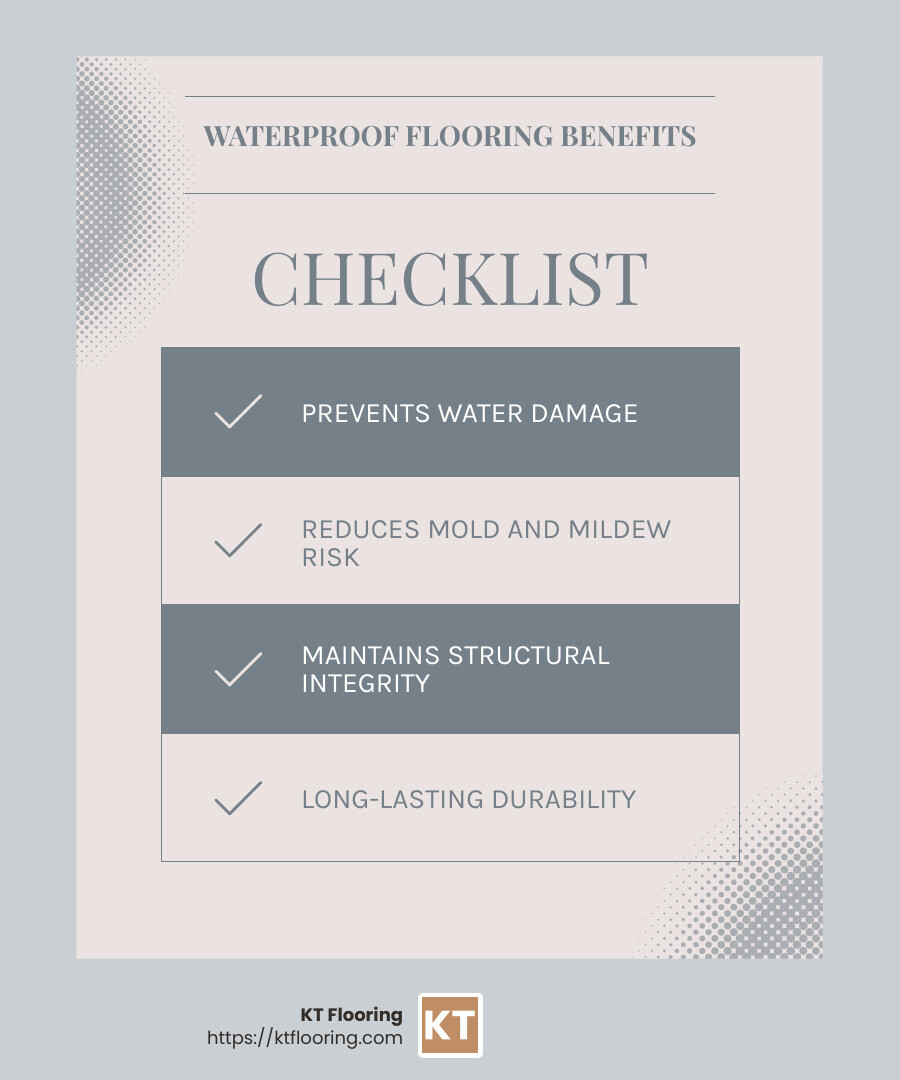
These materials not only resist water but also offer high durability, ensuring your bathroom floor remains in excellent condition for years. For example, luxury vinyl flooring is known for its high durability and scratch-resistant surface, making it ideal for busy households.
In contrast, water-resistant options might be less expensive initially but can incur higher costs over time due to potential repairs or replacements caused by water damage.
Choosing the right flooring for your bathroom involves more than just picking a design you love. It means considering how well the material will hold up against the daily challenges of a wet environment. As we explore the best waterproof flooring options for bathrooms, investing in the right material can save you time, money, and headaches in the long run.
Top Waterproof Flooring Options for Bathrooms
When it comes to waterproof flooring options for bathrooms, the choices are abundant and varied, each offering unique benefits and styles. Let’s explore the top contenders that can transform your bathroom into a stunning and resilient space.
Vinyl Flooring: A Versatile Waterproof Solution
Vinyl flooring is a popular choice for bathrooms due to its waterproof nature and versatility. It comes in several forms, including vinyl sheet, luxury vinyl plank (LVP), and luxury vinyl tile (LVT). These options mimic the look of hardwood, stone, or tile but at a more affordable price.
- Vinyl Sheet: Perfect for bathrooms with its seamless installation, reducing the risk of water seeping through cracks. It’s especially suitable for children’s bathrooms where water splashes are frequent.
- Luxury Vinyl Plank and Tile: Known for their durability and ability to hide subfloor imperfections, LVP and LVT add value to your home with their realistic wood and stone visuals.

Ceramic and Porcelain Tiles: Classic and Durable
Ceramic and porcelain tiles are timeless choices for bathroom flooring. They offer a classic look with the benefit of being highly durable and waterproof.
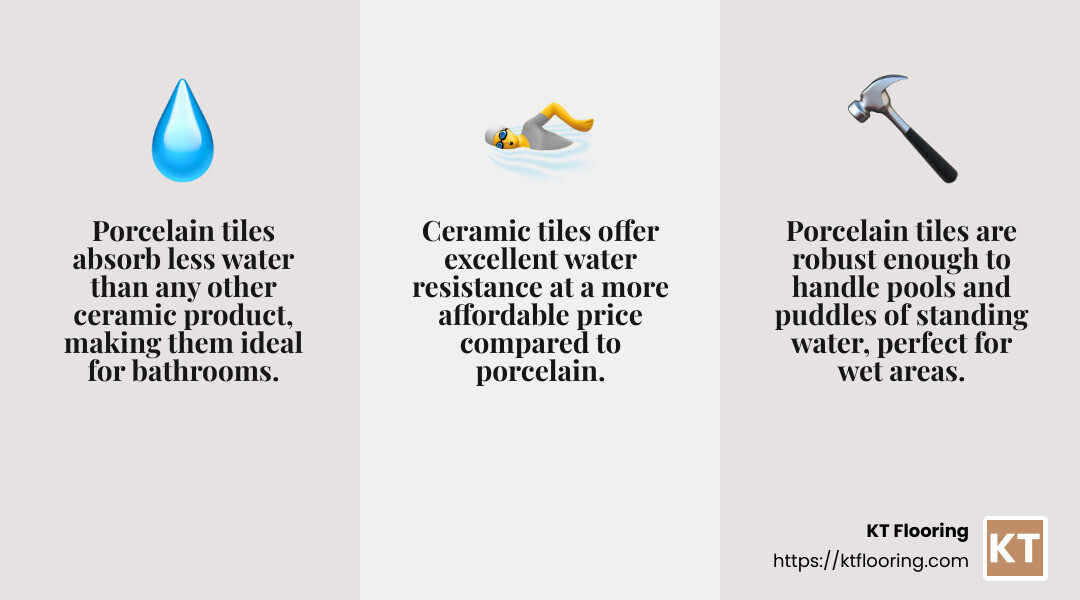
- Ceramic Tiles: These are less expensive than porcelain but still provide excellent water resistance. They’re available in various colors and designs, allowing for customization.
- Porcelain Tiles: Absorb less water than any other ceramic product, making them ideal for bathrooms. They’re also robust enough to handle pools and puddles of standing water, making them perfect for wet areas like showers.
Natural Stone: Luxury and Longevity
Natural stone flooring exudes luxury and can be a stunning addition to any bathroom. However, it’s important to consider installation and maintenance.
- Durability and Beauty: Natural stone is both resilient and visually appealing, with a variety of colors and patterns.
- Installation Considerations: Stone can be tricky to install and may require professional help. It also needs regular sealing to maintain its water resistance and appearance.
Waterproof Hardwood: Combining Beauty and Functionality
For those who love the look of hardwood, waterproof hardwood flooring is a game changer. Advances in technology have made it possible to enjoy the beauty of wood without compromising on performance.
- Technology: Brands like Raintree offer SPC-based rigid cores with a real hardwood veneer, ensuring complete waterproofing and resistance to indentations.
- Installation Tips: While engineered hardwoods provide a more stable option, follow proper installation guidelines to maximize moisture resistance.
Choosing the right flooring for your bathroom is crucial, not just for aesthetics but for functionality and durability in a moisture-rich environment. As we further explore each option, keep in mind that the best choice will depend on your specific needs, style preferences, and budget.
Vinyl Flooring: A Versatile Waterproof Solution
When it comes to waterproof flooring options for bathrooms, vinyl flooring stands out for its versatility and affordability. It comes in three distinct forms: vinyl sheet, luxury vinyl plank (LVP), and luxury vinyl tile (LVT). Each offers unique benefits, making them suitable for various bathroom styles and needs.
Vinyl Sheet
Vinyl sheet flooring is an excellent choice for bathrooms, particularly those used by children. Its seamless installation means fewer places for water to seep through, reducing the risk of water damage. This makes it ideal for spaces where water splashes and spills are common.
- Seamless Installation: The wide roll widths, typically 12′ or 13′, mean fewer seams and a smoother finish.
- Cost-Effective: Vinyl sheet is generally more affordable than other waterproof options, making it a budget-friendly choice for families.
Luxury Vinyl Plank (LVP) and Luxury Vinyl Tile (LVT)
LVP and LVT are popular for their durability and realistic appearance. They can mimic the look of natural wood or stone, adding a touch of elegance to any bathroom without the high cost.
- Durability: Both LVP and LVT have a composite core that hides subfloor imperfections and withstands heavy foot traffic.
- Aesthetic Appeal: Available in a wide range of styles, colors, and textures, these options can lift the look of your bathroom and potentially increase your home’s resale value.
- Easy Maintenance: Regular sweeping and occasional mopping keep these floors looking pristine with minimal effort.
Why Choose Vinyl for Your Bathroom?
Vinyl flooring is not only waterproof but also easy to install and maintain. Its versatility makes it a top choice for bathrooms, offering both functionality and style. Whether you prefer the seamless look of vinyl sheet or the realistic visuals of LVP and LVT, vinyl flooring provides a reliable and attractive solution for any bathroom.
Let’s explore other classic and durable options like ceramic and porcelain tiles, which offer their own unique benefits for bathroom spaces.
Ceramic and Porcelain Tiles: Classic and Durable
When considering waterproof flooring options for bathrooms, ceramic and porcelain tiles remain timeless choices. These materials are renowned for their durability, water resistance, and classic appeal, making them ideal for bathroom environments.
Benefits of Ceramic Tile
Ceramic tiles are a popular choice for bathrooms due to their affordability and versatility. They come in a wide array of colors, patterns, and textures, allowing homeowners to create a personalized look without breaking the bank.
- Cost-Effective: Ceramic tiles are generally more affordable than many other hard surface options, providing a budget-friendly yet stylish solution.
- Variety: With countless design options, from simple solids to intricate patterns, ceramic tiles can suit any aesthetic preference.
- Easy Maintenance: These tiles are straightforward to clean, requiring just regular sweeping and mopping to maintain their appearance.
Benefits of Porcelain Tile
Porcelain tiles take the benefits of ceramic a step further. They are denser and less porous, making them even more water-resistant. This makes porcelain an excellent choice for areas with high moisture exposure, like showers.
- Superior Water Resistance: Porcelain absorbs less water than any other ceramic product, making it ideal for wet environments.
- Durability: Porcelain tiles are known for their strength and resilience, capable of withstanding heavy foot traffic and resisting scratches and stains.
- Luxury Appeal: Available in a range of high-end finishes, like polished or matte, porcelain tiles can mimic the look of natural stone, offering a luxurious feel without the hefty price tag.
Design Options
Both ceramic and porcelain tiles offer extensive design flexibility. Their adaptability allows homeowners to experiment with different styles and layouts, creating visually appealing and unique bathroom spaces.
- Textured Surfaces: For added safety, especially in shower areas, opt for tiles with a textured surface to prevent slipping.
- Mosaic Patterns: Small ceramic or porcelain tiles can be arranged in mosaic patterns to add interest and detail to your bathroom design.
- Large Format Tiles: Using larger tiles can create a sense of spaciousness in smaller bathrooms, reducing the number of grout lines and enhancing the overall aesthetic.
Incorporating ceramic or porcelain tiles into your bathroom not only improves its functionality but also adds a touch of classic elegance. These tiles are a practical and stylish choice for anyone looking to create a beautiful and long-lasting bathroom space.
Next, we’ll dig into the luxurious world of natural stone, exploring its benefits and considerations for bathroom flooring.
Natural Stone: Luxury and Longevity
Natural stone flooring brings a touch of elegance and timeless beauty to any bathroom. Its unique textures and colors can transform a simple bathroom into a luxurious retreat. However, there are several factors to consider when choosing natural stone as a waterproof flooring option for bathrooms.
Benefits of Natural Stone
Natural stone offers several advantages, making it a sought-after choice for high-end bathroom designs.
- Unique Aesthetics: Each piece of natural stone is one-of-a-kind, with distinct patterns and colors that add character to your bathroom.
- Durability: Known for its resilience, natural stone can withstand daily wear and tear, making it suitable for busy households.
- Water Resistance: While not entirely waterproof, many types of natural stone, such as marble and granite, are highly water-resistant when properly sealed.
Installation Considerations
Installing natural stone can be more complex than other flooring materials, requiring careful planning and expertise.
- Professional Installation: Due to its weight and the need for precise cutting, professional installation is recommended to ensure a flawless finish.
- Subfloor Preparation: A sturdy subfloor is essential to support the weight of natural stone tiles and prevent cracking.
- Sealing: To improve water resistance and prevent staining, natural stone must be sealed before and after installation.
Maintenance
Maintaining natural stone flooring requires a bit more effort compared to other materials, but the results are worth it.
- Regular Sealing: Periodic sealing is necessary to maintain the stone’s water resistance and protect it from spills and moisture.
- Gentle Cleaning: Use pH-neutral cleaners to avoid damaging the stone’s surface. Avoid acidic or abrasive products that can etch or dull the finish.
- Immediate Spill Cleanup: Quickly clean up any spills to prevent staining, especially with porous stones like limestone or travertine.
Natural stone flooring is an investment in both style and durability. While it may require more maintenance and a higher upfront cost, the luxurious finish and longevity it provides can significantly improve your bathroom’s value and appeal.
Next, we’ll explore how waterproof hardwood combines beauty and functionality in bathroom flooring.
Waterproof Hardwood: Combining Beauty and Functionality
When it comes to waterproof flooring options for bathrooms, waterproof hardwood is a game-changer. It combines the timeless beauty of wood with advanced technology to withstand moisture and humidity.
Waterproof Hardwood Technology
Gone are the days when wood and water didn’t mix. Thanks to innovations like Raintree’s NINJA H2O Core technology, waterproof hardwood is now a reality. This technology places a real hardwood veneer over a rigid, waterproof core, offering the natural beauty of wood without the fear of water damage.
- SPC-Based Rigid Core: The core is made from Stone Plastic Composite (SPC), which is both durable and impervious to water.
- Reinforced Veneer: The top layer is real wood, treated to resist moisture and prevent swelling or warping.
- Indentation Resistance: The technology also helps the flooring resist dents and scratches, making it suitable for high-traffic areas.
Engineered Hardwood: A Smart Choice
For those who love the look of hardwood but need something more practical for a bathroom, engineered hardwood is a fantastic option. It consists of a real wood top layer bonded over layers of plywood or high-density fiberboard.
- Stability: The layered construction provides stability and reduces the expansion and contraction that can occur with solid hardwood.
- Moisture Resistance: While not entirely waterproof, engineered hardwood is more resistant to moisture than traditional hardwood.
- Variety of Styles: Available in a range of finishes and wood species, engineered hardwood offers flexibility in design.
Installation Tips
Proper installation is crucial to ensure the longevity and performance of waterproof hardwood flooring.
- Professional Installation Recommended: Given the complexity of the material and the need for precision, hiring professionals can ensure a seamless installation.
- Subfloor Preparation: A clean, dry, and level subfloor is essential to prevent any issues after installation.
- Acclimation: Allow the flooring to acclimate to the bathroom’s environment before installation to minimize expansion and contraction.
Waterproof hardwood brings together the best of both worlds—natural beauty and practical durability. It’s an excellent choice for homeowners who want to lift their bathroom’s aesthetic without compromising on functionality.
Next, let’s dive into some frequently asked questions about waterproof flooring options for bathrooms.
Frequently Asked Questions about Waterproof Flooring Options for Bathrooms
What is the best non-tile flooring for a bathroom?
When it comes to non-tile options, vinyl flooring and waterproof hardwood are top contenders. Vinyl flooring, including luxury vinyl plank and tile, is 100% waterproof, making it ideal for bathrooms where water exposure is a constant concern. It mimics the look of real wood or stone at a fraction of the cost, and its durability makes it perfect for high-traffic areas.
Waterproof hardwood, like those using Raintree’s NINJA H2O Core technology, offers the natural beauty of wood with moisture resistance comparable to vinyl. This makes it a fantastic choice for those who desire the elegance of wood without the risk of water damage.
How do you prevent mold with bathroom flooring?
Preventing mold starts with choosing the right materials. Porcelain tile is an excellent option due to its non-porous nature, which makes it highly resistant to water and mold growth. However, the key to preventing mold is not just the material but also the installation.
- Proper Sealing: Ensure that grout lines are properly sealed to prevent moisture from seeping through.
- Ventilation: Good ventilation helps keep the bathroom dry, reducing the likelihood of mold.
- Regular Cleaning: Regular cleaning with mild, mold-preventing solutions can also help keep mold at bay.
What happens if water gets under vinyl plank flooring?
If water gets under vinyl plank flooring, it can lead to moisture damage. While vinyl itself is waterproof, the subfloor beneath it may not be. Water trapped under the planks can lead to mold growth and damage the subfloor.
Installation Tips to Prevent Issues:
- Use a Moisture Barrier: Installing a moisture barrier can help protect the subfloor from any water that might seep through.
- Ensure Tight Seams: Properly fitted seams will minimize the risk of water getting underneath the flooring.
- Regular Inspections: Check for any gaps or issues in the flooring and address them promptly to prevent water intrusion.
By choosing the right materials and following proper installation practices, you can ensure your bathroom flooring remains both beautiful and functional for years to come.
Conclusion
At KT Flooring, we understand the importance of choosing the right waterproof flooring options for bathrooms. With over 50 years of experience, our team is dedicated to helping you find the perfect solution for your home. Whether you’re looking for the elegance of waterproof hardwood or the versatility of vinyl, we’ve got you covered.
Expert Consultation: Our experienced professionals are here to guide you every step of the way. We offer free in-home consultations to assess your specific needs and recommend the best flooring options. Our goal is to ensure you make an informed decision that suits both your style and budget.
Quality Assurance: We pride ourselves on providing top-quality materials and precise installation services. By partnering with leading industry brands, we ensure that our flooring solutions are not only beautiful but also durable and long-lasting. Our commitment to quality means you can trust that your investment will stand the test of time.
Customer Satisfaction: At KT Flooring, your satisfaction is our priority. We strive to exceed your expectations with every project, delivering results that improve the beauty and functionality of your bathroom. Our team is always available to address any questions or concerns, ensuring a smooth and stress-free experience.
Ready to transform your bathroom with the best waterproof flooring options? Contact us today for a consultation and find how KT Flooring can help you achieve the bathroom of your dreams.
With KT Flooring, you can trust that your bathroom flooring project is in expert hands. Our dedication to quality, precision, and customer satisfaction ensures that you receive the best service and the perfect flooring solution for your home.
