Understanding Flooring’s Impact on Your Health
When you’re struggling with allergies, the floor beneath your feet might be a bigger culprit than you realize. Best flooring for allergies isn’t just a selling point—it’s a genuine health consideration that can transform how you feel in your own home.
If you’re looking for quick answers, here are the top options that consistently provide relief for allergy sufferers:
- Tile (ceramic or porcelain) – Non-porous, prevents mold growth, easy to clean
- Solid hardwood – Doesn’t trap allergens, easy to clean thoroughly
- Natural linoleum – Antimicrobial properties, low VOCs
- Cork – Naturally antimicrobial, resists mold and mildew
- Luxury vinyl – Non-porous, easy maintenance (look for low-VOC certified products)
Did you know that over 50 million Americans battle allergy symptoms yearly? The Asthma and Allergy Foundation of America confirms this staggering statistic, yet many people don’t connect their sniffles and sneezes to what’s under their feet.
Your flooring choice matters more than you might think. The wrong floors can become a cozy home for dust mites, a collection point for pet dander, a trap for outdoor pollen, and even a breeding ground for mold. Beyond these hidden allergens, some flooring materials release volatile organic compounds (VOCs) that can trigger asthma flare-ups and allergic reactions.
Consider this: most of us spend about 90% of our time indoors. That makes your flooring selection not just a design decision but a crucial health choice that affects your breathing space day in and day out.
I’ve seen the difference proper flooring makes firsthand. I’m Christopher Talty, owner of KT Flooring, and I’ve spent decades helping allergy sufferers throughout New Hampshire and Northeast Massachusetts find relief through smart flooring choices. My team specializes in creating healthier homes where you can breathe easier while still enjoying beautiful floors that complement your style.
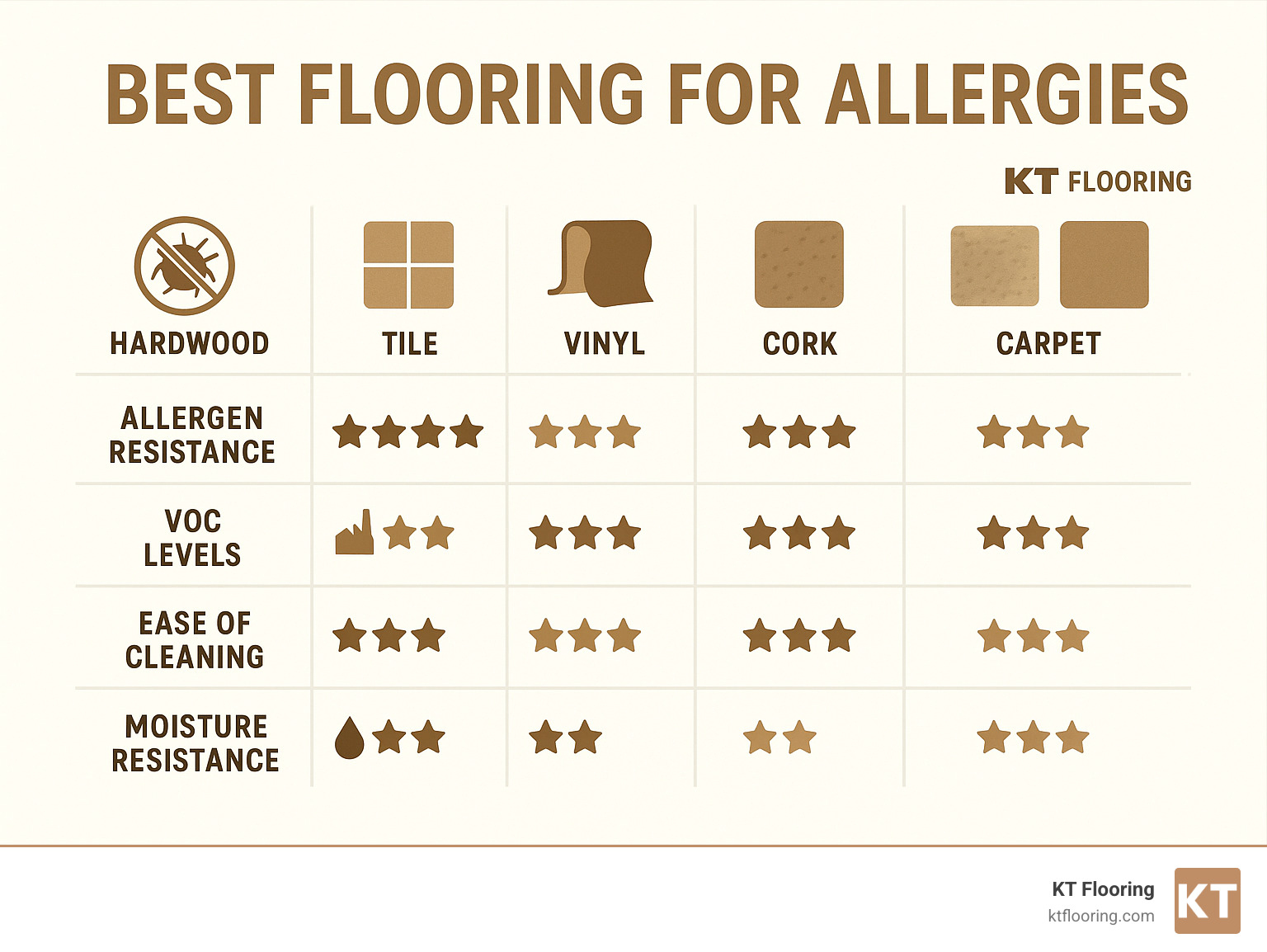
When exploring best flooring for allergies, you might also want to consider specialized options for high-moisture areas like bathrooms, where allergens like mold can thrive. We offer excellent solutions for:
– Non-slip bathroom flooring
– Waterproof bathroom flooring
Let’s dive deeper into why certain flooring types can help you breathe easier, and how making the right choice now can mean years of relief down the road.
Why Flooring Choice Impacts Allergies & Asthma
When you’re battling allergies or asthma, you might focus on air purifiers or hypoallergenic bedding—but what about the surface covering your entire home? The floors beneath your feet can significantly affect the air you breathe every single day.
“If you can see dust particles dancing in a sunbeam in your living room, imagine what’s happening every time you walk across your floor,” explains Dr. Jennifer Miller, an allergist we frequently consult with at KT Flooring. “Each step can release thousands of allergen particles back into the air you breathe.”
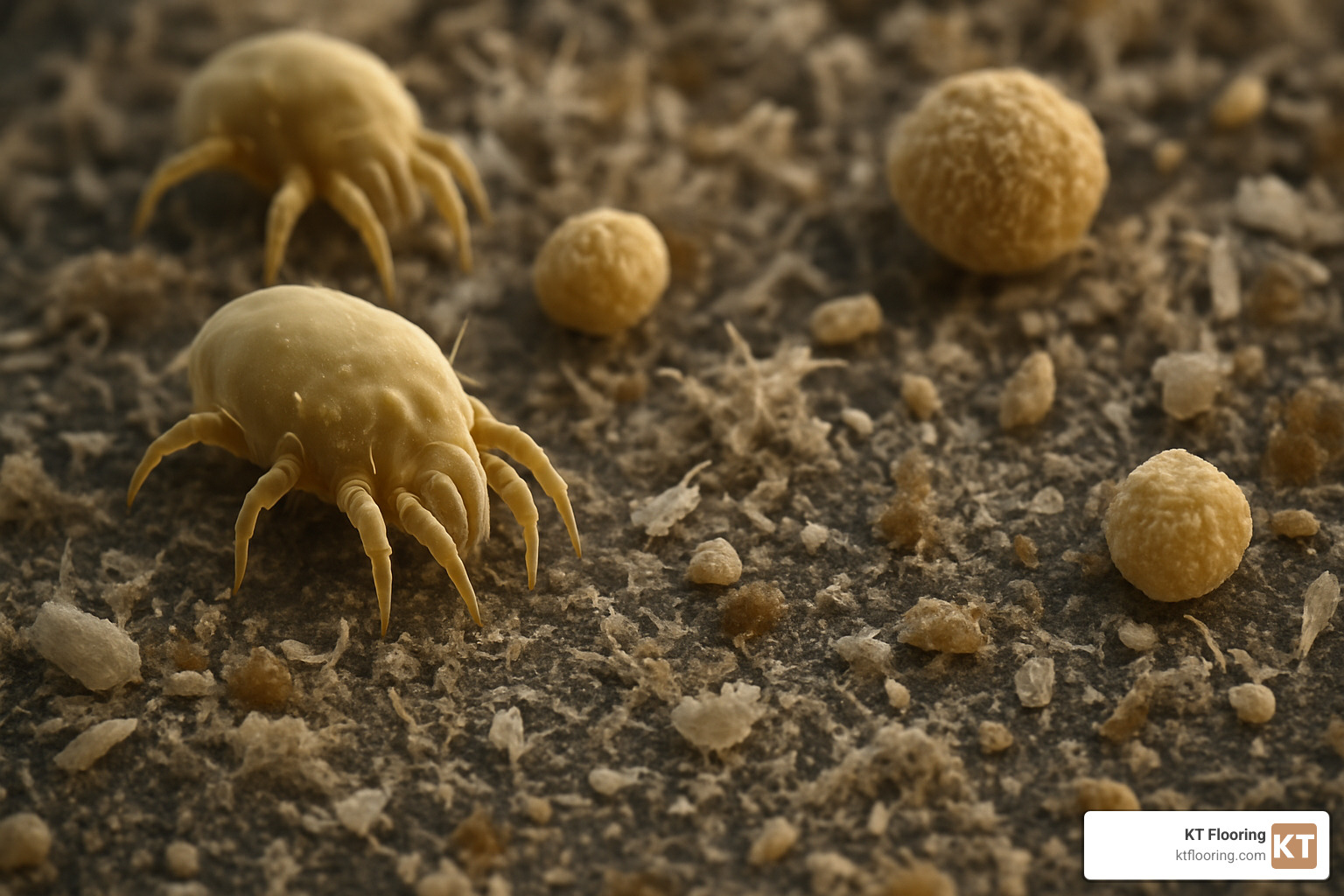
Your flooring might be harboring more than you realize. Dust mites thrive in soft, porous surfaces, feeding on the skin cells we naturally shed. Pet dander doesn’t just affect pet owners—these lightweight particles can be tracked into any home and become trapped in flooring fibers. Pollen doesn’t stay outdoors either, hitching rides on shoes and clothing before settling into your floors. In moisture-prone areas, mold spores can multiply beneath or within certain flooring materials, creating invisible health hazards.

The battle between hard and soft surfaces is real when it comes to indoor air quality. Hard surfaces allow you to see and remove allergens easily, while soft, porous surfaces like carpet become allergen reservoirs over time. Would you believe a single square yard of carpet can hold up to two pounds of dust? That’s a troubling thought for anyone with respiratory sensitivities.
We’ve witnessed remarkable changes in our customers’ health after flooring changes. One family in Nashua told us their child’s nighttime asthma attacks decreased by over 70% within weeks of replacing their bedroom carpet with hardwood floors. These aren’t just aesthetic upgrades—they’re quality of life improvements.
Beyond the visible allergens, some flooring materials release chemical emissions in the form of volatile organic compounds (VOCs) that can irritate sensitive airways. These invisible irritants can trigger asthma symptoms even when your floors look perfectly clean.
For homes with allergy sufferers, selecting the best flooring for allergies isn’t just about style—it’s about creating an environment where everyone can breathe easier. The right flooring choice becomes an essential part of your overall health strategy, especially considering most of us spend about 90% of our time indoors.
Key Factors of Allergy-Friendly Flooring
When you’re searching for the best flooring for allergies, it’s not just about what looks good in your home. Several critical factors determine whether your new floors will help or hinder your breathing:
Allergen retention is perhaps the most important consideration. Some flooring materials act like magnets for dust, pet dander, and pollen, while others allow these irritants to sit on the surface where they can be easily removed. I’ve seen families transformed after switching from allergen-trapping carpet to smooth, hard surfaces that don’t harbor these invisible troublemakers.
Cleaning ease goes hand-in-hand with allergen retention. What good is a floor that doesn’t trap allergens if you can’t properly clean it? The best flooring for allergies allows for thorough cleaning without special equipment or harsh chemicals.
VOC emissions might not be visible, but they can be just as problematic for allergy sufferers. According to scientific research on VOCs and health, these airborne chemicals can trigger immediate symptoms like headaches and throat irritation, while long-term exposure may lead to more serious respiratory conditions. This is especially important to consider with new flooring installations.
Moisture resistance plays a crucial role in preventing mold and mildew growth. In my years at KT Flooring, I’ve seen countless cases where moisture-damaged floors became breeding grounds for allergens. Maintaining indoor humidity between 35% and 50% helps prevent both dust mite proliferation and mold growth, with some flooring materials naturally helping to regulate these levels.
Installation materials matter too. Even the most allergy-friendly flooring can become problematic if installed with high-VOC adhesives or underlayment. Always ask about low-VOC installation options when making your selection.
For environmentally conscious homeowners, you’ll be pleased to know that many allergy-friendly options are also eco-friendly. Learn more about these dual-benefit materials in our guide to Eco-Friendly Flooring Options.
What makes a product qualify as the Best flooring for allergies?
Not all manufacturer claims about allergy-friendly flooring are created equal. For a product to truly earn the title of best flooring for allergies, it needs to meet specific, measurable criteria.
Legitimate allergy-friendly flooring undergoes rigorous allergen count testing. In controlled laboratory settings, these materials demonstrate minimal retention of common triggers like dust mite waste, pet dander, and pollen when compared to traditional flooring options.
VOC thresholds matter tremendously. Truly allergy-friendly products emit VOCs well below the limits established by organizations like the California Air Resources Board (CARB). Many manufacturers now seek third-party certification to verify their low-emission claims. These certifications aren’t just marketing—they represent real testing under stringent conditions.
Cleanability test results should show that standard cleaning methods can completely remove allergens from the surface. If specialized cleaning protocols or equipment are required, the flooring may not be practical for most households.
Moisture resistance testing ensures the material won’t create conditions where mold can thrive. This is particularly important in bathrooms, kitchens, and basements where moisture levels fluctuate.
I always advise my clients to ask for documentation of these test results rather than relying solely on marketing claims. The allergy-conscious consumer market is growing rapidly, and manufacturers know it—some claims are substantiated while others may be exaggerated. Trust, but verify!
1. Solid Hardwood
When it comes to the best flooring for allergies, solid hardwood has earned its stellar reputation for good reason. I’ve seen countless families experience relief after making the switch to hardwood floors in their homes.
The National Wood Flooring Association (NWFA) backs this up with their endorsement: “Wood floors have the added benefit of not harboring allergens, microorganisms or harmful pesticides that can be tracked in from outdoors. In addition, dust, mold and animal dander contamination is minimal in homes with wood floors, which can significantly improve indoor air quality.”
What makes hardwood so effective? It’s all about that smooth, solid surface. Unlike carpet fibers or porous materials, hardwood doesn’t provide cozy hiding spots for dust mites and other allergens. When pollen, pet dander, or dust lands on hardwood, it stays right there on the surface—visible and ready to be swept away.
You have two main options when considering hardwood:
Site-finished hardwood gives you that completely sealed surface with no seams where allergens can hide. The wood gets installed, sanded, and finished right in your home. The downside? You’ll need to plan for some temporary VOC exposure during the finishing process and allow proper ventilation time.
Pre-finished hardwood arrives already sanded, stained, and sealed from the factory. This option typically brings fewer on-site VOCs during installation—a big plus for those with chemical sensitivities. Just be aware of the micro-bevels between boards, which can collect small amounts of dust.
“My go-to would be solid hardwood flooring because you know exactly what you’re getting and it’s easy to install without adhesives,” says green building expert Tristan Roberts—advice I often share with customers worried about chemical sensitivities.
For the most allergy-friendly results, I typically recommend pre-finished hardwood with low-VOC sealers, or if you prefer site-finished, opt for water-based polyurethane finishes with lower emissions. Either way, maintenance is straightforward but essential: a daily once-over with a microfiber dust mop keeps allergens at bay, followed by a weekly damp mop with a gentle, non-toxic cleaner.
One of my clients in Salem reported that her son’s chronic morning congestion disappeared within two weeks of replacing their old carpet with oak hardwood floors. It’s these kinds of real-life changes that make me passionate about helping allergy sufferers find relief through better flooring choices.
Want to explore our selection of allergy-friendly hardwood options? Visit our Hardwood Flooring page to see what might work for your home.
2. Porcelain & Ceramic Tile
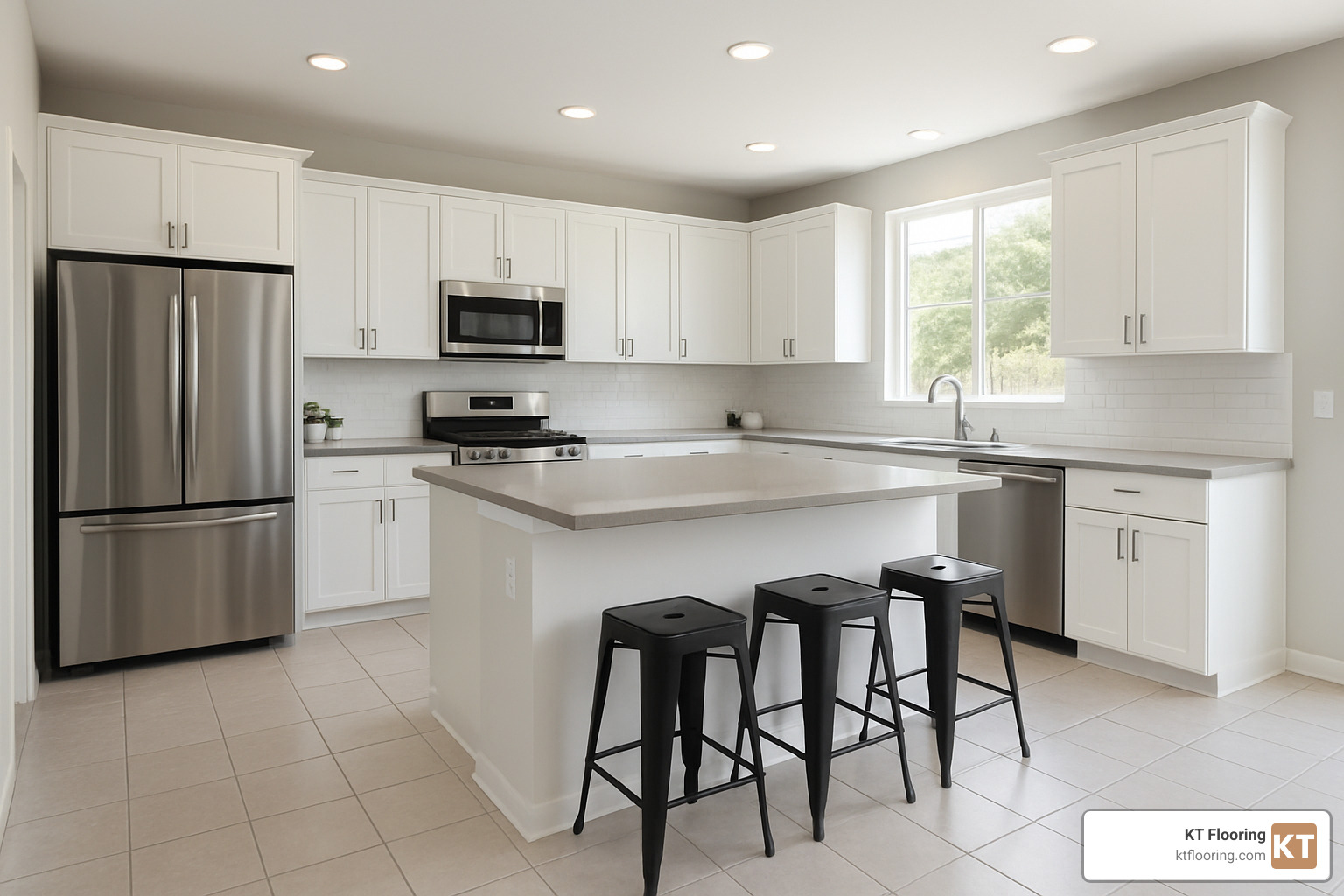
If you’re searching for the absolute best flooring for allergies, tile flooring—especially porcelain and ceramic—deserves your serious consideration. In my years at KT Flooring, I’ve seen remarkable improvements in allergy symptoms when families switch to tile in key areas of their homes.
What makes tile so exceptional for allergy sufferers? It’s all about that smooth, non-porous surface. Unlike softer flooring options, allergens have nowhere to hide on tile—they sit right on top where you can easily wipe them away. Plus, tile’s exceptional moisture resistance naturally prevents the growth of mold and mildew, two notorious triggers for respiratory issues.
The health benefits of ceramic and porcelain tile are impressive:
Complete impermeability means allergens stay on the surface where they can be cleaned away—they simply can’t penetrate properly glazed tile. This is a huge advantage over even the hardest woods, which can absorb minute amounts of moisture and allergens over time.
Heat and water resistance allows you to use steam cleaning methods that actually kill dust mites and remove allergens more thoroughly than standard cleaning. Many of our customers with severe allergies swear by their steam mops for tile areas.
Zero VOC emissions set tile apart from many other flooring options. Because ceramic and porcelain tiles are fired at extremely high temperatures during manufacturing, any volatile compounds are eliminated long before the product reaches your home.
Exceptional longevity means you won’t need to replace your flooring frequently, avoiding the disruption and potential allergen release that comes with installation. A properly installed tile floor can last decades without degrading or releasing particles into your indoor air.
Now, let’s address the elephant in the room—grout lines. Yes, the spaces between tiles can collect dirt and potentially harbor mold if neglected. But there are simple solutions to this challenge. I typically recommend using epoxy grout, which resists staining and mold growth far better than traditional grout. For existing tile, applying a high-quality grout sealer every 1-2 years maintains that protective barrier. And if you’re installing new tile, consider larger format tiles to minimize the total area of grout lines.
I remember working with a family in Nashua whose daughter had severe asthma. After we installed large-format porcelain tile throughout their first floor, her nighttime inhaler use dropped dramatically within just weeks. Stories like this are why I’m so passionate about helping allergy sufferers find the right flooring solution.
Tile also pairs beautifully with radiant heating systems. Not only does this combination create a wonderfully warm surface underfoot (addressing the common complaint that tile feels cold), but the gentle heat helps maintain lower humidity levels that further reduce allergen proliferation.
3. Cork & Bamboo
For allergy sufferers seeking natural materials with a softer feel underfoot than tile or hardwood, cork and bamboo offer compelling alternatives that still qualify as best flooring for allergies.
Cork Flooring
Cork flooring is derived from the bark of cork oak trees, which regenerates every 9-12 years without harming the tree. What makes cork exceptional for allergy sufferers is its unique cellular structure:
- Antimicrobial properties: Cork contains suberin, a natural compound that resists mold, mildew, and bacteria growth.
- Hypoallergenic nature: The material doesn’t shed fibers or particles that could trigger allergies.
- Dust resistance: Cork’s slightly textured surface prevents dust from becoming airborne as easily as on smoother floors.
- Natural insect repellent: Cork naturally deters insects, including dust mites.
One customer from Bedford, NH, told us: “After installing cork in our son’s bedroom, his nighttime congestion improved dramatically. Plus, the floor has a pleasant, warm feel that hardwood doesn’t offer.”
Cork does require proper sealing to maintain its allergen-resistant properties. We recommend water-based polyurethane sealants with low VOC content for the best results.
Bamboo Flooring
Bamboo, technically a grass rather than wood, offers another excellent option for allergy sufferers:
- Dense, hard surface: High-quality strand-woven bamboo can be even harder than oak, providing a surface that doesn’t easily trap allergens.
- Rapid renewability: Bamboo reaches maturity in just 3-5 years, making it an environmentally sustainable choice.
- Natural resistance: Like cork, bamboo has inherent properties that resist mold and pest infestations.
“Bamboo is technically not a wood – it’s a grass!” explains our flooring specialist at KT Flooring. “This fast-growing plant creates extremely durable flooring that’s perfect for allergy sufferers who want a wood-like appearance.”
Both cork and bamboo require attention to moisture levels, as excessive humidity can affect their performance. We recommend maintaining indoor humidity between 35-50% for optimal results.
For more information about these sustainable, allergy-friendly options, visit our page on Environmentally Friendly Flooring Options.
4. Luxury Vinyl & Natural Linoleum
Looking for allergy-friendly flooring that won’t break the bank? Modern luxury vinyl and natural linoleum might be your perfect match. I’ve seen these options transform homes for allergy sufferers while still delivering on style and durability.
Luxury Vinyl Flooring
Today’s luxury vinyl is worlds apart from the vinyl flooring of yesteryear. One of my customers in Nashua laughed when I suggested vinyl, saying, “Isn’t that what my grandmother had in her kitchen?” After seeing modern samples, she was amazed by the change in this product category.
What makes luxury vinyl one of the best flooring for allergies is its completely smooth, non-porous surface. Allergens have nowhere to hide, sitting right on top where they’re easy to wipe away. Many of my allergy-sensitive customers love that most luxury vinyl products can be installed using click-lock systems without adhesives, significantly reducing VOC exposure during installation.
The waterproof nature of vinyl is another huge plus. I remember visiting a client whose basement carpet had become a breeding ground for mold after minor flooding. We replaced it with luxury vinyl, and her son’s asthma symptoms improved dramatically within weeks.
When shopping for allergy-friendly vinyl, certifications are your best friends:
FloorScore certification verifies that products meet strict indoor air quality standards, while GREENGUARD Gold certification takes testing even further, ensuring minimal chemical emissions. Always ask about phthalate-free formulations too, as these avoid potentially harmful plasticizers.
“After our installation, we keep windows open for 48-72 hours,” I tell my chemically sensitive clients. “Even with low-VOC products, proper ventilation helps any initial odors dissipate quickly.”
For scientific validation of these low-VOC claims, check out SCS Global Services’ FloorScore certification, which provides independent verification that products meet strict indoor air quality requirements.
Natural Linoleum
Natural linoleum is one of flooring’s best-kept secrets for allergy sufferers. Many people confuse it with vinyl, but they couldn’t be more different.
“True linoleum is actually one of the most natural flooring products available,” I explain to my customers. Made from linseed oil, pine resin, wood flour, cork dust, and limestone on a jute backing, it’s about as natural as flooring gets.
What makes linoleum special for allergy sufferers is its inherent antimicrobial properties. The linseed oil continues to oxidize over time, creating an environment where microbes simply don’t thrive. Many of my clients with severe allergies have found relief after switching to linoleum.
A retired teacher from Salem told me, “After 30 years of suffering in my carpeted classroom, installing linoleum in my home was life-changing. I can actually breathe freely now!”
Quality linoleum can last 30-40 years when properly maintained, making it not just healthy but economical over time. Modern products like Marmoleum have dramatically improved on traditional linoleum with easier installation methods and stunning design options.
Both luxury vinyl and linoleum are incredibly low-maintenance. For most of my customers, regular sweeping and occasional damp mopping with a mild, non-toxic cleaner is all they need to keep allergens at bay. This simplicity is a welcome relief for allergy sufferers already burdened with extra cleaning routines.
Whether you choose luxury vinyl for its waterproof properties or linoleum for its natural composition, both options offer significant advantages for creating a healthier home environment without sacrificing style or breaking your budget.
5. Allergy-Friendly Low-Pile Carpet & Washable Rugs
While hard surfaces generally rank as the best flooring for allergies, I completely understand the desire for something soft underfoot. There’s nothing quite like the cozy feeling of stepping onto carpet on a chilly New Hampshire morning! The good news is that you don’t have to completely sacrifice comfort for health.
Low-Pile Carpet Options
Modern carpet technology has come a long way in creating more allergy-friendly options. When I meet with clients concerned about allergies, I always point out these key features:
Green Label Plus certification is your first assurance of quality. This rigorous Carpet and Rug Institute program certifies carpets that meet strict standards for very low VOC emissions. Think of it as the “gold standard” for healthier carpet.
Solution-dyed nylon fibers are your next best friend. Unlike natural fibers that can absorb moisture (creating perfect dust mite habitats), these synthetic fibers resist moisture and are significantly less hospitable to those microscopic troublemakers.
The pile height matters tremendously. Short, tight pile carpets (less than ½-inch) simply trap fewer allergens than those plush, sink-your-toes-in varieties. They’re also much easier to clean thoroughly.
Don’t forget what’s underneath! Hypoallergenic padding made from synthetic materials like polyurethane performs much better than natural rubber, which can deteriorate over time and release particles into your home.
“While carpet isn’t generally the first recommendation for allergy sufferers, modern low-pile nylon carpets with proper care can still work for many families,” explains our carpet specialist at KT Flooring. “The key is regular, thorough cleaning.”
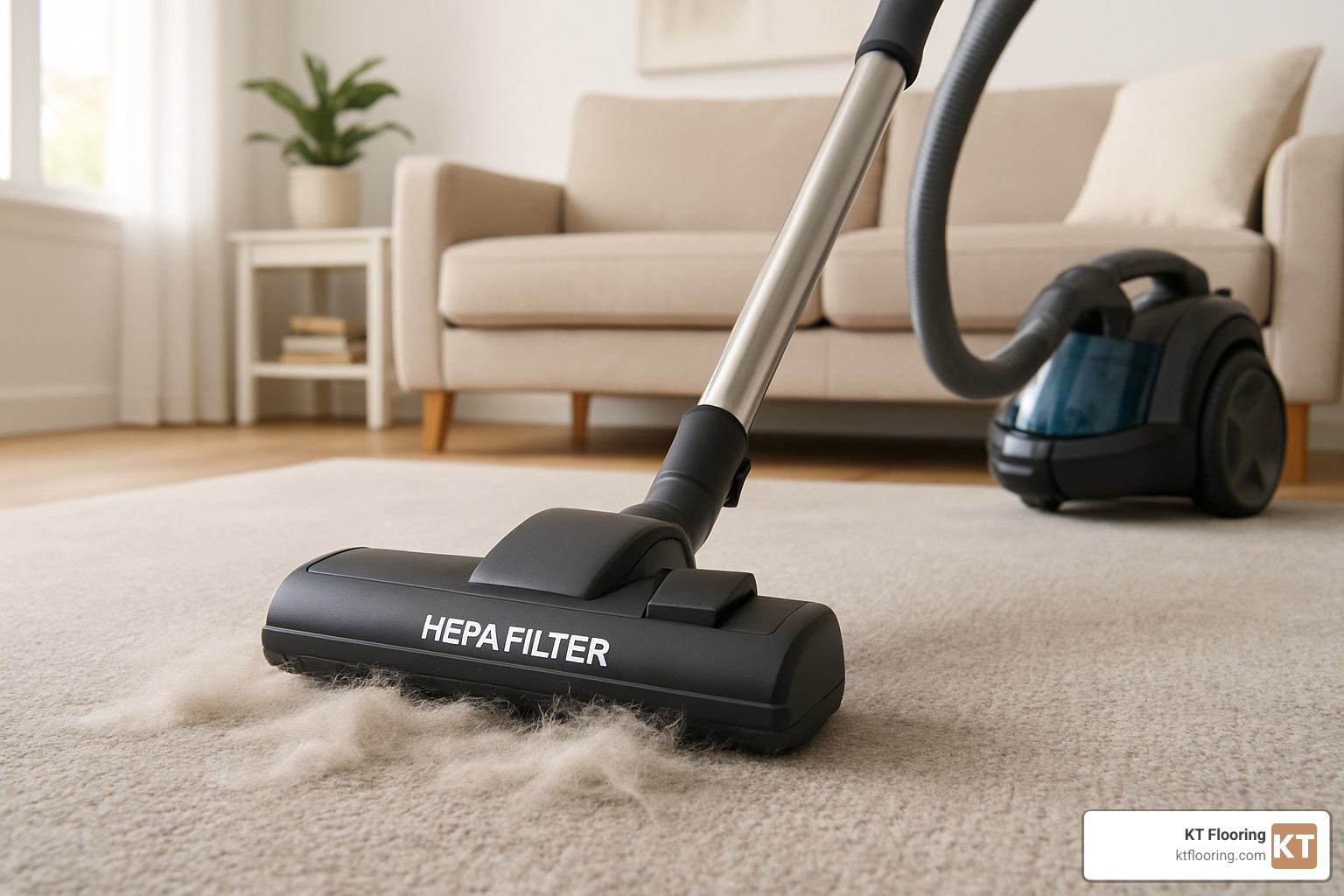
Speaking of cleaning—this is where many homeowners fall short. For carpet to remain truly allergy-friendly, you’ll need to vacuum at least twice weekly with a HEPA-filtered vacuum. Professional deep cleaning using hot water extraction every 12-18 months is also essential. Keep your home’s humidity below 50% to discourage dust mites, and always clean spills immediately to prevent mold growth.
Washable Area Rugs
For many of our customers with allergies, I recommend what I call the “best of both worlds” approach. Start with a hard-surface flooring like hardwood or tile as your primary floor, then add washable area rugs for comfort and warmth where desired.
Machine-washable rugs offer tremendous advantages for allergy sufferers. You can thoroughly clean them at high temperatures to kill dust mites—something impossible with wall-to-wall carpet. They can be removed during high pollen seasons if necessary, and they’re easily replaceable if they become worn or harbor too many allergens.
“My family uses washable cotton rugs in our living areas and bedrooms,” shares one of our Nashua customers. “We wash them every two weeks, and it’s made a tremendous difference in my daughter’s seasonal allergy symptoms.”
I’ve found this hybrid approach works particularly well in bedrooms, where we spend roughly a third of our lives. A hard surface floor with washable rugs around the bed gives you comfort where you need it while minimizing allergen exposure during those crucial sleeping hours.
For more information about our selection of allergy-friendly carpet options, visit our Carpet Flooring page.
Maintenance & Cleaning Routine to Keep Allergens at Bay
Even the best flooring for allergies won’t perform its job if you neglect regular maintenance. Think of your floors as the largest filter in your home – they need consistent attention to keep allergens at bay.
“I tell my customers that consistency trumps intensity every time,” says our cleaning specialist at KT Flooring. “Five minutes of daily cleaning prevents hours of deep cleaning later, especially for allergy sufferers.”
The cleaning routine that works best depends on your specific flooring type. Here’s a practical guide that our customers have found most effective:
| Floor Type | Daily | Weekly | Monthly | Yearly |
|---|---|---|---|---|
| Hardwood | Dust mop | HEPA vacuum | Damp mop with pH-neutral cleaner | Professional deep clean |
| Tile | Sweep | Damp mop | Grout cleaning | Reseal grout (if needed) |
| Cork/Bamboo | Dust mop | HEPA vacuum | Damp mop with manufacturer-approved cleaner | Reapply sealant as needed |
| Luxury Vinyl | Sweep | Damp mop | Deep clean with approved cleaner | Check for damage/wear |
| Linoleum | Sweep | Damp mop with mild soap | Polish if recommended | Professional cleaning |
| Low-pile Carpet | HEPA vacuum high-traffic areas | Complete HEPA vacuum | Spot clean as needed | Professional steam cleaning |
Daily sweeping or dust mopping captures surface allergens before they can be stirred into the air. Weekly HEPA vacuuming removes deeper particles, while monthly damp mopping with the right cleaner ensures a more thorough clean without damaging your floors.
The tools you use matter just as much as your routine. Microfiber dust mops capture significantly more dust than traditional cotton versions without dispersing particles back into the air. HEPA-filtered vacuums trap 99.97% of microscopic particles rather than recirculating them through your home. And gentle, fragrance-free cleaners prevent chemical irritation for sensitive individuals.
Humidity control plays a surprisingly important role in managing allergens. “We recommend keeping indoor humidity between 35-50%,” advises our installation team leader. “Below 35%, static electricity increases, causing airborne dust to cling to surfaces. Above 50%, dust mites thrive and mold growth becomes more likely.” A simple hygrometer can help you monitor your home’s levels.
When spills happen (and they always do), prompt attention is crucial. Blot – don’t rub – the spill with an absorbent cloth, then clean according to manufacturer recommendations. Most importantly, ensure the area dries completely to prevent mold growth.
One of our Bedford customers shared a valuable insight: “I used to let small spills on our old carpet ‘dry on their own,’ not realizing they were creating a perfect environment for dust mites and mold. With our new hardwood floors, spills are visible and easy to clean completely.”
For homes with pets, daily vacuuming of high-traffic areas becomes particularly important. Pet dander is lightweight and easily becomes airborne when disturbed, so capturing it before it spreads can significantly reduce allergy symptoms.
Seasonal changes may require adjusting your cleaning routine. During high pollen seasons, increasing your cleaning frequency can help manage outdoor allergens that inevitably make their way inside. And during winter, when homes are more tightly sealed, more frequent cleaning helps compensate for reduced air circulation.
With the right maintenance routine, even allergy sufferers can enjoy beautiful, comfortable floors that contribute to better health rather than undermining it.
Installation Materials & VOC Awareness
The installation process and materials used can significantly impact how allergy-friendly your new flooring will be. Even the best flooring for allergies can cause problems if installed with high-VOC adhesives or sealants.
When I meet with clients concerned about allergies, I always explain that what goes under and around your flooring matters just as much as the flooring itself. Think of it like baking a cake – even the best ingredients won’t save you if you use the wrong pan or oven temperature.
Several components of flooring installation can affect indoor air quality:
Adhesives bond your flooring to the subfloor, but traditional options can off-gas chemicals for weeks or even months. Underlayment provides cushioning and sound dampening between your subfloor and new flooring, but some materials contain formaldehyde or other irritants. Sealants protect certain flooring types but can emit strong fumes during curing. Even transition pieces used between different flooring materials might contain irritating compounds.
According to the EPA, VOC levels can be 2-5 times higher indoors than outdoors, and even higher during and immediately after flooring installation. This explains why so many allergy sufferers notice increased symptoms after new flooring goes in, even when they’ve chosen an allergy-friendly material.
Reducing VOC Exposure
At KT Flooring, we take several approaches to minimize VOC exposure for our sensitive customers:
Floating floor systems have been a game-changer for many of our allergy-prone clients. Many hardwood, laminate, and luxury vinyl products can be installed using click-lock systems that require no adhesives whatsoever. One customer from Salem told me her asthma symptoms disappeared completely after switching from glued-down carpet to a floating luxury vinyl system.
When adhesives are necessary, we use low-VOC products certified to have minimal emissions. These products might cost slightly more, but our customers find the health benefits well worth it.
We often recommend pre-finished materials because factory-finished products typically release fewer VOCs on-site than those finished during installation. The controlled factory environment allows for more complete curing before the product enters your home.
“Always request the Material Safety Data Sheet (MSDS) for any installation materials,” advises our lead installer. “This document discloses the chemical composition and potential hazards of products used in your home.”
For formaldehyde-free options, look for products labeled with NAF (No Added Formaldehyde), ULEF (Ultra-Low Emitting Formaldehyde), or CARB Phase 2 Compliant (California Air Resources Board) certifications.
Learn more about our low-VOC installation options for Laminate Flooring and other materials.
How to shop for the Best flooring for allergies locally?
When shopping for allergy-friendly flooring in New Hampshire or Northeast Massachusetts, I recommend following these steps:
First, ask for specific certifications rather than accepting vague claims like “eco-friendly” or “green.” Request actual documentation showing low-VOC certifications.
Next, verify the installation plan in detail. A truly allergy-aware flooring provider will be able to discuss exactly which adhesives, underlayment, and finishing materials will be used in your home. If they seem vague or dismissive about these details, that’s a red flag.
I always suggest scheduling installation strategically. Plan your flooring project during seasons when windows can be opened, if possible. A spring or fall installation allows for better ventilation during the initial off-gassing period.
It’s also wise to allow for off-gassing time by installing flooring when you can vacate the space for a few days afterward. This is especially important for family members with severe chemical sensitivities.
Finally, request samples to test before making your final decision. Take home samples of flooring options to test for odors or reactions before committing to a full installation.
“At KT Flooring, we understand that customers with allergies and sensitivities need special consideration,” says our showroom manager. “We’re always transparent about our products’ composition and installation requirements.”
After all, your new floor should improve your health, not compromise it. With the right materials and installation practices, you can enjoy both beautiful flooring and easier breathing for years to come.
Certifications & Labels to Trust
With so many products claiming to be the best flooring for allergies, it’s easy to feel overwhelmed. How do you separate marketing hype from genuine health benefits? This is where third-party certifications become your best allies in the search for truly allergy-friendly flooring.
Key Certifications to Look For
When I’m helping customers at our showroom, I always point out the certification logos on product samples. These little symbols represent significant testing and validation that can make all the difference for allergy sufferers.
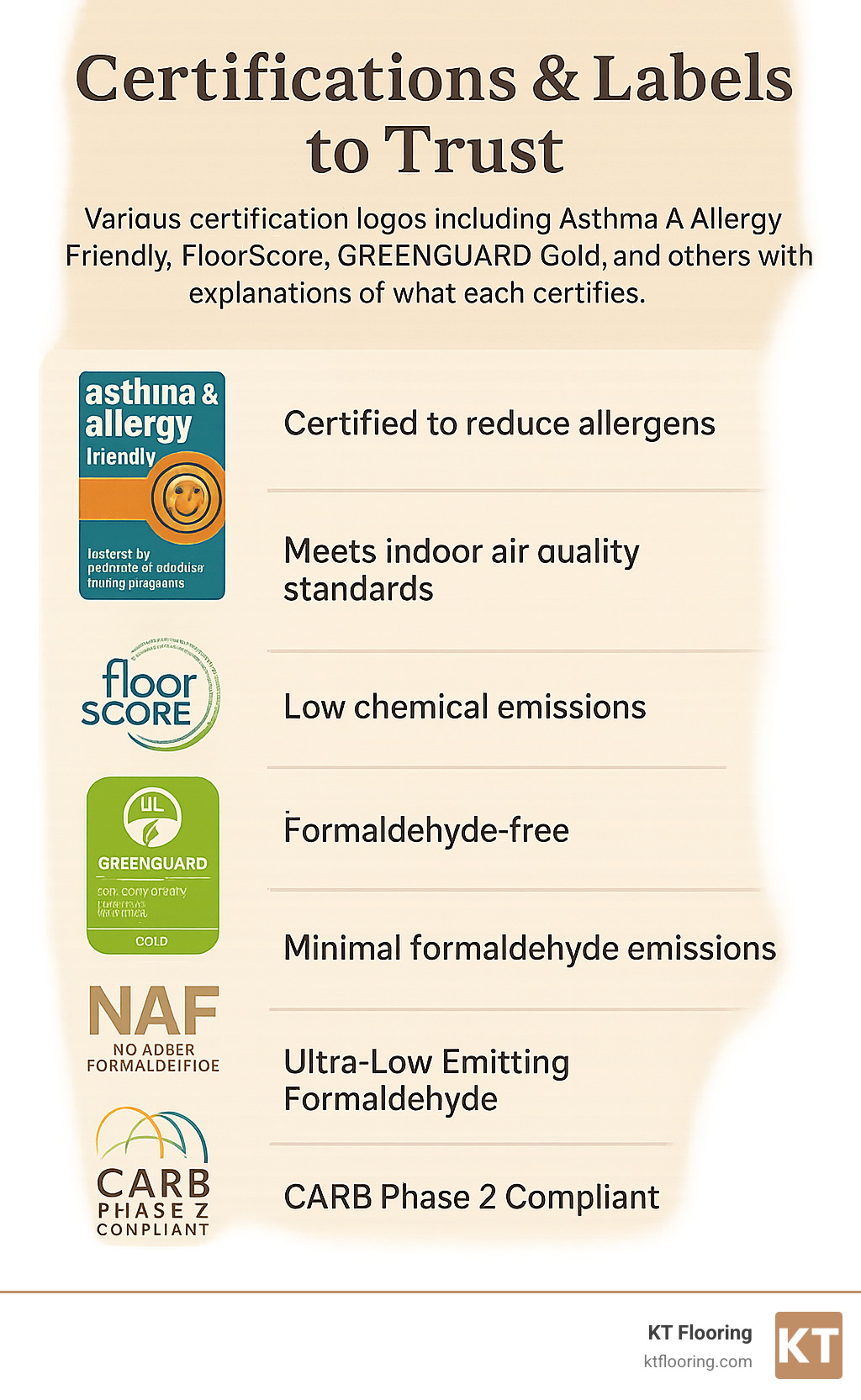
The Asthma & Allergy Friendly® Certification is perhaps the gold standard for those with respiratory concerns. Developed by the Asthma and Allergy Foundation of America, this certification doesn’t come easily. Products must undergo testing in environmentally controlled chambers where scientists evaluate how well the flooring resists allergen buildup, how effectively it can be cleaned, and whether it emits harmful chemicals.
“Last year, a customer brought in her asthmatic son to help choose new flooring,” shares our showroom manager. “When we showed her products with this certification, she actually teared up – she’d been struggling to find truly safe options for years.”
For those concerned primarily about chemical emissions, the FloorScore® certification focuses specifically on indoor air quality. This program certifies that flooring meets strict VOC emission limits and is recognized by prestigious programs like the U.S. Green Building Council’s LEED certification. Many of our eco-conscious clients specifically request FloorScore-certified products.
Even stricter is the GREENGUARD Gold certification, which goes beyond basic GREENGUARD standards to ensure products are acceptable for use in sensitive environments like schools and healthcare facilities. These products undergo testing for thousands of potential chemical emissions and VOCs. For families with young children or elderly members, this certification offers exceptional peace of mind.
For our international clients, the Allergy UK Seal of Approval provides another trusted verification. This certification involves rigorous scientific testing protocols focusing specifically on reducing exposure to common allergens. It’s less common in the U.S. market but worth looking for if available.
If you’re considering engineered wood products, pay special attention to Zero-Add Formaldehyde Labels like NAF (No Added Formaldehyde) and ULEF (Ultra-Low Emitting Formaldehyde). These certifications are particularly important for products containing wood composites, which historically have been sources of formaldehyde emissions.
“These certifications aren’t just marketing tools—they represent rigorous testing and verification,” explains our product specialist at KT Flooring. “For allergy sufferers, they provide peace of mind that a product has been objectively evaluated.”
I always recommend asking for documentation of these certifications rather than relying solely on salesperson claims or product packaging. Legitimate manufacturers will readily provide this information, and at KT Flooring, we keep certification documentation on file for all our allergy-friendly products.
While these certifications add to a product’s cost, they represent significant investment in testing and quality control. For those with serious allergies or asthma, this extra assurance is well worth the small premium in price.
Frequently Asked Questions about the Best Flooring for Allergies
Do I have to remove all carpet if I have allergies?
This is probably the most common question I hear from families dealing with allergies. The good news? You don’t necessarily need to rip out every inch of carpet in your home to find relief.
“We often recommend a phased approach,” says our design consultant. “Start with bedrooms, where you spend 8+ hours daily, then assess whether symptoms improve before making more extensive changes.”
Think strategically about your home. Bedrooms should typically be your first priority since we spend about a third of our lives sleeping. Living rooms and family spaces might come next, while less-used formal areas could remain carpeted if budget is a concern.
Many of our customers find success with a mixed approach:
– Hard surfaces in primary living areas where allergens are most likely to accumulate
– Well-maintained, low-pile carpet in areas where comfort and noise reduction are priorities
– Washable area rugs over hard surfaces as a perfect compromise solution
I’ve seen remarkable improvements in allergy symptoms when customers make even partial changes to their flooring, especially in sleeping areas.
What is the average cost range for allergy-friendly flooring?
Budget considerations are naturally a big concern when planning a flooring project. Based on internet data (not actual KT Flooring pricing), here’s what you might expect to pay for various allergy-friendly options:
Ceramic/Porcelain Tile: $5-30 per square foot installed
Solid Hardwood: $8-25 per square foot installed
Engineered Hardwood: $7-20 per square foot installed
Cork: $5-15 per square foot installed
Luxury Vinyl: $4-12 per square foot installed
Natural Linoleum: $5-15 per square foot installed
Low-pile, hypoallergenic carpet: $3-12 per square foot installed
The wide ranges reflect differences in material quality, installation complexity, and regional labor costs. Premium materials often offer better sealing against allergens and greater durability, which can make them more cost-effective over time.
Many of our customers with severe allergies tell us that investing in higher-quality, best flooring for allergies ultimately reduced their medication costs and improved their quality of life immeasurably. One family from Nashua mentioned they were able to reduce their child’s allergy medications after installing tile throughout their first floor.
Are radiant-heated floors safe for allergy sufferers?
Not only are radiant floor heating systems safe for allergy sufferers – they’re actually ideal! There are several reasons why they’re a perfect match:
First, unlike forced-air heating systems that blow dust and allergens throughout your home, radiant systems heat surfaces directly without moving air. This dramatically reduces airborne allergen circulation.
Second, they help maintain consistent humidity levels throughout your home, which discourages dust mite proliferation. Dust mites thrive in high humidity environments, so this stability is a significant benefit.
Third, radiant heating works beautifully with hard, allergy-friendly surfaces like tile, which can otherwise feel cold underfoot in our New Hampshire winters.
“Radiant heating is particularly beneficial under tile in bathrooms,” notes our installation manager. “The warmth makes the hard surface more comfortable underfoot while helping prevent moisture issues that could lead to mold.”
The only caution I’d offer is to ensure that your chosen flooring material is compatible with radiant heating. While tile is ideal, some engineered wood products may not tolerate the heat cycles well. During your free in-home consultation, we’ll help you steer these considerations to find the perfect solution for your specific needs.
Conclusion
Choosing the best flooring for allergies isn’t just about aesthetics—it’s a decision that can transform your family’s health and comfort at home. Throughout this guide, we’ve explored how the right flooring can dramatically reduce allergy symptoms and create a healthier living environment.
I’ve seen how proper flooring choices have helped countless families across New Hampshire and Northeast Massachusetts breathe easier. One Dover customer called me three months after we installed ceramic tile throughout her first floor to share that her son hadn’t needed his rescue inhaler once since the installation—after years of frequent asthma attacks.
The journey to an allergy-friendly home starts with understanding what matters most:
Hard surfaces generally outperform soft surfaces, with porcelain tile, hardwood, and cork leading the way. These materials don’t trap allergens and allow for complete removal of dust, pet dander, and pollen during regular cleaning. Even traditionally problematic materials like vinyl and carpet have evolved with new technologies to become viable options when properly selected.
Installation is just as important as the material itself. The most allergy-friendly flooring can still cause problems if installed with high-VOC adhesives or improper sealing. Always ask about low-VOC installation materials and proper ventilation during the process.
Maintenance remains your ongoing defense against allergens. Even the best flooring for allergies requires consistent care—regular sweeping, damp mopping, and prompt attention to spills will keep your home healthier year-round.
Don’t overlook the value of third-party certifications like Asthma & Allergy Friendly, FloorScore, and GREENGUARD Gold. These provide objective verification that products meet strict standards for indoor air quality and allergen resistance.
At KT Flooring, we understand that every family’s needs are unique. Our team brings over 50 years of experience helping homeowners select flooring that balances health requirements with style preferences and budget considerations. We’re committed to guiding you through the entire process, from selection to installation and maintenance.
We invite you to schedule a free in-home consultation where we can assess your specific situation and recommend solutions custom to your family’s needs. Our extensive selection of allergy-friendly options ensures you’ll find the perfect flooring without compromising on style or durability.
For more information about the quality brands we carry, visit our Flooring Brands page.
Your path to easier breathing starts from the ground up—and we’re here to help you build that foundation one room at a time.
