Understanding Your Hardwood Flooring Investment
Installation cost for hardwood flooring typically ranges from $6 to $25 per square foot, with national averages as follows:
| Cost Component | Price Range | Notes |
|---|---|---|
| Materials | $4-$20 per sq ft | Varies by species & quality |
| Labor | $3-$10 per sq ft | 50-70% of total cost |
| Total Installed | $6-$25 per sq ft | Up to $45 for premium materials |
| Average 1,000 sq ft project | $6,000-$25,000 | Budget 10-15% contingency |
When considering a hardwood floor upgrade, understanding the true cost goes beyond just the price tag of the planks. Like buying a car, the sticker price rarely tells the full story. Your investment covers materials, labor, preparation work, and several hidden factors that can significantly impact your final bill.
According to the National Realtor Association’s 2022 Remodeling Impact Report, homeowners who install new wood flooring recoup approximately 118% of the cost at resale. This makes hardwood flooring one of the rare home improvements that can actually pay for itself over time.
“It’s hard to beat the natural beauty and allure of hardwood flooring,” as many flooring experts note, but that timeless appeal comes with various cost considerations that every homeowner should understand before committing to the project.
As Christopher Talty, owner of KT Flooring with over 50 years of experience installing hardwood floors throughout New Hampshire and Northeast Massachusetts, I’ve guided countless homeowners through the installation cost for hardwood flooring process, helping them steer material selection, subfloor preparation, and installation methods to maximize their investment while staying within budget.
Installation cost for hardwood flooring terms made easy:
– Hardwood floor installation services
– install hardwood floor on concrete
– install laminate hardwood flooring
Installation Cost for Hardwood Flooring: National Averages & Per-Square-Foot Breakdown
Let’s talk dollars and cents—because when it comes to hardwood floors, knowing what you’re getting into financially is just as important as picking the perfect shade of oak.
The installation cost for hardwood flooring typically falls between $6 and $25 per square foot all-in. But what exactly are you paying for? Let’s break it down:
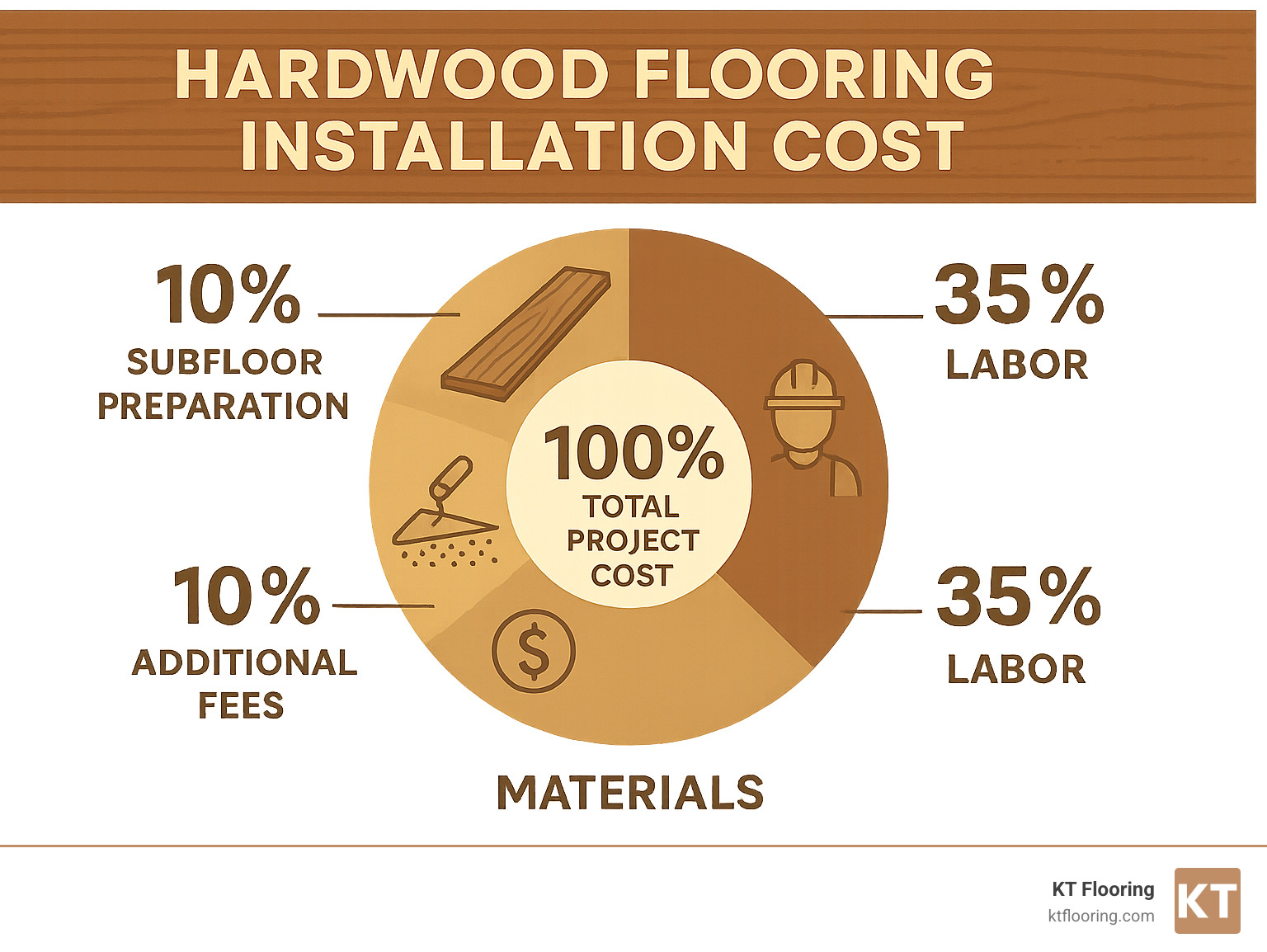
Your hardwood investment typically includes materials ($4-$20 per square foot), labor ($3-$10 per square foot, usually 50-70% of your total), subfloor preparation ($1-$2 per square foot), and removal of old flooring ($1-$3 per square foot). If you’re eyeing those gorgeous herringbone patterns or exotic wood species, prepare for premium pricing—up to $45 per square foot for truly high-end installations.
Geography matters too! What you’ll pay in Southern New Hampshire might differ from costs in the Boston area. That’s why at KT Flooring, we always provide free in-home consultations—we want your estimate to reflect your actual space, not just national averages.
Here’s a tip from decades of experience: always add a 10-15% contingency to your budget. Even the most thorough inspection can miss hidden subfloor issues that only reveal themselves once your project begins.
For more detailed information about pricing specifics, check out our comprehensive guide on hardwood flooring installation cost. And if you’re gathering supplies, Home Depot’s flooring section offers a good overview of current market prices for materials.
How Room Size Affects Your Installation Cost for Hardwood Flooring
Size matters in flooring—but not always in the way you might think. While larger spaces naturally require more materials, they can actually be more cost-effective per square foot.
Small rooms (under 500 sq ft) often cost more per square foot ($3,000-$12,500 total) because setup costs are spread across fewer square feet, and working around fixtures requires more precise cutting. Medium projects (around 1,000 sq ft) hit the sweet spot at $6,000-$25,000 total, with better labor efficiency. Large installations (2,000+ sq ft) ranging from $12,000-$50,000 total offer the best opportunity for bulk discounts and efficient labor utilization.
Remember to factor in 5-15% extra material for waste—more for diagonal installations or rooms with lots of corners. Those beautiful bay windows might be gorgeous, but they’ll increase your material needs!
Want to get a better sense of costs for your specific room size? Our guide on the Average Cost to Install Hardwood Flooring breaks it down further.
Solid vs Engineered Cost Snapshot
One of the biggest decisions affecting your installation cost for hardwood flooring is choosing between solid and engineered products.
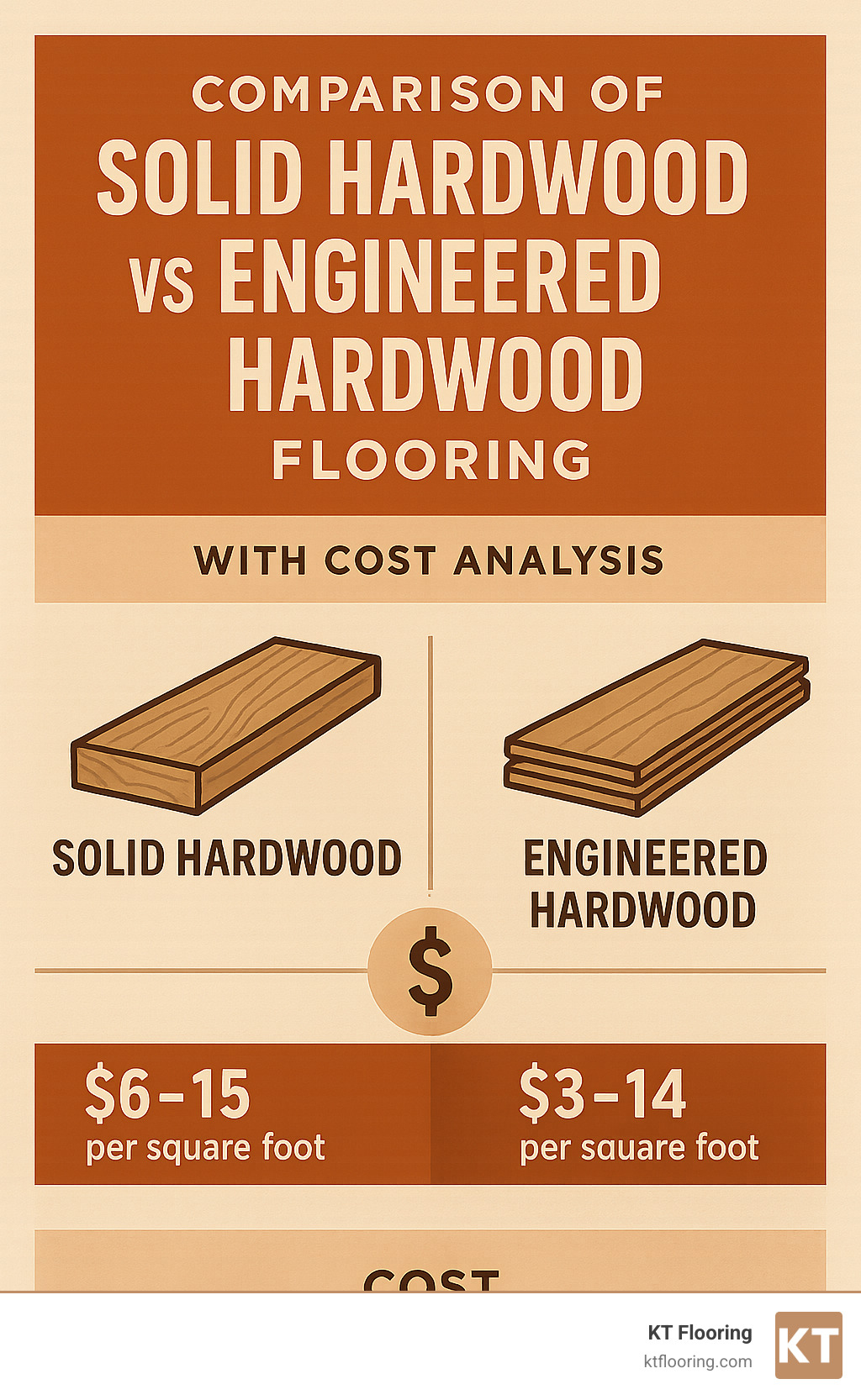
Solid hardwood typically costs $8-$15 per square foot for materials plus $3-$10 for installation, totaling $11-$25 per square foot installed. The premium price comes with premium benefits: a potential century-long lifespan with proper care, multiple refinishing opportunities, and higher resale value. It’s the flooring your grandchildren might thank you for!
Engineered hardwood offers a more budget-friendly approach at $3-$14 per square foot for materials and $3-$8 for installation, totaling $6-$22 installed. While its 30-50+ year lifespan is shorter than solid wood, its superior moisture resistance makes it ideal for basements or bathrooms. The veneer thickness is crucial—premium options with 3mm+ veneers cost more but can be refinished multiple times.
Prefinished options in either category typically add about $2 per square foot to material costs, but they save on labor and finishing time—meaning you can walk on your new floors sooner.
At KT Flooring, we believe in options. That’s why we carry top industry brands for both solid and engineered products, ensuring quality regardless of your budget or preference.
Key Factors That Influence the Final Bill
Looking beyond basic square footage, several factors can dramatically shift your installation cost for hardwood flooring in ways many homeowners don’t expect until they’re deep into the project.
Wood Species and Grade
The wood species you select is perhaps the single biggest variable affecting your bottom line. Think of it like choosing between a Toyota and a Lexus – both are quality vehicles, but with very different price points:
Domestic hardwoods offer excellent value while remaining beautiful and durable. Red oak typically runs $4-$8 per square foot (materials only), while white oak commands $5-$10. American maple ranges from $4-$12, and hickory—known for its striking grain patterns—costs $6-$13 per square foot.
For those seeking more exotic options, Brazilian cherry starts around $8-$14, mahogany ranges from $8-$15, and teak—prized for its water resistance and rich color—commands $11-$20 per square foot.
Wood grade significantly impacts pricing too. Clear grade wood with minimal knots and consistent coloring fetches premium prices, while character grades with more natural variation cost less but offer unique visual interest that many homeowners actually prefer.
The Janka hardness rating often correlates with price—harder woods typically cost more but offer better resistance to denting in busy households with kids, pets, or heavy furniture. This practical consideration often justifies the higher investment for active families.
Plank Dimensions and Installation Pattern
Plank width dramatically affects both aesthetics and price:
Traditional narrow planks (2¼-3 inches) generally have lower material costs but require more boards to cover the same area, increasing labor costs. Wide planks (5-7+ inches) create a more contemporary look but command higher material prices—though potentially with slightly lower labor costs. Extra-wide planks (8+ inches) are truly premium products, often costing 20-30% more than standard widths.
The pattern you choose can transform your installation cost for hardwood flooring. While straight layouts are most economical, specialty patterns like herringbone add approximately 30% to labor costs. Parquet designs and custom inlays can increase costs by 50-100%, but create truly distinctive spaces that become conversation pieces.
Subfloor Preparation and Existing Floor Removal
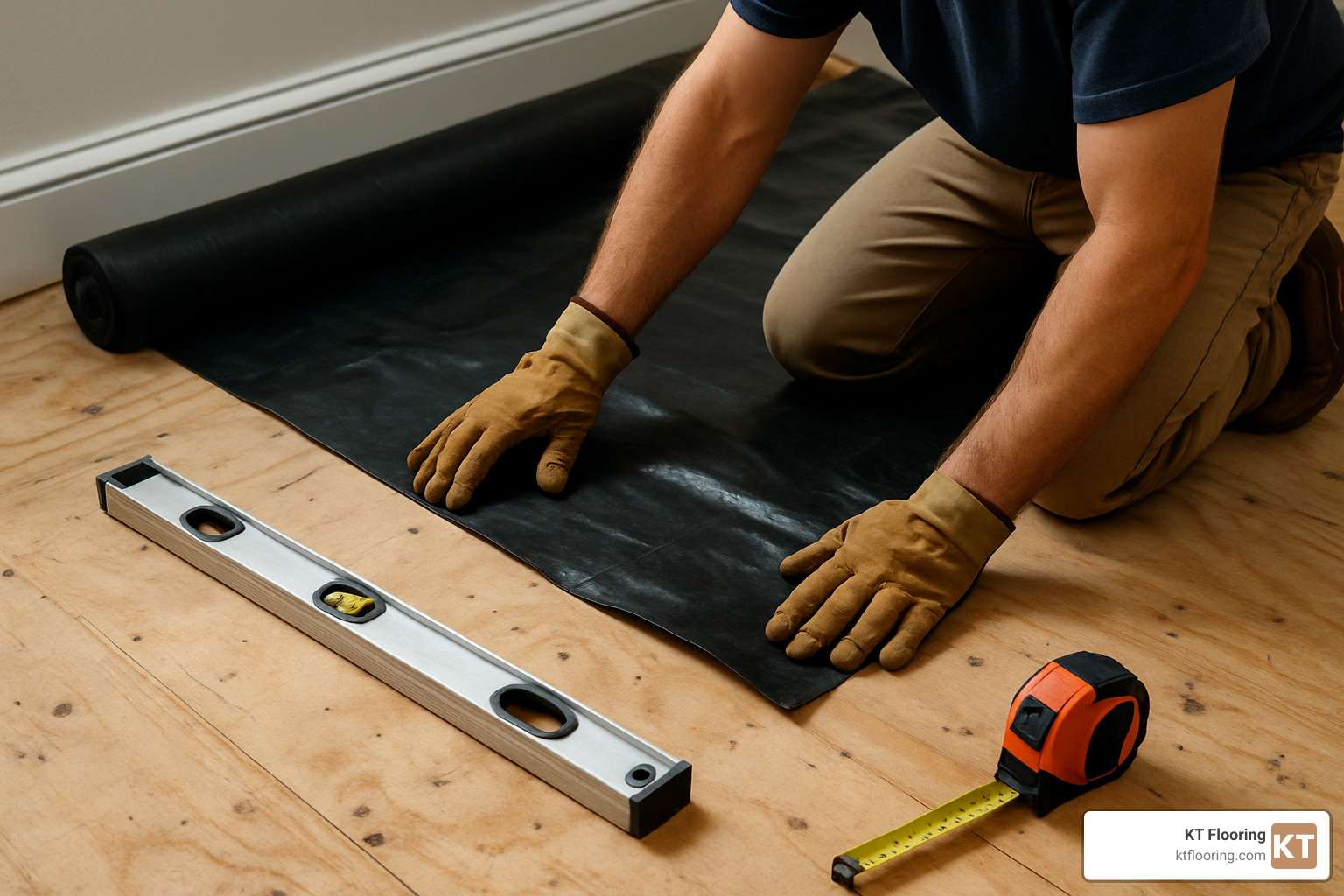
Never underestimate subfloor preparation—it’s like the foundation of a house. Skip this step, and even the most expensive hardwood will fail prematurely.
A typical room might need $500-$800 in leveling work to create the perfect surface. Moisture barriers—essential in our humid New England climate—add $0.50-$1.00 per square foot but protect your investment for decades. According to scientific research on subfloor moisture, proper moisture control is absolutely crucial for preventing warping and buckling, particularly in the seasonal temperature swings we experience in New Hampshire and Massachusetts.
Removing existing flooring also adds to your bill: carpet removal runs $1-$2 per square foot, tile removal $2-$3, and old hardwood removal $1.50-$3. If we find floor joist issues during removal (not uncommon in older New England homes), repairs can add $40-$60 per square foot to affected areas.
Installation Method
Your installation method affects both performance and price:
Nail-down installation remains the gold standard for solid hardwood, requiring a wood subfloor but providing exceptional stability. Glue-down methods work beautifully for engineered hardwood over concrete, though adhesive adds $0.50-$1.00 per square foot. Floating installation—where boards connect to each other but not to the subfloor—typically costs less but may not feel as solid underfoot. Click-lock systems offer the fastest installation for engineered products and are particularly DIY-friendly.
For concrete subfloor solutions, our guide on how to Install Hardwood Floor on Concrete provides detailed information on the best approaches.
Hidden Fees That Inflate Your Installation Cost for Hardwood Flooring
The “sticker price” rarely tells the whole story. Several often-overlooked expenses can catch homeowners by surprise:
Permits cost $50-$200 depending on local requirements—something we help steer for our New Hampshire and Massachusetts customers. Furniture moving might seem minor but adds $20-$50 per room. Trims and moldings run $5-$10 per linear foot for baseboards, quarter round, and transition strips. Complex patterns can increase labor by 30-100%, while debris disposal adds $0.75-$0.85 per square foot. And don’t forget sales tax, typically 5-8% on materials in our region.
At KT Flooring, we believe in transparent pricing with no surprises, which is why our quotes include these potential hidden costs upfront.
Installation Methods and Their Price Tags
Each installation method has distinct advantages and cost considerations:
Nail-down installation ($4-$7 per square foot for labor) provides excellent stability for solid hardwood but requires a wood subfloor. It’s the time-tested approach we’ve used successfully for decades.
Glue-down installation ($5-$8 per square foot plus $0.50-$1.00 for adhesive) creates excellent stability and sound insulation, particularly for engineered hardwood over concrete. The downside? It’s more permanent and difficult to remove if needed.
Floating installation ($3-$6 per square foot) offers the fastest installation with no fasteners required—ideal for engineered hardwood. While more budget-friendly, it may produce more noise and feel slightly less solid underfoot.
Click-lock installation ($3-$5 per square foot) represents the easiest DIY option with no glue or nails needed, though it’s limited to engineered products with click systems.
For more details on engineered installation options, our guide on how to Install Engineered Hardwood Floor provides step-by-step assistance.
Saving Money & Financing Your Hardwood Floor Project
Let’s face it—hardwood floors are an investment. But there are plenty of ways to get that gorgeous wood look without emptying your bank account. I’ve helped hundreds of homeowners find creative solutions to manage their installation cost for hardwood flooring while still getting stunning results.
Cost-Saving Strategies
Before you dive into buying brand new hardwood, consider whether your existing floors might just need some TLC. Refinishing existing hardwood typically costs between $3-$8 per square foot—substantially less than a full replacement. The National Realtor Association reports that refinishing existing floors recovers a whopping 147% of the cost when you sell your home. That’s money back in your pocket!
If you’re set on new floors, the prefinished vs. unfinished decision can significantly impact your budget. Prefinished boards cost about $2 more per square foot upfront, but you’ll save on labor since they don’t require on-site sanding and finishing (which adds $2-$7 per square foot). Plus, you can walk on them immediately after installation—no waiting for finishes to dry!
Timing matters too. Many flooring retailers (including us at KT Flooring) offer deeper discounts during winter months when installation work typically slows down. If your project isn’t urgent, planning around seasonal sales could save you 10-15%.
Don’t be afraid to roll up your sleeves either. Taking on the demo work yourself by removing old flooring and moving furniture can shave $1-$3 per square foot off your quote. Just be sure to wear proper safety gear—those old carpet tack strips are notorious for causing nasty scratches!
For larger homes, buying in bulk opens the door to volume discounts. When you’re covering 1,500+ square feet, suppliers are often willing to negotiate better rates, potentially saving you 10-15% on materials.
Financing Options
You don’t need to pay for everything upfront. Several financing paths can help spread the cost over time:
A Home Equity Line of Credit (HELOC) typically offers the most favorable interest rates (currently 4-8%) and potential tax benefits since you’re borrowing against your home’s value. It’s worth a conversation with your bank if you have decent equity built up.
Personal loans provide another solid option with no collateral required. Interest rates vary widely (6-36%) based on your credit score, but the application process is usually straightforward and quick.
If your project is smaller, credit cards with 0% introductory APR can be smart—as long as you’re disciplined enough to pay off the balance before that promotional period ends.
During your free in-home consultation with KT Flooring, we’re happy to discuss these options and help find a solution that fits your financial situation. We believe beautiful floors should be accessible to everyone!
Pros and Cons of Professional Installation vs DIY
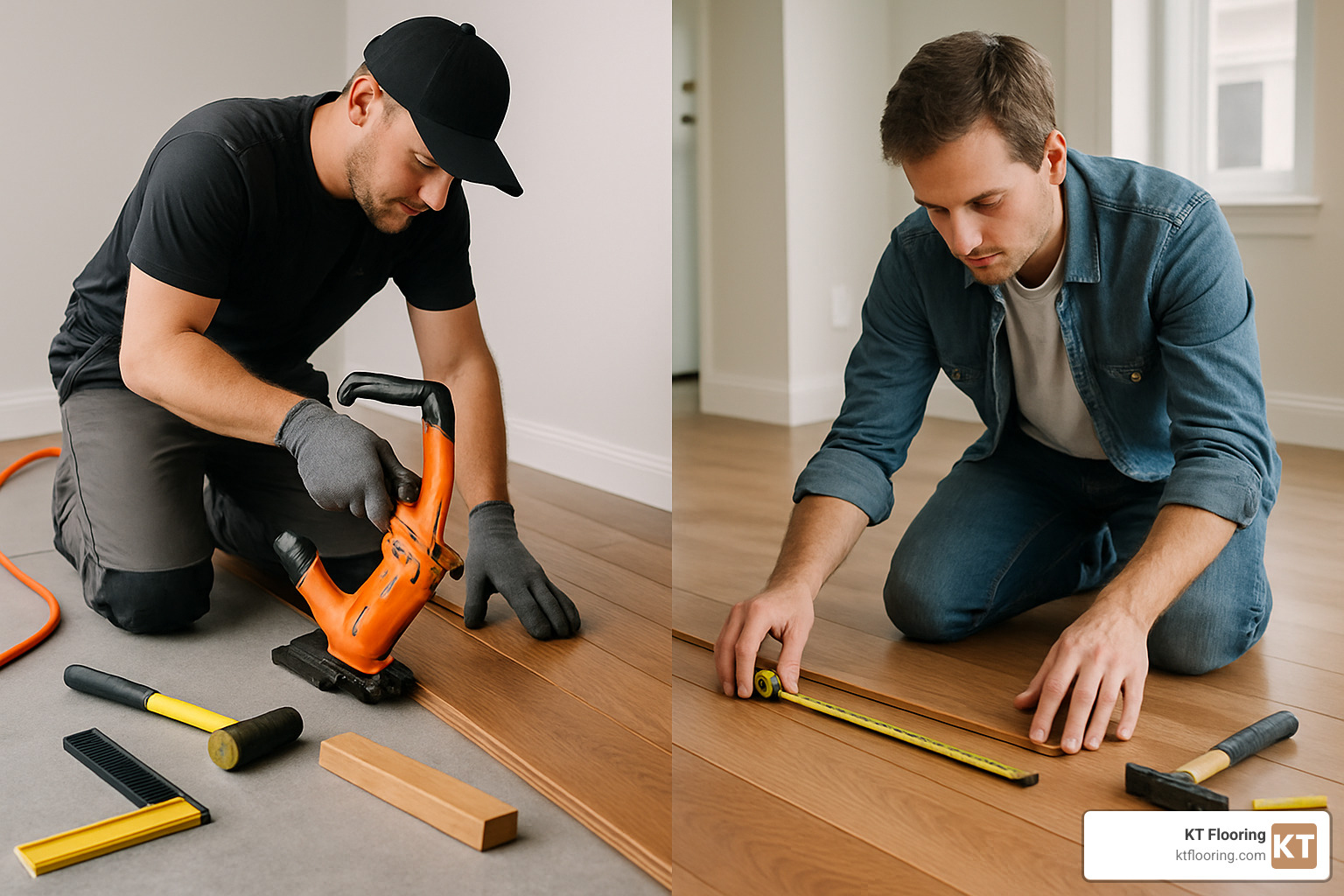
The DIY route seems tempting when looking at labor costs, but it’s not always the money-saver it appears to be. Let’s break down the real pros and cons.
With professional installation, you’re paying for expertise and efficiency. Our team at KT Flooring can typically complete a 1,000 square foot installation in just 2-3 days, compared to the 1-2 weeks many DIYers need. We bring all the specialized tools (which would cost you $250-$500 to rent or buy), handle the subfloor preparation properly, and most importantly—we stand behind our work with a warranty.
The downside? Professional labor runs between $3-$10 per square foot (based on average industry data, not specifically KT Flooring rates). You’ll also need to schedule around installer availability, which can be challenging during busy seasons.
For the DIY approach, the obvious advantage is potential labor savings and the satisfaction of creating something with your own hands. You also control the timeline completely.
However, hardwood installation isn’t as simple as those weekend warrior TV shows make it appear. The learning curve is steep, especially for nail-down installations. Mistakes can be costly—both in wasted materials and potential damage to your subfloor. Many manufacturers even void warranties on products that aren’t professionally installed.
Click-lock engineered flooring offers the most DIY-friendly option if you’re determined to tackle it yourself. For more information about professional installation, check out our Hardwood Floor Installation Services page.
Proper installation is what transforms beautiful wood into a beautiful floor that lasts for generations. Sometimes paying for expertise is the best investment you can make!
Beyond Installation: Maintenance, ROI, and Alternative Flooring Costs
When you’re considering hardwood floors, the story doesn’t end at installation. Like any good investment, understanding the full picture means looking at long-term care, value, and how it stacks up against other options.
Long-Term Maintenance Costs
Your beautiful new hardwood floors will need some TLC to keep them looking their best:
Routine cleaning will run about $50-$100 annually for quality wood-specific cleaners. These specialized products protect your investment by cleaning without damaging the finish.
Professional deep cleaning is worth budgeting $100-$200 for once a year, especially in high-traffic homes. This service removes stubborn grime that regular cleaning might miss.
The most significant maintenance cost is refinishing, which typically runs $3-$8 per square foot every 7-10 years. This process breathes new life into worn floors by sanding away damage and applying fresh finish.
For those inevitable accidents, spot repairs might set you back $200-$500 to address isolated scratches or damage. Still, compared to replacing entire sections of other flooring types, this is relatively economical.
Despite these maintenance needs, hardwood remains incredibly durable. Solid hardwood can last up to 100 years with proper care, while engineered varieties typically serve 30-50+ years, depending on the thickness of the wear layer. That’s generations of enjoyment from a single installation!
Return on Investment (ROI)
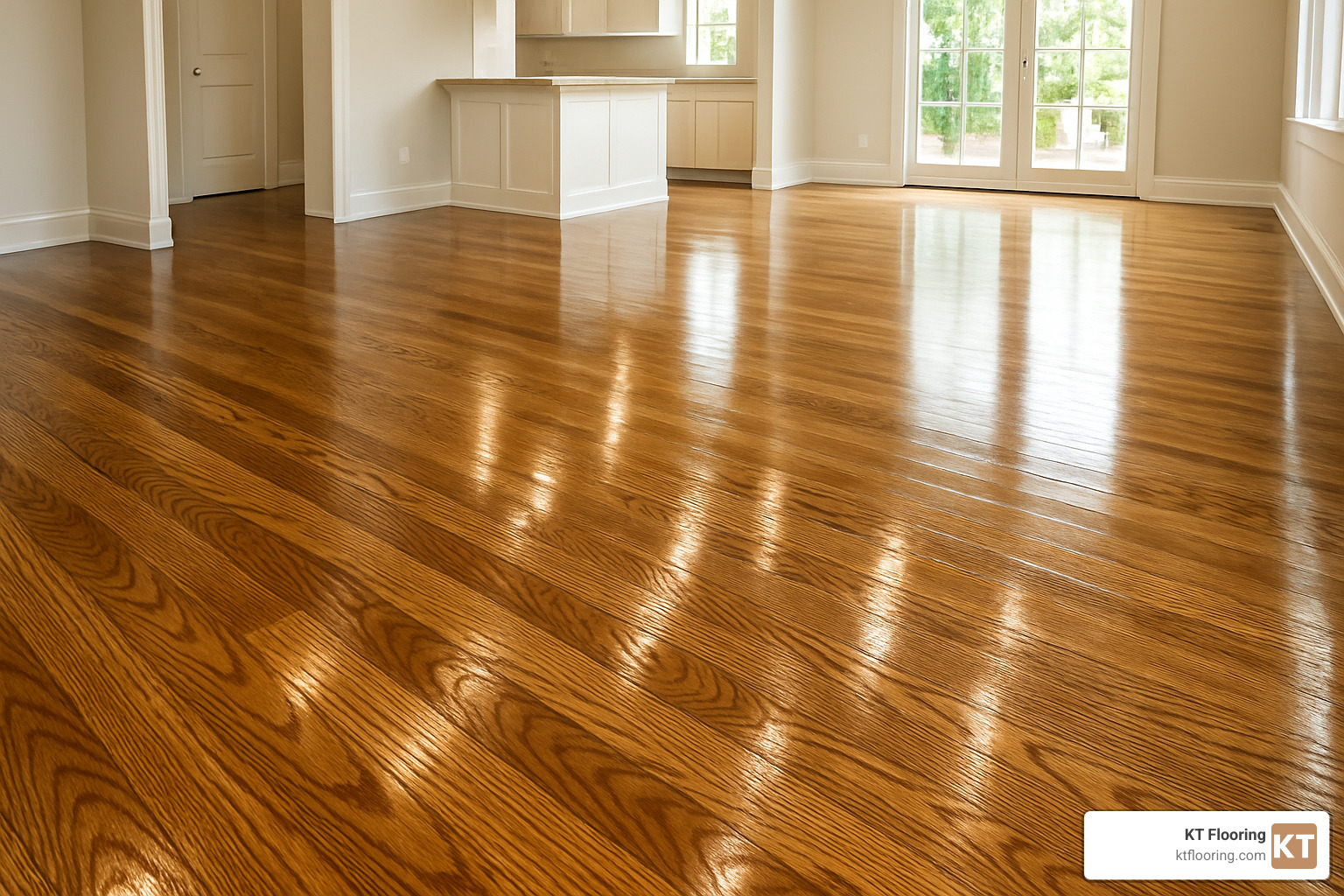
When it comes to home improvements that pay you back, hardwood flooring is hard to beat:
New hardwood installation delivers an impressive 118% cost recovery at resale, according to the National Realtor Association. That means for every $10,000 spent, you might see $11,800 back when selling your home.
Even better, hardwood refinishing offers a whopping 147% return. It’s one of the rare home improvements that can actually put more money in your pocket than you spent!
The benefits extend beyond just financial returns. Hardwood floors improve your indoor air quality by eliminating carpet fibers that trap allergens. Their timeless appeal means they won’t look dated in five years like trendy alternatives might. And their remarkable durability means you won’t be replacing them every decade like some other flooring options.
Alternative Flooring Cost Comparison
While we love hardwood at KT Flooring, it’s important to consider how it compares to other options. Based on average internet data (not KT Flooring’s specific pricing):
| Flooring Type | Material Cost | Installation Cost | Total Installed | Lifespan |
|---|---|---|---|---|
| Solid Hardwood | $8-$15/sq ft | $3-$10/sq ft | $11-$25/sq ft | 75-100+ years |
| Engineered Hardwood | $3-$14/sq ft | $3-$8/sq ft | $6-$22/sq ft | 30-50+ years |
| Luxury Vinyl Plank | $2-$7/sq ft | $2-$5/sq ft | $4-$12/sq ft | 15-25 years |
| Laminate | $1-$5/sq ft | $2-$5/sq ft | $3-$10/sq ft | 15-25 years |
| Carpet | $2-$7/sq ft | $1-$3/sq ft | $3-$10/sq ft | 5-15 years |
| Tile | $5-$15/sq ft | $4-$12/sq ft | $9-$27/sq ft | 50+ years |
When you look at the big picture, hardwood’s higher upfront installation cost for hardwood flooring often makes more financial sense over time. Consider this: you might replace carpet 4-6 times during the lifetime of a single hardwood floor! Each replacement means new materials, new installation costs, and the hassle of moving all your furniture again.
For homeowners looking to install hardwood over concrete subfloors, we’ve compiled helpful information in our guide on how to Install Hardwood Floor on Concrete. This specialized installation requires specific techniques to ensure longevity and performance.
Whether you’re looking at solid or engineered options, the long-term value of hardwood flooring makes it worth considering for almost any home. And with proper care, your floors will continue to shine and impress for decades to come.
Frequently Asked Questions about Hardwood Flooring Costs
What ongoing maintenance costs should I budget for?
Keeping your hardwood floors looking beautiful isn’t complicated, but it does require some ongoing investment. Think of it as caring for a fine piece of furniture that happens to cover your entire floor!
For day-to-day care, you’ll need to keep up with regular sweeping or vacuuming using a hardwood-safe attachment. Monthly cleaning with manufacturer-recommended wood floor cleaners will run you about $30-$50 per year – a small price to pay for maintaining that gorgeous shine.
The bigger maintenance expense comes with periodic refinishing, typically needed every 7-10 years depending on foot traffic and how well you maintain the floors. This refreshes your hardwood’s appearance and protective coating at a cost of $3-$8 per square foot. Preventative measures like furniture pads, strategically placed entryway rugs, and maintaining proper indoor humidity levels can significantly extend the time between refinishings.
When we complete your installation at KT Flooring, we’ll provide detailed maintenance instructions custom to your specific flooring choice, helping you protect your investment for decades to come.
Does installing hardwood really increase home value?
Absolutely! Hardwood flooring isn’t just beautiful – it’s one of the smartest investments you can make in your home. According to the National Realtor Association’s 2022 Remodeling Impact Report, new wood flooring recovers approximately 118% of its cost when you sell your home. That’s right – you actually get more back than you put in! Even better, refinishing existing hardwood floors returns about 147% of the investment.
I’ve seen this play out countless times throughout New Hampshire and Northeast Massachusetts. Homes with hardwood floors typically sell faster and command higher prices than similar properties with carpet or vinyl flooring. In many of our region’s luxury markets, hardwood flooring isn’t even considered an upgrade anymore – it’s simply expected by discerning buyers.
The timeless appeal of natural wood, its durability, and its reputation for quality all contribute to this exceptional return on investment.
Are there simple ways to lower my installation quote?
There are definitely ways to trim your installation cost for hardwood flooring without compromising quality. Many of our customers at KT Flooring successfully reduce their project costs with these approaches:
Do some of the prep work yourself by removing old flooring (saving $1-$3 per square foot) or moving furniture before our installers arrive (saving $20-$50 per room). Many homeowners find this relatively easy to handle themselves.
Make strategic design choices by selecting simpler installation patterns rather than labor-intensive herringbone or parquet designs. Choosing more common domestic wood species like oak or maple instead of exotic varieties can significantly reduce material costs.
Consider engineered hardwood options, which generally cost less than solid hardwood while offering excellent durability and appearance. Similarly, narrower planks typically come with a lower price tag than the extra-wide boards that have become trendy in recent years.
Timing matters too – winter months often see better pricing as it’s typically a slower season for flooring installations. And don’t forget to ask about upcoming sales events, as many retailers offer periodic discounts that can save you 10-15%.
During your free in-home consultation with KT Flooring, we’re happy to discuss these cost-saving approaches to help you achieve the beautiful hardwood floors you want while respecting your budget constraints. We pride ourselves on finding solutions that balance quality, appearance, and affordability.
Conclusion
Investing in hardwood flooring is one of those rare home improvements that truly stands the test of time. The installation cost for hardwood flooring typically ranges from $6-$25 per square foot installed, with premium installations reaching up to $45 per square foot. For a typical 1,000 square foot project, most homeowners invest between $6,000 and $25,000, depending on their specific choices and requirements.
Yes, that’s a significant investment—especially when compared to some temporary flooring alternatives. But here’s the thing: while carpet and vinyl might need replacing every 5-15 years, your hardwood floors can literally last a lifetime. Many of our clients in Hudson and throughout New Hampshire are walking on hardwood floors that have been in their homes for generations!
The numbers tell the story: hardwood flooring delivers an impressive 118% return on investment at resale. That’s not just recouping your costs—it’s actually putting money back in your pocket when you sell your home. Few home improvements can make that claim.
Smart budgeting for your hardwood project isn’t just about finding the lowest price. It’s about understanding the complete picture. Be sure to get detailed, itemized quotes that account for everything from subfloor preparation to trim work. Always budget that extra 10-15% contingency for unexpected issues (those old houses in New England can surprise you!). And don’t forget to factor in the minimal but important long-term maintenance that keeps your floors looking their best.
At KT Flooring, we’ve been walking homeowners through this process for over 50 years. We’ve installed hardwood floors throughout Southern New Hampshire and Northeast Massachusetts—from cozy Cape Cod homes in Manchester to sprawling colonials in the Greater Boston Area. That experience means we can provide accurate estimates without those “surprise” add-ons that leave you with budget anxiety.
We understand that hardwood flooring is more than just a purchase—it’s a legacy addition to your home. The warmth of oak under your feet on a cold New Hampshire morning. The rich character of maple that deepens with each passing year. The compliments from friends and family when they step into your home. These are the intangibles that make hardwood such a worthwhile investment.
For more information about your options or to schedule a free in-home consultation where we can provide pricing specific to your project, visit our Hardwood Flooring page. We’re proud to serve communities throughout Southern New Hampshire and the Greater Boston Area, including Hudson, Manchester, Nashua, and surrounding areas.
While the initial installation cost for hardwood flooring might give you a moment’s pause, remember—you’re not just buying floors. You’re investing in beauty, durability, and value that will improve your home for decades to come.
