Why Kitchen Flooring Durability Matters
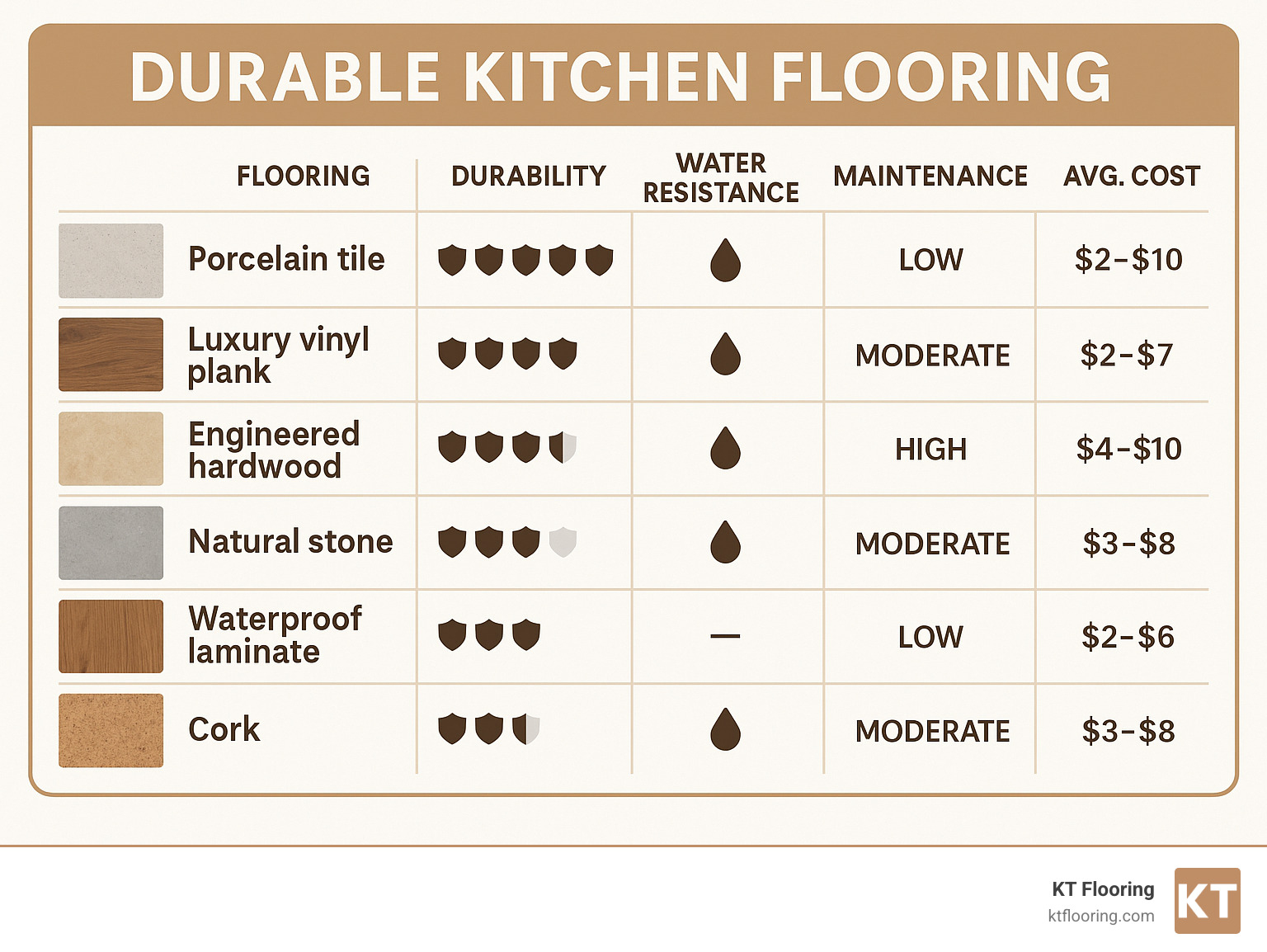
Durable kitchen flooring is essential for any home, as kitchens endure more wear and tear than almost any other room. For busy homeowners seeking quick guidance, here are the top options ranked by durability:
- Porcelain tile – Lasts 20+ years, waterproof, extremely scratch resistant
- Luxury vinyl plank – 100% waterproof, excellent scratch resistance, 15-20 year lifespan
- Engineered hardwood – Better moisture resistance than solid wood, can be refinished
- Natural stone – Extremely durable but requires regular sealing every 6-12 months
- Concrete – Nearly indestructible but hard underfoot and needs proper subfloor support
- Waterproof laminate – Modern options offer good water resistance at lower cost
- Cork – Sustainable, comfortable, naturally antimicrobial but needs regular sealing
Your kitchen floor endures daily challenges that would destroy lesser materials – dropped pots, spilled liquids, constant foot traffic, and the occasional pet mishap. Selecting the right flooring isn’t just about aesthetics; it’s about finding the perfect balance of durability, water resistance, comfort, and style for your specific needs.
“Your kitchen floor, besides being practical and durable, is a major design statement as well,” notes industry experts, highlighting how today’s homeowners want both performance and beauty from their kitchen surfaces.
Modern flooring technology has evolved dramatically, with options like luxury vinyl plank offering the authentic look of hardwood or stone while providing superior water and scratch resistance. Even traditional materials like ceramic and porcelain tiles now come in styles that convincingly mimic other surfaces, from rustic wood planks to neat marble.
I’m Christopher Talty, owner of KT Flooring with over 50 years of experience helping homeowners select and install durable kitchen flooring that stands up to real-life challenges while enhancing their home’s value and appearance.
Basic durable kitchen flooring vocab:
– Anti-fatigue kitchen flooring
– best kitchen flooring for high traffic area
– best waterproof flooring for kitchen
What You’ll Learn
In this comprehensive guide, you’ll find everything you need to know about durable kitchen flooring options, including:
- A detailed breakdown of the most durable materials for kitchen floors
- Key factors that determine flooring durability and longevity
- Maintenance requirements for different flooring types
- Average cost ranges and value considerations
- How to match durable flooring with your kitchen style
- Eco-friendly and sustainable options that don’t sacrifice performance
We’ll help you steer the sometimes overwhelming world of kitchen flooring choices so you can make an informed decision that you’ll be happy with for years to come.
Why Durable Kitchen Flooring Should Top Your Remodel List
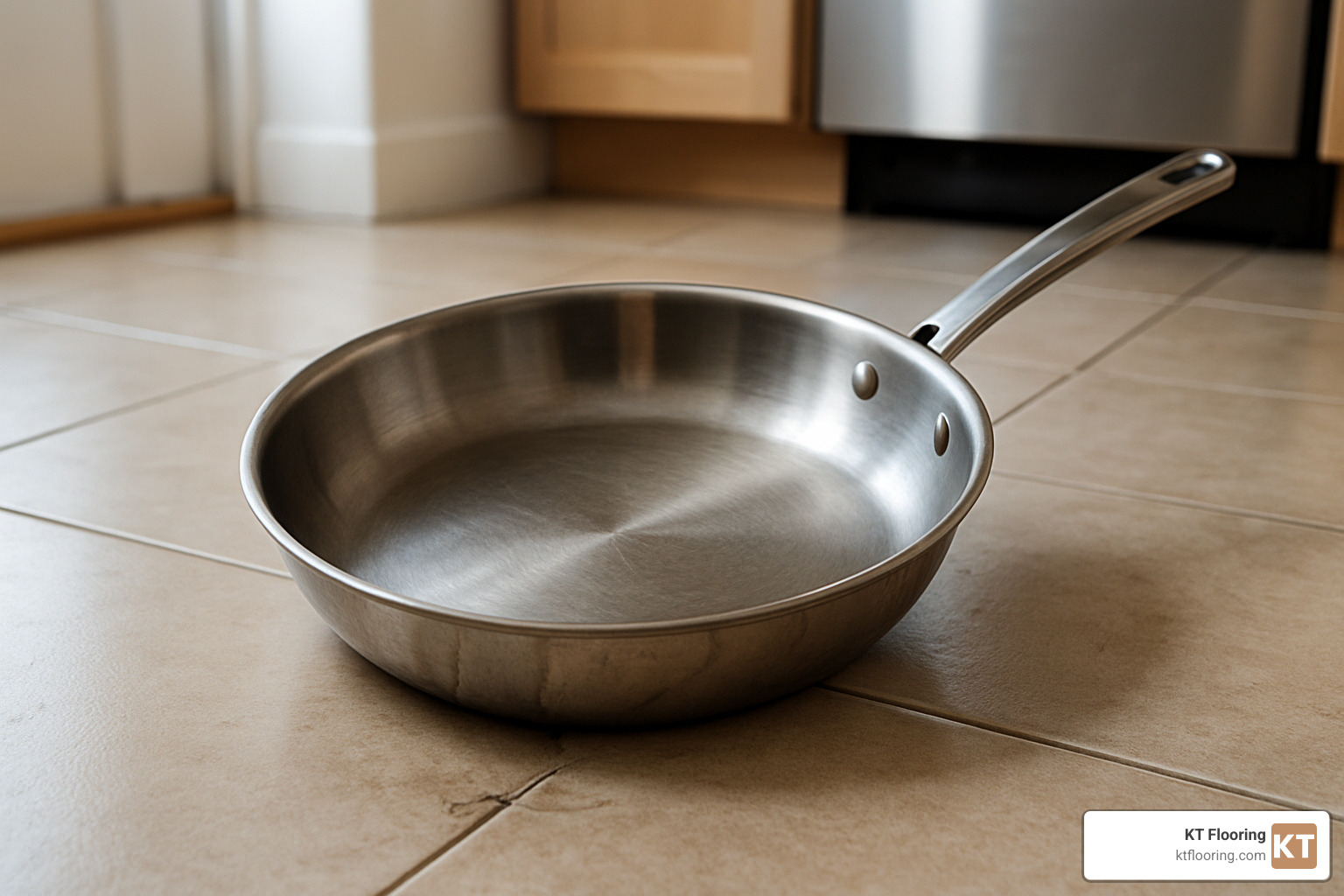
When dreaming up your kitchen renovation, it’s easy to get starry-eyed about gleaming new appliances or gorgeous countertops. But here’s a little secret from our 50+ years in the flooring business: what’s beneath your feet will make or break your kitchen experience for years to come.
Mike Holmes, the straight-talking contractor from HGTV, doesn’t mince words on this topic. “Tile is top notch for kitchen floors,” he explains. “It’s easy to install, moisture-resistant, and can be found for as little as $0.50 per square foot for certain ceramic tiles.” While many homeowners swoon over hardwood’s warm appeal, Holmes points out the reality: dropped pots, pans, and kitchen tools can quickly turn that beautiful wood floor into a dented, scratched disappointment. You can read more about his expert advice on tile durability here.
The numbers tell a compelling story. A properly installed ceramic tile floor can faithfully serve your kitchen for 20+ years with minimal maintenance. Compare that to replacing less durable options every 5-10 years, and you’ll see why durable kitchen flooring isn’t just practical—it’s economical.
We’ve witnessed countless “flooring revelations” throughout New Hampshire and Northeast Massachusetts. One Hudson family shared with us, “After replacing our kitchen floor three times in ten years, we finally installed porcelain tile. Five years later, it still looks brand new despite our three kids and two dogs.” That’s the peace of mind that comes from choosing durability first.
The Role of Water Resistance in Durable Kitchen Flooring
Let’s talk about your kitchen’s greatest enemy: moisture. Between cooking splashes, refrigerator drips, dishwasher leaks, spilled drinks, and that perpetually knocked-over pet water bowl, your kitchen floor faces a daily moisture onslaught.
Even minor water exposure can spell disaster for the wrong flooring. When moisture penetrates beneath the surface, it doesn’t just damage what you can see—it can silently attack your subfloor, creating a perfect environment for mold and structural damage that costs thousands to repair.
This explains why truly waterproof options like porcelain tile and luxury vinyl plank have become kitchen superstars. A Nashua homeowner recently told us after a dishwasher disaster, “Our luxury vinyl planks saved our kitchen. The water sat there for hours before we found it, but the floor was completely unaffected.”
Today’s manufacturers understand this challenge, offering improved warranties specifically addressing water resistance. Some modern laminate products now feature waterproof technology with 24-hour spill protection guarantees—a quantum leap from earlier generations that would swell and buckle at the first hint of moisture.
How Durable Kitchen Flooring Affects Home Value
Your kitchen floor isn’t just a practical surface—it’s an investment in your home’s market appeal. According to real estate professionals, kitchens and bathrooms are the two spaces that most heavily influence buyers’ decisions and property appraisals.
The National Association of Realtors found that 83% of real estate agents report that hardwood or tile flooring helps sell a home faster and for more money. While traditional hardwood has long been the gold standard for boosting home value, savvy buyers increasingly recognize the practical benefits of durable kitchen flooring alternatives like luxury vinyl plank and porcelain tile that offer similar aesthetics.
“Just about everyone wants hardwood floors, including home buyers,” notes one industry expert, adding that hardwood’s resale value is “through the roof.” However, in kitchens specifically, today’s buyers often appreciate waterproof options that deliver hardwood looks without the worry.
In our experience serving Southern New Hampshire and the Greater Boston Area, homes with high-quality, durable kitchen flooring typically command better prices and spend less time on the market than those with worn or outdated floors. The right flooring choice delivers a powerful combination of timeless appeal and practical durability that resonates with potential buyers.
When you’re ready to explore durable kitchen flooring options that will improve both your daily life and your home’s value, our team at KT Flooring is here to help with personalized guidance based on your specific needs and budget.
The 7 Most Durable Kitchen Flooring Options Ranked
When evaluating kitchen flooring options, it’s important to consider not just their initial appearance but their performance over time. Here’s our comprehensive ranking of the seven most durable kitchen flooring materials, based on our 50+ years of experience at KT Flooring:
1. Porcelain & Ceramic Tile—The 20-Year Workhorse
If kitchens could vote for their favorite flooring, porcelain and ceramic tiles would win by a landslide. These clay-based champions have earned their reputation as the most durable kitchen flooring option on the market, and for good reason. Formed from natural clay, minerals, and water, then fired at temperatures that would make your oven jealous, these tiles create a surface that laughs in the face of kitchen chaos.
When clients ask me what will truly go the distance in their busy kitchen, I don’t hesitate to recommend porcelain. It’s completely waterproof, making those inevitable spills a non-issue. You could practically host a water balloon fight in your kitchen and the tile wouldn’t bat an eye. Its exceptional scratch resistance means your dog’s claws, dropped utensils, and sliding bar stools won’t leave their mark.
The stain resistance of glazed tiles is particularly impressive. I’ve had clients call me years after installation, amazed that their red wine spill from last Thanksgiving left absolutely no trace. And when we talk about longevity, properly installed tile floors regularly serve families for 20+ years while still looking fresh and stylish.
One Methuen homeowner told me, “After 15 years of family meals, holiday gatherings, and two large dogs, our porcelain tile kitchen still looks almost new. We’ve dropped heavy pots, spilled everything imaginable, and even weathered a refrigerator leak, but you’d never know it looking at our floor.”
For kitchen installations, I always recommend tiles with a Porcelain Enamel Institute (PEI) rating of Class 4 or 5. This industry standard measures durability on a scale of 1-5, with Class 4 being perfect for busy residential kitchens and Class 5 standing up to even commercial-grade abuse. Your kitchen deserves nothing less.
The design options for modern tiles have exploded in recent years. Today’s manufacturing techniques can create porcelain that convincingly mimics:
- Hardwood planks (without the moisture worries)
- Luxurious natural stone (at a fraction of the cost)
- Industrial concrete (without cracking concerns)
- Intricate patterns and textures (that won’t wear away)
The only meaningful maintenance consideration with tile is grout care. However, modern epoxy grouts have come a long way from the stain-prone options of yesteryear. With proper sealing (which we always recommend), grout lines can stay fresh and clean for years between treatments. For the ultimate in perfect tile floor installation, professional installation ensures your floor will perform at its best.
The bottom line? If you want kitchen flooring that can take a beating while looking beautiful for decades, porcelain and ceramic tile deserve their place at the top of your list. They’re the true workhorses of the kitchen flooring world, providing peace of mind that’s well worth the investment.
2. Luxury Vinyl Plank—Waterproof & Family-Proof
If you’ve ever winced watching a glass of juice tip over on your kitchen floor, you’ll appreciate why luxury vinyl plank (LVP) has become such a game-changer for homeowners. This isn’t the flimsy vinyl flooring from decades past—today’s luxury vinyl flooring combines remarkable durability with stunning looks that can fool even the most discerning eye.
“I couldn’t believe it wasn’t real hardwood,” confessed one of our Salem clients after installation. “But when my son’s science experiment spilled all over it and nothing happened, I was sold for life.”
Luxury vinyl’s secret weapon is its multi-layer construction. Think of it as armor for your floor—each layer serving a specific protective purpose:
The core layer provides rigidity and stability, preventing warping even when exposed to moisture. Above that sits the incredibly realistic image layer with high-definition printing technology that captures every grain, knot, and texture of natural materials. The whole thing is topped with a clear wear layer that acts like a shield against scratches, stains, and daily abuse.
For families with children and pets, LVP’s 100% waterproof performance offers incredible peace of mind. One Bedford homeowner told us, “After our dog knocked over his water bowl for the third time in a week, we were so grateful for our vinyl waterproof flooring. We just wiped it up and went about our day—no panic, no damage.”
Beyond water resistance, LVP stands up remarkably well to scratches and dents. The wear layer thickness (measured in mils) determines scratch resistance—we typically recommend at least 12 mils for busy kitchens, with premium options offering up to 30 mils for commercial-grade durability.
What happens if damage does occur? Unlike hardwood or tile, LVP allows for simple plank replacement without tearing up the entire floor. We’ve helped many Nashua homeowners replace just one or two damaged planks after moving heavy appliances or dropping sharp objects.
Another advantage that our New Hampshire clients appreciate is how LVP maintains its dimensions regardless of temperature fluctuations. Unlike some natural materials that expand and contract with seasonal changes, luxury vinyl remains stable year-round—a significant benefit in our region’s varying climate.
Many of our luxury vinyl options come with attached underlayment that adds comfort underfoot while reducing noise—making your kitchen a more pleasant place for those marathon holiday cooking sessions when you’re standing for hours.
With proper installation and basic care, today’s premium LVP can last 15-20 years in even the busiest kitchens, making it not just a durable choice, but a smart investment for your home.
3. Engineered Hardwood—Classic Look, Modern Performance
There’s something timeless about hardwood floors that continues to captivate homeowners. But in kitchens, traditional solid hardwood can be a recipe for disaster. That’s where engineered hardwood steps in—offering that classic wood appeal with significantly improved kitchen performance.
Unlike its solid wood cousin, engineered hardwood was designed specifically to overcome traditional wood’s biggest weakness: its reaction to moisture. The clever multi-layer construction gives you the best of both worlds.
Key durability factors:
– Dimensional stability: Thanks to its plywood or high-density fiberboard core, engineered hardwood stays put when humidity fluctuates—unlike solid hardwood that can cup, warp or gap.
– Real wood surface: That top layer isn’t fake—it’s genuine hardwood, giving you authentic beauty and the ability to refinish it when needed.
– Modern sealants: Today’s water-resistant finishes work much harder to protect against kitchen spills than older hardwood finishes ever could.
– Versatility: Whether you love oak, maple, hickory or exotic species, there’s an engineered option in countless finishes and plank widths.
I recently spoke with a Manchester family who installed engineered hardwood seven years ago. “We were nervous about putting wood in our kitchen,” they told me, “but our engineered floors have survived everything from dropped ice cubes to our golden retriever’s water dish mishaps. Just wipe up spills promptly and you’re good to go.”
What makes engineered hardwood so special is its construction. The top layer is genuine hardwood—typically 2-6mm thick—bonded to multiple layers of high-quality plywood or HDF core. This creates a floor that looks identical to solid hardwood but behaves much better in kitchen environments.
While not completely waterproof like tile or luxury vinyl, engineered hardwood with quality sealants can handle the occasional spill when you clean it up promptly. Many of our Southern New Hampshire customers place small rugs near sink areas for added protection in splash zones.
One of the biggest long-term advantages is repairability. Unlike many flooring options, engineered hardwood with a thick enough wear layer (4mm+) can be refinished once or twice. This means that years down the road, when life’s trips have left their mark, you can refresh rather than replace your kitchen floor—saving thousands while extending its lifespan.
For homeowners seeking that perfect balance between traditional beauty and modern performance, engineered hardwood delivers a kitchen flooring solution that stands the test of time—both in durability and style.
4. Natural Stone—Luxury With Caveats
Natural stone flooring brings best elegance to kitchens with its organic beauty and one-of-a-kind character. Whether you choose granite, marble, slate, or travertine, each stone tile tells its own story through unique veining patterns and color variations that manufactured materials simply cannot duplicate.
Key durability factors:
– Hardness: Granite and certain slates rank impressively high on the hardness scale, standing firm against scratches and impacts from daily kitchen activities.
– Temperature resistance: Stone naturally maintains a cool surface in summer months while working beautifully with radiant heating systems during winter.
– Timelessness: Unlike trendy materials that come and go, natural stone has graced homes for centuries and continues to be desired for its classic appeal.
– Unique beauty: Your stone floor will be truly one-of-a-kind, as nature never creates the exact same pattern twice.
The luxury of natural stone does come with some important considerations that every homeowner should understand before installation.
Natural stone requires regular maintenance to maintain its beauty. Most varieties are naturally porous and need sealing every 6-12 months to prevent staining and moisture penetration. As one flooring expert puts it, “Apply a high-quality sealer every 6–12 months to maintain water resistance and prevent staining from common kitchen spills.”
Not all stone is created equal when it comes to kitchen durability. While granite offers exceptional hardness and resistance to daily wear, marble tends to be softer and more vulnerable to scratching. Acidic substances like lemon juice or vinegar—kitchen staples for many cooks—can etch marble surfaces, creating dull spots in its polished finish.
The investment in natural stone typically exceeds other flooring options, both in material costs and installation. Its substantial weight sometimes necessitates additional subfloor reinforcement, particularly in older homes or upper-floor installations.
“Our travertine kitchen floor is absolutely stunning and has held up beautifully for over a decade,” shares a Concord, MA client. “The key is regular sealing—we do it every spring as part of our routine maintenance.”
Here’s a fascinating testament to stone’s longevity: The Colosseum in Rome, constructed primarily of travertine, has withstood the elements for nearly 2,000 years—proof that properly maintained natural stone truly stands the test of time.
For homeowners in Lexington or Winchester seeking a truly premium kitchen floor with distinct character and luxury appeal, natural stone delivers best sophistication. While it demands more attention than some alternatives, many of our clients find the extra care well worth the timeless beauty it brings to their homes.
5. Concrete—Industrial Strength Underfoot
Concrete flooring has come a long way from garage and basement stereotypes. These days, concrete is a go-to choice for homeowners who want durable kitchen flooring that’s as tough as it gets and surprisingly stylish. If you love that modern, urban loft vibe—or just want a floor that’s nearly indestructible—concrete is worth a closer look.
What makes concrete so durable? First, it’s almost impossible to damage under normal kitchen use. A properly poured and finished concrete floor can shrug off heavy foot traffic, dropped pans, pets, and even the occasional roller suitcase (don’t ask). Once it’s sealed, concrete naturally resists water, stains, and odors, making it an excellent choice for busy families who want to spend less time worrying about spills.
Another plus is heat retention. Concrete absorbs and stores warmth, so it pairs perfectly with radiant heating systems—an absolute treat in chilly New England winters. Cleaning is a breeze; regular sweeping and the occasional mop are all you need to keep it looking sharp. Plus, today’s concrete floors are anything but boring. They can be polished for a high-gloss shine, stained in rich colors, or even stamped and scored for custom designs.
One Lowell family told us, “Our polished concrete kitchen floor has withstood years of kids, pets, and wild birthday parties. It still looks brand new—and we’ve never had to baby it.” That’s the kind of real-life durable kitchen flooring story we love to hear at KT Flooring.
Concrete also scores points for indoor air quality. With the right low-VOC or zero-VOC sealers, your floor won’t trap allergens, mold, or musty odors. It’s fire-resistant and won’t harbor dust mites either.
However, concrete isn’t for everyone or every home. It’s extremely heavy, so installing it on anything but a ground-level kitchen may require a structural engineer’s thumbs-up. Concrete is also very hard underfoot—great for durability, not so great for long baking sessions. Many families use anti-fatigue mats in front of the sink or stove for extra comfort (see our anti-fatigue kitchen flooring guide for ideas).
Finally, concrete is not a DIY weekend project. It requires expert installation to ensure proper curing and finishing. If you’re considering this option for your Nashua or Salem home, our KT Flooring team can walk you through the process, including what to expect in terms of installation timeline and cost. (Keep in mind: Any average prices you see online are just that—averages based on internet data, not actual KT Flooring quotes.)
For homeowners who want modern style, low maintenance, and the ultimate in durable kitchen flooring, concrete delivers strength you can rely on for decades. If you’re ready to talk heavy-duty floors (or just want to see some beautiful local examples), we’re here to help.
6. Waterproof Laminate—Budget-Friendly Technology
Waterproof laminate flooring has truly stepped up its game in recent years, making it a smart and stylish option for those wanting durable kitchen flooring on a budget. Brands like Mohawk’s RevWood have introduced advanced waterproof technology and tight click-lock installation, which means you don’t have to stress over every little spill.
What sets today’s waterproof laminate apart is its combination of water resistance and affordability. The surface is built to shrug off splashes, and the click-lock system keeps water from sneaking between the planks. This makes it a great pick for busy family kitchens, especially if you’re prone to the odd “uh-oh” moment at the sink or coffee maker.
You’ll also notice a big improvement in scratch resistance. The tough wear layer stands up to pets, kids, and kitchen chairs without showing every scuff. And the comfort underfoot is a real surprise—many customers tell us that laminate feels warmer and softer than tile or concrete, so you can finally ditch the thick socks!
The typical construction of laminate flooring includes a water-resistant or waterproof backing layer, a sturdy HDF (high-density fiberboard) core, a high-definition photographic design layer (so the wood or stone looks are very convincing), and a clear, protective wear layer on top.
Of course, no floor is completely invincible. While laminate handles daily spills and quick cleanups like a pro, it’s not as bulletproof as luxury vinyl plank or porcelain tile when it comes to standing water. If you let puddles sit too long, the core could still be affected. Prompt clean-up is key, but for most households, it’s easy to stay ahead of the game with regular care.
One more thing our clients love: easy and fast installation. The click-lock system means your project can often be finished in a weekend, and you don’t need specialty tools.
For many homeowners in Tewksbury, Burlington, and all across New Hampshire, waterproof laminate offers a practical blend of style, comfort, and value. With its wide range of realistic wood and stone looks, you can get the kitchen of your dreams—without the nightmare price tag.
If you’re curious about costs, average internet pricing for waterproof laminate flooring can start as low as $2 per square foot for basic products and go up to $7 or more for premium styles (not including installation). High-end custom installations can run three times higher or beyond. These are just general internet averages—not specific to KT Flooring’s products or services.
So, if you’re looking for durable kitchen flooring that’s easy on your wallet but tough on everyday wear, today’s waterproof laminate is worth a closer look. And if you’re still not sure which option suits your kitchen best, our team at KT Flooring is always happy to help you weigh the pros and cons for your unique space.
7. Cork—Sustainable Comfort
Cork flooring delivers a unique trifecta of durability, comfort, and eco-consciousness that many homeowners don’t initially consider for their kitchens. Harvested from the bark of cork oak trees—a process that actually preserves the trees instead of destroying them—cork represents one of the most sustainable flooring options available today.
Key durability factors that make cork surprisingly kitchen-friendly include its natural resilience, water resistance when properly sealed, excellent sound dampening properties, and built-in antimicrobial protection. The cellular structure of cork gives it a memory-like quality, allowing it to bounce back from dropped items that might dent other surfaces.
“It may come as a surprise, but cork is one of the best kitchen flooring options,” notes a sustainable design expert. “Its springy composition allows dents to bounce back and naturally reduces sound transfer, making it ideal for upstairs kitchens.”
The comfort factor of cork simply cannot be overstated. The natural springiness provides gentle cushioning that makes a real difference during long cooking sessions. A Chelmsford client recently told us: “Standing at our kitchen island for holiday baking marathons used to leave my back and knees in agony. Our cork floor has completely changed that experience without sacrificing style or durability.”
For families with young children, cork’s natural warmth and slight give makes it more forgiving when little ones take tumbles. This same quality makes dropped dishes less likely to shatter—a practical benefit in busy kitchens.
Cork’s environmental benefits extend beyond its renewable harvesting. The material naturally resists mold, mildew, and insects without chemical treatments, contributing to healthier indoor air quality. Its thermal insulation properties can also help reduce energy costs by maintaining kitchen temperatures more efficiently.
Maintaining durable kitchen flooring made from cork does require some attention:
- Resealing every 1-2 years maintains water resistance and protects against staining
- Prompt cleanup of spills prevents potential damage to the sealant
- Using furniture pads under heavy appliances prevents permanent compression
For environmentally conscious homeowners in Reading or Westford who spend significant time cooking, cork offers a sustainable, comfortable option that doesn’t sacrifice durability. The material’s unique combination of resilience and comfort makes it particularly well-suited for kitchen renovations where reducing fatigue and noise are priorities alongside environmental considerations.
Side-by-Side Durability & Cost Comparison
Choosing the right durable kitchen flooring isn’t just about picking the toughest or the prettiest option—it’s also about finding what fits your lifestyle and your budget. Let’s take a closer look at how the leading flooring materials stack up in real-world kitchens, from how long they last to how much they’ll cost to install.
Here’s a quick comparison chart of the most popular choices:
| Flooring Type | Lifespan | Water Resistance | Scratch Resistance | Average Cost Range* | Installation Complexity |
|---|---|---|---|---|---|
| Porcelain Tile | 20+ years | Excellent | Excellent | $3-30/sq ft | High |
| Ceramic Tile | 15-20 years | Excellent | Very Good | $0.50-15/sq ft | High |
| Luxury Vinyl Plank | 15-20 years | Excellent | Very Good | $2-12/sq ft | Low-Medium |
| Engineered Hardwood | 20-30 years | Good (with sealing) | Good | $4-25/sq ft | Medium |
| Natural Stone | 25+ years | Good (with sealing) | Varies by stone | $5-50/sq ft | High |
| Concrete | 50+ years | Very Good (with seal) | Excellent | $3-25/sq ft | Very High |
| Waterproof Laminate | 10-20 years | Good | Good | $1-8/sq ft | Low-Medium |
| Cork | 10-15 years | Good (with sealing) | Fair | $3-12/sq ft | Medium |
*Please note: The cost ranges above are based on internet averages for material only, not actual KT Flooring pricing. Expect wide variation—especially at the high end, which can be three times the average depending on the brand and style.
If you’re searching for the best durable inexpensive flooring for a kitchen, ceramic tile and waterproof laminate tend to offer the best bang for your buck. Luxury vinyl plank is a customer favorite for balancing durability, water resistance, and cost. There’s truly a fit for every taste, whether you’re dreaming of a farmhouse vibe or a sleek, modern look.
Understanding Price Ranges*
It’s normal to see a wide range of prices when shopping for durable kitchen flooring. The numbers above cover everything from basic builder-grade options to high-end designer collections.
- Material quality plays a major role—a simple ceramic tile might be just $0.50 per square foot, while an imported porcelain or hand-glazed ceramic can run over $15 per square foot.
- Installation complexity also matters. Tile and stone generally require pros and extra labor, while floating floors like LVP or laminate are easier (and sometimes cheaper) to install.
- Regional labor costs can shift your total, especially in New Hampshire and Massachusetts where prices can vary town to town.
- Special projects—like prepping an uneven subfloor or adding radiant heat—can bump up the project total.
*Remember: these are internet averages, not KT Flooring’s actual prices. For a real quote custom to your home and style, schedule a free in-home consultation with our team.
Hidden Costs to Budget For
It’s easy to get swept up in picking the perfect color or texture, but don’t forget the “little things” that can affect your budget. When planning your project, keep in mind removal and disposal of old flooring, subfloor repairs or leveling, and the right underlayment for moisture and sound control. Transition strips, new baseboards, and trim are often needed for a polished look. And yes, you’ll want to move appliances and furniture—sometimes more of a feat than picking the floor itself!
Some materials, like stone or concrete, will also need regular sealing to protect against stains and wear. While these costs aren’t huge, it’s smart to include them in your planning.
At KT Flooring, we provide clear, comprehensive quotes so you won’t face any surprises during your project. We want you to enjoy your new floor—not worry about hidden costs along the way!
If you’re ready to talk through the options or want a side-by-side look at samples in your home, give us a call for a free in-home consultation. We’re here to help you find the perfect, budget-friendly, and truly durable kitchen flooring for your family’s needs.
How to Choose the Right Durable Kitchen Flooring for Your Lifestyle

Choosing durable kitchen flooring is about much more than picking the hardest floor on the shelf. The best floor for you is one that fits the way you and your family live—day in, day out. At KT Flooring, we know every home is a little different, so let’s walk through the key things to think about before you take the plunge.
Think about daily life. Is your kitchen Grand Central Station, with kids and pets zipping through all day? If so, you’ll want something that stands up to serious traffic and is easy to clean—think porcelain tile or luxury vinyl plank. These are favorites for big families because they shrug off scratches and muddy paw prints like it’s nothing.
If you love cooking and spend hours on your feet, comfort matters too. Materials like cork or engineered hardwood offer some natural give underfoot, making long meal preps a little easier on your back and knees. (We once had a client say her new cork floor was “the best thing to happen to family spaghetti night—besides the food!”)
Pets and kids add another layer of fun— and mess. Clumsy toddlers, playful pups, and shedding cats can be tough on floors. It’s smart to look for scratch-resistant surfaces. Porcelain tile and luxury vinyl with a thick wear layer are top picks here. If accidents are a regular thing—think spilled juice or puppy puddles—waterproof floors like LVP or tile will save you a lot of worry and cleanup.
Noise is another surprise for busy homes. If you’re not a fan of echoing footsteps or clicking claws, cork or luxury vinyl with cork underlayment can make your kitchen a quieter, more peaceful place.
Open-concept living is incredibly popular, but it comes with its own flooring questions. If your kitchen flows into your living or dining room, you might want to use a single flooring material throughout for a seamless look. Engineered hardwood or LVP in a wood-look plank can tie the space together beautifully. When you do need to transition between floors, make sure you use proper strips for safety and style. Or, use a change in flooring to gently “zone” your kitchen from the rest of your space—no walls required.
Style matters, too. Your dream kitchen should feel like you. Traditional kitchens often shine with classic wood, marble, or ceramic tile, while sleek porcelain or polished concrete looks right at home in a modern space. Love the farmhouse vibe? Go for wide-plank engineered hardwood, rustic-look porcelain, or distressed LVP. Want industrial? Polished concrete or stone-look tile adds instant character. And don’t forget: today’s tile and vinyl can mimic almost any material, so you don’t have to sacrifice durability for style.
Balancing comfort and durability is a common challenge. The toughest floors—porcelain tile and concrete—can be hard on your feet and joints, especially if you love to cook or bake. That’s where a little strategy comes in. Try an anti-fatigue kitchen flooring option like cork, or add cushioned mats at your sink and stove. Area rugs with non-slip backing can also boost comfort (and style) while protecting high-traffic spots. Some flooring types, like LVP and laminate, can be installed with a padded underlayment for a bit of extra “give” without losing durability.
Eco-friendliness is more than a trend—it’s a choice. If you want to tread lightly on the planet, cork is a top pick—it’s harvested without harming the tree and is naturally antimicrobial. Bamboo, although not as durable as our top seven, is a rapidly renewable option when sourced responsibly. Porcelain and ceramic tiles are made from abundant natural clay and last for decades, which cuts down on waste. Reclaimed wood engineered floors give old materials a second act and work better in kitchens than solid wood. For healthy indoor air, look for flooring and adhesives with low-VOC labels—many top brands offer certified products.
Your perfect kitchen floor should make your life easier, your kitchen safer, and your home more beautiful. If you’re feeling overwhelmed by choices, don’t worry—our team at KT Flooring has seen (and installed) it all. We’re happy to help you sort through options, talk through your needs, and find the flooring that fits your real life.
Ready to get started? Book a free in-home consultation and let’s find the perfect fit for you!
Care & Maintenance: Extending the Life of Durable Kitchen Flooring
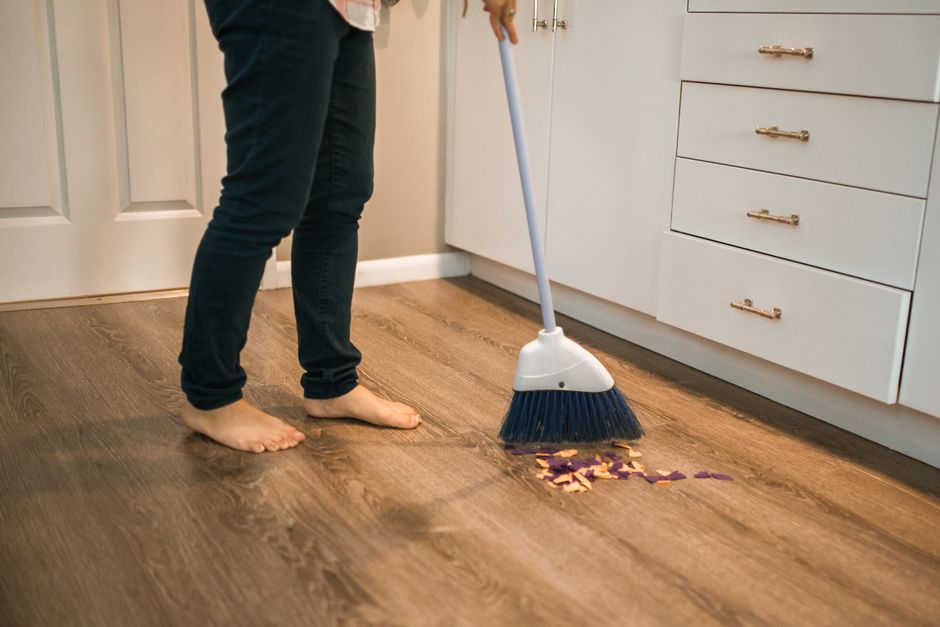
Even the most durable kitchen flooring needs proper care to reach its full potential lifespan. Think of maintenance as an investment that pays dividends in the form of years of additional service from your floors. With just a little regular attention, you can keep your kitchen floors looking beautiful for decades rather than years.
“Most flooring failures we see aren’t from product defects—they’re from improper maintenance,” explains our installation team leader at KT Flooring. “Simple routines make all the difference in how long your kitchen floor will last.”
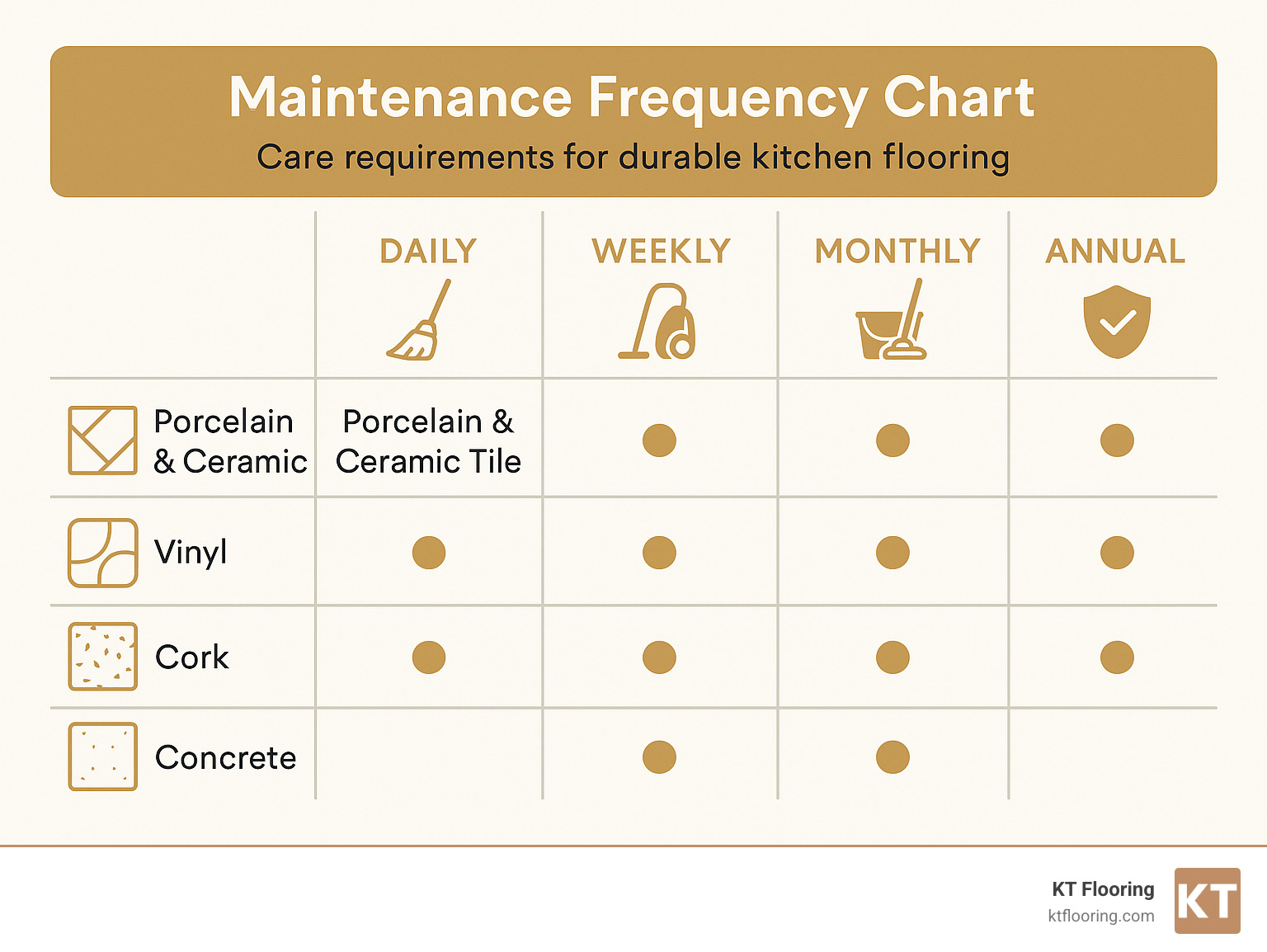
Best Practices for Each Material
Porcelain and Ceramic Tile
The beauty of porcelain and ceramic tile lies in its almost indestructible nature, but even these workhorses need some TLC. Regular sweeping or vacuuming is essential to remove the gritty particles that can actually scratch tile over time. Think about it—even diamonds can be cut by other diamonds!
For weekly cleaning, warm water with a mild detergent works perfectly. “I’ve learned the hard way to avoid vinegar and other acidic cleaners,” shares a Tyngsboro client. “They slowly eroded my grout and I ended up needing to regrout sooner than expected.”
For long-term care, mark your calendar for annual grout sealing (unless you’ve chosen epoxy grout, which doesn’t require this step). This simple hour of maintenance can prevent costly repairs down the road. Every few years, consider treating your tile to a professional deep cleaning to restore its original luster.
“We use a steam mop on our porcelain tile kitchen floor once a week,” one satisfied KT Flooring customer told us, “and five years in, guests still ask if we recently installed it!”
Luxury Vinyl Plank
The low-maintenance nature of luxury vinyl plank is one of its biggest selling points. For daily care, a quick sweep captures crumbs and debris before they can scratch the surface. Weekly cleaning is as simple as a damp mop with a manufacturer-approved cleaner—no special products needed.
“The best thing about our luxury vinyl kitchen floor is how forgiving it is,” shared a Winchester client. “With three kids and a dog, spills happen constantly. We just wipe them up whenever we get to them, and the floor looks perfect year after year.”
For preserving long-term beauty, use furniture pads under heavy appliances and avoid harsh chemical cleaners that might damage the wear layer. The beauty of LVP is that it requires no refinishing or resealing—ever. That’s why so many busy families in Southern New Hampshire choose this practical option from our vinyl waterproof flooring collection.
Engineered Hardwood
Engineered hardwood brings natural warmth to kitchens but demands more careful attention than some alternatives. Daily dust mopping prevents fine particles from scratching the finish, while weekly cleaning should involve only a barely damp mop with a cleaner specifically formulated for hardwood.
“The secret with our engineered hardwood is immediate spill cleanup,” explains a Concord, MA homeowner who’s had their floor for seven years. “Water isn’t its friend, but quick action means we’ve never had an issue, even in the busy kitchen area.”
For extended beauty, plan to refinish your engineered hardwood every 5-10 years depending on wear patterns. Unlike solid hardwood, engineered products typically can only be refinished once or twice due to the thickness of the veneer layer. Maintaining consistent indoor humidity (35-55%) prevents the expansion and contraction that can damage these floors over time.
Natural Stone
Natural stone floors like marble, granite, and travertine offer best elegance but require the most dedicated care routine. Daily sweeping prevents scratching, while weekly cleaning should only be done with pH-neutral cleaners specifically designed for stone.
“The day we installed our marble kitchen floor, our installer gave us the best advice,” recalls a Lexington homeowner. “He said, ‘Think of acidic spills as your floor’s enemy.’ We now keep a dedicated cloth near the cooking area just for immediate blotting of lemon juice, vinegar, or wine spills.”
The most critical long-term maintenance for stone is regular sealing—typically every 6-12 months depending on the stone type and traffic. This isn’t optional if you want your stone to remain stain-resistant. Many homeowners mark this on their calendar alongside other home maintenance tasks. Professional polishing every few years can restore the original shine if it begins to dull.
Concrete
Concrete floors offer industrial strength with surprising elegance when properly finished. Daily care is minimal—just sweep to remove debris that might scratch the surface finish. For weekly cleaning, a damp mop with a pH-neutral cleaner maintains the finish without degrading the sealer.
“Our polished concrete kitchen floor has been virtually maintenance-free for years,” reports a Malden homeowner. “We just sweep regularly and mop occasionally, and it continues to look fantastic.”
The primary long-term maintenance requirement is resealing every 2-3 years to maintain water and stain resistance. The exact timing depends on your sealer type and traffic levels—your installer can provide specific guidance. Address any cracks promptly, as they can spread if left untreated.
Waterproof Laminate
Today’s waterproof laminates offer significantly better moisture resistance than earlier generations, but proper care still maximizes their lifespan. Daily sweeping or dust mopping prevents scratches, while weekly cleaning with a damp (not wet) mop and manufacturer-approved cleaner keeps the surface looking fresh.
“Even with our waterproof laminate, we still clean up spills right away,” notes a Haverhill client who chose from our laminate flooring collection. “But it’s reassuring to know we have more time before damage might occur.”
For preserving appearance, use furniture pads to prevent scratches and avoid steam mops or excessive water, which can still potentially damage the locking mechanisms between planks. While laminate can’t be refinished, individual damaged planks can sometimes be replaced—another reason to always keep a few extra pieces from your installation.
Cork
Cork offers natural warmth and comfort with excellent environmental credentials, but requires consistent care. Daily sweeping prevents scratching, while weekly cleaning should use only a barely damp mop with mild cleaner to prevent moisture damage.
“Our cork kitchen floor has been wonderful for my back during long cooking sessions,” shares a Portsmouth homeowner. “The trade-off is being diligent about resealing it annually, but that’s a small price to pay for the comfort.”
The most important long-term maintenance for cork is regular resealing every 1-2 years to maintain water resistance. This is especially important in kitchen environments. Using furniture pads helps prevent permanent indentations from heavy appliances, and maintaining consistent indoor humidity prevents the expansion and contraction that can damage cork over time.
At KT Flooring, we don’t just install your kitchen floor—we partner with you for its lifetime. When we complete your installation, we’ll provide specific care instructions custom to your chosen material and your household’s specific needs. A little maintenance goes a long way in protecting your investment in durable kitchen flooring.
Frequently Asked Questions about Durable Kitchen Flooring
What is the longest-lasting kitchen floor material?
When it comes to sheer longevity, porcelain tile and concrete stand at the top of the durable kitchen flooring mountain. Both can potentially last more than 50 years with proper care – that’s half a century of cooking, entertaining, and family life!
Porcelain tile edges out concrete slightly in the practicality department. It’s easier to install, and if you ever do damage a tile (which is quite difficult to do), you can replace individual pieces rather than refinishing an entire floor. Plus, its complete waterproof nature makes it perfect for kitchens where spills happen daily.
“We installed porcelain tile in our kitchen 22 years ago,” a Woburn client recently told us, “and despite raising three kids and hosting every holiday gathering for our extended family, it still looks almost new. Best investment we ever made in our home.”
Natural stone deserves honorable mention in the longevity category. Stone floors in European castles have lasted centuries! However, they do require more regular maintenance through sealing to achieve that kind of lifespan in a busy modern kitchen.
How often should grout or stone be sealed?
Sealing schedules vary based on your specific materials and how much traffic your kitchen sees. For standard cement grout between tiles, plan on sealing every 6-12 months in kitchen areas. If you’ve invested in epoxy grout (which costs more initially), you can skip the sealing altogether – one of its major advantages.
Natural stone is more demanding when it comes to maintenance. More porous stones like marble, limestone, and travertine typically need sealing every 6-12 months, while denser options like granite and slate can often go 1-2 years between applications. The quality of sealer you use also makes a difference in how frequently you’ll need to reapply.
A client in Concord, MA shared their simple maintenance routine: “We seal our travertine kitchen floor every spring as part of our annual home maintenance. It takes about an hour, but that yearly investment keeps our gorgeous floor protected and looking beautiful. We just make it part of our routine.”
If you’re unsure whether your stone or grout needs sealing, try the water test: sprinkle a few drops of water on the surface. If the water beads up, your sealer is still working. If it darkens or absorbs into the material, it’s time to reseal.
Are modern waterproof laminates truly kitchen-safe?
The waterproof laminates available today have come a long way from their predecessors. While traditional laminates would swell and warp with even minimal water exposure, today’s advanced products offer significantly improved moisture resistance that makes them viable kitchen options with some caveats.
Modern waterproof laminates feature tight-locking installation systems that create a much better seal against surface moisture. Many have waterproof cores and improved edge treatments specifically designed to prevent water penetration. They can typically handle the everyday spills and splashes that happen in kitchens, provided you wipe them up within a reasonable timeframe.
“We installed waterproof laminate in our rental property’s kitchen three years ago,” a Manchester property owner told us. “I was skeptical at first, but it’s held up remarkably well despite tenant turnover and heavy use. No water damage issues at all, which has been a pleasant surprise.”
That said, they’re still not completely impervious to standing water the way porcelain tile or luxury vinyl plank would be. A major plumbing leak or flood could still potentially cause damage. For the best performance:
- Choose products specifically marketed as waterproof (not just water-resistant)
- Follow installation instructions precisely, paying special attention to perimeter sealing
- Use proper transition moldings where the laminate meets other flooring or fixtures
- Clean up significant spills within a reasonable time
For most households with normal kitchen activities, today’s waterproof laminates provide a budget-friendly option that offers good moisture protection when properly installed and maintained.
Conclusion
Finding the right durable kitchen flooring might seem overwhelming, but it’s one of those home decisions that pays dividends every single day. After all, your kitchen floor quite literally supports everything else in the busiest room of your home.
Throughout this guide, we’ve explored options that balance toughness, water resistance, comfort, and style—because the perfect kitchen floor isn’t just about surviving spills and dropped pots. It’s about creating a foundation that complements your home while standing up to your family’s unique lifestyle.
Here at KT Flooring, we’ve walked thousands of New Hampshire and Northeast Massachusetts homeowners through this exact decision over our 50+ years in business. Whether it’s helping a young family in Nashua find something that can handle toddlers and dogs, or guiding a Lexington empty-nester toward the perfect balance of luxury and practicality, we’ve seen how the right flooring transforms a kitchen.
What’s exciting is how modern flooring technology has revolutionized what’s possible. Today’s options offer unprecedented combinations of performance and beauty. Waterproof luxury vinyl can convincingly mimic hardwood while shrugging off spills. Porcelain tile can look like natural stone without the maintenance headaches. Whatever your priority—be it ultimate durability, eco-friendliness, or budget-consciousness—there’s a perfect solution for your kitchen.
We’d love to help you explore these options in person, where you can see and feel samples in your own space, under your actual lighting, against your existing cabinetry. Our free in-home consultations bring the showroom experience to you, with expert guidance custom to your specific needs and space.
Your kitchen deserves a floor that can handle everything life throws at it—from Tuesday night dinner prep to holiday gatherings—while making you smile every time you walk in. With the right durable kitchen flooring, you’ll enjoy that perfect combination of beauty and performance for many years to come.
Ready to find your perfect kitchen floor? We’re just a call away, and with our luxury vinyl flooring collection and many other quality options, your dream kitchen is closer than you think.
