Bringing Sustainability Under Your Feet
Walking barefoot across a floor that’s not only beautiful but also kind to our planet is one of life’s simple pleasures. As more homeowners accept eco-conscious living, the demand for eco-friendly flooring options has skyrocketed – and for good reason!
Did you know that according to EPA studies, indoor air can contain two to five times more pollutants than outdoor air? New flooring is often a significant contributor to this problem. That’s why choosing sustainable materials isn’t just an environmental decision – it’s a health-centered one for your family.
When I meet with homeowners, I often explain that true sustainability means looking at the entire journey of your flooring – from how materials are sourced and manufactured to how they’ll eventually be disposed of or recycled. The most earth-friendly choices tend to be minimally processed, sourced close to home, built to last generations, and either return naturally to the earth or find new life through recycling.
Here in New Hampshire, I’ve helped countless families find beautiful eco-friendly flooring options that don’t compromise on style or durability. Let me walk you through some personal favorites:
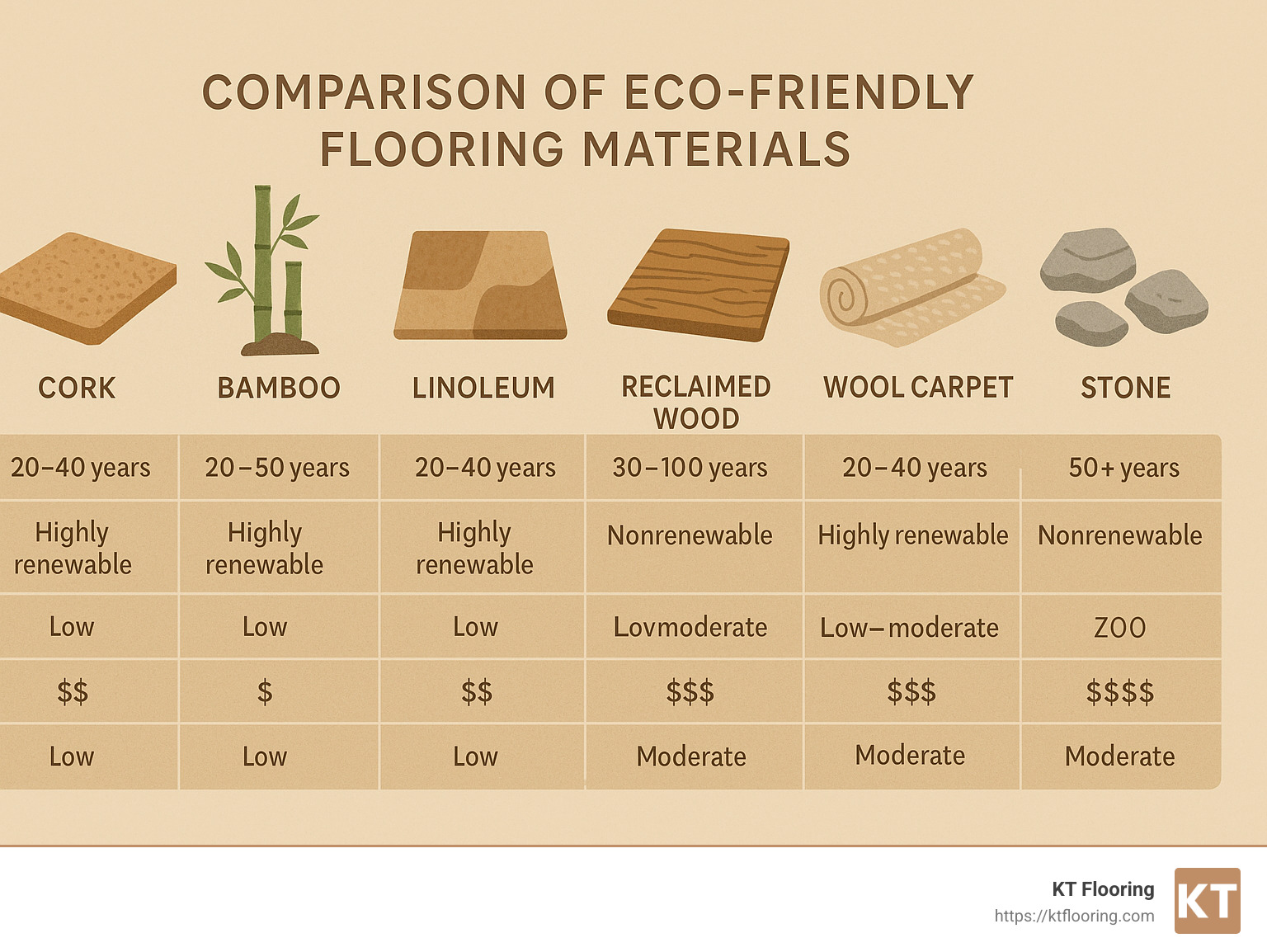
Cork flooring holds a special place in my heart. Harvested from the bark without harming the tree (which regrows its bark!), it offers natural antimicrobial properties and springy comfort underfoot. With proper care, it can last 40+ years – I have customers whose cork floors are still beautiful after decades.
Bamboo continues to impress with its rapid growth cycle – reaching maturity in just 3-5 years compared to hardwoods’ decades. It’s actually 13% harder than maple, making it incredibly durable while maintaining a low environmental footprint.
Linoleum (the real stuff, not vinyl) is made from linseed oil and other natural materials. It’s 100% biodegradable and can last 30-40 years. The vibrant color possibilities make it a designer’s dream for creative spaces.
Reclaimed wood tells a story in every plank. Salvaged from old barns, factories, and historic buildings, these floors require zero new tree harvesting while bringing character and history into your home.
Wool carpet offers a natural, renewable alternative to synthetic options. It’s biodegradable, naturally stain-resistant, and feels incredibly luxurious underfoot – perfect for bedrooms and living spaces where comfort is paramount.
Stone flooring, while requiring careful sourcing, offers best longevity – often lasting 100+ years with minimal processing. Its excellent thermal properties help regulate home temperatures naturally, potentially reducing energy costs.
I’m Christopher Talty, owner of KT Flooring, and after 30+ years helping New Hampshire homeowners, I’ve seen how the right eco-friendly flooring options can transform a house into a healthier, more sustainable home. The beauty of these materials is that they don’t just help our planet – they bring natural warmth, character, and longevity that synthetic options simply can’t match.
Want to explore sustainable flooring in greater depth? Check out our detailed guides on environmentally friendly flooring options and environmentally friendly hardwood flooring.
What Makes a Flooring Material Truly Eco-Friendly?
When you’re searching for eco-friendly flooring options, it’s easy to get lost in marketing claims that sound green but might not hold up to scrutiny. At KT Flooring, we believe true sustainability goes beyond buzzwords and pretty packaging. Let’s walk through what makes a floor genuinely environmentally friendly.
The most sustainable floors start with renewability – how quickly can nature replace what we’ve taken? Cork bark regenerates every 8-10 years without harming the tree, while bamboo reaches maturity in just 3-5 years. Compare that to traditional hardwoods that might take decades or even a century to grow back, and you’ll see why these rapid renewers are environmental stars.
Embodied carbon matters too. This measures all the greenhouse gases released throughout a product’s life – from forest or quarry to your home and eventually to disposal. Materials requiring minimal processing or transported shorter distances typically have a lower carbon footprint. That’s why we often suggest New England-sourced hardwoods to our Massachusetts and New Hampshire neighbors – beautiful floors that haven’t traveled halfway around the world.
“The most eco-friendly flooring options are often minimally extractive, minimally processed, minimally transported, minimally harmful, and minimally in need of replacement,” explains Franco Rossi, a sustainable materials expert.
Recycled content is another green indicator. Floors made from post-consumer or industrial waste keep materials out of landfills and often require less energy to produce. Meanwhile, VOC emissions directly affect your family’s health – these chemicals can cause everything from minor irritation to serious health issues. Research from the American Lung Association confirms that flooring significantly impacts indoor air quality, especially right after installation.
Don’t overlook durability in your eco-calculations. A floor that lasts 50 years is inherently more sustainable than one needing replacement after 10, even if the shorter-lived option uses more renewable materials. And finally, consider what happens at end-of-life – can your flooring be recycled, composted, or repurposed when it’s time for something new?
Key Certifications & Labels to Trust
When shopping for eco-friendly flooring options, certain certifications help separate genuine sustainability from clever marketing:
The Forest Stewardship Council (FSC) certification is the gold standard for responsibly harvested wood. FSC certification ensures forests are managed to preserve biodiversity while benefiting local communities. For indoor air quality, look for FloorScore certification, which tests for 35 specific VOCs, or GREENGUARD, which ensures products have low chemical emissions.
If you’re considering carpet, GoodWeave certification guarantees no child labor was used in production – they’ve already rescued more than 3,600 children from forced labor. And speaking of carpets, the Carpet America Recovery Effort (CARE) facilitates recycling to keep the estimated 5 billion pounds of carpet typically discarded in U.S. landfills every year out of the waste stream.
At our Hudson showroom, we can help you steer these certifications to find products that align with your environmental values while meeting your design vision and budget.
Common Greenwashing Red Flags
Not all “green” claims deserve your trust. Here are some warning signs that a flooring product might be wearing an eco-disguise:
Be wary of vague “natural” claims without specifics. Terms like “eco,” “green,” or “natural” mean nothing without third-party verification or detailed explanations. Truly sustainable companies provide transparent Life Cycle Assessment (LCA) data about their products’ environmental impact from creation to disposal.
If you’re considering exotic wood, be extra vigilant. Exotic wood without origin information might contribute to deforestation – always look for FSC certification or detailed responsible harvesting practices. And don’t fall for misleading “biodegradable” vinyl claims. Vinyl (PVC) flooring is petroleum-based and not biodegradable, regardless of creative marketing. While some brands are improving recycled content and reducing VOCs, vinyl generally isn’t among the most environmentally friendly options.
Even excessive packaging can be a tell-tale sign – truly sustainable brands minimize packaging waste and use recyclable materials.
“When manufacturers claim their product is ‘green’ without specifics, that’s a red flag,” notes Sean Brennan, a sustainable building materials specialist. “Ask for certifications and specific environmental attributes instead of accepting vague marketing terms.”
At KT Flooring, we believe in honest conversations about sustainability. We’ll help you weigh environmental benefits against practical considerations like budget, style, and maintenance – because the greenest floor is one that you’ll love and maintain for decades to come.
Exploring the Top Eco-Friendly Flooring Options

Let’s walk through the best eco-friendly flooring options available to homeowners in New Hampshire and Northeast Massachusetts. After installing these materials in countless homes throughout the region—from cozy Portsmouth colonials to sleek modern builds in Greater Boston—we at KT Flooring have seen how sustainable flooring can transform a space.
Rapidly Renewable Stars: Cork & Bamboo
Cork Flooring
There’s something almost magical about cork flooring. Harvested from the bark of cork oak trees in Mediterranean countries, the process is a model of sustainability. The trees aren’t cut down—just their outer bark is carefully removed, and they continue growing. A single cork oak can be harvested every 8-10 years for up to 250 years!
When you walk on cork, you’ll notice its gentle give underfoot—that’s the natural resilience that makes it easier on your joints. This same cellular structure makes cork naturally insulating (keeping your floors warmer in winter) and sound-absorbing (perfect if you have a piano player in the family or live in a multi-story home).
What many homeowners don’t realize is that cork is naturally antimicrobial and hypoallergenic. It contains a substance called suberin that resists mold, mildew, and pests, making it an excellent choice for allergy sufferers.
“Cork flooring has come full circle,” says Robbie Davis, a flooring historian. “It was popular in the 1920s through 1940s before synthetics took over, and now people are refinding its unique combination of comfort and sustainability.”
Material costs for cork typically range from $3–$12 per square foot, depending on quality, finish, and pattern. With proper care, expect your cork floor to last 40+ years—an excellent return on investment.
Bamboo Flooring
Though it looks like hardwood, bamboo is actually a grass—and an incredibly fast-growing one. While oak trees might take 60-100 years to mature, bamboo reaches harvest age in just 3-5 years. Its extensive root system prevents soil erosion, and harvesting doesn’t kill the plant, which simply grows back.
Bamboo floors are remarkably tough. Strand-woven bamboo (where the fibers are shredded, compressed, and bonded) is 13% harder than maple and 27% harder than northern red oak. This makes it ideal for busy households with kids, pets, or high-traffic areas.
The clean, uniform grain patterns of bamboo suit contemporary interiors beautifully. It’s also more stable in humid environments than many hardwoods, making it a practical choice for bathrooms and kitchens.
One environmental consideration worth mentioning: since most bamboo is grown in Asia, transportation emissions are higher than locally-sourced materials. Look for bamboo with FSC certification to ensure responsible harvesting practices.
Bamboo flooring typically costs between $3–$11 per square foot for materials, with variations based on quality, construction method, and finish. These prices reflect industry averages and not necessarily KT Flooring’s specific pricing.
You can explore our environmentally friendly flooring options online or visit our Hudson showroom to see and feel these materials in person.
Classic but Conscious: Linoleum (Marmoleum) & True Linoleum Sheets
True linoleum is the original eco-friendly flooring—and it shouldn’t be confused with vinyl! While they might look similar, linoleum is made from natural materials: linseed oil (from flax seeds), pine rosin, wood flour, cork dust, limestone powder, and jute backing, colored with mineral pigments.
This natural composition makes linoleum one of the most genuinely eco-friendly flooring options available. Unlike vinyl, it’s biodegradable at the end of its life. And that life is impressively long—a quality linoleum floor can last 30-40 years with proper care.
Linoleum has some surprising performance benefits too. It’s naturally antimicrobial, inhibiting bacteria growth without chemical additives. It’s also antistatic, meaning it doesn’t attract dust—a real plus for maintaining clean indoor air.
Some manufacturers, like Forbo’s Marmoleum, have taken sustainability even further. “Marmoleum is made from 98% natural raw materials and is actually climate positive from cradle to gate,” explains a Forbo representative. “The CO₂ uptake in its biobased raw materials exceeds emissions from production and transport.”
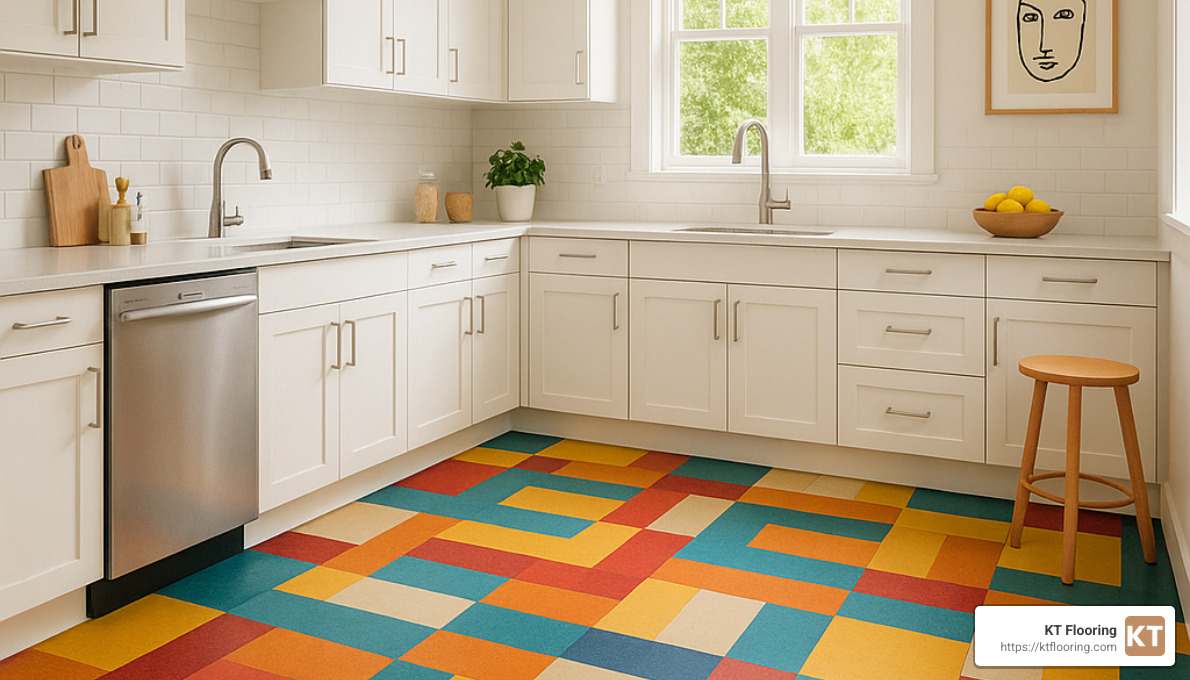
Available in sheets, tiles, and click-together planks with a rainbow of color options, linoleum material costs typically range from $2–$5 per square foot, though specialty designer patterns may cost more. These are average industry prices and not specific to KT Flooring.
We’ve installed linoleum in many different settings throughout New Hampshire and Massachusetts—healthcare facilities valuing its antimicrobial properties, homes with allergy sufferers seeking better indoor air quality, historic renovations where period-appropriate materials are desired, and modern homes embracing eco-conscious design.
One exciting recent innovation is liquid linoleum, which can be applied as a seamless floor finish—perfect for creating custom designs or covering unusual floor shapes.
Sustainable Hardwood & Engineered Alternatives
Wood flooring never goes out of style, and when sourced responsibly, it can be quite sustainable. For truly eco-friendly flooring options in hardwood, consider these choices:
FSC-Certified Domestic Species like maple, oak, hickory, and ash from certified sustainable U.S. forests have lower transportation emissions and support local forestry. The beauty of these woods is timeless, and they can be finished to match any décor.
Reclaimed Timber salvaged from old barns, factories, and other structures gives new life to existing materials with zero new tree harvesting. Each plank tells a story through its patina and character marks—a conversation starter in any home.
Modified Woods processed using methods like acetylation (Accoya) or thermal modification improve durability and resistance to rot without chemicals. These innovations extend the lifespan of the wood significantly.
“We source sustainable wood from tree farms in New Zealand or British Columbia, where they’re harvesting less than 1% of the standing trees every year and then regrowing them,” explains Robbie Davis, a sustainable forestry expert.
Here’s an eye-opening statistic: Refinishing existing hardwood floors rather than replacing them can reduce the carbon footprint by over 75%. This makes proper maintenance of hardwood one of the most environmentally responsible choices you can make.
For even greater efficiency, consider Engineered Hardwood, which uses about one-third the amount of slow-growing species by applying a thin veneer over sustainable substrate layers. Or try HempWood, an innovative alternative made from compressed hemp fibers and soy-based adhesive. Hemp grows to harvest-ready in just 120 days—a fraction of the time needed for traditional hardwoods.
When selecting finishes, opt for low-VOC, waterborne polyurethane or natural oil finishes to minimize indoor air pollution.
Hardwood flooring typically costs $6–$18+ per square foot for materials, with reclaimed and exotic species commanding premium prices. Engineered options generally fall in the $4–$12 range. These reflect industry averages and not necessarily KT Flooring’s specific pricing.
At KT Flooring, we’ve been installing and refinishing hardwood floors throughout New Hampshire and Massachusetts for over three decades. Our team can help you select the most sustainable options for your specific project. Learn more about our environmentally friendly hardwood flooring selections.
Recycled & Upcycled Surfaces: Carpet Tiles, Rubber, Glass & Metal
Some of the most innovative eco-friendly flooring options transform what would have been waste into beautiful, functional floors.
Every year, Americans send a staggering 1.8 million tons of carpets to landfills, where they persist for centuries. Fortunately, sustainable alternatives exist. ECONYL Regenerated Nylon carpet is made from reclaimed fishing nets, fabric scraps, and carpet waste. “For every 10,000 tons of ECONYL raw material, 70,000 barrels of crude oil are saved, and 65,100 tons of CO2 equivalent emissions are avoided,” notes Franco Rossi, a sustainable materials expert.
PET Carpet made from recycled plastic bottles—typically five bottles per square foot—diverts plastic from landfills while creating a durable floor covering. And for the ultimate in natural carpeting, Wool Carpet offers a renewable, biodegradable alternative that’s naturally flame-resistant without chemical treatments.
I especially like recommending carpet tiles for families with young children or pets. When little accidents happen (and they will!), you can replace individual tiles rather than the entire floor—saving money and reducing waste.
Recycled Rubber Flooring made from post-consumer tire rubber offers extreme durability, slip resistance, and shock absorption. It’s perfect for home gyms, playrooms, and mudrooms. Costs typically range from $3–$8 per square foot based on industry averages.
For truly stunning eco-conscious floors, consider Recycled Glass Tiles made from post-consumer bottles and industrial waste glass. Available in countless colors and patterns, they typically cost $30–$60 per square foot. Or explore Recycled Metal Tiles created from scrap aluminum, copper, and other metals, offering industrial chic aesthetic with serious eco-credentials at approximately $30–$50 per square foot.
We’ve installed these innovative recycled materials in homes throughout New Hampshire and Massachusetts—from eco-conscious carpet in Nashua to recycled glass tile in Andover—helping countless homeowners reduce their environmental footprint without sacrificing style.
Long-Life Naturals: Stone, Terrazzo & Polished Concrete
Sometimes the most sustainable flooring comes straight from the earth with minimal processing.
Natural Stone flooring—including granite, slate, limestone, and marble—offers best longevity. A well-installed stone floor can last well over 100 years with proper care. Stone requires minimal processing compared to manufactured materials and provides excellent thermal mass for passive solar designs, naturally cooling your home in summer and reducing air conditioning needs.
The primary environmental consideration with stone is transportation emissions. We recommend domestically sourced stone whenever possible to reduce the carbon footprint. Stone flooring typically costs $8–$50+ per square foot for materials, depending on the type, quality, and source.
Terrazzo combines stone chips in a concrete or epoxy base. Modern terrazzo often incorporates recycled glass, plastic, or metal in place of traditional marble chips. Recent innovations include zero-VOC epoxy binders and integration with radiant floor heating systems.
Terrazzo typically costs $25–$90+ per square foot installed, making it one of the more premium options, but its durability makes it cost-effective over decades of use. These are industry average prices and not specific to KT Flooring.
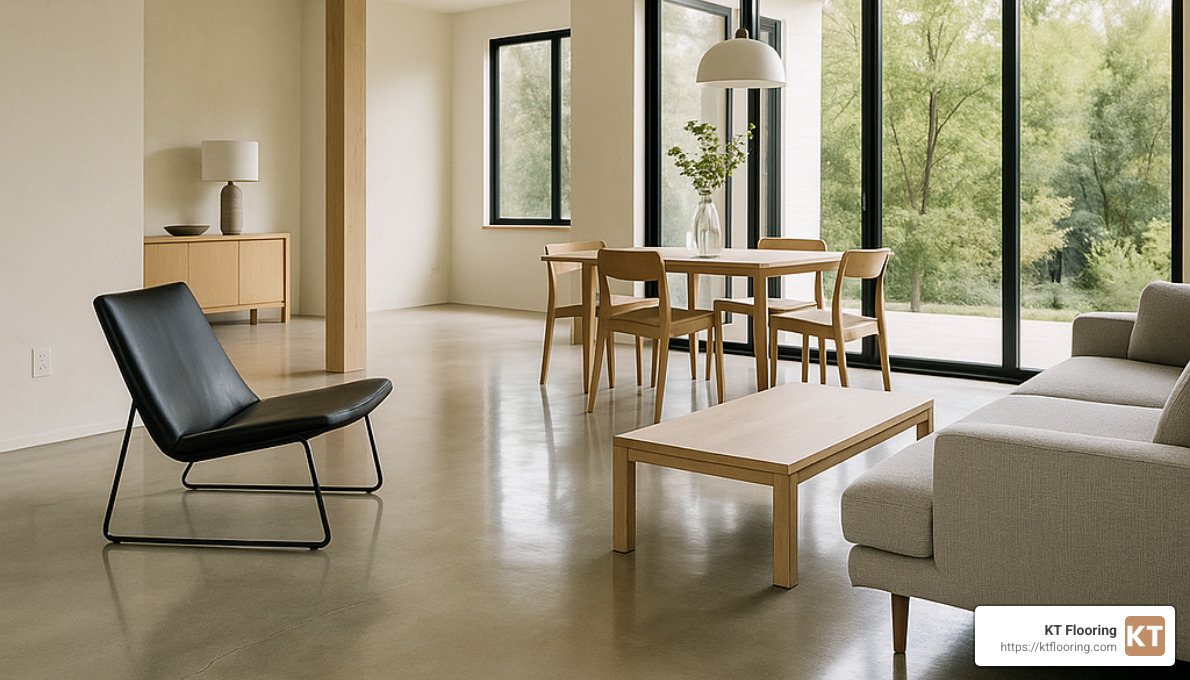
For the ultimate in minimalist, low-impact flooring, consider Polished Concrete. By simply polishing an existing concrete slab, you eliminate the need for additional flooring materials entirely. It’s extremely durable, energy-efficient when used with radiant heating systems, and can be tinted, stained, or stamped for decorative effects.
“Concrete floors are now considered a beautiful, minimalist option rather than too industrial,” notes Sean Brennan, an interior design specialist. “They’ve become particularly popular in modern and industrial-style homes.”
Recent innovations include new Swiss concrete flooring development halving material use and cutting embodied carbon by 80%, plant-based polyurethane concrete coatings for improved sustainability, and techniques to expose varying aggregate sizes for improved aesthetics.
Polished concrete typically costs $3–$15 per square foot, depending on the existing slab condition and desired finish.
At KT Flooring, we’ve helped many clients throughout New Hampshire and Massachusetts evaluate these natural, long-lasting options. Our experienced team can help you determine which material best suits your lifestyle, aesthetic preferences, and sustainability goals. We’d love to show you samples and discuss which eco-friendly flooring options might work best in your home.
Selecting, Installing & Maintaining Your Eco-Friendly Floor
Choosing sustainable materials is just the beginning of your green flooring journey. How you install and care for your floors dramatically impacts their environmental footprint and longevity. At KT Flooring, we’ve helped countless New Hampshire homeowners steer these decisions for over five decades.
Subfloor Preparation
Before any new floor goes down, we need to address what’s underneath. A properly prepared subfloor extends the life of your new flooring and improves its performance.
“I always tell my clients that subfloor prep is like the foundation of a house—you can’t see it, but it makes all the difference,” says Chris Talty, owner of KT Flooring. “Cutting corners here will cost you in the long run.”
For maximum sustainability, we recommend repairing rather than replacing whenever possible. When leveling compounds are needed, we use low-VOC products that won’t compromise your indoor air quality. For added comfort and sound dampening, consider cork or recycled rubber underlayment—these natural materials improve acoustics while adding a bit of cushion underfoot.
Installation Methods
Different eco-friendly flooring options require different installation approaches, each with environmental considerations:
Floating floors have revolutionized DIY-friendly installation. Many cork, bamboo, and engineered wood products use click-lock systems that eliminate the need for adhesives altogether. This not only reduces chemical use in your home but makes future recycling or repurposing much easier when the floor eventually reaches the end of its life.
When adhesives are necessary, the landscape has changed dramatically in recent years. Today’s soy-based and water-based adhesives perform beautifully while significantly reducing VOC emissions. For clients with chemical sensitivities, we can recommend zero-VOC options that won’t compromise indoor air quality.
Traditional nail-down hardwood installation avoids chemical adhesives entirely. This centuries-old method remains one of the most environmentally friendly approaches, especially for solid hardwood floors that may last generations.
Our installation teams arrive with proper ventilation equipment, carefully manage waste through precise cutting and planning, and thoroughly clean up after themselves. We’re meticulous about these details because we understand that even the most sustainable materials can have their benefits undermined by wasteful installation practices.
Maintenance for Longevity
The greenest floor is one that doesn’t need replacement for decades. Proper maintenance dramatically extends the life of your floors while preserving their beauty.
For daily care, microfiber mops have revolutionized floor cleaning by trapping dust and dirt without harsh chemicals. Pair them with plant-based cleaners specifically formulated for your flooring material. We’ll provide detailed care instructions for your specific floors—what works for hardwood might damage linoleum, and vice versa.
Preventive measures make a world of difference. Quality entrance mats capture dirt and grit before they can scratch your floors. Furniture protectors prevent dents and gouges. In New England’s variable climate, maintaining consistent indoor humidity levels (35-55%) prevents seasonal wood expansion and contraction that can damage floors over time.
Many natural materials can be refreshed rather than replaced. Hardwood floors typically can be sanded and refinished 5-7 times throughout their lifespan—a process that reduces carbon footprint by more than 75% compared to replacement, according to the National Wood Flooring Association. Even materials like cork and linoleum can be resealed to restore their appearance and protective finish.
When damage does occur, prompt attention prevents it from spreading. Many natural materials like cork, linoleum, and wood can be spot-repaired without requiring full replacement. We can help with these repairs or guide you through DIY solutions.
For more information on our lower-impact synthetic options, visit our laminate flooring and luxury vinyl flooring pages. While not as eco-friendly as natural materials, modern manufacturing has dramatically improved these products’ environmental profiles, with many now offering low-VOC emissions and improved recyclability.
Health Considerations for Allergy & Chemical Sensitivity
For the 50 million Americans with allergies or the growing number with chemical sensitivities, flooring choice becomes a critical health decision.
Non-porous surfaces like linoleum, finished hardwood, and bamboo don’t trap allergens the way carpet can. They’re easier to clean thoroughly, removing dust, pet dander, and pollen rather than harboring them. If someone in your household suffers from allergies, these smooth-surface eco-friendly flooring options can dramatically improve symptoms.
Cork deserves special mention for allergy sufferers. Its natural antimicrobial properties resist mold and mildew growth, while its unique cellular structure doesn’t harbor dust mites. Many of our clients with severe allergies have found remarkable relief after switching to cork flooring.
For those sensitive to formaldehyde (a common component in many adhesives and composite wood products), look for NAF (No Added Formaldehyde) or ULEF (Ultra-Low Emitting Formaldehyde) certifications. These products use alternative binding systems that won’t off-gas harmful chemicals into your home.
Even with the most natural materials, increasing ventilation for several weeks after installation helps dissipate any remaining VOCs. This is especially important in newer, tightly-sealed homes where air exchange is limited.

Budget, Aesthetics & Local Climate Balancing Act
Selecting the right eco-friendly flooring options involves balancing several factors that are unique to your home and lifestyle.
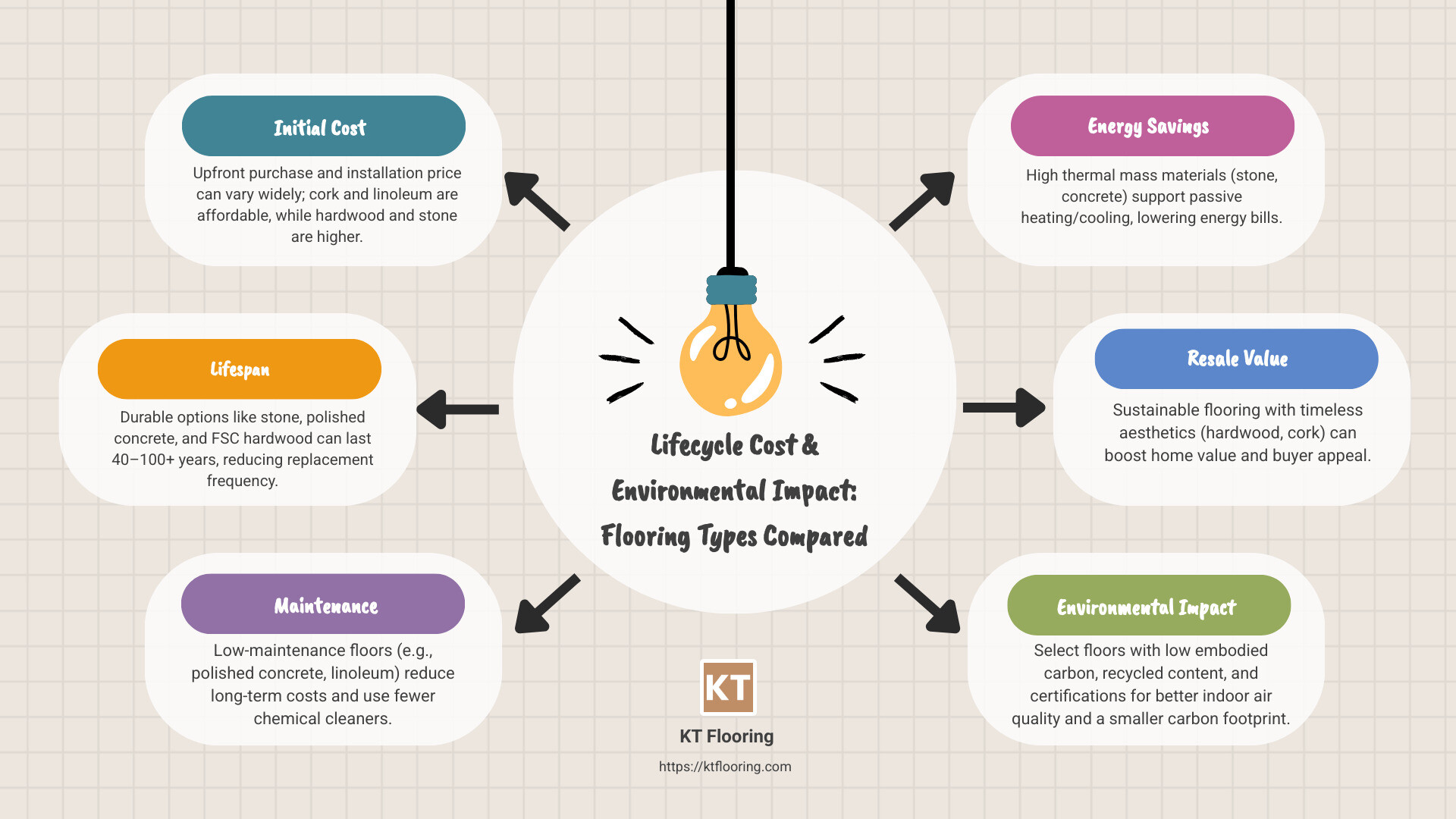
When considering costs, think beyond the price tag. While some sustainable materials like cork or linoleum might have higher upfront costs (averaging $3-$12 per square foot for materials), their 30-40 year lifespan often makes them more economical than cheaper options that need replacement after 10-15 years. Factor in potential energy savings too—cork’s natural insulation properties can reduce heating costs, while stone’s thermal mass can moderate temperature swings.
Today’s sustainable flooring comes in endless design possibilities. Darker floors create a cozy, intimate feeling but show dust more readily (a consideration for busy households). Lighter floors reflect more natural light and can make smaller spaces feel more expansive. Wide planks create a contemporary look while using fewer seams (and thus less adhesive). Even pattern installation—like herringbone or basketweave—can reduce waste by utilizing smaller cuts that might otherwise be discarded.
New England’s climate presents unique challenges for flooring. Our hot, humid summers and cold, dry winters create significant seasonal humidity fluctuations. Materials like engineered wood and cork handle these changes better than solid hardwood, which can expand and contract significantly. For bathrooms, entryways, and basements where moisture is a concern, consider linoleum or porcelain tile that resist water damage.
At KT Flooring, we understand the specific challenges of homes in New Hampshire and Massachusetts. Our free in-home consultations help you select materials that will perform beautifully in your specific environment while meeting your sustainability goals and staying within your budget.
Frequently Asked Questions about Sustainable Floors
How do production and transportation affect a floor’s carbon footprint?
When you’re considering eco-friendly flooring options, it’s important to look beyond just the material itself. The journey your flooring takes before reaching your home plays a huge role in its environmental impact.
Manufacturing processes vary dramatically between flooring types. Materials like ceramic tile require intense heat during production, while vinyl flooring involves extensive chemical processing – both consuming significant energy. In contrast, reclaimed wood or minimally processed cork have much smaller manufacturing footprints.
Transportation is another piece of the sustainability puzzle. That beautiful bamboo flooring might grow incredibly fast, but if it’s shipped all the way from Asia to New Hampshire, some of its green credentials get offset by shipping emissions. That’s why at KT Flooring, we often recommend locally or regionally sourced materials when possible – New England hardwoods are both beautiful and have shorter travel distances to our customers’ homes.
“The greenest product is often the one made closest to home,” explains Robbie Davis, a sustainable building expert. “Transportation can account for up to 30% of a product’s carbon footprint.”
Many forward-thinking manufacturers are making impressive strides in reducing their environmental impact. Look for companies using renewable energy in their factories, implementing closed-loop water systems, or achieving zero-waste certification. These innovations can significantly reduce a floor’s lifetime carbon footprint.
At KT Flooring, we partner with manufacturers committed to environmental responsibility, and we’re happy to help you find products with the smallest carbon footprints for your Hudson or Nashua home.
Can eco-friendly floors be refinished or recycled at end-of-life?
The environmental story of your flooring doesn’t end when it’s time for replacement. True eco-friendly flooring options should have responsible end-of-life pathways.
Hardwood flooring shines in this category. A quality hardwood floor can be refinished multiple times, potentially extending its life for generations. My team at KT Flooring has refinished oak floors in Portsmouth homes that are over 100 years old! When hardwood eventually reaches the end of its useful life, it can be recycled into mulch, used as biomass fuel, or even reclaimed for new projects.
Bamboo and cork flooring can typically be refinished at least once, significantly extending their lifespan. Some forward-thinking manufacturers now offer take-back programs for these materials.
Linoleum deserves special mention for its impressive end-of-life credentials. True linoleum (not vinyl) is 100% biodegradable and can actually be composted. Companies like Forbo have even established recycling programs for their Marmoleum products.
For carpet, the landscape is improving. The Carpet America Recovery Effort (CARE) works tirelessly to increase carpet recycling rates. In 2020 alone, CARE diverted over 396 million pounds of carpet from U.S. landfills – a stark contrast to conventional carpeting, which can persist in landfills for up to 20,000 years.
Even stone and ceramic tiles can find new life when removed. They can be repurposed for other projects, used in landscape features, or crushed for use in road base or new tile production.
“The most sustainable floor is often the one you don’t have to replace,” notes Franco Rossi, a flooring lifecycle specialist. “But when replacement is necessary, choosing materials with clear recycling pathways makes a significant environmental difference.”
What installation adhesives are safest for indoor air quality?
Even the most eco-friendly flooring options can be compromised by poor adhesive choices. The glues and adhesives used during installation can significantly impact your home’s indoor air quality.
Water-based adhesives generally have lower VOC emissions than their solvent-based counterparts. These products have improved dramatically in recent years, offering excellent performance while releasing fewer harmful chemicals into your home.
For those with particular sensitivities, zero-VOC adhesives are now available for most flooring types. These specialized products perform comparably to traditional adhesives but without the off-gassing concerns.
Whenever possible, consider installation methods that eliminate adhesives entirely. Floating floors with click-lock systems or traditional nail-down hardwood installation avoid adhesive concerns completely. This approach is particularly valuable for families with allergies or chemical sensitivities.
Plant-based alternatives are another exciting development. Soy-based adhesives offer strong bonds with significantly lower environmental impacts than petroleum-based products. These biobased options are becoming increasingly available for residential flooring projects.
At KT Flooring, our installation teams are thoroughly trained in proper adhesive selection and application techniques. We prioritize low-VOC products and ensure proper ventilation during and after installation to protect your family’s health. For customers in Nashua, Manchester, or anywhere in our service area with specific health concerns, we can recommend specialized products custom to your sensitivity needs.
“The right adhesive is just as important as the right flooring material,” explains Christopher Talty, owner of KT Flooring. “We take the time to match both to our customers’ health requirements and environmental goals.”
Conclusion
Selecting eco-friendly flooring options isn’t just about making an environmentally conscious choice—it’s about creating a healthier, more beautiful home that stands the test of time. Throughout this guide, we’ve explored the remarkable variety of sustainable flooring solutions available today, from the springy comfort of cork to the timeless elegance of reclaimed hardwood.
What I’ve learned in my years at KT Flooring is that sustainable choices don’t require compromise. Today’s eco-friendly materials offer exceptional durability, stunning aesthetics, and performance that matches or exceeds their conventional counterparts. Whether you’re drawn to the natural antimicrobial properties of cork, the rapid renewability of bamboo, or the century-long lifespan of natural stone, there’s a sustainable option that perfectly suits your needs.
The beauty of choosing eco-friendly flooring options extends beyond their minimal environmental impact. These materials often bring unique character and warmth that mass-produced synthetic alternatives simply can’t match. There’s something special about walking on a floor and knowing its story—whether it’s cork bark harvested without harming a single tree, bamboo that grew to maturity in just a few years, or reclaimed wood that brings centuries of history into your home.
At KT Flooring, we’re passionate about helping homeowners throughout New Hampshire and Northeast Massachusetts steer these choices. Our team takes the time to understand your lifestyle, aesthetic preferences, and environmental priorities. We believe informed decisions lead to lasting satisfaction, which is why we offer comprehensive guidance on everything from material selection to maintenance practices.
I invite you to explore our hardwood flooring collections and other sustainable options in our Hudson showroom. Our free in-home consultations provide personalized recommendations custom to your specific space, ensuring you find that perfect balance between environmental responsibility, durability, beauty, and budget.
Remember—the most sustainable floor is one you won’t need to replace for decades. By investing in quality materials, professional installation, and proper maintenance, you’re making a choice that benefits your home, your health, and our shared planet.
After serving communities from Portsmouth to Boston and Manchester to Lowell for over 50 years, we’ve seen trends come and go. But the movement toward sustainability isn’t just a passing fashion—it’s the future of home design. We’re proud to be your partners in creating beautiful, responsible living spaces that you’ll enjoy for years to come.
Contact KT Flooring today to begin your journey toward more sustainable flooring. Your feet—and the planet—will thank you.
