Transform Your Home with Hardwood Floor Installation in NH
Hardwood floor installation NH services typically cost between $6-$20 per square foot with most homeowners spending $8-$12 per square foot for professional installation. The process generally takes 2-7 days depending on the scope of the project and requires proper acclimation of wood to New Hampshire’s climate.
| Hardwood Installation NH Quick Facts | Details |
|---|---|
| Average Cost | $6-$20 per square foot |
| Installation Timeline | 2-7 days typically |
| Popular Woods in NH | Oak, Maple, Birch, Pine |
| Best Time for Installation | Spring/Fall (moderate humidity) |
Few home improvements create as dramatic an impact as new hardwood flooring. The rich, warm character of hardwood instantly lifts any space while providing exceptional durability and timeless appeal. In New Hampshire, where homes experience distinct seasonal changes, properly installed hardwood floors can maintain their beauty for generations when installed by experienced professionals.
New Hampshire homeowners face unique considerations when selecting and installing hardwood floors. Our state’s climate fluctuations require special attention to wood acclimation and installation techniques. Additionally, the growing variety of hardwood options—from traditional oak and maple to exotic species and engineered products—can make choosing the right flooring solution overwhelming without expert guidance.
I’m Christopher Talty, owner of KT Flooring, and I’ve been helping New Hampshire homeowners achieve stunning results with hardwood floor installation NH projects since 1974, bringing decades of specialized experience with the unique challenges of New England’s climate and building styles.
Hardwood floor installation NH vocab to learn:
Understanding Hardwood Floor Installation in NH
New Hampshire’s unique geographical and climatic conditions create specific challenges and opportunities for hardwood floor installation. Understanding these factors is crucial for ensuring your investment stands the test of time and maintains its beauty through our region’s distinct seasonal changes.
At KT Flooring, we’ve spent over 50 years perfecting our hardwood floor installation NH techniques to address these local challenges. Our experience serving homeowners throughout Southern New Hampshire and Northeast Massachusetts has given us invaluable insights into how hardwood flooring performs in our specific climate.
How the New Hampshire Climate Affects Hardwood Floor Installation
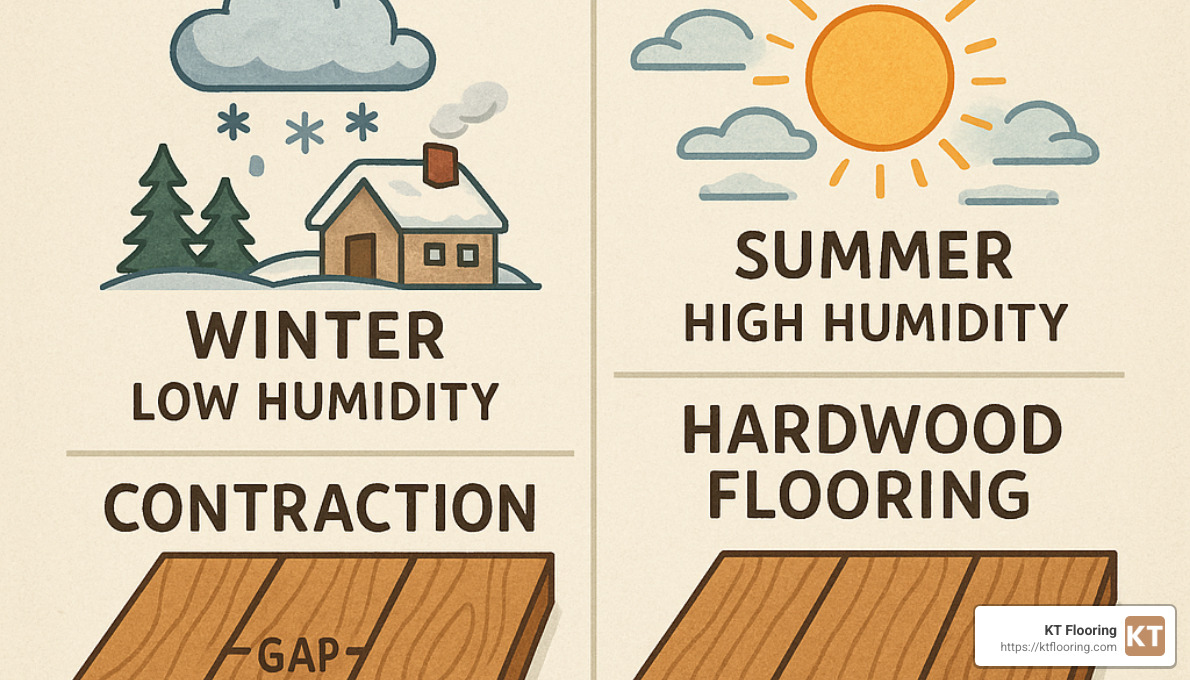
New Hampshire experiences dramatic seasonal shifts that directly impact your hardwood floors. Our cold, dry winters and humid summers cause wood to naturally expand and contract throughout the year. Without proper installation techniques, these natural movements can lead to unsightly gaps, buckling, or warping.
“The trickiest part of hardwood floor installation NH projects is dealing with our wild humidity swings,” says our lead installer at KT Flooring. “When you crank the heat in January, homes get desert-dry and wood shrinks. Then summer rolls around, humidity spikes, and wood expands. Professional installation plans for these changes so your floors stay beautiful year-round.”
In New Hampshire, proper wood acclimation isn’t just recommended—it’s essential. We typically let hardwood rest in your home for 3-5 days before installation, letting it adjust to your home’s unique environment. During extreme weather, we might suggest longer acclimation periods.
Before any installation begins, we thoroughly test moisture levels in both your subfloor and the hardwood materials. The difference should be less than 4% to prevent future problems. We also leave slightly larger expansion gaps (at least ¾ inch) around room perimeters to accommodate our more dramatic seasonal wood movement.
Many New Hampshire homes have basements or crawlspaces that can introduce additional moisture concerns. We pay special attention to these situations, installing proper vapor barriers to protect your investment. While we can install hardwood any time of year, spring and fall generally offer the most moderate conditions in New Hampshire, allowing wood to be installed at its “middle state” of expansion/contraction.
Popular Hardwood Flooring Options in New Hampshire
Over decades of hardwood floor installation NH projects, we’ve noticed clear preferences among homeowners for certain wood species that both perform well in our climate and complement our regional architectural styles.
Oak reigns supreme in New Hampshire homes, accounting for about 70% of our hardwood installations. Both red and white oak varieties offer exceptional durability with Janka hardness ratings of 1290-1360. Their distinctive grain patterns cleverly hide minor scratches, and they take stain beautifully. There’s something about oak that just feels right in traditional New England homes, especially colonials and craftsman-style properties.
Maple takes second place, particularly in more contemporary New Hampshire homes. Homeowners love its clean, consistent grain pattern and exceptional hardness (Janka rating of 1450). Its naturally light, bright appearance works wonders in smaller spaces, making rooms feel larger and more open. Maple also stands up remarkably well to our seasonal humidity fluctuations when properly finished.
For families with active kids or pets, hickory has become the go-to choice. This incredibly tough wood (Janka rating of 1820) resists dents and wear like a champion. Its dramatic color variations and rustic appearance complement mountain and lakeside properties beautifully. One customer told us, “After two kids, a dog, and five years, our hickory floors still look amazing—best investment we made in our home.”
History buffs and renovation enthusiasts often request Eastern White Pine, a traditional New England choice that’s authentic to early New Hampshire homes. While softer underfoot than true hardwoods (Janka rating of 380), pine develops a beautiful patina over time that tells your home’s story. Plus, it’s often locally sourced, appealing to sustainability-minded homeowners.
Given our climate challenges, engineered hardwoods have gained tremendous popularity in recent years. These specially constructed floors perform exceptionally well in basements, over concrete slabs, with radiant heating systems, and in areas with greater humidity fluctuations. They give you the beauty of hardwood with improved stability in challenging environments.
A customer from Bedford recently shared: “After installing oak hardwood floors throughout our 1920s colonial, we’ve been amazed at how they’ve maintained their beauty through four New Hampshire winters. The installer’s attention to proper acclimation and expansion gaps has prevented any of the seasonal issues our neighbors have experienced with their DIY installation.”
When you choose KT Flooring for your hardwood floor installation NH project, you’re getting more than beautiful floors—you’re getting our decades of local expertise and understanding of how to make hardwood thrive in our unique New Hampshire climate.
For more information about hardwood species and their characteristics, you can visit the National Wood Flooring Association’s wood species guide, which provides detailed information about various wood types and their properties.
Hardwood Floor Installation NH: Finding the Best Services
Selecting the right professional for your hardwood floor installation NH project is perhaps the most crucial decision in the entire process. The quality of installation directly impacts both the immediate appearance and the long-term performance of your hardwood floors. I’ve seen beautiful hardwood turn into a homeowner’s nightmare when installed incorrectly, and I’ve also witnessed how proper installation can make even mid-range hardwood look absolutely stunning for decades.
Factors to Consider When Choosing a Hardwood Floor Installation Company in NH
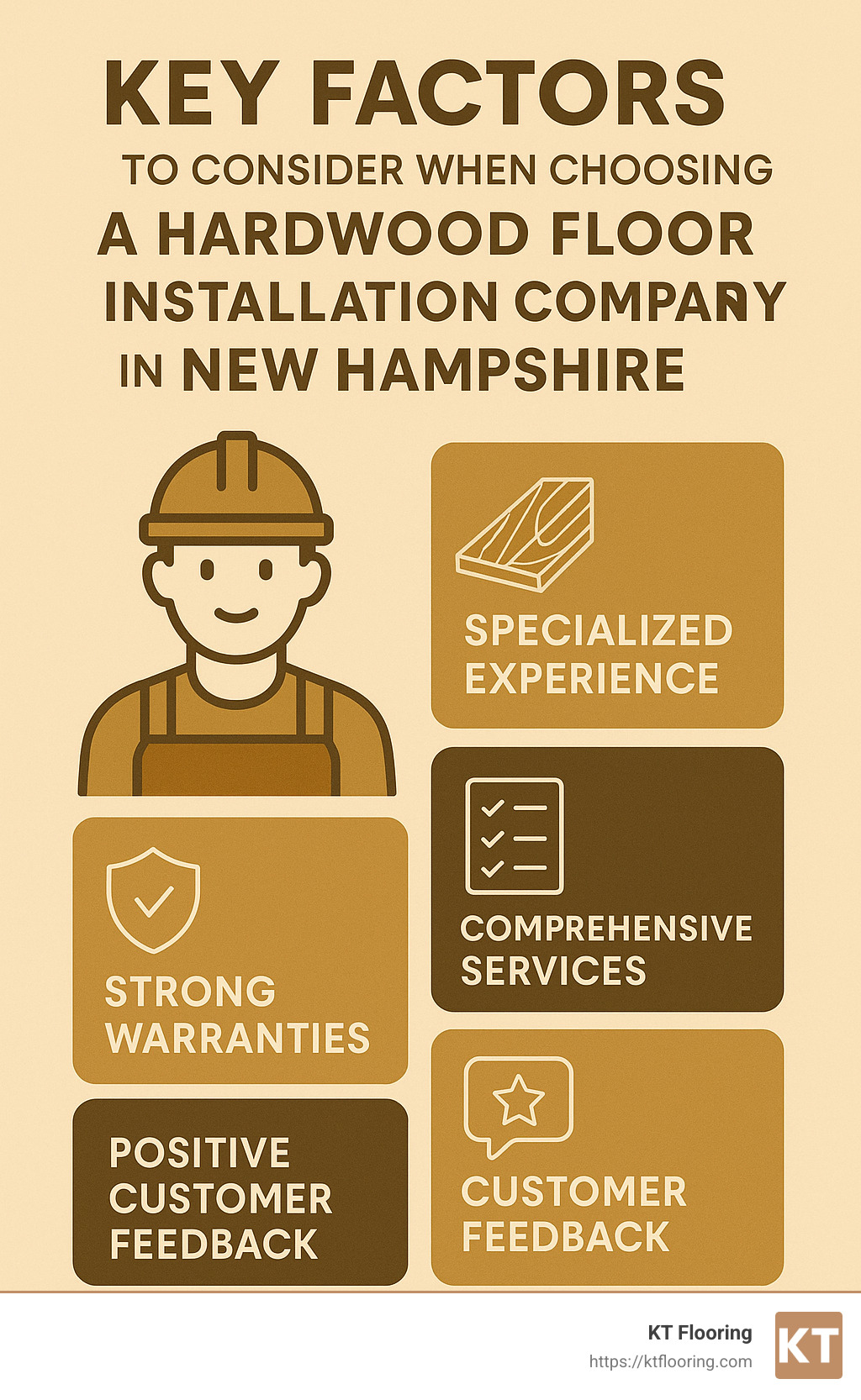
When you’re evaluating hardwood floor installation NH professionals, there are several critical factors that separate the true craftsmen from those who might leave you with regrets.
First and foremost, always verify proper licensing and insurance. Any reputable installer should happily provide proof of their New Hampshire Home Improvement Registration, general liability insurance (look for at least $1 million in coverage), and workers’ compensation for all employees. This isn’t just paperwork—it protects you if something goes wrong during your project.
Experience matters tremendously with hardwood installation. The best craftsmen have at least 5-10 years of specific hardwood experience and understand the unique challenges of New Hampshire’s climate. When I talk with potential installers, I always ask about their experience with my specific subfloor type and chosen wood species. Their answers tell me volumes about their expertise.
Look for comprehensive service offerings beyond just the installation itself. Quality hardwood floor installation NH professionals should offer thorough in-home consultations, handle subfloor preparation, remove existing flooring, assist with furniture moving, and provide meticulous cleanup afterward. These details make a huge difference in your overall experience.
Warranties speak to a company’s confidence in their work. The best installers offer at least a 1-year installation warranty and clearly explain both their guarantees and the manufacturer’s warranties in writing. Be wary of any contractor who seems vague about standing behind their work.
Customer feedback reveals the true story. Before committing, check Google and Yelp reviews (aim for companies with 4.5+ star ratings), verify their Better Business Bureau standing, and ask for references from previous customers in your area. Even better, ask to see photos of installations similar to your project.
At KT Flooring, we’re proud to meet and exceed these industry standards. With over 50 years of hardwood floor installation NH experience, we’ve refined our processes to address the specific needs of New Hampshire homeowners. Our installation teams undergo continuous training on the latest techniques, and we maintain all required licensing, insurance, and bonding.
The Benefits of Hiring Local New Hampshire Hardwood Flooring Contractors
While those big national flooring chains might tempt you with flashy ads and seemingly competitive pricing, there are significant advantages to choosing a local New Hampshire contractor for your hardwood floor installation.
Climate-specific expertise is perhaps the most valuable benefit. Local contractors understand the unique humidity patterns of New Hampshire’s seasons and how they affect wood. We know that a technique that works perfectly in Arizona might fail miserably in our New England environment. Having installed floors through countless New Hampshire winters and summers, local pros have seen how different wood species perform in our specific climate.
There’s also something special about community reputation and accountability. For local businesses like KT Flooring, our reputation isn’t just a marketing asset—it’s our lifeblood. We depend on word-of-mouth referrals and know we’ll likely run into our customers at the local grocery store or town events. This creates a level of accountability that national chains simply can’t match. We’re not just completing a transaction; we’re building relationships with neighbors.
The personalized service from local hardwood floor installation NH professionals makes a tremendous difference too. When you work with a local company, you’ll typically enjoy more attentive, customized service and direct communication with owners or senior staff. We can be more flexible with specific requests and have a deeper understanding of regional architectural styles that complement New Hampshire homes.
There are broader economic benefits to choosing local as well. Your investment stays within the New Hampshire economy, supporting local families and workers. Despite what you might expect, local contractors often offer more competitive pricing due to lower overhead costs compared to national chains. Plus, you’re building a relationship with a company that will be there for your future flooring needs.
A customer from Nashua recently shared this experience with me: “After getting quotes from both a national chain and KT Flooring for our hardwood installation, we chose the local company despite a slightly higher quote. The difference in knowledge about our specific home’s challenges and the personal attention to detail made it worth every penny. Three years later, our floors still look perfect.”
That’s the kind of feedback that makes me proud to be part of New Hampshire’s local flooring community. When your neighbors are also your customers, you simply care more about getting every detail right.
The Hardwood Floor Installation Process in NH
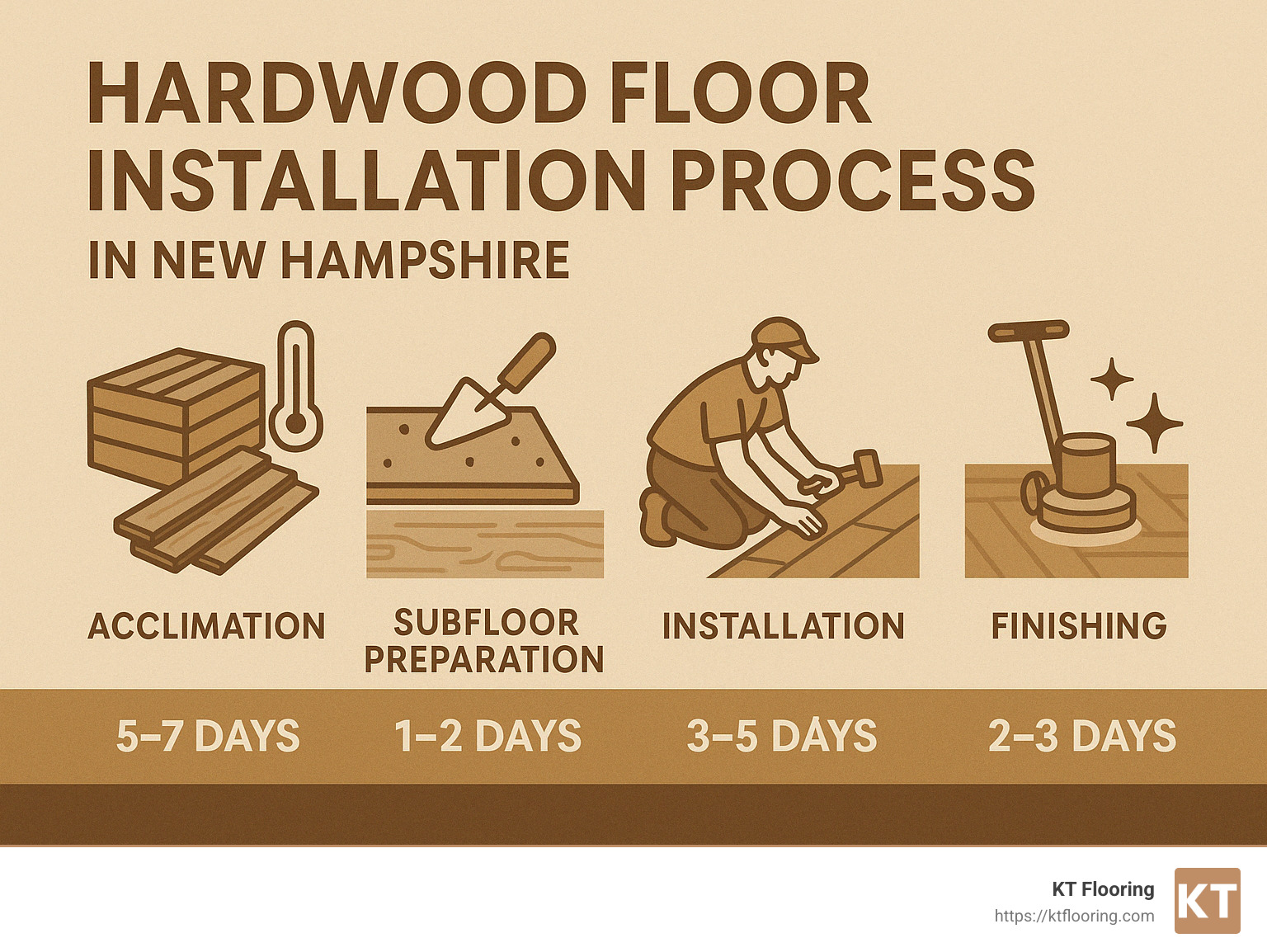
Understanding what to expect during your hardwood floor installation NH project helps ensure a smooth process and excellent results. At KT Flooring, we follow a comprehensive, proven methodology refined over our five decades of experience.
When you choose KT Flooring, your hardwood journey begins with a thorough consultation where we evaluate your space, take detailed measurements, and discuss your vision. We’ll guide you through selecting the perfect wood species and finishes for your home while identifying any potential challenges like uneven subfloors or moisture concerns.
After selecting your materials (with an appropriate 7-10% overage to account for cuts and future repairs), we’ll schedule delivery to allow proper acclimation time – a critical step for New Hampshire installations. During pre-installation preparation, we’ll remove existing flooring if needed, inspect and prepare the subfloor, and ensure ideal environmental conditions.
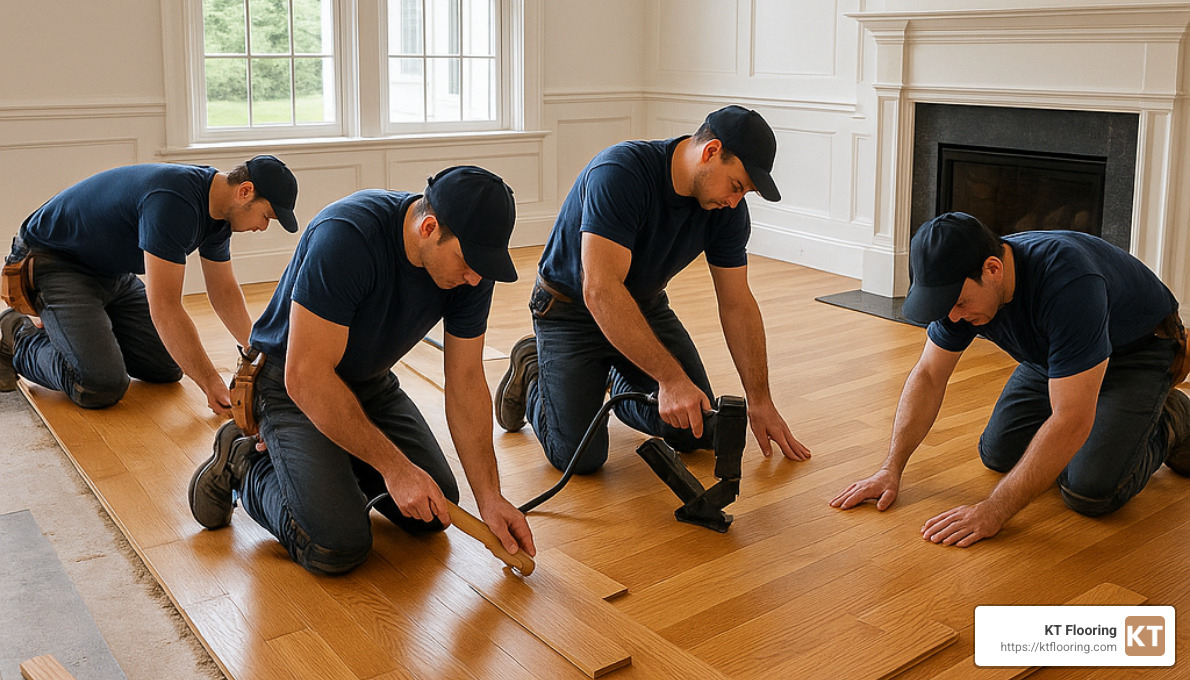
On installation day, our team arrives ready to transform your space. We’ll carefully protect or move furniture, prepare the final subfloor, and thoughtfully plan the layout before beginning the precise installation process. Each day ends with thorough cleanup and progress updates so you’re never left wondering what’s happening in your home.
The final phase includes sanding and finishing (for unfinished hardwood), installing trim and transitions, and a meticulous cleanup. We conclude with a walkthrough inspection and provide detailed maintenance instructions to help your new floors last for generations.
How Long Does Hardwood Floor Installation Typically Take in NH?
“How long will I be without my space?” is one of the most common questions we hear from homeowners considering hardwood floor installation NH projects. The honest answer is: it depends on several factors, but we can provide some helpful guidelines.
For a single room of about 200 square feet, expect 1-2 days for prefinished hardwood installation, while unfinished wood (including finishing time) typically takes 3-5 days. Medium-sized projects around 1,000 square feet generally require 3-4 days for prefinished or 5-7 days for unfinished hardwood. Larger installations of 2,000+ square feet can extend to 5-7 days for prefinished or 7-10 days for unfinished options.
That specialty installations like herringbone patterns or custom borders add approximately 30-50% more time to these estimates. Your timeline might also stretch if your subfloor needs extensive leveling or repair work, if challenging existing flooring must be removed, or during periods of extreme humidity when finishing products require longer drying times.
A Manchester customer recently shared: “KT Flooring installed about 1,200 square feet of oak hardwood throughout our first floor. The actual installation took 4 days, but they recommended a 4-day acclimation period beforehand since we were installing in January during very dry conditions. This attention to detail has prevented any seasonal gaps.”
Preparing Your Home for Hardwood Floor Installation
A smooth hardwood floor installation NH experience starts with proper preparation. Think of it as setting the stage for success – and we’re here to help you every step of the way.
Clear the installation area completely before our team arrives. Remove furniture, empty closets, take down window treatments that might interfere with perimeter work, and safely store wall decorations and fragile items. Don’t worry if this seems overwhelming – we can arrange furniture moving assistance if needed.
Create clear access paths for our team and materials. Ensure there’s adequate parking for our vehicles, remove obstacles from entrances and hallways, and secure pets in areas away from the work zone. This helps us work efficiently while keeping your furry family members safe.
Prepare for some dust and noise despite our best containment efforts. Consider sealing off adjacent rooms with plastic sheeting and covering air vents in work areas. The installation process inevitably creates noise during working hours, so you might want to plan activities outside the home or prepare sensitive family members.
Maintain stable environmental conditions before and during installation. Keep your home’s temperature between 65-75°F and relative humidity between 35-55% if possible. Continue normal HVAC operation throughout the project, and avoid other major renovations that might affect humidity levels.
Plan for limited access to newly installed areas during the process. Map out alternative pathways through your home, make special arrangements for children and pets, and consider scheduling your installation during a convenient time – many of our customers coordinate with vacations or business trips for major installations.
At KT Flooring, we provide detailed preparation checklists to all our customers and offer assistance with special accommodations when needed. Our goal is to make your hardwood floor installation NH project as stress-free and rewarding as possible, delivering floors that will be the foundation of your home’s beauty for decades to come.
Cost Considerations for Hardwood Floor Installation in NH
When you’re planning a new floor, understanding what goes into the cost helps you budget wisely. I’ve seen many New Hampshire homeowners surprised by price variations, so let’s break down what you can expect to pay for your hardwood floor installation NH project.
What is the Average Cost of Hardwood Floor Installation in New Hampshire?
The truth is, hardwood flooring costs vary widely based on numerous factors. From my experience with hundreds of hardwood floor installation NH projects, I can share these general price ranges. Please note that these figures represent industry averages based on internet data and not actual costs for KT Flooring products and services.
| Cost Component | Economy Range | Mid-Range | Premium Range |
|---|---|---|---|
| Materials (per sq ft) | $3-$6 | $6-$12 | $12-$25+ |
| Installation Labor (per sq ft) | $2-$4 | $4-$7 | $7-$15+ |
| Subfloor Preparation (per sq ft) | $0.50-$2 | $2-$4 | $4-$10 |
| Finishing (unfinished wood) | $2-$3 | $3-$5 | $5-$12 |
| Total Average Cost (per sq ft) | $5.50-$15 | $15-$28 | $28-$62+ |
When we break down these numbers, you’ll see several key factors driving the price. The wood species makes a tremendous difference – that beautiful Brazilian cherry will cost significantly more than a classic red oak. Similarly, wider planks generally command premium prices compared to traditional narrower boards.
Your installation pattern matters too. While a standard straight layout represents the base cost, diagonal installations typically add 15-25% to your bill. If you’re dreaming of a stunning herringbone pattern (which I’ve installed in several historic Portsmouth homes), expect to add 30-100% to your base installation cost.
The condition of your subfloor can significantly impact your budget as well. I remember one project in Bedford where what seemed like a straightforward installation revealed significant subfloor issues that required extensive remediation, adding about $4 per square foot to the project.
A Dover homeowner recently told me: “We installed 1,800 square feet of 5-inch white oak planks throughout our home. The total project cost approximately $22,000, which included removing old carpeting and tile. While this was a significant investment, the change has been remarkable, and we’ve already seen the value reflected in our home’s appraisal.”
Prefinished vs Unfinished Hardwood Flooring: Making the Right Choice
One question I hear almost daily concerns whether to choose prefinished or unfinished hardwood. This decision affects not just your costs, but also your timeline and final results.
Prefinished hardwood arrives at your home already sanded, stained, and sealed at the factory. The benefits are substantial: your installation wraps up faster since there’s no on-site finishing needed, you’ll have no sanding dust throughout your home, and you can use your new floors immediately. The factory-applied finishes often include aluminum oxide, making them incredibly durable.
However, prefinished boards typically cost $1-$3 more per square foot than unfinished options. They also feature slight bevels between boards (which some people love and others don’t), and customization options are more limited.
Unfinished hardwood gives you a blank canvas. After installation, the wood is sanded smooth on-site, then stained and finished to your exact specifications. This approach creates a perfectly level surface without bevels and allows complete color customization. It’s particularly valuable when matching existing flooring in historic homes.
The downsides? The process takes longer – typically adding 3-7 days to your project timeline. You’ll need to live with some dust (though our modern dust containment systems minimize this significantly) and odors during finishing. And you can’t walk on the floors during the curing process, which can be inconvenient.
I’ve found that the overall project costs often end up similar between the two options. Prefinished wood has higher material costs, while unfinished wood requires additional labor for finishing. Your choice usually comes down to convenience versus customization.
A Nashua homeowner shared their experience with me: “We chose unfinished red oak for our 1930s colonial renovation because we wanted to match the original floors in the living room. The sanding and finishing process took an extra four days, but the seamless transition between the old and new floors was absolutely worth it.”
At KT Flooring, we’ve installed both types extensively throughout New Hampshire. I’m always happy to walk customers through the pros and cons based on their specific home, timeline, and aesthetic preferences. Sometimes, we even recommend a hybrid approach – prefinished in some areas and site-finished in others – to balance convenience with perfect matching where it matters most.
Frequently Asked Questions about Hardwood Floor Installation in NH
After helping New Hampshire homeowners with their floors for over 50 years, we’ve heard just about every question imaginable about hardwood floor installation NH. I’ve gathered the most common questions we receive, along with straightforward answers based on our decades of experience working with local homes.
What Maintenance is Required for Hardwood Floors in New Hampshire Homes?
New Hampshire’s distinct seasons create unique challenges for hardwood floor maintenance. Our winters can be brutally dry, while summers often bring humidity that makes wood expand. With proper care, though, your hardwood floors can remain beautiful for generations.
For day-to-day cleaning, a simple routine works best. Sweep or vacuum with a soft brush attachment weekly to remove grit that can scratch your floors. I recommend using a microfiber dust mop between deeper cleanings – they’re remarkably effective at grabbing dust without scratching. When spills happen (and they will!), wipe them up immediately to prevent moisture damage.
The cleaning products you choose matter tremendously. Only use pH-neutral cleaners specifically designed for hardwood floors. I’ve seen too many beautiful floors damaged by all-purpose cleaners or steam mops, which can strip finishes and force moisture into the wood.
Seasonal care makes all the difference in New Hampshire homes:
During our winter heating season, indoor humidity often plummets below 30%, causing wood to contract and creating those annoying gaps between boards. A whole-house humidifier or even portable units maintaining 35-45% humidity can prevent this. One of our customers in Concord joked that her humidifier is “cheaper than new floors!”
In spring and summer, our humidity climbs, sometimes causing boards to swell or cup. Air conditioning or dehumidifiers keeping humidity below 55% will protect your investment.
Fall is the perfect time to inspect for any summer moisture damage and address issues before heating season begins.
For long-term care, plan to refresh the finish coat every 3-5 years in high-traffic areas like entryways and kitchens. A complete refinishing typically becomes necessary every 7-10 years, depending on wear patterns and household activity. Simple practices like using furniture pads and placing area rugs at entrances (avoid rubber-backed mats which trap moisture) can significantly extend the life of your floors.
As one of our long-time customers in Concord told me recently, “Our oak floors have lasted 15 years with only one refinishing. The key has been controlling humidity with whole-house humidifiers in winter and using the right cleaning products. The maintenance advice from KT Flooring has been invaluable.”
What are the Differences Between Water-Based and Oil-Based Finishes for Hardwood Floors?
The finish you select dramatically impacts both how your floors look and how they’ll perform over time. This choice often confuses homeowners during hardwood floor installation NH projects, so let me break down the differences.
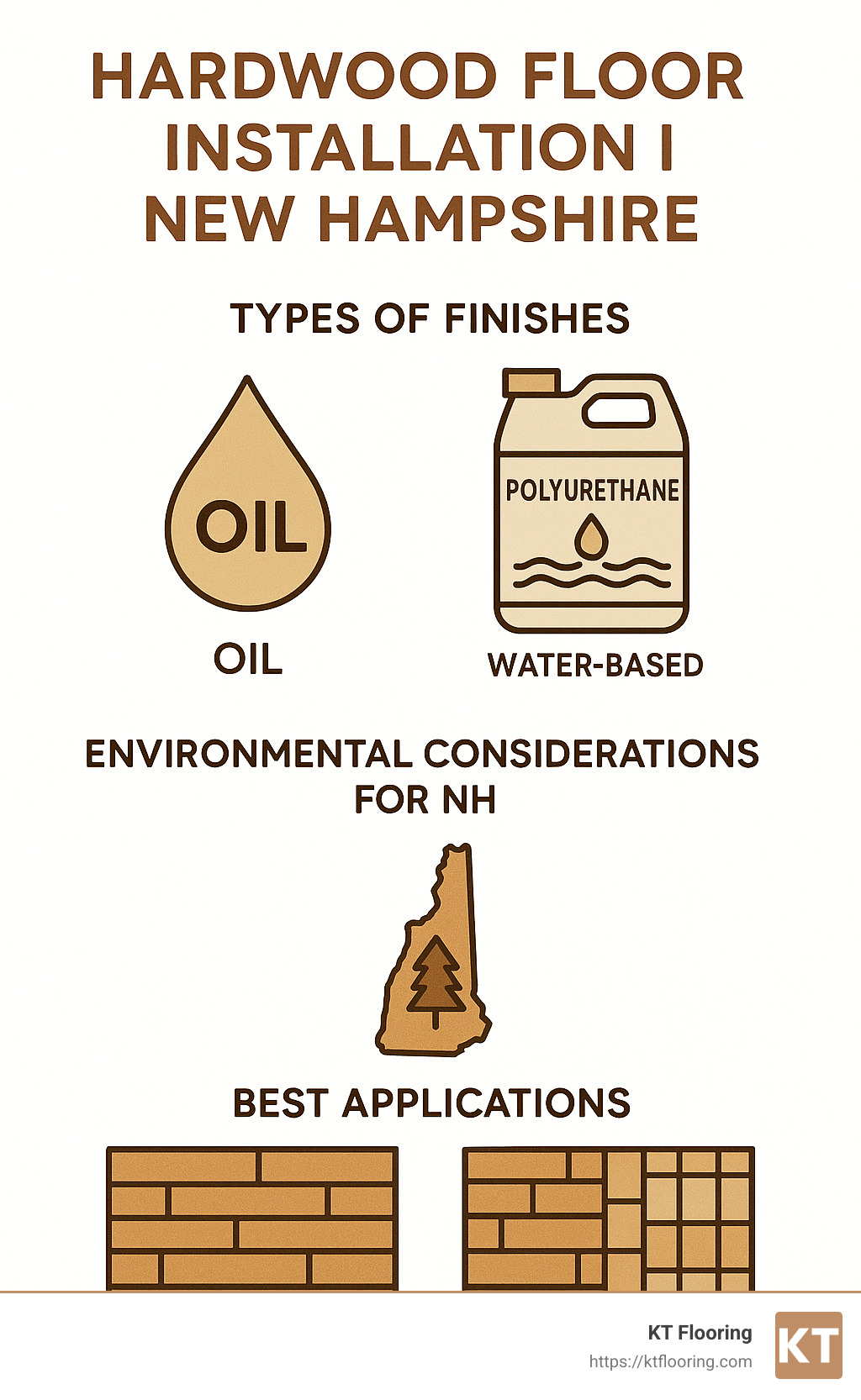
Water-based polyurethane finishes have become increasingly popular in New Hampshire homes. They dry remarkably fast – usually 2-4 hours between coats – which means we can often complete a project in just a couple of days. The low odor is another significant advantage, especially for families with children, pets, or anyone sensitive to chemical smells.
Water-based finishes remain clear over time rather than developing the amber tone that oil-based products create. This clarity is perfect if you want to preserve the natural color of lighter woods like maple or ash. They also contain fewer volatile organic compounds (VOCs), making them a more environmentally friendly choice that meets New Hampshire’s increasingly strict emissions regulations.
The downside? Water-based finishes typically cost $15-$25 more per gallon than oil-based alternatives. They also require more coats (usually 3-4) for adequate protection, and they can highlight imperfections in the wood more noticeably.
Oil-based polyurethane finishes have been the traditional choice for decades, and for good reason. They create that warm, rich amber tone that deepens beautifully over time – exactly what many homeowners envision when they picture classic hardwood floors. They provide excellent moisture resistance and generally require fewer coats (2-3) for good protection.
Oil-based finishes are typically more forgiving during application, which matters if you’re considering a DIY approach. They’re also generally less expensive than water-based alternatives, helping your budget stretch further.
The trade-offs? The strong odor during application can be quite powerful, often requiring families to vacate the home during application and initial curing. The slow drying time (12-24 hours between coats) extends your project timeline significantly. And while many homeowners appreciate the amber tones that develop over time, others find the yellowing effect undesirable, especially on lighter woods.
I remember a Bedford family who chose water-based finish for their maple floors specifically to preserve the light, natural look. “The quick drying time meant we could move back in after just two days,” they told me, “compared to the week our neighbors waited with their oil-based finish.”
At KT Flooring, we’re happy to discuss which finish would work best for your specific situation, considering your timeline, budget, aesthetic preferences, and environmental concerns. The right choice varies for each home and family, and we’re here to help you steer that decision.
Conclusion
Choosing the right hardwood floor installation NH service is a decision that impacts your home’s beauty, value, and comfort for decades to come. Throughout this guide, we’ve explored the unique considerations New Hampshire homeowners face when selecting and installing hardwood flooring.
When I think about what makes a truly successful hardwood flooring project in our unique New Hampshire environment, it always comes down to a thoughtful combination of elements. The perfect wood species matters – one that can handle our dramatic seasonal shifts without excessive expanding or contracting. The installation technique needs to account for our humidity swings from bone-dry winter heating seasons to our sometimes muggy summers. And let’s not forget the importance of proper acclimation – rushing this critical step is where many projects go wrong before they even begin.
I’ve seen countless floors that looked gorgeous on day one but developed problems months later because someone skipped these fundamentals. That’s why at KT Flooring, we’re almost obsessive about getting these details right. When we finish a project, we want your floors to look beautiful not just at the reveal, but for generations to come.
Local expertise matters in New Hampshire more than in many other regions. Our winters can be brutal, our old homes have their quirks, and our seasonal humidity swings demand specialized knowledge. Having installed hardwood floors throughout Southern New Hampshire for over five decades, we’ve encountered virtually every challenge our unique region can present – from historic Portsmouth colonials with their centuries-old subfloors to modern Manchester construction with its own set of considerations.
Your home deserves flooring that’s installed with both technical precision and artistic care. Whether you’re renovating a classic Cape in Salem or building a contemporary home in Bedford, the foundation of your living space should be both beautiful and enduring. We invite you to learn more about our residential flooring installation services and find why generations of New Hampshire families have trusted us with their homes.
Proper hardwood floor installation isn’t just about today’s aesthetics—it’s about creating a surface that will continue to bring warmth and character to your home for decades. When you choose experienced local professionals who understand our region’s unique challenges, you’re making an investment that pays dividends every day you walk across those beautiful floors.
I still remember a customer in Derry who called us back 22 years after we installed her oak floors. She wasn’t calling with a problem – she was calling to thank us because her floors had weathered two decades of family life beautifully, and she wanted the same quality in her new home. Those are the relationships and results we value most.
We’d love to help bring your hardwood flooring vision to life. Contact KT Flooring today for a free in-home consultation and join the thousands of satisfied New Hampshire homeowners who have transformed their spaces with our expert hardwood floor installation NH services.
