Step Up Your Style with Inexpensive Flooring Options
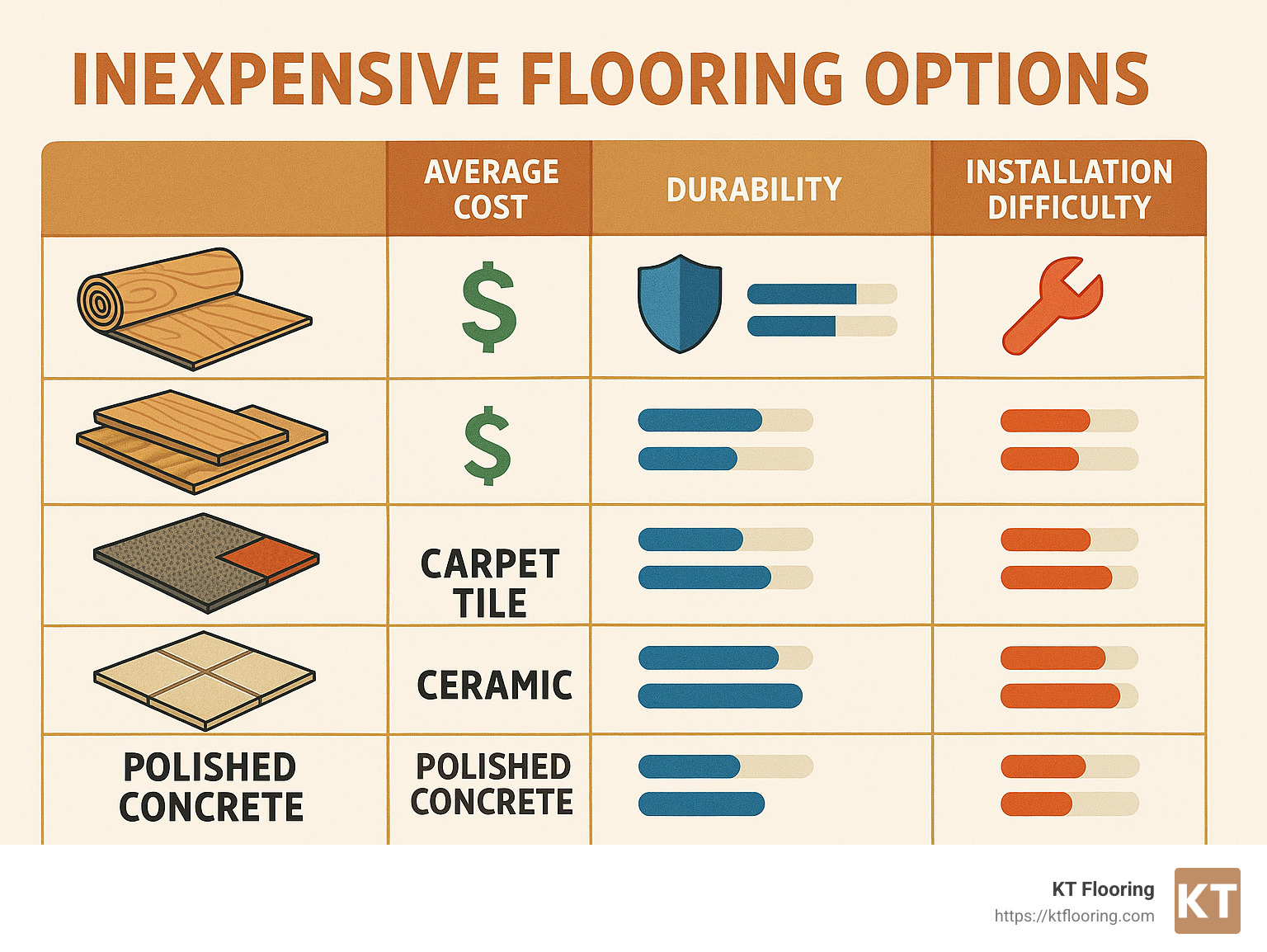
Looking for inexpensive flooring options that are stylish, durable, and budget-friendly? Here are some of the best choices available to homeowners today:
- Sheet Vinyl: $1–$2 per square foot; moisture resistant; easy installation.
- Luxury Vinyl Planks/Tiles: $2.50–$5 per square foot; durable, waterproof, click-lock installation.
- Peel-and-Stick Tiles: $0.50–$4 per square foot; ideal for DIY; easy replacement.
- Laminate Flooring: $3–$13 per square foot; scratch-resistant; mimics wood appearance.
- Carpet Tiles: $1.50–$3.50 per square foot; easy DIY installation; comfortable.
- Ceramic Tile: $0.50–$7 per square foot; water-resistant; durable.
- Polished Concrete: $2–$15 per square foot; modern industrial style.
- Cork Flooring: $3–$19 per square foot; eco-friendly and comfortable.
Whether renovating your forever home or updating a temporary space, choosing inexpensive flooring can refresh your interior without breaking the bank. As homeowner Helen in New Hampshire knows, updating flooring can quickly transform old spaces into stylish and inviting areas. The good news? You don’t have to sacrifice quality or style to save money.
I’m Christopher Talty, owner of KT Flooring, and for over 50 years we’ve helped homeowners and businesses across New Hampshire and Northeast Massachusetts find and install inexpensive flooring options custom to their needs and budget. Let me guide you through choosing your next beautiful—and budget-friendly—flooring solution.
Quick inexpensive flooring options terms:
– Best vinyl flooring prices
– best deals for flooring
Why Choose Inexpensive Flooring Options?
Home renovations are exciting, but let’s keep it real—flooring upgrades can quickly become pricey. Yet, there’s great news: high-quality doesn’t always have to mean high-cost. In fact, there are plenty of scenarios where choosing inexpensive flooring options just makes sense.
Budget Constraints
Let’s face it—most of us don’t have an unlimited home improvement budget (wouldn’t that be nice?). Many of our customers throughout Southern New Hampshire and Greater Boston want to refresh their spaces without emptying their wallets. By choosing budget-friendly flooring, you free up cash for other renovations or simply keep your savings intact.
Temporary Solutions
Sometimes flooring doesn’t need to last a lifetime. Maybe you’re saving up for your dream hardwoods but urgently need fresh flooring today. Inexpensive choices like sheet vinyl or peel-and-stick tiles work great as temporary upgrades, giving your rooms an instant facelift without a huge upfront cost. We’ve seen plenty of homeowners in places like Nashua and Manchester take this practical route, saving their bigger plans for the future.
Rental Properties
If you own rental properties in Northeast Massachusetts, you already know renters can be rough on floors. You need flooring that’s durable, easy to maintain, and simple to replace between tenants. Budget-conscious options like vinyl planks or laminate flooring offer the perfect balance of durability and affordability. Plus, quick replacements help keep your rental property looking fresh and attractive—without draining your resources.
Quick Renovations
Selling your home soon? Nothing spruces up a property faster (and more affordably!) than fresh flooring. A small flooring upgrade can significantly boost your home’s market appeal and help you sell faster. Many of our customers in Andover and Lowell have finded that affordable laminate or luxury vinyl plank can give rooms a polished look—without a hefty price tag.
Durability Considerations
Believe it or not, many inexpensive flooring options actually deliver impressive durability. High-traffic areas like kitchens need floors that handle daily wear and tear. Products like vinyl and laminate often outperform pricier floors in resisting scratches, moisture, and stains—making them ideal when you want long-lasting performance without breaking your budget. Check out our guide to Best Durable Inexpensive Flooring for a Kitchen to learn more.
Benefits of Budget-Friendly Flooring
Choosing affordable flooring does more than just keep your project under budget—it comes with some surprising perks, too.
Cost Savings are the most obvious advantage. Let’s put it into perspective: sheet vinyl costs around $1 to $2 per square foot on average, while hardwood floors typically range from $10 to $18 per square foot. For a 500-square-foot room, that’s potential savings between $4,500 and $8,500 (yes, you read that right!). These are average prices based on general internet data—not specific KT Flooring products and services.
Easy Installation is another great benefit. Peel-and-stick vinyl, click-lock laminate flooring, and interlocking carpet tiles are all designed with DIY enthusiasts in mind. These budget-friendly materials don’t require special skills or expensive tools to install, meaning less frustration, fewer headaches—and quicker results.
Speaking of DIY, many low-cost flooring options are remarkably DIY-Friendly. Doing your own installation can save an additional $1 to $4 per square foot, compared with hiring professionals. One of our customers in Chelmsford recently tackled luxury vinyl plank flooring installation themselves for an 800-square-foot basement and saved over $2,000. Not bad for a weekend project!
If you need a Quick Turnaround, affordable flooring shines again. Installing peel-and-stick vinyl or carpet tiles can often be completed in just a weekend. For busy families who can’t afford weeks of disruption, these fast and easy flooring options are lifesavers.
Finally, let’s talk about Style Versatility. Gone are the days when budget flooring meant compromising on looks. Today’s inexpensive flooring materials come in every aesthetic imaginable—from classic hardwood looks and neat tile patterns to modern and vibrant designs. Whatever your vision, chances are there’s an affordable option to match your style perfectly. For inspiration, take a peek at our guide to Best Vinyl Flooring Prices.
Vinyl Flooring: The Ultimate Inexpensive Flooring Option

If you’re looking for the perfect balance of affordability, style, and durability, vinyl flooring might just be your new best friend. Trust me, this isn’t your grandmother’s vinyl from the 1970s! Today’s vinyl options have undergone quite the makeover, and our customers in Bedford, Burlington, and Concord can’t stop raving about them.
What makes vinyl the darling of inexpensive flooring options? For starters, it’s incredibly versatile. Whether you’re dealing with a moisture-prone bathroom, a busy kitchen, or a basement that occasionally gets damp, vinyl stands up to the challenge. It’s remarkably durable too—with proper care, many vinyl floors last 15-25 years or more. And let’s talk maintenance: a quick sweep and occasional mop is all it takes to keep vinyl looking fresh.
Many homeowners are surprised by how comfortable vinyl feels underfoot. Unlike harder surfaces, vinyl offers a slight give that’s easier on your joints. It’s also quieter than many flooring types and tends to feel warmer in winter months—a definite plus for our chilly New Hampshire winters!
Modern vinyl flooring is engineered with multiple layers that work together for maximum performance. The wear layer on top protects against daily scratches and stains. Below that, the design layer creates those beautiful wood or stone visuals. The core provides stability and often includes waterproofing features, while the backing adds cushioning and structural support.
Pro tip: When shopping for vinyl, pay attention to the wear layer thickness (measured in mils). For homes, look for at least 12 mils, while businesses might want to bump up to 20 mils or more for extra durability.
Sheet Vinyl: Affordable and Practical
When budget is your primary concern, sheet vinyl deserves serious consideration. At just $1-$2 per square foot for materials (average costs based on internet data, not actual KT Flooring pricing), it’s among the most wallet-friendly flooring solutions we offer to homeowners throughout Southern New Hampshire and Northeast Massachusetts.
Sheet vinyl comes in large, continuous rolls—typically 6 or 12 feet wide—which means fewer seams in your finished floor. This seamless installation creates a waterproof surface that’s perfect for moisture-prone areas of your home. Just last month, a customer in Nashua told me, “We installed sheet vinyl in our kids’ bathroom, and I don’t worry anymore when they splash water everywhere during bath time!”
The moisture resistance of sheet vinyl is truly impressive. That continuous surface prevents water from seeping through to your subfloor, protecting your home’s structure. And don’t think you’re sacrificing style for practicality—today’s sheet vinyl comes in an amazing variety of patterns that convincingly mimic wood, stone, and decorative designs.
Many local businesses choose sheet vinyl for their commercial spaces too. Its durability in high-traffic areas and easy cleaning make it ideal for shops, offices, and restaurants. Spills wipe up easily without absorption—a quality any busy family can appreciate as well.
Want to learn more? Check out our detailed guide to Sheet Vinyl Flooring.
Luxury Vinyl Planks and Tiles
“Is that real hardwood?” It’s a question we hear constantly when customers visit homes with luxury vinyl planks installed. For those wanting a more premium look while keeping costs reasonable, Luxury Vinyl Planks (LVP) and Luxury Vinyl Tiles (LVT) hit the sweet spot.
Typically priced between $2.50-$5 per square foot (average costs based on internet data, not actual KT Flooring pricing), these products offer remarkable value considering their realistic appearance and impressive performance. The difference between LVP and LVT is simply the format—planks mimic hardwood boards, while tiles replicate the look of stone or ceramic.
The technology behind these products is pretty amazing. Advanced printing techniques create incredibly realistic visuals, and the textured surfaces actually match the printed pattern. Run your hand across luxury vinyl with a wood pattern, and you’ll feel the grain. Touch a stone-look tile, and you’ll notice subtle texture variations just like the real thing.
Many Winchester homeowners love the click-lock installation systems that make these products relatively DIY-friendly. The planks or tiles snap together without adhesive, creating what’s called a “floating floor” that can often be installed right over existing flooring. For busy households or commercial settings, there are also glue-down options that provide extra stability.
Perhaps the biggest advantage of luxury vinyl is its waterproof capability. Unlike laminate, which can swell when wet, properly installed luxury vinyl can handle spills, high humidity, and even some flooding situations. This makes it ideal for New Hampshire basements, where moisture issues are common.
For a deeper dive into these premium vinyl options, visit our Luxury Vinyl Flooring page.
Peel-and-Stick Vinyl Tiles
If you’re looking for the ultimate DIY-friendly inexpensive flooring option, peel-and-stick vinyl tiles might be your perfect match. Priced from $0.50-$4 per square foot (average costs based on internet data, not actual KT Flooring pricing), these self-adhesive tiles offer an accessible entry point for almost any flooring renovation project.
The beauty of peel-and-stick tiles lies in their simplicity. Clean your subfloor, peel off the backing, and press the tiles into place—it really is that straightforward. Most products can be cut with ordinary scissors or a utility knife, making this truly a no-special-tools-required project.
Renters particularly love this option (with landlord permission, of course). Since the tiles can be removed more easily than permanent flooring, they’re perfect for temporary situations. A customer in Dracut recently shared, “As a renter, I wanted something nicer than the dated linoleum in my kitchen, but I couldn’t make permanent changes. The peel-and-stick tiles transformed the space in just one afternoon, and my landlord was actually impressed with how professional it looked!”
Another advantage is the ability to get creative with patterns. You can mix and match colors or create unique designs that express your personal style. And if a tile gets damaged, you can replace just that individual piece rather than redoing the entire floor.
While peel-and-stick tiles offer excellent value, they typically don’t last as long as sheet vinyl or luxury vinyl products. They work best in low to moderate traffic areas and may require occasional replacement of individual tiles where wear is heaviest.
| Vinyl Type | Cost Range | Durability | Installation Difficulty | Best Applications |
|---|---|---|---|---|
| Sheet Vinyl | $1-$2/sq ft | 10-20 years | Moderate (Pro recommended) | Bathrooms, kitchens, laundry rooms |
| Luxury Vinyl | $2.50-$5/sq ft | 15-25 years | Easy to Moderate | Whole-house, basements, commercial |
| Peel-and-Stick | $0.50-$4/sq ft | 5-10 years | Very Easy | Rentals, low-traffic areas, temporary |
With so many vinyl options available, finding the right inexpensive flooring option for your specific needs has never been easier. Whether you’re updating a rental property, renovating on a budget, or looking for practical solutions for moisture-prone areas, vinyl delivers impressive performance without breaking the bank.
Laminate Flooring: Style Meets Affordability

Laminate flooring has long been a homeowner favorite among inexpensive flooring options—and for good reason! If you adore the look of hardwood floors but prefer a more wallet-friendly alternative, laminate is a fantastic choice. Throughout Southern New Hampshire towns like Londonderry, Merrimack, and Pelham, we’ve installed laminate flooring for hundreds of satisfied homeowners who still love their floors today.
What exactly makes laminate flooring such an appealing and affordable solution? Let’s take a closer look at the layers beneath your feet. A typical laminate plank has four key layers working together:
- Wear layer: A durable, clear coating that protects your floor from scratches, fading, and stains—perfect if energetic pets or playful kids share your space.
- Design layer: A high-quality printed image that realistically replicates wood grain, stone, or decorative patterns. Modern laminate flooring often uses embossed-in-register (EIR) technology that matches the texture perfectly with the printed design, creating an incredibly realistic look.
- Core layer: Crafted from high-density fiberboard (HDF), this layer provides structural stability and strength.
- Backing layer: Acts as a moisture barrier and stabilizes the plank, adding extra protection and durability.
Together, these layers create a floor that’s not just affordable but incredibly tough. Laminate floors resist scratches, stains, and fading, making them ideal for busy families and high-traffic areas like kitchens and entryways. Spills wipe up easily without leaving marks, giving you peace of mind during everyday messes.
“Laminate flooring mimics wood but is less expensive and offers an incredibly durable, easy-to-maintain surface. Like vinyl, laminate is great for high-traffic rooms like kitchens and is stain resistant.”
Cost and Installation Considerations
When exploring inexpensive flooring options, it’s important to factor in costs carefully. According to average online pricing, laminate flooring typically ranges from $3 to $13 per square foot, depending on factors like material quality, plank thickness, and design realism. That these are average prices from online data and do not reflect specific KT Flooring pricing.
Professional laminate installation usually adds roughly $2–$7 per square foot to your total cost, but many homeowners in New Hampshire and Northeast Massachusetts choose to install laminate themselves. Laminate flooring planks come with click-lock systems that snap together without special adhesives, allowing for DIY-friendly, floating installations.
Why choose a floating floor? With no adhesive required, installation becomes simpler and cleaner—no sticky messes or harsh fumes to deal with. You can lay laminate flooring right over many types of existing flooring, saving you the hassle and expense of removing old floors. Plus, if you ever need to make repairs or move, laminate floors can typically be carefully disassembled.
But before you jump into installation, there are a few considerations to keep in mind:
- Moisture concerns: Traditional laminate doesn’t love water, so it’s not recommended for bathrooms or damp basements. However, newer water-resistant laminates are available if you need moisture protection in places like kitchens or laundry rooms.
- Subfloor preparation: Your subfloor (the surface underneath your laminate) needs to be clean, dry, and level for the planks to fit together properly.
- Underlayment requirements: Most laminate installations call for a thin foam padding beneath the planks. This underlayment smooths out minor imperfections in the subfloor and provides additional comfort and sound dampening.
- Acclimation period: Before installation, laminate planks should rest unopened in your home for roughly 48 hours. This gives them time to adapt to your home’s temperature and humidity, preventing warping or gaps later.
Laminate plank thickness typically ranges from 7mm to 12mm. While thinner laminates can perform well for residential use, thicker planks offer greater durability, stability, and noise reduction—worth considering if you’re installing floors in busy spaces.
A recent customer from Salem shared their experience with us: “We installed laminate throughout our first floor last year. The click-lock system made installation easy enough for a weekend DIY project. It looks so much like real hardwood that guests don’t believe it’s laminate until we tell them!”
With laminate flooring, you truly can achieve the warm, inviting look of hardwood floors without the hefty price tag. And if you’re in Southern New Hampshire or Northeast Massachusetts, KT Flooring is here to help you find your ideal affordable flooring option—one that fits both your style and your budget!
Carpet Options for Budget-Conscious Homeowners

Carpet remains one of the most beloved inexpensive flooring options among homeowners in New Hampshire and Northeast Massachusetts—and for good reason! There’s nothing quite like sinking your toes into soft, warm carpeting on a chilly winter morning. Carpet adds a cozy, welcoming feel to bedrooms, living rooms, and family spaces that harder flooring simply can’t match.
Beyond its comfort, carpet offers a host of other great advantages. It provides excellent thermal insulation, keeping your home warmer during our harsh New England winters. It also helps dampen noise, creating quieter, more peaceful spaces—which parents and pet-owners alike really appreciate! Plus, carpet can make your home safer, providing a softer landing for the occasional tumble—especially important for young kids, elderly family members, or anyone prone to clumsiness (we’ve all been there!).
Today’s carpets have come a long way, addressing many of homeowners’ traditional concerns. Advanced stain-resistant fibers help repel spills, making cleanup easier and keeping carpets looking new longer. If you’re worried about allergens, modern carpets are designed to minimize allergen buildup, especially when paired with regular cleaning. They’re also more durable than ever before, standing up to daily traffic and wear better than past generations of carpeting.
Traditional Wall-to-Wall Carpet
Wall-to-wall carpeting remains a popular choice for homeowners looking to balance comfort, style, and affordability. On average, you can expect to pay between $3 and $11 per square foot for carpeting—including the carpet itself, padding, and professional installation. (These are average costs based on internet data, not specific pricing from KT Flooring.)
What makes costs vary so widely? It comes down to the type of carpet you choose. Options range from affordable olefin or polyester blends to durable nylon and even luxurious wool blends. The style you select also matters. Low-pile Berber carpets typically cost less, while plush, high-pile carpeting will be at the higher end of the price range. Other factors that influence price include face weight (the amount of fiber per square yard, with higher numbers usually more durable), density (how tightly packed the fibers are), and fiber treatments for stain and moisture resistance.
Professional installation is generally recommended for wall-to-wall carpeting since it requires specialized tools, precise measuring, and proper stretching techniques. Expect professional installation to add an average extra $1–$2 per square foot to your project.
Don’t overlook carpet padding—it’s not just fluff! Quality padding can significantly improve your carpet’s lifespan and comfort. Good padding absorbs impacts and reduces fiber crushing from foot traffic, improving durability. It also adds insulation, improves comfort underfoot, and provides added soundproofing for quieter rooms.
Many homeowners we serve in communities like Winchester, Woburn, and Bedford choose wall-to-wall carpet for bedrooms and family rooms, spaces where comfort and warmth top the priority list. Families love the softness underfoot, especially in rooms meant for relaxation and leisure.
Carpet Tiles: The DIY Alternative
If you’re looking for a budget-friendly alternative that’s quick to install, carpet tiles offer an ideal solution. Usually priced between $1.50–$3.50 per square foot (average internet pricing, not KT Flooring’s actual pricing), carpet tiles are affordable and practical, especially for DIY enthusiasts.
Carpet tiles are modular squares you simply lay edge-to-edge to create a seamless carpeted surface. Installation couldn’t be easier—no special tools or professional experience necessary, just a utility knife for trimming edges when needed. That ease of installation makes carpet tiles perfect for weekend home improvement projects you can tackle with the whole family.
The real beauty of carpet tiles is that they’re incredibly versatile. If a tile becomes stained or damaged, just lift it out and replace it—no need for costly professional repairs. This easy replacement is especially handy in busy family rooms, children’s play areas, or home offices. You can even mix and match colors and patterns to create fun, custom looks custom to your home’s decor.
Carpet tiles come in a few installation styles: peel-and-stick tiles come with adhesive already attached, releasable adhesive options allow for secure yet removable installations, and friction-fit systems rely on interlocking edges or sturdy backing that holds them securely in place without glue.
One of our clients in Methuen recently shared their experience: “We installed carpet tiles in our basement family room and absolutely love them! When our dog had an accident (oops!), we simply replaced that tile instead of dealing with permanent staining. It took just an afternoon, and even our teenagers enjoyed helping out!”
Carpet tiles are especially suited to basements—since individual tiles are easier to remove if moisture issues arise—as well as children’s rooms, home offices, and rental properties where permanent changes aren’t ideal. If you plan to use carpet tiles in moisture-prone areas, look for tiles specifically designed with waterproof backing to handle minor spills and humidity.
Whether you’re looking for the full-room comfort of wall-to-wall carpeting or the flexible convenience of carpet tiles, inexpensive flooring options like carpet provide warmth, style, and affordability—making your home cozy without breaking your budget.
Ceramic and Porcelain Tile on a Budget
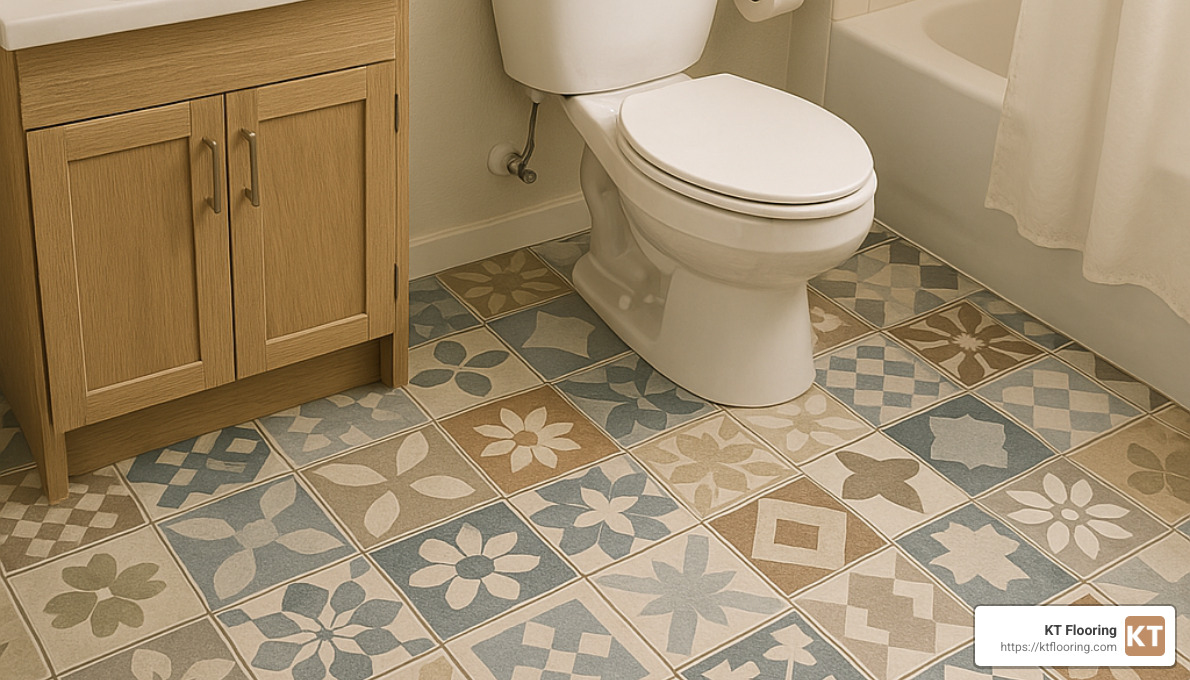
When you think of tile flooring, your mind might automatically jump to high-end kitchens or luxury bathrooms. But here’s a little secret: tile can actually be a fantastic inexpensive flooring option too, especially if you know where and how to shop.
Both ceramic and porcelain tile have been trusted by homeowners for centuries—and for good reason. They provide exceptional durability, water resistance, and a timeless charm that works with almost any decorating style. Plus, they’re incredibly easy to clean, making them great for busy families, pet lovers, and anyone dealing with allergies (goodbye, dust mites!).
Ceramic tile tends to be the lower-cost option of the two, typically ranging between $0.50–$7 per square foot. Porcelain tile, which is fired at higher temperatures, is denser and more water-resistant. It typically costs a bit more, ranging from about $3–$10 per square foot. These prices are average estimates based on industry data, and actual costs can vary. (Don’t worry, at KT Flooring we’ll always help you find the best deal for your budget and style.)
While porcelain is the top choice for areas with heavy moisture or high traffic, ceramic tile is still a smart, budget-friendly choice for many parts of your home. To make sure the ceramic tiles you choose can handle foot traffic, look for tiles rated at least a 3 on the PEI scale—the industry standard set by the Porcelain Enamel Institute.
One of the best ways to save money on tile flooring is to get a little creative with your shopping techniques:
- Check out clearance and overstock sales—retailers frequently offer deep discounts on discontinued or surplus tile.
- Consider sticking with standard tile sizes, as specialty or unusual shapes often cost more.
- Keep your design simple to minimize waste and cutting labor, which can raise installation costs.
- Choose from in-stock options rather than special-order tiles. They’re usually more budget-friendly and ready to go.
A recent customer in Concord found beautiful porcelain tiles on clearance for their bathroom at just $2 per square foot—over 60% off the regular price. Don’t be shy about browsing sales bins or clearance sections—you just might score an amazing deal!
Now, tile flooring isn’t the easiest DIY project. Good tile installation is all about prep: the subfloor must be solid, stable, and level. Tile setting itself can be tricky, especially for beginners, and professional installation typically adds anywhere from $4–$14 per square foot to your overall costs. But remember, professionally installed tile can last 20, 30, even 50 years or more, making it a long-lasting investment.
Other installation details worth keeping in mind include grout and sealing requirements. If you’re installing tile in a busy area, choosing darker grout helps hide stains and discoloration. Most tile installations also benefit from periodic sealing to keep grout looking fresh and prevent moisture damage.
At KT Flooring, we’ve helped countless homeowners throughout Southern New Hampshire and Northeast Massachusetts find stylish yet affordable ceramic and porcelain tiles. Our relationships with trusted manufacturers and suppliers often mean we can pass along special pricing on premium-quality tile options. We’re always here to help you strike the perfect balance between style, quality, and budget.
Alternative Inexpensive Flooring Options
When you’re looking to refresh your floors on a budget, don’t limit yourself to just the standard vinyl, laminate, carpet, and tile options. There’s a whole world of alternative inexpensive flooring options that can give your home a unique character while still being gentle on your wallet.
Cork Flooring: Eco-Friendly and Affordable
Ever wondered what happens to the cork after it’s pulled from a wine bottle? Some of it might end up under your feet! Cork flooring is harvested from the bark of cork oak trees without harming the tree itself. The bark naturally regenerates every 9-12 years, making cork one of the most sustainable flooring materials available.
While cork typically costs between $3-$19 per square foot (with most residential options in the $5-$7 range), it offers unique benefits that often justify the slightly higher price tag compared to other inexpensive flooring options.
Cork feels wonderfully soft and springy underfoot – your joints will thank you! It naturally insulates against both temperature and sound, making it perfect for bedrooms and home offices. If you suffer from allergies, cork’s natural resistance to mold, mildew, and pests makes it an excellent choice. Plus, it has natural antimicrobial properties that help keep your home healthier.
You’ll find cork available as glue-down tiles, floating floor planks with click-together systems (similar to laminate), or even as underlayment beneath other flooring types.
One of our Lawrence customers who installed cork in their home office told us: “The comfort underfoot is amazing compared to the hardwood in the rest of our house. As someone who works from home, I appreciate how it reduces fatigue during long days at my desk. The natural insulation also helps keep the room comfortable year-round.”
Just keep in mind that cork does require periodic resealing to maintain its water resistance. It can dent under heavy furniture (though it often self-recovers), and may fade in direct sunlight without proper treatment.
For more information about sustainable flooring like cork, check out our guide to Environmentally Friendly Flooring Options.
Concrete Flooring: Industrial Chic on a Budget
That gray slab hiding under your current flooring might actually be your next stylish floor! For homeowners seeking a modern, industrial aesthetic, polished concrete offers a surprisingly affordable option. Many homes in New Hampshire and Massachusetts already have concrete subfloors that can be transformed into finished surfaces for approximately $2-$15 per square foot, depending on the level of finishing.
Turning your concrete subfloor into a showpiece typically involves grinding the existing concrete to remove imperfections, filling cracks and holes, polishing to your desired sheen level, and sealing for protection and improved appearance.
Beyond the basic polished finish, concrete can be customized with staining in various colors and patterns, scoring to create tile-like divisions, stamping to imprint patterns resembling stone or brick, or epoxy coatings for additional protection and decorative effects.
When it comes to durability, concrete is simply best. A properly maintained concrete floor can last 50-100+ years! It’s incredibly easy to clean – just sweep and occasionally mop. With no fibers or grout lines to trap dust and pollen, it’s perfect for allergy sufferers. Concrete also works beautifully with radiant heating systems, as its thermal mass efficiently stores and releases heat.
A Lexington homeowner who chose polished concrete for their basement renovation shared: “We were initially skeptical about concrete as a finished floor, but the results are stunning. The polishing process brought out beautiful aggregate patterns, and the cool gray tone works perfectly with our modern furniture. It’s been especially practical with our kids and dog since nothing seems to damage it.”
Concrete floors work particularly well in basements (where you’re making use of the existing slab), modern or industrial-style homes, and sunrooms or spaces with radiant heat. The main drawbacks? Concrete is hard and can be uncomfortable for long standing periods, and it tends to be cold in winter months (though area rugs can help with both issues).
Linoleum: The Original Sustainable Flooring
Often confused with vinyl, true linoleum is made from natural materials including linseed oil, pine resin, wood flour, cork dust, and limestone – all on a jute backing. This classic flooring option has made a comeback as homeowners seek eco-friendly alternatives to synthetic materials.
Priced between $2.50-$9 per square foot, linoleum offers exceptional durability (often lasting 25-40 years) along with natural antimicrobial properties. It comes in sheets, tiles, and click-together planks in a rainbow of colors and patterns.
Refinishing Existing Floors
Sometimes the most budget-friendly option is right beneath your feet! If you have hardwood floors hiding under carpet or vinyl, refinishing them might cost just $3-$8 per square foot – far less than installing new flooring. Even if your hardwood needs some repairs, this approach often costs less than replacement.
Area Rugs Over Existing Floors
When your subfloor is in decent condition but not particularly attractive, large area rugs can be an immediate, low-cost solution. This approach works especially well for renters or those planning more extensive renovations in the future. A good-quality 8’x10′ area rug starts around $100-$300, making this perhaps the most inexpensive flooring option of all.
Throughout Southern New Hampshire and Northeast Massachusetts, we’ve helped countless homeowners find creative, budget-friendly flooring solutions that perfectly match their needs and style preferences. Whether you’re drawn to the natural warmth of cork, the industrial chic of polished concrete, or any other alternative flooring option, the KT Flooring team is here to help turn your vision into reality.
Frequently Asked Questions about Inexpensive Flooring Options
What is the cheapest and most durable flooring?
When you’re trying to stretch your renovation dollar as far as possible, the balance between initial cost and long-term durability becomes crucial. In my experience working with hundreds of New Hampshire and Massachusetts homeowners, sheet vinyl often emerges as the champion in this category. At just $1-$2 per square foot for materials, it’s among the most affordable options available, yet quality vinyl can serve your family faithfully for 10-20 years with reasonable care.
That said, several other inexpensive flooring options deserve consideration for their value proposition:
Laminate flooring offers impressive durability at $3-$13 per square foot, typically lasting 15-25 years before showing significant wear. The higher-end options feature remarkably realistic wood appearances that can transform a space.
Ceramic tile starts at a surprisingly low $0.50 per square foot for basic options and can easily last 20+ years, even in busy households. While installation costs are higher, the long-term value is undeniable.
Polished concrete might surprise you as a budget option at $2-$15 per square foot, but when you consider it might literally last the lifetime of your home, the value becomes clear. Plus, today’s finishing techniques create stunning results far removed from the cold, industrial look you might imagine.
Your ideal choice really depends on your specific home situation. A busy entryway with kids and pets demands different performance than a rarely-used guest bedroom. Consider your family’s lifestyle, the moisture exposure in the space, how much maintenance you’re willing to perform, and whether you’re comfortable with DIY installation to maximize savings.
I remember a North Reading family who chose luxury vinyl planks for their chaotic first floor with three children and a large dog. Five years later, they’re still thrilled with the decision: “It’s held up remarkably well—no visible scratches or wear patterns despite constant traffic. We paid about half what hardwood would have cost, and it needs practically no maintenance. Best decision we made during our renovation.”
How can I save money on flooring installation?
Installation costs can sometimes equal or even exceed the price of the flooring materials themselves. Here are some proven strategies my customers have used to keep those costs manageable:
DIY when possible – Many modern inexpensive flooring options are specifically engineered for homeowner installation. Peel-and-stick vinyl tiles require little more than a tape measure and utility knife. Click-lock laminate and luxury vinyl systems have revolutionized DIY flooring with their user-friendly design. Even carpet tiles can be successfully installed by homeowners with minimal experience.
Even if you’re not comfortable handling the entire installation, you can still reduce costs significantly by managing parts of the process yourself. Removing old flooring yourself can save $1-$4 per square foot—a substantial amount on larger projects. Moving furniture before installers arrive and handling basic cleanup afterward can also reduce labor charges.
Prepare your subfloor properly – This step is absolutely crucial for a successful installation. A thoroughly cleaned subfloor free of debris, properly leveled to address any unevenness, and checked for moisture issues will prevent costly complications during installation and extend the life of your new flooring.
Shop strategically for both materials and installation services. Compare quotes from multiple providers—you might be surprised at the price variation for identical products. Look for overstock or clearance items, which often represent tremendous values on quality materials. For larger projects, buying in bulk typically secures better pricing. And timing matters—winter months and the end of fiscal quarters often bring the best flooring sales.
One savvy Reading customer shared: “We waited for KT Flooring’s annual sale and saved nearly 30% on our luxury vinyl planks. The timing aligned perfectly with our renovation schedule, and we used the savings to upgrade all our baseboards. A little patience made a huge difference in what we could accomplish within our budget.”
Which inexpensive flooring is best for moisture-prone areas?
Water and moisture create special challenges for flooring, particularly in New England where basement flooding and humidity can be significant concerns. For bathrooms, kitchens, basements, and laundry rooms, certain inexpensive flooring options clearly outperform others:
Vinyl flooring is the undisputed moisture champion among budget options. Sheet vinyl creates a virtually seamless, waterproof surface that excels in bathrooms and laundry areas. Modern luxury vinyl planks and tiles with waterproof cores can even withstand temporary flooding without damage. While peel-and-stick tiles offer budget-friendly water resistance, be aware that their seams can be vulnerable to moisture penetration over time.
Ceramic and porcelain tile have been trusted in wet environments for centuries with good reason. Dense porcelain tile offers exceptional water resistance, while properly installed ceramic tile with quality grout creates a highly water-resistant surface. Glazed tiles provide additional protection against water absorption. While installation costs are higher, tile’s longevity in wet environments often justifies the investment.
Concrete flooring makes particular sense for basements and ground-level installations prone to moisture issues. Properly sealed concrete resists both everyday moisture and occasional flooding. Epoxy-coated concrete provides improved protection while opening up decorative possibilities, and stained concrete combines waterproof performance with surprising aesthetic appeal.
Whichever option you choose, pay careful attention to moisture management details. Appropriate underlayment with moisture barriers may be necessary, especially in basements. Quality installation practices that prevent water infiltration at seams and edges are essential. And don’t overlook transitions where flooring meets walls or other surfaces—these vulnerable areas require proper sealing.
I’ll never forget the Hooksett homeowner who learned this lesson the hard way. After dealing with a flooded basement and damaged carpet, they installed luxury vinyl planks as a replacement. “When we had another water issue the following spring,” they told me, “we simply dried the floor and continued using it—no damage whatsoever. The peace of mind has been worth every penny.”
While these are average costs based on internet data and not actual costs for KT Flooring products and services, we’re always happy to provide specific pricing for your project during a free consultation.
Conclusion
Choosing the right inexpensive flooring options doesn’t have to mean compromising on style, durability, or quality. Throughout Southern New Hampshire and Northeast Massachusetts, homeowners and businesses alike have finded that budget-friendly flooring can offer impressive value—both immediately and for years to come.
Budget Planning Considerations
As you explore the many affordable flooring solutions available today, look beyond the initial price tag. Consider the long-term costs including maintenance needs, expected lifespan, and potential replacement down the line. Don’t forget to factor in installation expenses, such as subfloor preparation and labor, especially since some floors are easier to install yourself and others benefit significantly from professional handling.
It’s also essential to remember that different rooms have different flooring requirements. A cozy carpet might be ideal for bedrooms or family rooms, while moisture-resistant vinyl or ceramic tiles may serve you best in bathrooms or kitchens. Your flooring choice can affect your home’s value and appeal, whether you plan to stay long-term or sell soon.
Professional Consultation Value
There’s a lot to consider when choosing flooring, even if you’re aiming for the most budget-conscious solutions. That’s why many homeowners in towns like Manchester, Londonderry, and Chelmsford turn to KT Flooring for free in-home consultations. Our experienced team helps you weigh your options and ensures you pick the perfect flooring to match your lifestyle, aesthetic preferences, and, of course, budget.
Your consultation with KT Flooring will include a thorough evaluation of your subfloor, moisture testing if needed, viewing flooring samples right in your space, detailed measurements for accurate pricing, and expert recommendations custom specifically to your project. Plus, we promise not to judge that messy basement (we’ve seen it all!).
Quality Considerations
Affordable doesn’t mean low-quality. When shopping for inexpensive flooring options, always look for products from reputable manufacturers that offer solid warranties. Make sure the flooring you choose meets your specific needs by checking thickness, wear layers, and certifications that ensure safety and performance standards.
At KT Flooring, we’ve spent over 50 years building relationships with top flooring brands. This allows us to offer high-quality yet budget-friendly options that perform beautifully in homes across New Hampshire and Massachusetts. We do the research so you can enjoy peace of mind knowing your floors will last.
Long-Term Value
Real flooring value isn’t only about upfront savings—it’s also about how your flooring choice stands up over time. Consider durability for your specific environment, ease of maintenance and repair, the flexibility to adapt to changing design trends, and the impact your choice will have on your home’s resale value.
A client from Derry recently told us, “Working with KT Flooring helped us realize that spending just a bit more on luxury vinyl instead of laminate was the better long-term choice for our busy family. Three years later, our floor still looks brand new—even after countless muddy shoes and spilled juice boxes.”
So, whether you’re sprucing up a rental property in Nashua, updating your forever home in Lowell, or preparing your place for sale in Bedford, KT Flooring has the expertise and personalized guidance you need.
Ready to explore the best inexpensive flooring options for your home? Visit our detailed page all about Sheet Vinyl Flooring or reach out today to schedule your free, no-pressure consultation.
Stepping up your home’s style doesn’t have to mean stepping up your budget. Let KT Flooring help you create affordable, beautiful floors you’ll love for years to come.